
Adam Smith: The Father of Modern Economics
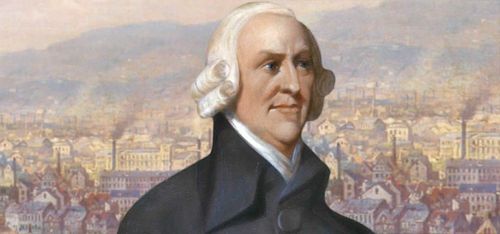

Table of Contents
- Who Was Adam Smith
- The Wealth of Nations: A Game-Changer
- Adam Smith’s Influence on Modern Economics
- Why Should Students Learn About Adam Smith?
- Smith’s Life as a Scholar and Thinker
- Smith's Legacy in Education and Thought
- What We Can Learn From Adam Smith Today
- Smith and the Art of Communication
- Criticism and Alternate Views
- How to Introduce Kids to Economic Thinking
- Adam Smith’s Enduring Impact
- Adam Smith’s Modern Relevance- and His Critics
- Teaching Critical Thinking Like Adam Smith at PlanetSpark
- Why Learn About Adam Smith?
- Summary Table
- Conclusion
- FAQs
When we think of modern economics, one name invariably rises to the top Adam Smith. Widely regarded as the "Father of Modern Economics," Adam Smith revolutionized how we understand wealth, markets, and economic behavior. His ideas laid the foundation for classical economics and continue to influence fiscal policy, capitalism, and free-market theory.
In this blog, we’ll explore Adam Smith’s life, major works, his key economic principles, and his enduring legacy. We’ll also uncover why understanding thinkers like Smith is crucial for building critical thinking and communication skills in students- skills that PlanetSpark’s public speaking and creative writing programs nurture in young minds.
Who Was Adam Smith
Adam Smith was a Scottish philosopher and economist born in 1723 in Kirkcaldy, Scotland. Educated at the University of Glasgow and later at Oxford, Smith initially delved into moral philosophy. Over time, his curiosity about human nature, society, and trade led him to develop economic theories that are still taught in classrooms today.
Major Milestone:
Published “The Theory of Moral Sentiments” in 1759
Published “The Wealth of Nations” in 1776
The Wealth of Nations: A Game-Changer
Smith’s most famous work, “An Inquiry into the Nature and Causes of the Wealth of Nations” (commonly known as The Wealth of Nations), published in 1776, is considered the first modern treatise on economics.
Key Concepts from The Wealth of Nations:
The Invisible Hand – Individuals pursuing their interests unintentionally benefit society through their economic choices.
Division of Labor – Specialization increases productivity and efficiency.
Free Market Economy – Minimal government intervention allows economies to flourish.
Gross Domestic Product (GDP) – Smith’s work laid the groundwork for what would become the concept of GDP.
Adam Smith’s Influence on Modern Economics
Smith's principles are at the core of modern capitalism. His arguments for limited government intervention, specialization, and free trade have been adopted by governments, economists, and businesses worldwide.
He influenced:
Capitalist economies like the United States and the UK.
Economic policies on taxation, free markets, and trade.
Thinkers like David Ricardo, Karl Marx (in critique), and John Maynard Keynes.
Why Should Students Learn About Adam Smith?
Understanding Smith equips students with:
A sense of how economies function
Critical thinking about wealth, labor, and government roles
An appreciation for history, philosophy, and their links to real-world policies
Develop Critical Thinking Like Adam Smith!
At PlanetSpark, we believe in teaching kids to think deeply and speak clearly. Our Public Speaking and Creative Writing Courses help young minds analyze complex ideas and express them confidently, just like the great thinkers of history.
Explore PlanetSpark Courses Now
Smith’s Life as a Scholar and Thinker
Although Smith is renowned for economics, his early work focused on moral philosophy. In The Theory of Moral Sentiments, he explored how sympathy forms the basis of moral judgments. This dual expertise made Smith unique- he connected economics with ethics, a rare but powerful combination
Smith's Legacy in Education and Thought
Many economic institutions and concepts today are built on Smith’s foundation:
Business schools often start economics courses with their principles.
Economic policies still debate around Smith’s core ideas on laissez-faire.
Education curricula include Smith in economics, history, and philosophy.
Fuel Your Child’s Curiosity!
Does your child love exploring “why” and “how”? Let them uncover the thinkers that shaped the world with PlanetSpark’s immersive, discussion-based classes.
What We Can Learn From Adam Smith Today
Even in today’s digital economy, Smith’s teachings are highly relevant:
| Smith’s Idea | Modern Relevance |
|---|---|
| Division of Labor | Assembly lines, automation, AI |
| Free Markets | E-commerce, global trade |
| Self-Interest | Startup culture, gig economy |
| Limited Government | Privatization, deregulation |
Understanding these shifts helps students link classical theory to current events- a key communication skill emphasized at PlanetSpark.
Smith and the Art of Communication
Adam Smith didn’t just write about markets- he wrote clearly and persuasively. He used examples, analogies, and arguments that made complex ideas understandable. That’s exactly the skill we cultivate at PlanetSpark.
Whether your child is learning to debate, deliver speeches, or write essays, the ability to explain complex ideas is invaluable.
Help Your Child Speak Like a Scholar!
Want your child to master the art of expression? At PlanetSpark, we focus on clear articulation, confident delivery, and deep thought- skills that unlock academic and life success.
Book a demo class today
Criticism and Alternate Views
No great thinker is without critics. Some criticisms of Smith include:
Overemphasis on self-interest
Underplaying the role of social welfare
Over-reliance on the “invisible hand” theory
These criticisms led to modern adaptations and new schools of economic thought, showing that Smith’s work was a starting point, not a final answer.
How to Introduce Kids to Economic Thinking
While Smith’s work is complex, the fundamentals can be introduced early:
Discuss basic concepts like money, trade, value, and work
Use storytelling to explain ideas like saving vs. spending
Encourage children to debate and discuss ideas they care about
That’s exactly what PlanetSpark’s interactive learning environment supports.
Adam Smith’s Enduring Impact
More than two centuries later, Adam Smith remains a household name in economics. His ideas shaped capitalism, guided governments, and inspired entrepreneurs. His ability to blend ethics with economics makes him not just the Father of Modern Economics, but also one of the greatest thinkers in history.
Adam Smith’s Modern Relevance- and His Critics
Adam Smith’s ideas laid the groundwork for classical economics. Yet modern economies often face criticism of free-market excess, inequality, and environmental impact. Examining these criticisms helps students learn not only how ideas evolve, but also how to evaluate them critically- a vital skill for academic writing, debates, and public speaking.
Common Critiques:
Overemphasis on self-interest: Critics argue that unchecked self-interest can lead to greed, exploitation, and social disparity.
Ignores environmental costs: Smith’s model doesn’t account for negative externalities like pollution or climate change.
Uneven access to opportunity: Critics say not everyone starts on equal footing, so market outcomes can reinforce privilege.
Yet even skeptics acknowledge Smith’s foundation-setting genius. Modern economists build on his ideas, adding regulations, social welfare, and sustainability to address his blind spots. Smith’s teachings remain a starting point in economics education, not a final answer.
Teaching Critical Thinking Like Adam Smith at PlanetSpark
At PlanetSpark, we believe in nurturing thinkers, not just speakers. As young learners explore economic ideas or social theories, they also build skills in evaluation, reason, and articulation, similar to Adam Smith’s balanced approach.
How We Help:
Debate and discussion sessions where students explore different viewpoints
Critical reading modules for understanding arguments and counterarguments
Essay-writing practice that helps students organize ideas and evidence effectively
These are the same tools that scholars use to analyze Smith’s work, even centuries later.
Why Learn About Adam Smith?
Learning about Adam Smith equips students with the tools to understand how markets function, why economies grow, and what ethical dilemmas arise from profit‑driven systems. When taught thoughtfully, his ideas inspire young minds to think deeply about fairness, commerce, and collective well‑being.
At PlanetSpark, we guide children beyond memorization- towards empathic communication, structured thinking, and confident public speaking. By combining reading with discussion and debate, your child becomes a skilled communicator who can both understand and challenge big ideas.
Summary Table
| Element | Details |
|---|---|
| Name | Adam Smith |
| Born | 1723, Scotland |
| Famous Work | The Wealth of Nations |
| Key Idea | Invisible Hand |
| Legacy | Founder of Classical Economics |
| Relevance Today | Free markets, GDP, division of labor |
Conclusion
Adam Smith’s journey from a curious Scottish scholar to the father of modern economics is a reminder of how powerful ideas can shape nations. His work remains foundational, not just for economists but for anyone trying to understand how society functions.
For parents looking to inspire their children to think deeply and speak powerfully, PlanetSpark offers an ideal platform. Through our programs in public speaking, creative writing, and communication, we prepare children to lead the conversations of tomorrow, just like Adam Smith led the conversations of his time.
FAQs
1. Why is Adam Smith called the father of modern economics?
Adam Smith laid the foundation for classical economics and introduced key concepts like the "invisible hand," division of labor, and free markets.
2. What are Adam Smith’s most famous books?
His two main works are The Theory of Moral Sentiments (1759) and The Wealth of Nations (1776).
3. How is Adam Smith relevant today?
His ideas continue to influence global economic policies, capitalism, and even personal finance.
4. What was Adam Smith’s profession?
He was a philosopher, author, and professor of logic and moral philosophy.
5. How can kids learn from Adam Smith?
By developing critical thinking, understanding how economies work, and improving their communication skills- skills taught at PlanetSpark!