
Personification in Poems for Students | Examples


Poetry becomes magical when ordinary objects begin to speak, sing, dance, cry, whisper, or even dream. This is exactly what happens when writers use personification in poems, a powerful literary device that gives human qualities to non-human things. Young learners love it because it makes poems feel alive, and suddenly, the sun isn’t just shining, it is smiling down at the world. The wind isn’t blowing; it is whispering secrets to the trees.
For students, especially in the early grades, personification opens the door to imagination. A simple poem becomes more colourful, more emotional, and much more engaging. When children learn how to use personification in poetry, they slowly start observing the world creatively, seeing stories in leaves, emotions in skies, and adventures in raindrops.
That ability is the true foundation of confident Creative Writing.
What Is Personification?
Personification is a figure of speech where poets give human qualities, emotions, or actions to things that are not human. This includes animals, objects, natural elements, and even abstract ideas.
For example:
The flowers danced in the garden.
The moon watched over the sleeping city.
Time marches on.
None of these things can actually dance, watch, or march. But by describing them this way, the poem becomes vivid and meaningful.
Why is this important for students?
Because children naturally think in images. When they read, they imagine. When they imagine, they understand better. And when they understand better, they write better.
Personification helps students:
Describe things creatively
Build a stronger vocabulary
Add emotion and depth to writing
Strengthen descriptive writing skills
Make poems more fun and expressive
Teachers often notice that once students understand personification, their writing transforms. A simple line like “The night was dark” becomes “The night wrapped its dark arms around the city”. That’s the power of creative expression.
How Personification Helps in Poetry
In poetry, words are limited, but feelings are not. Personification bridges that gap by making readers feel connected to the poem. It helps children:
Visualize the scene
Feel the emotion
Understand the mood
Engage with every line
Young learners often find poetry difficult because it feels abstract, but personification makes it relatable and concrete. It brings the poetic world closer to a child’s thinking and imagination.
Help your child add life to their poems!
Why Use Personification in Poetry?
Poetry is all about expression, rhythm, and emotion. But personification adds an extra layer of magic, it transforms a plain sentence into a living moment. For students, understanding why poets use personification makes it easier to appreciate poetry and try it themselves.
Here are the biggest reasons:
1. It Makes Poetry More Visual
A poem becomes a picture in the reader’s mind when personification is used.
Instead of saying:
The wind blew hard.
A poet might say:
The wind howled angrily through the streets.
Students instantly feel the intensity and mood. This helps them imagine the scene, making the poem far more memorable.
2. It Builds Emotional Connection
Personification helps readers emotionally connect with non-human elements.
For example:
The lonely tree waited for spring to return.
This gives the tree a feeling of sadness, something children can relate to. When kids connect emotionally, they read deeper and understand better.
3. It Makes Writing More Creative
Personification encourages young writers to think beyond the literal. Suddenly, they are not just describing the world, they are creating their own version of it.
Instead of writing:
The sun was bright today.
They might write:
The sun stretched its golden arms across the sky.
That level of creativity sets their work apart.
4. It Adds Rhythm and Flow to Poems
Personification blends naturally into poetic language. It improves:
Flow
Imagery
Mood
Tone
Even simple poems become musical and expressive when objects perform human actions.
5. It Helps Students Understand Meaning
Poetry often explores deep themes like hope, sadness, joy, and courage, abstract concepts that children struggle with. Personification makes them easier to understand.
For example:
Hope whispered in her ear.
Now, “hope” becomes a living presence, something comforting, gentle, and real.
6. It Makes Poems More Memorable
Students always remember lines with personification because they stand out. They are unusual, imaginative, and delightful. This not only strengthens literature skills but also builds long-term memory and creativity.
7. It Strengthens Creative Writing Confidence
When children learn how to use personification, they gain confidence because they can now express big ideas with small, beautiful lines. It gives them the freedom to write more boldly and imaginatively.
Give your child the writing superpower they deserve!
Examples of Personification in Poetry
Personification in poetry is one of the most loved literary techniques because it instantly turns simple lines into expressive, imaginative, and deeply visual ideas. When young writers begin giving life to objects, nature, or feelings, their poems become richer and more memorable.
Below are some captivating examples of personification in poetry that students can learn from and apply in their own writing.
Example 1: The Sun Smiled at the Morning
"The sun peeked over the hills
And smiled at the waking world."
Here, the sun is treated like a person who can smile. This not only adds warmth to the scene but also creates a friendly, fresh start to the poem. Students often find it easy to begin with nature, sun, rain, clouds, or wind, because these elements already feel alive.
This helps them step naturally into the world of poetic imagery.
Example 2: The Angry Storm Roared Loudly
"The storm roared and shouted
As the frightened trees trembled."
In this line, the storm displays anger, and the trees react like scared humans. This technique helps poets express mood and tone more dramatically. Personifying weather is especially powerful when writing emotional or intense poetry.
Example 3: The Book Whispered Old Secrets
"The old book whispered stories
Of forgotten kings and distant lands."
This is a classic example of how non-living objects can carry emotions when given human traits. For students who love writing fantasy or adventure poetry, this form of personification opens up endless creative paths.
Example 4: The River Danced Playfully
"The river danced around the stones
Laughing its way to the sea."
By describing the river as dancing and laughing, the poet brings movement and joy to the poem. This version of personification in poetry is great for elementary-grade students because it encourages imagination while still keeping the imagery clear.
Example 5: The Wind Whispered My Name
"The wind gently whispered my name
As if calling me to explore."
This is one of the most relatable examples for children; they often feel like nature talks to them, and poetry permits them to express it.
Your child’s imagination deserves a stage.
Poem Personification Template – Try It Yourself
Helping students write poetry becomes much easier when you give them a structure to follow. This simple and fun personification template for kids encourages creative thinking while building confidence.
Below is a kid-friendly template students can use to practice personification in poetry step by step.
Step 1: Choose an Object or Element of Nature
Let children pick something they already relate to:
A tree
A river
A pencil
A cloud
A pet toy
The moon
A backpack
A classroom door
Personal connection increases their creativity.
Step 2: Give It a Human Emotion or Action
Ask: If this object were a person, what would it do?
For example:
A pencil that "dances across the page"
A moon that "keeps watch at night"
A leaf that "waves goodbye"
This is the heart of personification.
Step 3: Build Two Imagery Lines
Here’s a simple structure:
Line 1: Object + Human Action
Line 2: Object + Emotion or Intention
Example:
"My pencil dances excitedly
As it rushes to finish my thoughts."
Step 4: Add a Feeling or Message
This helps children turn their imagery into meaning:
joy
curiosity
friendship
bravery
adventure
Even simple feelings make poems powerful.
Step 5: Put It All Together
Here’s a template students can directly use:
Success stories show parents what is possible when the right guidance meets a child’s potential. Here's a powerful example:
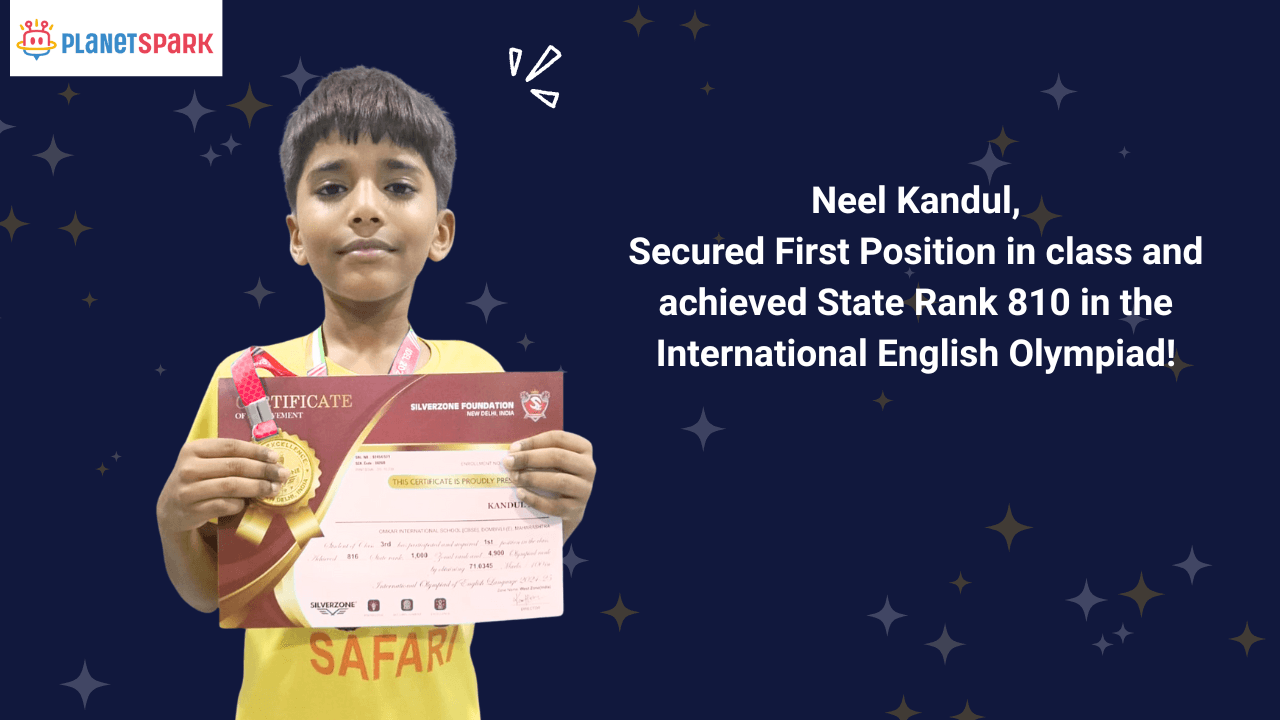
PlanetSpark helped Neel transform from a shy learner into a confident communicator and achiever.
With consistent guidance, structured learning, and interactive English skill-building sessions, Neel achieved something incredible:
First Position in his class
State Rank 810 in the International Olympiad of the English Language
This remarkable accomplishment reflects Neel’s hard work and PlanetSpark’s commitment to helping every child unlock their best abilities in reading, writing, comprehension, and communication.
Neel’s progress is a reminder that when children receive the right learning environment, they don’t just improve, they thrive.
Don’t let your child miss out on discovering their creative voice.
Poem Template for Personification
Title: ___________________________
Line 1: The __________ (object) __________ (human action).
Line 2: It __________ (emotion/intention) as ____________________.
Line 3: The __________ (object) seems to _________________________
Line 4: As if it were __________________________________________
Students can repeat the pattern to extend the poem.
Example Using the Template
Title: The Brave Little Cloud
“The little cloud marched across the sky.
It puffed its chest proudly as it blocked the sun.
The cloud stood strong like a tiny guardian,
As if it were protecting the earth below.”
This shows how easy and fun it becomes to blend imagination with structure.
Quick Tip for Teachers & Parents
Encourage children to observe their surroundings and ask themselves:
“What would this object do if it were alive?”
This question unlocks creativity quickly.
Why Choose PlanetSpark Creative Writing?
Creative writing is more than a hobby; it’s an essential life skill that helps children express themselves, think independently, and communicate ideas effectively. PlanetSpark specializes in transforming young minds into confident writers and storytellers through interactive, engaging, and structured learning.
Here’s why thousands of parents trust PlanetSpark Creative Writing Classes for their children:
Genre-Focused Curriculum: Covers diverse forms like stories, poems, essays, reviews, and persuasive letters to build versatile writing skills.
Framework-Based Learning: Students master story arcs, the S.T.O.R.Y structure, the 5W1H method, and the PEEL technique for structured writing.
Writing and Speaking Integration: Learners present their written pieces to strengthen expression and storytelling confidence.
Real-Time Editing: Classes emphasize rewriting and refinement through peer reviews and teacher feedback.
Publishing Opportunities: Students can feature their work on PlanetSpark’s blog, e-magazine, or co-authored anthologies for recognition.
Creativity Boosters: Writing prompts, imagination games, and story dice activities nurture originality and creative thinking.
Unlock your child’s full creative potential.
Where Words Come Alive, And Children Do Too
Personification in poetry opens a magical doorway for children, a world where rivers dance, clouds whisper, and stars celebrate the night. It’s more than a poetic device; it’s a bridge between imagination and expression.
As students practice personification, they learn to observe the world more closely, feel emotions more deeply, and express themselves more confidently in writing. Whether your child is a beginner or already budding as a young poet, nurturing their creative writing skills will shape their communication and confidence for years to come.
With structured guidance, fun learning methods, and expert-led sessions, PlanetSpark ensures every child discovers the joy of writing, just like Neel did.
Creative writing is not just a skill. It’s a superpower.
Give your child the chance to explore it today.
More For You: If You Loved This Blog, You May Also Enjoy…
These additional reading sections help the reader stay connected and explore more useful learning topics:
Frequently Asked Questions
Personification in poetry is a literary device where non-living things, animals, or abstract ideas are given human qualities or actions. It helps young writers make their poems more vivid, emotional, and imaginative.
Poets use personification to bring scenes to life. When the sun “smiles” or the wind “whispers,” readers feel more connected to the poem. It helps children express emotions creatively and visualize ideas more clearly.
Yes! In fact, children pick it up very quickly because it mirrors how they naturally think—imagining objects with feelings, moods, and personalities.
Absolutely. It strengthens imagination, descriptive writing, emotional expression, and poetic craft. It also helps children think more deeply about the world around them.
Start with simple prompts:
- “If the moon could talk, what would it say?”
- “What would my backpack do if it had feelings?”
- “How would the rain behave if it were alive?”
Children can also try PlanetSpark’s fun poem templates and guided writing challenges for regular practice.