
Understand Noise In Communication and How to Overcome it
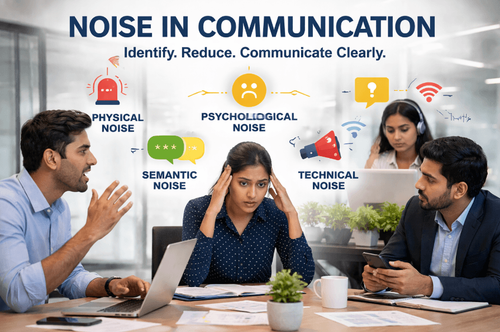

Table of Contents
- What is Noise in Communication and Why It Matters
- Key Types of Communication Noise
- Impact of Noise in Workplace Communication
- Strategies to Overcome Noise in Communication
- Building Strong Communication Habits for Professionals
- Your Business Communication needs a touch of PlanetSpark
- Communicate Clearly, Succeed Confidently
In every professional setting, communication plays a critical role in determining success. Yet, despite our best efforts, messages often get misunderstood, delayed, or distorted. This happens because of noise in communication, a common but often overlooked barrier that affects how information is shared and received.
For working professionals, even a small communication gap can lead to missed deadlines, confusion, and strained relationships. Whether it is a poorly written email, distractions during a meeting, or differences in interpretation, noise can disrupt clarity and efficiency. Understanding noise in communication is essential for anyone who wants to improve workplace interactions.
When you learn how to identify and manage these disruptions, you not only communicate better but also build stronger professional relationships. In this blog, you will explore the concept in depth, understand the types of noise in communication, and learn practical strategies to overcome it effectively.
What is Noise in Communication and Why It Matters

Noise in communication refers to any disturbance that interferes with the accurate transmission or understanding of a message. It can occur at any stage, whether the sender is encoding the message, the channel is transmitting it, or the receiver is interpreting it.
To fully understand noise in communication, it is important to recognize that it is not always obvious. Sometimes, communication appears smooth on the surface, but subtle misunderstandings still occur. These small gaps can accumulate over time and lead to larger issues.
Common sources of communication noise
- Environmental distractions such as office chatter, phone notifications, or interruptions
- Poorly structured messages that lack clarity or detail
- Emotional states like stress, frustration, or overconfidence
- Cultural and language differences that affect interpretation
- Technical disruptions such as poor internet connectivity or unclear audio
Why it matters in the workplace
- Reduces clarity and accuracy
When noise interferes, the message received may differ from what was intended. This can lead to confusion and repeated clarifications. - Affects productivity and efficiency
Miscommunication often results in rework, delays, and wasted time. Teams may need to revisit tasks due to misunderstandings. - Impacts professional relationships
Repeated miscommunication can create frustration, misunderstandings, and even conflicts among colleagues. - Leads to poor decision-making
Decisions based on incomplete or incorrect information can negatively affect business outcomes. - Creates unnecessary stress
When communication is unclear, professionals may feel uncertain or anxious about expectations and responsibilities.
Workplace example
Consider a scenario where a manager sends a vague message about project priorities. Different team members may interpret it differently, leading to inconsistent results. This confusion is caused by communication noise.
Understanding and addressing these barriers is essential for improving clarity and ensuring smooth workflow in professional environments.
Key Types of Communication Noise
Understanding the types of noise in communication is essential for working professionals because each type affects clarity in a different way. When you can identify the exact type of noise, you can address it more effectively instead of making general assumptions about communication problems.
1. Physical noise
Physical noise refers to external environmental distractions that interfere with communication. In a workplace, this can include background conversations, ringing phones, keyboard sounds, or even frequent interruptions from colleagues.
In hybrid or remote work environments, physical noise also includes unstable surroundings, such as working from crowded spaces or noisy homes. These distractions reduce concentration and increase the chances of missing important information.
Over time, constant exposure to physical noise can lead to reduced attention span and lower communication efficiency. This is why professionals must consciously create distraction-free environments for important discussions.
2. Psychological noise
Psychological noise originates from within the individual. It includes stress, anxiety, assumptions, biases, or emotional reactions that distort how a message is interpreted.
For example, if an employee is already feeling overwhelmed, they may interpret neutral feedback as criticism. Similarly, preconceived notions about a colleague may affect how their message is received.
This type of noise is particularly challenging because it is not visible. It requires self-awareness and emotional intelligence to manage effectively.
3. Semantic noise
Semantic noise occurs when language itself becomes a barrier. This happens when words, phrases, or sentence structures are unclear, ambiguous, or overly complex.
In professional environments, this often appears in emails filled with jargon or instructions that lack clarity. When the receiver does not fully understand the terminology, the message loses its meaning.
To reduce semantic noise, professionals must focus on simplicity, clarity, and audience understanding. Clear communication is always more effective than complex language.
4. Cultural noise
Cultural noise arises from differences in cultural backgrounds, communication styles, and social norms. In global workplaces, this type of noise is very common.
For instance, some cultures prefer direct communication, while others value indirect or polite expressions. Misunderstanding these differences can lead to confusion or even unintended offense.
Developing cultural awareness helps professionals communicate more effectively across diverse teams and avoid unnecessary misunderstandings.
5. Technological noise
Technological noise is increasingly relevant in modern workplaces where communication relies heavily on digital tools. Poor internet connectivity, audio issues, software glitches, or delayed messages can disrupt communication flow.
For example, in virtual meetings, lagging audio or video can cause participants to miss key points or misunderstand instructions.
While technology enables communication, it also introduces new challenges. Being prepared and using reliable tools can help minimize this type of noise.
Why understanding these types matters
- It helps you identify the exact communication barrier
- It allows you to apply targeted solutions
- It improves adaptability in different workplace situations
- It strengthens overall communication effectiveness
When professionals understand these categories, they become more mindful communicators. This awareness leads to fewer misunderstandings and more productive conversations.
Impact of Noise in Workplace Communication
The impact of noise in communication extends beyond simple misunderstandings. It can influence productivity, teamwork, and overall workplace efficiency.
Impact on productivity
When communication is unclear, employees spend additional time clarifying instructions or correcting mistakes. This reduces efficiency and delays project timelines.
Impact on teamwork
Effective teamwork depends on clear communication. Noise can create confusion about roles, responsibilities, and expectations, leading to poor collaboration.
Impact on decision-making
Decisions based on incomplete or incorrect information can lead to ineffective outcomes. Communication noise increases the risk of such errors.
Impact on employee confidence
Professionals who frequently face communication issues may lose confidence in their ability to express ideas clearly. This can affect their participation in meetings and discussions.
Impact on organizational growth
At a larger level, communication noise can affect business performance. Misaligned teams and unclear strategies can hinder growth and innovation.
Real-world scenario
Imagine a team working on a tight deadline where instructions are not clearly communicated. Each member may interpret tasks differently, leading to inconsistent results and delays. This highlights how noise can disrupt even well-planned projects.
Reducing communication noise is essential for maintaining efficiency and ensuring smooth collaboration.
Strategies to Overcome Noise in Communication
Overcoming noise in communication is not about eliminating all distractions. It is about developing the ability to manage them effectively. Professionals who master this skill communicate more clearly, avoid misunderstandings, and build stronger workplace relationships.
Practical strategies to reduce communication noise
- Use clear and structured language
Always organize your message before delivering it. Break down complex ideas into simple points. This ensures that your message is easy to follow and understand. - Practice active listening consistently
Listening is just as important as speaking. Focus fully on the speaker, avoid interruptions, and process the information carefully before responding. This reduces the chances of misinterpretation. - Ask for clarification when needed
Never assume you have understood everything correctly. Asking questions shows engagement and helps eliminate confusion early. - Choose the appropriate communication medium
Not all messages should be communicated in the same way. Use emails for documentation, calls for quick discussions, and meetings for detailed conversations. The right medium reduces noise significantly. - Minimize environmental distractions
For important discussions, choose a quiet setting. Turn off unnecessary notifications and create a focused environment to improve clarity. - Be mindful of tone and body language
Communication is not only verbal. Your tone, facial expressions, and gestures influence how your message is perceived. Ensure they align with your intent. - Adapt your communication to your audience
Understand the background, experience level, and expectations of your audience. Tailoring your message makes it more effective and reduces misunderstanding.
Advanced strategies for long-term improvement
- Develop emotional intelligence to manage psychological noise
- Improve vocabulary and language clarity to reduce semantic noise
- Build cultural sensitivity for global communication
- Use technology efficiently and ensure proper setup before important conversations
Why consistency matters
Applying these strategies occasionally is not enough. Consistent practice is what creates long-term improvement. Over time, these habits become natural and significantly enhance communication effectiveness.

Building Strong Communication Habits for Professionals
Strong communication habits are the foundation for reducing noise and improving clarity. While strategies help in specific situations, habits ensure long-term consistency and growth.
Essential habits to develop
- Think before you communicate
Take a moment to structure your thoughts. This reduces confusion and ensures your message is clear from the start. - Be concise without losing meaning
Avoid overloading your message with unnecessary details. Focus on what truly matters while maintaining clarity. - Seek and accept feedback
Feedback helps you understand how others perceive your communication. Use it as a tool for improvement rather than criticism. - Practice regularly in real situations
Communication improves with practice. Participate actively in meetings, discussions, and presentations to build confidence. - Stay open to different perspectives
Being open-minded helps you understand others better and reduces miscommunication caused by assumptions. - Reflect on your communication style
After important conversations, think about what went well and what could be improved. This self-awareness accelerates growth.
Long-term impact of strong habits
- Improved clarity and confidence
- Better professional relationships
- Reduced misunderstandings
- Increased productivity and efficiency
How habits improve communication
Consistent habits create a strong foundation for effective communication. Over time, they reduce misunderstandings and improve professional interactions.
Your Business Communication needs a touch of PlanetSpark
PlanetSpark’s business communication programs are designed to help working professionals overcome challenges like noise in communication and build strong, clear, and confident communication skills.
- Live 1:1 sessions with expert trainers
Each session is personalized to your specific needs. Trainers focus on your communication gaps and provide targeted guidance to improve clarity and confidence. - Real-world workplace simulations
You practice real scenarios such as meetings, presentations, and difficult conversations. This ensures that learning is practical and directly applicable to your job. - Structured communication framework
Learn how to organize your thoughts logically. This helps you deliver messages that are clear, concise, and impactful. - AI-powered feedback system
Advanced tools analyze your performance and provide detailed insights. This helps you track progress and continuously improve. - Flexible learning for busy professionals
The program is designed to fit into your schedule. You can learn without disrupting your work commitments. - Confidence-building exercises
Special activities help you overcome hesitation and fear. You learn to speak confidently in meetings, presentations, and one-on-one conversations. - Career-focused curriculum
The program is aligned with workplace needs. It focuses on skills that directly contribute to professional growth and success.
Why PlanetSpark stands out
PlanetSpark goes beyond theory and focuses on real transformation. It combines expert guidance, practical exposure, and personalized learning to help you become a confident communicator.
Unlike others, it prepares you for real workplace challenges. Whether you struggle with unclear messaging, hesitation, or misunderstandings, PlanetSpark provides the tools and support needed to improve.

Communicate Clearly, Succeed Confidently
Mastering noise in communication is essential for every working professional. Clear communication improves productivity, strengthens relationships, and builds trust.
When you understand the types of noise in communication and apply effective strategies, you can minimize misunderstandings and communicate with confidence. Every step you take toward improving your communication skills contributes to your professional growth.
Stay consistent, keep practicing, and focus on clarity in every interaction. With the right approach, you can turn communication challenges into opportunities for success.
Frequently Asked Questions
Noise in communication refers to any disturbance that interferes with the clarity of a message. It can occur at any stage of the communication process and affect how the message is understood. Managing it is essential for clear and effective workplace communication.
The main types of noise in communication include physical, psychological, semantic, cultural, and technological noise. Each type affects communication differently and can lead to misunderstandings if not addressed properly. Recognizing these types helps in applying the right solutions.
Understanding noise in communication helps professionals avoid misunderstandings and improve clarity in their interactions. It also enhances productivity and teamwork by reducing errors and confusion. This awareness is crucial for effective workplace communication.
Professionals can reduce noise by using clear language, practicing active listening, and choosing the right communication channels. They should also minimize distractions and confirm understanding when needed. Consistent practice helps improve clarity over time.
Noise cannot be completely eliminated because some level of distraction or misinterpretation is always present. However, it can be managed effectively with the right communication strategies and awareness. The goal is to minimize its impact as much as possible.
Noise can create confusion about roles, responsibilities, and expectations within a team. This can lead to misunderstandings, delays, and reduced collaboration. Clear communication helps teams work more efficiently and stay aligned.
Strong communication skills improve clarity, structure, and understanding of messages. They help professionals express ideas effectively and interpret information accurately. This significantly reduces the impact of noise in communication.
Personalized Communication Roadmaps
Record a video to get a AI generated personalized communication reports