Professional Communication Etiquette and Soft Skills
Workplace Etiquette, Emotional Intelligence, and Interpersonal Skills for Effective Business Communication
What Are Soft Skills in Professional Communication
Soft skills in professional communication refer to the behavioral and interpersonal abilities that shape how individuals interact, collaborate, and convey ideas in the workplace. Unlike technical expertise, these skills influence tone, clarity, empathy, adaptability, and professionalism in everyday communication.
In business environments, communication rarely happens in isolation. Meetings, emails, negotiations, presentations, and feedback discussions require more than subject knowledge. They demand listening, emotional control, cultural awareness, and respectful expression. Research by Harvard University, the Carnegie Foundation, and Stanford Research Center found that nearly 85 percent of job success comes from well developed soft skills, while only 15 percent comes from technical skills.
In professional communication, soft skills determine:
How effectively ideas are understood
How conflicts are handled
How trust and credibility are built
How leadership presence is perceived
This makes soft skills an essential foundation for effective business communication.
According to a LinkedIn Workplace Learning Report, 92 percent of talent professionals believe soft skills are just as important or more important than hard skills. This shift highlights that organizations now evaluate not only what professionals know, but also how they communicate and behave.
Professional Communication Etiquette in the Workplace
Professional communication etiquette refers to the standards of behavior that govern respectful and effective interaction at work. It ensures that communication remains professional, inclusive, and purpose driven.
Workplace communication etiquette includes:
Using respectful and clear language
Maintaining appropriate tone in emails and messages
Practicing meeting etiquette such as punctuality and preparedness
Allowing space for others to speak
Following digital communication norms
According to research by MIT Sloan, teams that follow clear communication norms perform significantly better due to reduced friction and improved trust. Professional etiquette creates predictability and psychological safety in interactions.
Workplace Communication Etiquette and Professional Standards
Workplace communication etiquette refers to the shared professional standards that guide how employees interact across roles, teams, and hierarchies. These standards exist to ensure clarity, respect, and consistency in professional behavior, regardless of position or function.
Professional communication etiquette is reflected in how messages are framed, how conversations are conducted, and how disagreements are handled. Research published in the Journal of Business Communication shows that teams with clearly understood communication norms experience fewer misunderstandings and higher trust levels.
Core professional communication standards include:
Using respectful, inclusive, and clear language
Maintaining appropriate tone across verbal and written communication
Practicing active listening without interruption
Respecting time, boundaries, and organizational protocols
These standards apply equally to in person conversations, cross functional discussions, client interactions, and leadership communication. Whether communicating upward with managers, laterally with peers, or externally with stakeholders, consistent workplace etiquette reinforces credibility and professionalism.
Business Communication Etiquette for Emails, Meetings, and Digital Channels
Digital communication has become the primary mode of workplace interaction, making etiquette in emails, meetings, and collaboration tools critical to professional success.
Professional email etiquette involves clarity, structure, and tone management. Emails should be concise, purpose driven, and respectful, with appropriate subject lines and response timelines. Studies on workplace productivity show that poorly written emails increase cognitive load and decision fatigue, leading to delays and misinterpretation.
Meeting etiquette in the workplace applies to both physical and virtual settings. Professional standards include punctuality, preparedness, attentive listening, and meaningful participation. In virtual meetings, etiquette extends to camera use, background professionalism, and minimizing distractions.
Digital workplace etiquette also includes:
Using collaboration tools responsibly
Avoiding overcommunication or unnecessary messaging
Respecting availability and response expectations
Maintaining professionalism in informal channels
According to Microsoft Work Trend Index data, clear digital communication norms significantly improve collaboration in remote and hybrid work environments. Professionals who follow digital etiquette communicate more efficiently and reduce friction across teams.
Professional Communication Etiquette with Clients, Teams, and Stakeholders
Professional communication etiquette becomes especially critical when interacting with clients, cross functional teams, and external stakeholders. These interactions directly reflect organizational values and brand reputation.
Client communication etiquette emphasizes clarity, responsiveness, and empathy. Professionals are expected to manage expectations transparently, handle concerns calmly, and maintain professionalism even during high pressure situations. Research in service communication highlights that tone and responsiveness often matter more to clients than technical accuracy alone.
Within teams and across hierarchies, etiquette governs respectful collaboration. Communicating with managers requires clarity and accountability, while peer communication relies on mutual respect and openness. Cross cultural communication etiquette further requires awareness of cultural norms, communication styles, and professional boundaries.
Non verbal communication also plays a role in professional etiquette. Body language, eye contact, posture, and vocal tone influence how messages are perceived, especially during presentations, negotiations, and leadership interactions.
Ethical communication and professional boundaries are foundational to all these interactions. Respecting confidentiality, avoiding inappropriate language, and maintaining inclusive communication practices support trust and long term professional relationships.
Why Soft Skills Matter for Effective Business Communication
Soft skills are the backbone of effective business communication because they determine how messages are delivered, received, and interpreted. Even well structured communication fails when empathy, clarity, or professionalism is missing.
In workplaces, poor communication is a major cost driver. A report by Grammarly and The Harris Poll revealed that ineffective communication costs U.S. businesses over $1.2 trillion annually due to misunderstandings, delays, and errors.
Soft skills support business communication by:
Improving message clarity and intent
Reducing conflict and misinterpretation
Strengthening professional relationships
Enhancing leadership credibility
Professionals with strong soft skills communicate with confidence, adjust their approach based on context, and create psychologically safe environments for collaboration.
Hard Skills vs Soft Skills in Modern Workplaces
The comparison between hard skills vs soft skills highlights two distinct but complementary skill sets.
Hard skills are technical abilities that can be measured, tested, and certified. Examples include coding, data analysis, accounting, or operating tools and software.
Soft skills, on the other hand, focus on how professionals apply their knowledge in real world settings.
Hard Skills
Soft Skills
Technical expertise
Communication and interpersonal ability
Job specific
Transferable across roles
Easily measurable
Assessed through behavior
Taught through formal education
Developed through practice and feedback
In modern workplaces, organizations increasingly seek a balance of both. A professional may possess strong technical knowledge, but without communication soft skills, their impact remains limited.
Difference Between Soft Skills and Hard Skills Explained
The difference between soft skills and hard skills lies primarily in application and influence.
Hard skills answer the question, “Can you do the job?” Soft skills answer the question, “How well can you work with others while doing the job?”
Soft skills influence leadership potential, teamwork, adaptability, and long term career growth. According to a study published in the Journal of Organizational Behavior, professionals with strong interpersonal skills are more likely to be promoted into leadership roles, regardless of their technical background.
This distinction explains why organizations now invest heavily in soft skills training alongside technical development.
Core Communication Soft Skills for Workplace Success
Communication focused soft skills directly shape professional effectiveness. These skills are not optional, they are critical for sustainable career growth.
Key communication soft skills include:
Active listening and clarity of expression
Emotional regulation during discussions
Adaptability in communication styles
Assertiveness without aggression
Collaboration and teamwork
These skills influence how professionals participate in meetings, respond to feedback, handle pressure, and represent their organization externally.
Workplace studies consistently show that teams with strong communication soft skills experience higher engagement, faster problem solving, and reduced conflict.
Professional Communication Etiquette in the Workplace
Professional communication etiquette refers to the standards of behavior that govern respectful and effective interaction at work. It ensures that communication remains professional, inclusive, and purpose driven.
Workplace communication etiquette includes:
Using respectful and clear language
Maintaining appropriate tone in emails and messages
Practicing meeting etiquette such as punctuality and preparedness
Allowing space for others to speak
Following digital communication norms
According to research by MIT Sloan, teams that follow clear communication norms perform significantly better due to reduced friction and improved trust. Professional etiquette creates predictability and psychological safety in interactions.
Emotional Intelligence as a Key Communication Soft Skill
Emotional intelligence plays a central role in professional communication. It refers to the ability to recognize, understand, and manage emotions in oneself and others.
Psychologist Daniel Goleman identified emotional intelligence as a stronger predictor of leadership success than IQ. In communication, emotional intelligence helps professionals:
Respond instead of reacting
Read non verbal cues
Adjust tone based on context
Handle difficult conversations calmly
High emotional intelligence improves conflict resolution, feedback discussions, and leadership presence. It also reduces communication breakdowns caused by stress or emotional mismanagement.
Cross Cultural Communication Skills in Global Organizations
In global and diverse workplaces, cross cultural communication skills are essential. Cultural differences influence communication styles, hierarchy, decision making, and feedback norms.
Misunderstandings often arise not from intent but from cultural assumptions. Research by Hofstede’s Cultural Dimensions Theory explains how values such as power distance and individualism affect workplace communication.
Professionals with cross cultural communication skills:
Show cultural sensitivity
Avoid assumptions and stereotypes
Adapt language and tone
Build trust across diverse teams
As organizations become increasingly global, these skills are now a core requirement rather than a niche competency.
Conflict Resolution Skills for Professional Communication
Conflict is inevitable in professional environments, but how it is managed defines workplace culture. Conflict resolution skills enable professionals to address disagreements constructively without damaging relationships.
Effective conflict resolution involves:
Active listening
Emotional control
Clear articulation of concerns
Focus on solutions rather than blame
According to the Thomas Kilmann Conflict Mode Instrument, collaborative conflict handling leads to higher team satisfaction and better outcomes. Professionals with strong conflict resolution skills maintain professionalism even in high pressure situations.
Feedback and Listening Skills in the Workplace
Feedback and listening are deeply interconnected communication soft skills. Poor listening often leads to defensive responses and ineffective feedback.
Effective professionals:
Listen to understand, not to respond
Ask clarifying questions
Deliver feedback with clarity and respect
Accept feedback without personalizing it
Gallup research shows that employees who receive regular, constructive feedback are three times more engaged than those who do not. Strong listening skills create trust and improve communication quality across teams.
Professional Behavior and Business Communication Standards
Professional behavior sets the tone for all workplace communication. It includes verbal, non verbal, and behavioral cues that reflect reliability, respect, and accountability.
Professional behavior in communication involves:
Consistent professionalism across channels
Respect for boundaries and time
Ethical communication practices
Accountability in messaging
Organizations often assess professional behavior during performance reviews because it reflects maturity, leadership readiness, and organizational alignment.
Soft Skills Examples in Real Workplace Scenarios
Soft skills become most visible in real situations.
Examples include:
Managing a tense client call with empathy and clarity
Giving constructive feedback to a team member
Navigating disagreement during meetings
Communicating delays transparently
These examples demonstrate that soft skills are not abstract traits. They are practical behaviors applied daily in professional communication.
Soft Skills for Resume and Career Advancement
Soft skills for resume sections have become increasingly important as recruiters look for communication competence alongside experience.
Highly valued soft skills include:
Communication and presentation skills
Team collaboration
Emotional intelligence
Conflict management
Professional etiquette
Recruiters often assess soft skills through behavioral interviews, situational questions, and peer feedback. Listing soft skills on a resume is most effective when supported by clear professional experiences.
Soft Skills Training for Professional Communication Growth
Soft skills do not develop automatically with experience. Structured soft skills training accelerates learning by combining theory, practice, feedback, and reflection.
Organizations invest in soft skills training to:
Improve leadership communication
Reduce workplace conflict
Enhance collaboration
Strengthen professional presence
Research from the World Economic Forum consistently ranks communication and emotional intelligence among the top future workplace skills. Training ensures these skills are developed intentionally rather than incidentally.
How Communication Soft Skills Support Business Communication
Communication soft skills act as enablers for all business communication functions. They strengthen business writing, presentations, negotiations, leadership messaging, and client interactions.
Without soft skills, business communication becomes transactional and ineffective. With them, communication becomes strategic, persuasive, and relationship driven.
This connection makes soft skills an integral component of any comprehensive business communication framework.
Building Professional Communication Etiquette and Soft Skills with PlanetSpark
Effective professional communication etiquette and soft skills develop through guided practice, contextual feedback, and real workplace application, not through theory alone. For working professionals, improvement comes from learning environments that reflect real meetings, feedback conversations, cross functional discussions, and client interactions. PlanetSpark’s communication focused learning programs are designed to support this practical, outcome driven approach to professional communication development.
The program helps professionals build strong soft skills such as workplace etiquette, emotional intelligence, active listening, and confident expression while adapting their communication style to different business contexts and organizational cultures.
What sets PlanetSpark’s professional communication and soft skills program apart:
Personalized learning paths aligned with individual communication goals, workplace challenges, and career roles
Live, interactive sessions that simulate real workplace conversations, meetings, and feedback discussions
Expert trainers who provide structured, actionable feedback focused on communication etiquette and behavioral improvement
Strong emphasis on emotional intelligence, clarity of expression, professional tone, and interpersonal effectiveness
Guided practice to improve communication in meetings, emails, conflict situations, and leadership interactions
Progress tracking to support consistent growth and long term professional communication confidence
By combining structured communication frameworks with real world application, PlanetSpark helps professionals move beyond understanding soft skills concepts to practicing professional communication etiquette confidently and effectively in the workplace.
Ranjit Nahak (TEDx VGS Youth)
From confident conversations to captivating crowds, Ranjit Nahak has made his mark as a TEDx Youth Speaker at TEDx VGS Youth. His powerful thought-provoking ideas reflect the clarity & communication skills he’s honed through his journey at PlanetSpark.
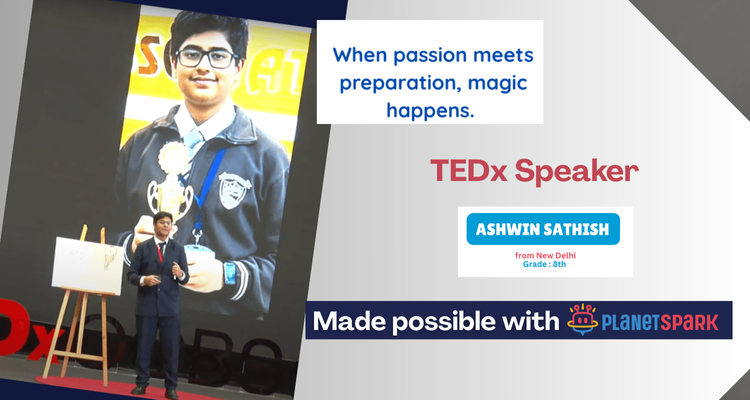
Ashwin Sathish (TEDx Speaker)
Ashwin Sathish, Grade 8 from New Delhi, stood tall as a TEDx Speaker, sparking conversations that truly matter. From classroom confidence to commanding a global stage, his journey reflects the power of voice, vision, and courage.
Dr. Ram Behin (Forbes Conference Speaker)
Dr. Ram's journey from mastering public speaking to making his mark at the Forbes Conference showcases how PlanetSpark transforms passion into impactful communication.
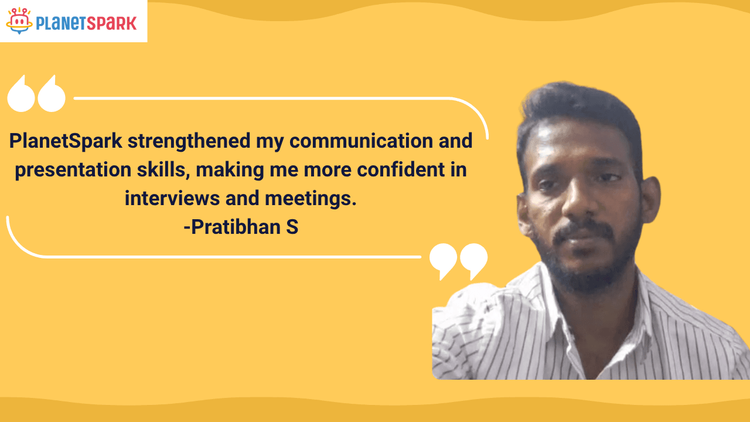
Pratibhan S
PlanetSpark helped me communicate confidently in meetings and interviews, driving real career growth.
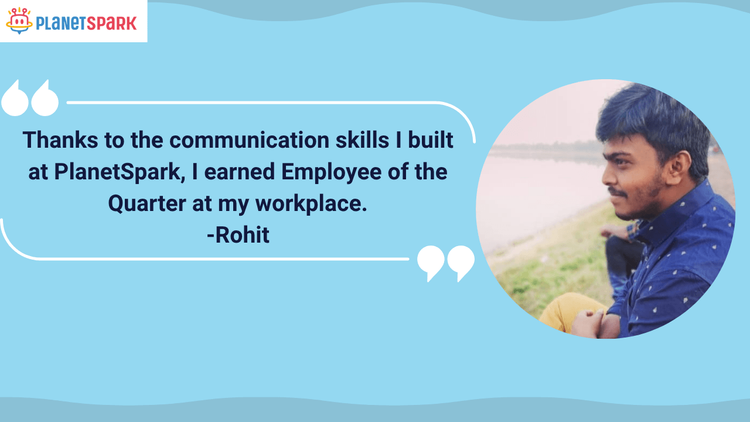
Rohit (Employee of the Quarter)
PlanetSpark helped me communicate more confidently at work, and I was proud to be named Employee of the Quarter.
Making Headlines Nationwide
How Binny Bansal-Backed PlanetSpark Reached Break-Even And Beat The Edtech Blues