
7 English Communication Skills Every Child Needs for Personal Growth
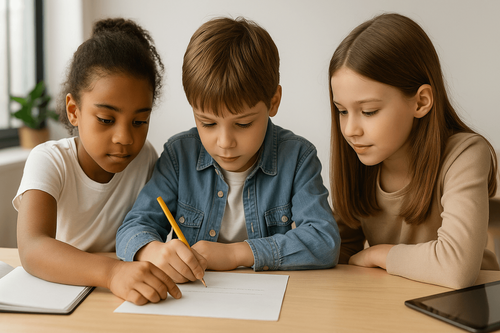

Strong English communication skills help children connect, lead, and grow. Skills like speaking in class, expressing emotions, or understanding others go far beyond vocabulary; they shape how children think, listen, and respond.
When children master communication early, they develop not just verbal fluency, but empathy, problem-solving ability, and emotional intelligence, truly the foundation of skills every child needs for personal growth.
1. Active Listening: The Core of Understanding
Good communication begins not with speaking, but with listening. Children who listen actively absorb ideas better and respond thoughtfully. It’s one of the first english communication skills they should master.
Parents can build this skill through small but powerful daily habits:
- Ask your child to retell a story you’ve just read aloud.
- Encourage them to make eye contact when listening.
- Play “Simon Says” or storytelling chain games that test concentration.
- During family conversations, prompt them gently with “What do you think?” or “Can you add to that?”
Active listening helps children grasp tone, emotion, and context, skills that support both comprehension and empathy. As they grow, this awareness becomes a foundation for leadership and collaboration.
Don’t wait to unlock your child’s writing and speaking confidence!
Enroll now in PlanetSpark’s Class 3 Grammar and Communication Program.
2. Expressive Speaking: Clarity, Tone, and Confidence
Speaking clearly and confidently allows children to share ideas without hesitation. But confidence in speech isn’t about perfection; it’s about practice. Whether introducing themselves or participating in a group discussion, children need opportunities to express their thoughts freely.
Practical ways to nurture this include:
- Hosting short “family speech nights” where each member speaks on a fun topic for one minute.
- Recording a message or short video together to help them hear their own tone and improve pronunciation.
- Using mirror exercises to build awareness of expressions and gestures.
- Encouraging open-ended responses rather than yes/no answers.
These small, consistent activities strengthen articulation, tone control, and presence, core components of english communication skills that help children perform confidently in classrooms and beyond.
3. Non-Verbal Communication: What Words Don’t Say
Children often communicate more through their expressions, gestures, and posture than through words. Teaching them to recognise and use non-verbal cues is essential in building awareness, empathy, and adaptability.
Parents can introduce this skill naturally through observation:
- Ask your child what emotions they see on a character’s face while watching a show.
- Play emotion-guessing games using facial expressions.
- Demonstrate how posture affects confidence, compare standing tall versus slouching.
- Teach them how hand gestures can support clarity while speaking.
These small lessons enhance self-expression and emotional perception, two pillars of children’s personal growth skills that foster better understanding of themselves and others.
4. Reading and Vocabulary Building: Feeding the Mind and Voice
Children who read regularly speak with greater fluency and confidence. Reading builds vocabulary, structure, and imagination, three elements that shape effective communication. Exposure to varied writing styles also teaches how language adapts to purpose and audience.
Here are ways parents can make reading more impactful:
- Create a daily reading routine; 15 minutes of quiet reading before bed works wonders.
- Discuss stories afterward: “What do you think the character learned?”
- Introduce books with strong moral or emotional themes to nurture empathy.
- Use reading journals where kids can summarise or draw what they read.
As children absorb new words, they begin to communicate with more precision and creativity. Encouraging expressive reading aloud also strengthens pronunciation, rhythm, and tone, important components of soft skills for kids aged 6-12 that go beyond academics.
5. Emotional Expression and Empathy: Communication Beyond Words
True communication isn’t just about exchanging information; it’s about connection. Children who learn to express feelings respectfully and recognise emotions in others build compassion, patience, and trust.
To strengthen emotional expression:
- Use “feeling charts” to help children identify emotions in different scenarios.
- Encourage journaling about daily experiences, not just events, but how they felt about them.
- Read stories where characters resolve emotional conflicts and discuss their choices.
- Role-play challenging social situations (“What if your friend forgot your birthday?”) and explore responses.
These life skills activities for kids build emotional balance and kindness, qualities that form the base of building character and resilience in children. Emotional communication makes children self-aware, compassionate, and socially intelligent, qualities that help them succeed in any environment.
6. Collaboration and Team Interaction: Learning to Speak and Listen in Groups
Effective communication involves understanding how to share space and ideas. Team discussions, school projects, and playtime all demand collaboration, a skill that grows through both speaking and listening.
Parents can encourage teamwork through fun, practical tasks:
- Assign family projects like planning a meal or organizing a weekend outing, with each member taking a role.
- Play cooperative board games that require strategy and shared decision-making.
- Encourage group reading or mini debates with friends to teach turn-taking and respect.
- Help them reflect afterward, “What went well in your team?” and “What can we do better next time?”
These small exercises build mutual respect and adaptability. Learning to communicate within groups not only develops leadership but also helps children practise empathy, patience, and self-regulation, core skills every child needs for personal growth.
Don’t wait to unlock your child’s communication and leadership confidence!
Enroll now in PlanetSpark’s Personality Development Program for young learners.
7. Storytelling and Creativity: Turning Thoughts into Impact
One of the most powerful english communication skills is storytelling. It allows children to weave imagination into expression, transforming facts into emotion. Storytelling teaches structure, sequencing, and purpose, skills that enhance writing, conversation, and public speaking.
You can nurture storytelling at home through:
- “One-line stories” where every family member adds a line to create a plot.
- Ask your child to describe their day as a story with a beginning, middle, and end.
- Creating picture-based storytelling cards where children invent tales from random images.
- Encouraging them to share stories from their cultural background or personal experiences.
Storytelling fosters creativity while teaching logic and empathy. Children learn how to persuade, engage, and inspire, abilities that carry into academic writing, friendships, and future leadership.
8. Time, Tone, and Context: The Subtle Art of Communication
Beyond vocabulary and fluency lies a skill many adults still struggle with: understanding when and how to say something. Teaching children to adapt speech to context builds maturity and social intelligence.
Parents can guide this by modelling and discussing scenarios:
- Differentiate between formal and casual tone, how you’d speak to a teacher versus a friend.
- Encourage pauses before answering, to think before speaking.
- Highlight examples from movies or books where the tone changed outcomes.
- Discuss why listening first is sometimes better than reacting quickly.
These lessons in timing and context equip children with strong interpersonal judgment. Over time, they begin to communicate with grace, confidence, and respect, hallmarks of effective communication and emotional growth.
Don’t wait to help your child grow into a confident, kind communicator!
Enroll today in PlanetSpark’s Personality Development and Communication Program.
9. Digital Communication Etiquette: Expressing Responsibly Online
In an age of social media and online learning, digital expression is now part of daily communication. Teaching children digital manners early prevents misunderstandings and promotes healthy interaction.
Guide them with a few essential habits:
- Encourage them to reread messages before sending to ensure politeness.
- Explain the importance of tone and how written words can be easily misunderstood.
- Set time limits for digital engagement and discuss what’s appropriate to share online.
- Teach them to use positive communication even in disagreement.
These parenting tips for life skills development ensure children remain respectful both offline and online. It’s not about restricting communication but helping them use it thoughtfully, a modern extension of english communication skills for the 21st century.
10. Building Confidence through Real-Life Practice
Confidence is built through action, not theory. Encourage your child to apply communication skills in everyday life:
- Ask them to greet guests or answer phone calls.
- Let them order food at a restaurant or introduce themselves to new friends.
- Praise their effort, not just accuracy; confidence grows from encouragement, not correction.
- Give feedback gently, focusing on improvement (“Try slowing down a bit next time”).
These real-life moments reinforce classroom learning. When children see their voice respected, they internalise the belief that communication is power, a bridge to both achievement and empathy.
How Parents Can Reinforce Communication Daily
Parents are the best role models for developing children’s personal growth skills. Your tone, patience, and body language all teach by example. Integrate these practices into your routine:
- Maintain a “talk time” each day where everyone shares one thing they learned.
- Celebrate small communication wins, like speaking politely or listening well.
- Keep devices away during family meals to encourage real conversation.
- Show appreciation when your child expresses thoughts clearly or respectfully.
Such consistent reinforcement helps communication become natural, not forced. Remember, the goal isn’t perfect grammar, it’s confidence, clarity, and connection.
Why English Communication Skills Matter for Personal Growth
Strong communication shapes not just academics but the personality behind it. Children who express ideas well become confident learners, empathetic peers, and independent thinkers. Mastering english communication skills helps them navigate diverse environments and prepares them for future challenges with composure.
From teamwork to public speaking, these habits also foster resilience, adaptability, and emotional intelligence, traits deeply linked with skills every child needs for personal growth. The earlier these skills develop, the easier it becomes for children to integrate them naturally into their behaviour and learning style.
Conclusion
Communication is more than just speaking; it’s how children understand the world, solve problems, and express their individuality. By developing english communication skills, parents empower their children to listen with empathy, speak with purpose, and respond with confidence.
From storytelling to emotional expression, every moment at home can nurture life skills activities for kids that last a lifetime. When communication meets creativity, children gain not just fluency but wisdom, an ability to connect heart and mind.
PlanetSpark helps bridge this journey by transforming everyday conversations into powerful learning experiences. Through interactive lessons, real-time feedback, and guided expression, children master communication that shapes both intellect and character.
Don’t wait to unlock your child’s full communication potential!
Book a free PlanetSpark demo today and help them grow with confidence and clarity.
Frequently Asked Questions
They help children express ideas clearly, build confidence, and form strong relationships, laying the foundation for lifelong success.
Encourage storytelling, role-playing, and open conversations daily to strengthen vocabulary and confidence.
Children as young as four can begin through play, reading aloud, and simple conversations.
They enhance empathy, leadership, and self-expression, core elements of skills every child needs for personal growth.
PlanetSpark uses games, storytelling, and real-world simulations to build fluency, confidence, and emotional intelligence in children aged 6–14.