
Attunement in Communication: Learn Skills with PlanetSpark
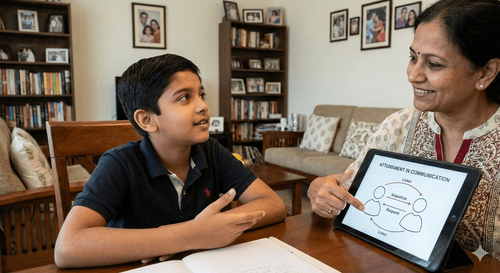

Table of Contents
- Understanding Attunement Definition
- The Science Behind Attunement
- Attunement vs. Interpersonal Attraction Theory
- Key Components of Attuned Communication for Students
- Practical Attunement Activities for Kids
- How Attunement Improves Academic Performance?
- Overcoming Common Attunement Challenges
- The Role of Technology in Learning Attunement
- Attunement Activities Parents Can Practice at Home
- The Long-Term Impact of Attunement Skills
- How PlanetSpark Develops Attunement Skills?
- Building a Foundation of Attunement Communication with Plane
Communication is more than just exchanging words; it's about truly connecting with others. For kids and school students, learning the art of attunement can transform how they interact with friends, teachers, and family members. At PlanetSpark, we believe that understanding the attunement definition is the foundation of effective communication skills that last a lifetime.
Attunement meaning refers to being aware of and responding sensitively to another person's emotions, needs, and perspectives. It's the ability to tune into someone else's feelings and thoughts, creating a genuine connection that goes beyond surface-level conversation. For young learners, mastering this skill opens doors to stronger friendships, better academic collaboration, and improved emotional intelligence.
At PlanetSpark, we integrate attunement principles into our communication curriculum, helping students develop the emotional awareness and interpersonal skills they need to thrive in school and beyond. Our programs are designed specifically for children and teenagers, focusing on practical skills they can use every day.
Understanding Attunement Definition
The attunement definition in communication psychology describes the process of synchronizing one's emotional state with another person. It involves reading verbal and non-verbal cues, showing empathy, and responding appropriately to create meaningful interactions. Think of it as emotional tuning, just like tuning a musical instrument to create harmony.
For students, attunement manifests in several key ways:
- Active Listening: Paying full attention when someone speaks, noticing their tone and body language
- Emotional Recognition: Identifying emotions in themselves and others through facial expressions and voice patterns
- Responsive Communication: Adjusting their communication style based on the other person's emotional state
- Perspective-Taking: Understanding situations from another person's viewpoint
Attunement allows our internal state to shift and resonate with another person's inner world. This resonance creates what he calls the "feeling felt" experience, that profound sense of being understood that every child craves.
The Science Behind Attunement
Research shows that attunement isn't just a soft skill; it has real neurological benefits. When children experience attuned communication, their prefrontal cortex, the brain region responsible for decision-making, problem-solving, and emotional regulation, becomes more developed. This brain development supports:
- Better impulse control
- Enhanced emotional regulation
- Improved social judgment
- Stronger critical thinking skills
Children who grow up with attuned caregivers and educators develop secure attachments, which serve as templates for all future relationships. At PlanetSpark, our communication coaches understand this developmental science and create learning experiences that promote healthy emotional growth.
Discover Your Child's Communication Potential!
Attunement vs. Interpersonal Attraction Theory
While exploring communication concepts, it's helpful to understand how attunement relates to interpersonal attraction theory. Interpersonal attraction theory examines what draws people together and sustains relationships. According to this psychological framework, several factors influence how we form connections:
Attunement serves as the bridge that makes interpersonal attraction theory come alive. While attraction theory explains what initially draws people together, attunement is the skill that sustains those connections. When students practice attuned communication, they:
- Create deeper bonds beyond surface-level similarities
- Navigate conflicts with empathy and understanding
- Build trust through consistent emotional responsiveness
- Develop authentic relationships that withstand challenges
At PlanetSpark, we teach students how to leverage both concepts, understanding what attracts people to each other while developing the attunement skills to maintain meaningful friendships and working relationships.
Key Components of Attuned Communication for Students
Developing attunement in communication involves several interconnected skills that PlanetSpark focuses on in our curriculum:
1. Non-Verbal Communication Awareness
Much of attunement happens without words. Students learn to:
- Read facial expressions accurately
- Understand body language signals
- Recognize tone of voice variations
- Notice personal space preferences
2. Emotional Vocabulary Development
Kids need words to describe what they feel and observe. We help them:
- Expand their emotional vocabulary beyond basic feelings
- Label complex emotions accurately
- Express feelings constructively
- Validate others' emotional experiences
3. Perspective-Taking Exercises
Understanding another person's viewpoint is central to attunement. Students practice:
- Imagining how others might feel in different situations
- Considering different cultural and personal perspectives
- Asking curious questions rather than making assumptions
- Recognizing that people can experience the same event differently
Transform Your Child's Communication Skills!
4. Mirroring and Reflection
Attunement often involves subtle mirroring, matching someone's emotional state appropriately. This doesn't mean mimicking, but rather:
- Showing facial expressions that reflect understanding
- Using a tone that matches the seriousness of the situation
- Providing responses that acknowledge the other person's feelings
- Creating a sense of "I'm with you" in the conversation
5. Timing and Responsiveness
Good attunement requires knowing when and how to respond. Students learn:
- When to speak and when to listen silently
- How to give others space to process emotions
- Recognizing when someone needs support versus problem-solving
- Balancing their own needs with others' needs
Practical Attunement Activities for Kids
At PlanetSpark, we incorporate engaging activities that make learning attunement fun and practical:
Emotion Charades
Students act out different emotions while peers guess and discuss what facial expressions and body language reveal the feeling. This builds recognition skills and emotional vocabulary.
Story Perspective Switching
After hearing a story, students retell it from different characters' viewpoints, exploring how the same events feel different to different people.
Active Listening Pairs
In pairs, one student shares something meaningful while the other practices attentive listening without interrupting, then reflects back what they heard and noticed about emotions.
Conflict Resolution Role-Play
Students practice navigating disagreements using attuned communication, learning to acknowledge feelings before problem-solving.
Empathy Journals
Kids write about times when someone understood them deeply, or when they understood someone else, reflecting on what made those moments special.
Give Your Child the Gift of Confident Communication!
How Attunement Improves Academic Performance?
The benefits of attuned communication extend far beyond social situations. Students with strong attunement skills often show:
Enhanced Collaboration
Group projects run more smoothly when students can read each other's communication styles and adjust accordingly. They resolve conflicts faster and work more efficiently as a team.
Better Teacher-Student Relationships
Students who can attune to their teachers' expectations and communication styles often perform better academically. They ask for help more effectively and receive feedback more constructively.
Improved Public Speaking
Attunement helps young speakers read their audience, adjust their presentation style, and connect emotionally with listeners, critical skills for effective presentations and debates.
Stronger Critical Thinking
Understanding multiple perspectives enhances analytical skills. Students become better at evaluating arguments, considering evidence from different angles, and forming well-rounded opinions.
Overcoming Common Attunement Challenges
Every child faces obstacles in developing attuned communication. Here are common challenges and how PlanetSpark addresses them:
Challenge: Self-Centeredness
Young children naturally focus on their own needs and perspectives. Through guided practice and age-appropriate activities, students gradually expand their awareness to include others' experiences.
Challenge: Overstimulation
In noisy, busy environments, picking up on subtle emotional cues becomes difficult. We teach students strategies for focusing attention and creating mental space for attunement.
Challenge: Emotional Overwhelm
When children feel strong emotions themselves, attuning to others becomes harder. PlanetSpark's program includes self-regulation techniques that help students manage their own feelings first.
Challenge: Cultural Differences
Emotional expression varies across cultures. We help students recognize these differences and avoid making assumptions based on their own cultural lens.
Build Social-Emotional Competence!
The Role of Technology in Learning Attunement
In our digital age, PlanetSpark recognizes both the challenges and opportunities technology presents for attunement development:
Challenges:
- Reduced face-to-face interaction time
- Difficulty reading non-verbal cues in digital communication
- Distraction from device notifications
- Less practice with real-time emotional responsiveness
Opportunities:
- Video calls allow practice with diverse communication partners
- Digital storytelling builds empathy through different narratives
- Online collaboration requires explicit communication skills
- Global connections expose students to varied perspectives
Our hybrid learning model at PlanetSpark balances technology use with face-to-face practice, ensuring students develop attunement skills across all communication contexts.
Attunement Activities Parents Can Practice at Home
Learning attunement doesn't stop in the classroom. Here are strategies parents can use:
- Family Check-Ins: Regularly ask each family member how they're feeling and what they need
- Emotion Labeling: Help children name their emotions throughout the day
- Storytelling Sessions: Discuss characters' feelings and motivations in books and movies
- Modeling Attunement: Demonstrate attuned listening when your child shares problems
- Mindfulness Moments: Practice being present together without distractions
At PlanetSpark, we provide parents with resources and guidance to reinforce communication skills at home, creating a consistent learning environment.
Unlock Confident, Connected Communication!
The Long-Term Impact of Attunement Skills
When students develop strong attunement abilities early, they carry these skills throughout life:
- Stronger Personal Relationships: Deep, authentic friendships and romantic partnerships
- Professional Success: Better teamwork, leadership, and client relations
- Mental Health: Lower anxiety and depression rates due to secure attachment patterns
- Conflict Resolution: Ability to navigate disagreements constructively
- Emotional Intelligence: High EQ correlates with success across life domains
- Community Contribution: More empathetic citizens who build inclusive communities
By investing in your child's attunement development today through programs like PlanetSpark, you're setting them up for success in every area of life.
How PlanetSpark Develops Attunement Skills?
PlanetSpark's comprehensive communication program integrates attunement training throughout our curriculum:
Structured Lessons: Age-appropriate modules focusing on specific attunement competencies
Live Practice Sessions: Small group interactions where students practice skills with peers under expert guidance
Personalized Feedback: Coaches provide individual feedback on communication strengths and growth areas
Real-World Application: Projects and presentations that require students to apply attunement in meaningful contexts
Progress Tracking: Regular assessments help students and parents see development over time
Expert Instructors: Our coaches are trained in child development and communication psychology, understanding both the attunement meaning and how to teach it effectively.
Building a Foundation of Attunement Communication with PlanetSpark
Understanding attunement meaning and applying it in daily interactions is one of the most valuable skills children can develop. Unlike academic subjects that have clear right and wrong answers, attunement requires ongoing practice, self-reflection, and genuine care for others.
The attunement definition, being aware of and responsive to another person's emotional state, provides the foundation for all successful communication. When combined with understanding interpersonal attraction theory, students gain insight into both what draws people together and how to maintain those connections through attuned responsiveness.
At PlanetSpark, we're committed to helping every child develop these essential communication competencies. Our evidence-based curriculum, experienced coaches, and engaging learning environment create the perfect space for students to discover their communication potential. From building emotional vocabulary to practicing perspective-taking, we guide students through every aspect of becoming attuned communicators.
Whether your child is naturally outgoing or more reserved, whether they're struggling with friendships or looking to enhance existing skills, attunement training provides benefits that extend far beyond childhood. These are skills for life, skills that will serve them in school, future careers, relationships, and community involvement.
By choosing PlanetSpark, you're not just investing in communication classes; you're investing in your child's ability to connect deeply with others, navigate complex social situations with confidence, and build the emotional intelligence that predicts success across all life domains. Join thousands of families who have discovered the PlanetSpark difference in communication education.
Frequently Asked Questions
Attunement in communication is the ability to recognize, understand, and respond sensitively to another person’s emotions, needs, and perspectives. It helps create meaningful and emotionally connected interactions.
Attunement helps students build strong friendships, collaborate better in class, regulate emotions, and improve communication with teachers and peers, supporting both academic and social success.
Empathy is understanding another person’s feelings, while attunement goes further by actively responding in a way that makes the other person feel understood and emotionally supported
Yes. Attunement is a learnable skill. Through guided practice, emotional vocabulary development, and active listening exercises, children can strengthen attuned communication over time.