
How to Build Trust and Accountability in Teams


Table of Contents
- What Does It Mean to Build Trust and Accountability in Teams
- Why Trust and Accountability Matter in Teams
- Key Behaviors That Foster Trust in Teams
- The Five Behaviors Model for Building Trust and Accountabili
- Practical Strategies to Apply the Five Behaviors Model in Yo
- Measuring Trust and Accountability in Teams
- How Accountability Strengthens Team Trust
- Real-World Examples of Teams With High Trust and Accountabil
- Learn Leadership and Team Skills With PlanetSpark
Strong teams are built on a foundation of trust. When team members trust one another, they collaborate more effectively, communicate openly, and hold themselves accountable for achieving shared goals. Learning how to build trust within teams is not just a leadership skill, it’s a critical factor that drives productivity, morale, and long-term organizational success.
In this blog, we will explore practical strategies to build trust within teams, foster accountability, and create a culture where everyone feels empowered, valued, and motivated to perform at their best.
What Does It Mean to Build Trust and Accountability in Teams?
Building trust in teams means creating an environment where members feel confident that their colleagues are reliable, honest, and committed to shared goals. Trust goes beyond simply liking or respecting team members, it’s about believing that everyone will act with integrity, communicate openly, and support one another consistently.
Accountability is closely linked to trust. When team members are accountable, they take responsibility for their actions, meet commitments, and own up to mistakes. Accountability reinforces trust because team members know they can rely on each other to follow through, uphold standards, and contribute fairly to team objectives.
See how PlanetSpark helps leaders and professionals foster trust, accountability, and collaboration in their teams.
Book your free demo now!
Key Elements of Trust and Accountability in Teams:
Reliability: Consistently delivering on commitments and meeting deadlines.
Integrity: Acting ethically, honestly, and transparently in all interactions.
Open Communication: Sharing ideas, feedback, and concerns without fear of judgment.
Empathy: Understanding and valuing others’ perspectives and experiences.
Ownership: Taking responsibility for both successes and setbacks.
Example: In a project team, if every member communicates openly about progress, admits mistakes early, and follows through on responsibilities, the team naturally develops a high level of trust. Conversely, missed deadlines, hidden mistakes, or lack of communication erodes trust and reduces overall accountability.
By actively fostering these behaviors, leaders and team members create a culture where trust and accountability are the norms, enabling teams to perform at their best.
Why Trust and Accountability Matter in Teams
Trust and accountability are the backbone of any high-performing team. Without them, collaboration falters, communication breaks down, and team morale suffers. When teams operate with a foundation of trust, members feel safe sharing ideas, taking risks, and holding themselves and each other accountable for results.
Key Reasons Trust and Accountability Are Crucial:
Enhances Collaboration: Teams with high trust communicate openly, share knowledge freely, and work together to solve problems efficiently.
Example: A software development team that trusts each other can quickly identify and fix bugs collaboratively, rather than assigning blame.Boosts Productivity: When team members are accountable, deadlines are met, tasks are completed reliably, and workflows remain smooth.
Example: In a marketing team, accountability ensures campaigns are executed on time, maintaining client satisfaction and revenue goals.Fosters Innovation: Trust creates a safe environment for sharing ideas without fear of criticism, encouraging creativity and innovative solutions.
Example: A product design team where members trust each other can brainstorm unconventional ideas that lead to breakthrough features.Improves Decision-Making: Teams with mutual trust can make informed decisions quickly, relying on each other’s expertise and input.
Example: In a crisis situation, a trusted team can evaluate options objectively and act decisively without second-guessing each other.Strengthens Employee Engagement and Retention: Accountable and trusting teams create positive workplace culture, where employees feel valued, motivated, and committed to the organization.
In essence, learning how to build trust and foster accountability transforms team dynamics, creating a culture of reliability, openness, and high performance.

Key Behaviors That Foster Trust in Teams
Building trust within a team doesn’t happen overnight. It requires consistent behaviors and a conscious effort from every team member and leader. The following key behaviors help create a culture of trust and accountability:
Open and Honest Communication: Share information transparently, express concerns respectfully, and provide constructive feedback. Teams trust members who communicate clearly and honestly.
Example: A team leader regularly updates the team on project status, potential risks, and decisions, ensuring everyone is informed and aligned.Consistency and Reliability: Follow through on commitments and maintain consistent behavior. Reliability shows that team members can depend on each other.
Example: A project manager consistently meets deadlines and delivers quality work, setting a standard for the team.Empathy and Emotional Intelligence: Understand and respect others’ perspectives, feelings, and challenges. Empathy strengthens relationships and trust.
Example: During a stressful period, a leader acknowledges team members’ workload and offers support or flexibility.Recognition and Support: Appreciate contributions and celebrate successes. Supporting peers during challenges reinforces mutual trust.
Example: A team member publicly acknowledges a colleague’s effort in completing a critical report, fostering positive morale.Taking Responsibility for Mistakes: Admit errors openly and learn from them. Accountability encourages a culture where mistakes are treated as learning opportunities, not failures.
Example: When a client proposal is delayed, the responsible team member owns the mistake, explains corrective steps, and prevents recurrence.Active Listening: Pay full attention to colleagues’ ideas and feedback, demonstrating respect and valuing their input.
Example: During a brainstorming session, a team leader listens carefully without interrupting and incorporates suggestions into the plan.
By practicing these behaviors consistently, teams can develop a strong foundation of trust and accountability, enabling smoother collaboration, higher performance, and stronger workplace relationships.
Discover practical strategies and personalized guidance to build high-trust, high-performance teams.
Book a demo to experience it firsthand!
The Five Behaviors Model for Building Trust and Accountability
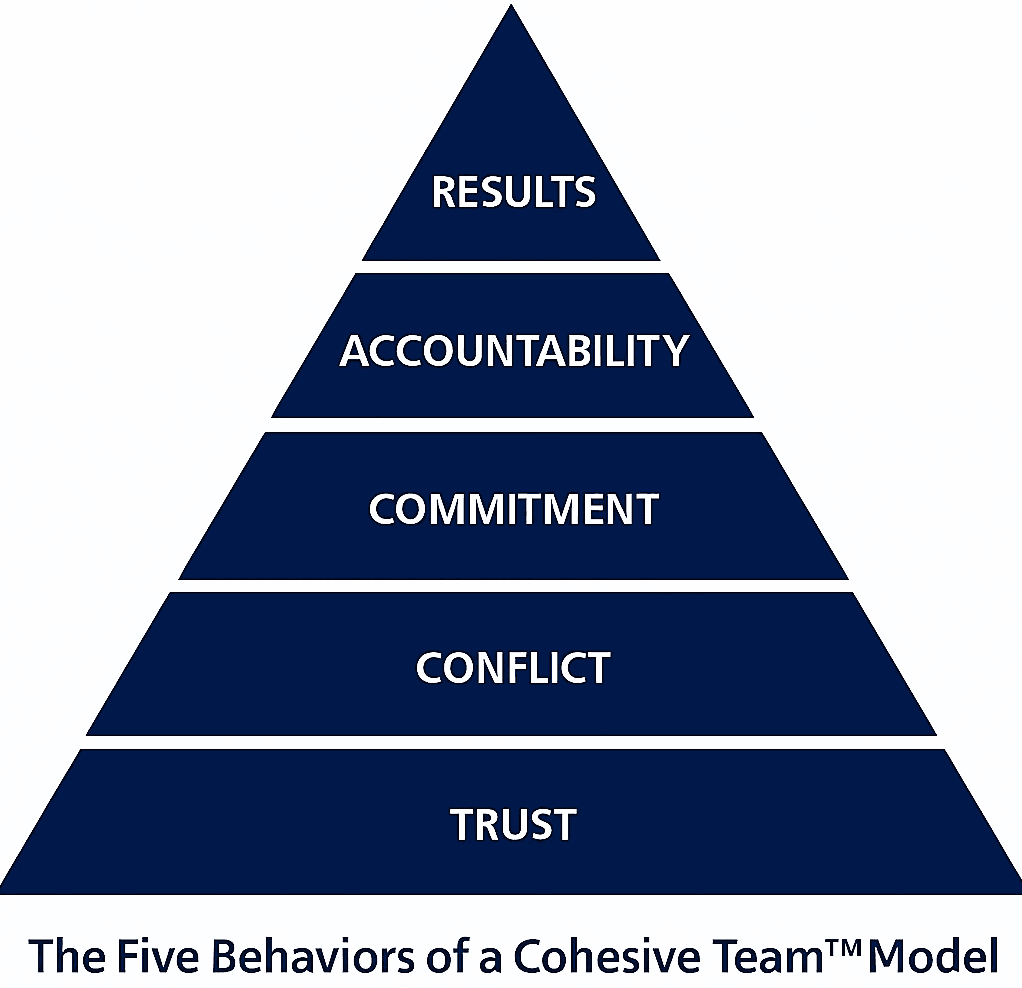
The Five Behaviors Model by Patrick Lencioni is a proven framework that helps teams build trust, foster accountability, and achieve results. It emphasizes five interconnected behaviors that are essential for high-performing teams:
Trust One Another
Team members are genuinely transparent and honest with one another, creating a safe environment for collaboration.
Example: Sharing challenges openly without fear of judgment builds credibility and strengthens team bonds.
Engage in Conflict Around Ideas
Teams commit to healthy debates and discussions to explore different perspectives and generate the best solutions.
Example: Brainstorming sessions where diverse opinions are encouraged lead to innovative strategies.
Commit to Decisions
Even if not everyone agrees initially, team members commit to collective decisions and move forward together.
Example: After a discussion on project priorities, the team aligns on a single plan of action and supports it fully.
Hold One Another Accountable
Teams establish clear expectations and hold each other responsible for follow-through.
Example: Colleagues remind each other of deadlines and standards respectfully, ensuring consistency and reliability.
Focus on Achieving Collective Results
Teams prioritize group goals over individual interests, ensuring that collaboration leads to measurable outcomes.
Example: Celebrating team achievements, rather than individual accolades, reinforces a culture of shared success.
By integrating these five behaviors into daily practices, teams can build trust, maintain accountability, resolve conflicts constructively, and achieve exceptional results. This model serves as a roadmap for creating cohesive, high-performing teams that thrive on mutual respect and shared responsibility.
Practical Strategies to Apply the Five Behaviors Model in Your Team
Understanding the Five Behaviors Model is one thing, applying it effectively is another. Here’s how teams can translate the model into actionable practices that build trust, foster accountability, and drive results:
1. Trust One Another: Build Vulnerability-Based Trust
Actionable Strategy: Encourage team members to share experiences, challenges, and lessons learned openly. Create opportunities for personal storytelling in team meetings or workshops.
Tip: Start small with low-stakes situations and gradually tackle more complex issues.
Example: During weekly team huddles, each member shares one success and one challenge from the past week, fostering transparency and empathy.
2. Engage in Conflict Around Ideas: Promote Healthy Debate
Actionable Strategy: Establish norms for constructive conflict. Encourage debates focused on ideas, not personalities.
Tip: Use structured frameworks such as “pros and cons lists” or “devil’s advocate” roles to guide discussions.
Example: In a strategy meeting, team members are asked to critique proposed marketing ideas constructively, helping refine the plan without personal criticism.
3. Commit to Decisions: Align and Own Collective Choices
Actionable Strategy: After discussions, explicitly confirm team decisions and responsibilities. Ensure everyone understands their role in implementing the decision.
Tip: Document decisions and action steps in shared tools like project management platforms or meeting notes for clarity.
Example: After choosing a new project workflow, all team members sign off on deadlines and deliverables, reinforcing shared commitment.
4. Hold One Another Accountable: Encourage Peer Responsibility
Actionable Strategy: Foster a culture where team members respectfully remind each other of deadlines and standards. Make accountability a collective responsibility, not just a manager’s job.
Tip: Pair accountability with support, offer help when someone struggles to meet expectations.
Example: In a product development team, members regularly check progress with peers and offer assistance to ensure deadlines are met without micromanagement.
5. Focus on Achieving Collective Results: Prioritize Team Goals
Actionable Strategy: Define clear, measurable team goals and regularly track progress. Reward group achievements alongside individual contributions.
Tip: Visual dashboards and regular team updates help keep the focus on collective success.
Example: A sales team sets a quarterly revenue goal and celebrates milestones together, reinforcing that the team’s success matters more than individual accolades.
Pro Tip: Integrating these behaviors consistently requires patience and persistence. Start by emphasizing one behavior at a time and gradually build momentum. Over time, these strategies become part of the team’s culture, making trust, accountability, and collective results second nature.
Learn how PlanetSpark equips managers to enhance team communication, ownership, and accountability.
Schedule your live demo today!
Measuring Trust and Accountability in Teams
Building trust and accountability is crucial, but leaders also need ways to assess whether these behaviors are taking root. Measuring trust and accountability helps identify strengths, gaps, and areas for improvement. Here are practical methods to track progress:
1. Conduct Regular Team Surveys
What to Measure: Team members’ perceptions of reliability, openness, and support within the group.
How to Use It: Anonymous surveys can gauge trust levels and highlight areas where accountability may be lacking.
Example: Ask team members to rate statements like “I can rely on my teammates to follow through on commitments” or “I feel comfortable sharing challenges without judgment.”
2. Track Commitment and Follow-Through
What to Measure: How consistently team members meet deadlines and fulfill responsibilities.
How to Use It: Use project management tools or shared trackers to monitor task completion rates and follow-ups.
Example: If 95% of tasks are completed on time with minimal reminders, it indicates a high level of accountability.
3. Observe Communication Patterns
What to Measure: Frequency and quality of open communication, transparency, and constructive feedback.
How to Use It: During meetings or collaborative sessions, track whether team members share ideas, ask questions, and voice concerns freely.
Example: Teams where members proactively discuss challenges and offer solutions demonstrate higher trust levels.
4. Evaluate Conflict Resolution
What to Measure: How conflicts are handled, whether they focus on ideas or turn personal.
How to Use It: Observe whether team members engage in healthy debate without fear, blame, or avoidance.
Example: A team that debates strategy options openly and reaches consensus quickly shows trust and accountability in action.
5. Monitor Collaboration and Peer Support
What to Measure: Willingness to help colleagues and work together toward team goals.
How to Use It: Track instances of knowledge sharing, joint problem-solving, and assistance offered without being asked.
Example: In a design team, members offering help to meet deadlines or improve project quality reflects strong mutual trust.
6. Review Performance and Results
What to Measure: Collective outcomes vs. individual success. Are team goals being met consistently?
How to Use It: Compare project results against objectives and observe whether success is celebrated collectively.
Example: A sales team that consistently meets its quarterly targets while recognizing team contributions shows alignment with shared accountability.
Signs of Strong Trust and Accountability:
Team members admit mistakes without fear of blame.
Decisions are supported even if not everyone agrees initially.
Collaboration happens naturally, with peers holding each other accountable.
Communication is transparent, constructive, and frequent.
Team goals take precedence over individual agendas.
How Accountability Strengthens Team Trust
Accountability and trust are deeply intertwined. When team members consistently take responsibility for their actions, meet commitments, and support one another, trust naturally grows. Here’s how accountability reinforces strong team dynamics:
1. Relationship Between Accountability and Reliability
Reliability is the backbone of trust. When team members hold themselves accountable, they follow through on tasks, meet deadlines, and uphold commitments. This reliability signals to colleagues that they can be depended upon, which strengthens confidence in each other.
Example: In a software development team, a developer who consistently completes assigned modules on time and reports progress builds trust with teammates who rely on those modules to continue their work.
2. Encouraging Ownership and Responsibility
Accountability encourages team members to take ownership of their work. When individuals accept responsibility for successes and failures alike, it reduces blame-shifting and fosters a culture of mutual respect. Ownership also motivates proactive problem-solving and thoughtful decision-making.
Example: If a marketing analyst notices an error in campaign data, they report it immediately and propose corrective actions. Their willingness to own the mistake reinforces trust among team members and leadership.
3. Impact on Team Morale and Performance
Teams that value accountability experience higher morale and improved performance. When everyone knows their peers will deliver on promises and contribute fairly, collaboration becomes smoother, stress decreases, and overall engagement rises. This positive atmosphere further strengthens trust and commitment.
Example: A project team that consistently meets deadlines and openly supports one another experiences fewer conflicts, faster problem-solving, and higher productivity.
4. Examples of Accountable vs. Non-Accountable Teams
| Team Type | Behavior | Trust Outcome |
|---|---|---|
| Accountable Team | Members admit mistakes, meet commitments, support peers | High trust, strong collaboration, efficient performance |
| Non-Accountable Team | Misses deadlines, hides mistakes, blames others | Low trust, poor communication, reduced productivity and morale |
By embedding accountability in daily practices, teams create a self-reinforcing cycle: reliability builds trust, trust encourages openness, and openness strengthens collaboration and performance. Accountability isn’t just a task, it's a key driver of team cohesion and success.
Real-World Examples of Teams With High Trust and Accountability
Understanding trust and accountability conceptually is important, but seeing how high-performing teams implement these principles in real life can be even more impactful. Here are some illustrative examples and scenarios:
1. Case Studies and Scenarios Demonstrating Trust-Building in Action
Scenario 1: Agile Software Development Team
An Agile development team holds daily stand-up meetings where each member reports progress, obstacles, and upcoming tasks. One developer encounters a bug that could delay the sprint. Instead of hiding it, they raise it during the meeting and propose a solution. The team collaboratively adjusts priorities and resolves the issue quickly.
Outcome: Open communication, shared problem-solving, and accountability strengthen trust, enabling faster delivery and smoother collaboration.
Scenario 2: Cross-Functional Product Launch Team
A product launch involves marketing, design, and engineering teams. Each department has clear roles, timelines, and responsibilities. Team members regularly check in on one another’s progress and provide support where needed. When delays occur, they are addressed constructively, focusing on solutions rather than blame.
Outcome: Shared ownership of successes and challenges builds mutual respect, enhancing both trust and accountability across the teams.
Scenario 3: Remote Project Team
A fully remote team relies on asynchronous communication tools. Despite geographical distance, team members commit to regular updates, transparency, and proactive check-ins. Mistakes are openly discussed, and lessons learned are documented for future reference.
Outcome: Even in a remote setting, consistent accountability fosters trust, collaboration, and engagement.
2. Examples of Companies Fostering Trust-Driven Cultures
Google – Psychological Safety and Open Communication
Google’s Project Aristotle study revealed that the most effective teams weren’t those with the highest-performing individuals, but those with psychological safety. Team members felt safe sharing ideas, admitting mistakes, and asking questions, creating a culture of trust and accountability.
Netflix – Freedom and Responsibility Culture
Netflix emphasizes a culture of freedom paired with responsibility. Employees are trusted to make decisions independently but are accountable for results. This approach encourages ownership, transparency, and high performance, strengthening trust across teams.
Pixar – Collaborative Creativity
At Pixar, team members are encouraged to give and receive honest feedback during the creative process. Leadership fosters an environment where ideas are challenged respectfully and accountability is shared. This collaborative approach ensures high-quality outcomes while building trust among creative teams.
Patagonia – Values-Driven Accountability
Patagonia promotes accountability through clear values and ethical standards. Employees are empowered to take ownership of decisions, and transparency is a key principle. Teams are trusted to act responsibly and support one another, which reinforces a strong culture of mutual trust.
Key Takeaways From Real-World Examples:
Trust grows when mistakes are openly acknowledged and addressed constructively.
Clear responsibilities and accountability reinforce reliability.
Psychological safety, transparency, and support are central to high-trust cultures.
Shared success and collective problem-solving strengthen both trust and performance.

Learn Leadership and Team Skills With PlanetSpark
Building trust and accountability isn’t just for corporate teams, it’s a critical life skill that children and young learners can benefit from early. PlanetSpark offers courses that help kids develop essential communication, collaboration, and leadership skills, laying the foundation for high-performing teams in the future.
How PlanetSpark Helps Develop Team Skills:
Interactive 1:1 Sessions: Personalized guidance ensures children understand the value of trust, responsibility, and accountability.
Collaborative Activities: Fun, group-based exercises teach kids how to communicate openly, solve problems together, and support peers.
Real-Time Feedback: Continuous feedback encourages reflection, ownership of actions, and improvement—mirroring accountability in real teams.
SparkX AI Analysis: Personalized performance insights help learners recognize strengths and areas for growth in collaboration and communication.
Gamified Learning: Rewards and challenges promote engagement, making lessons on trust, responsibility, and teamwork memorable and practical.
By cultivating these skills early, PlanetSpark equips children not only to excel academically but also to thrive in future team environments, whether at school projects, sports, or eventually in the workplace.
Take the first step: Encourage your child to learn, collaborate, and grow with PlanetSpark, where trust, accountability, and leadership skills come to life in every class.
Conclusion: Building Trust and Accountability Transforms Teams
Trust and accountability are the cornerstones of high-performing teams. When team members communicate openly, take ownership of their actions, and support one another, collaboration becomes seamless, innovation thrives, and goals are achieved more efficiently.
By practicing key behaviors such as honesty, reliability, empathy, and active listening, and applying frameworks like the Five Behaviors Model, leaders and team members can create a culture where trust and accountability are not just ideals but daily practices.
Frequently Asked Questions
Trust is the confidence team members have in each other’s reliability and integrity. Accountability is the practice of taking responsibility for one’s actions and commitments. Both reinforce each other—reliable, accountable team members build trust naturally.
Leaders can model transparency, encourage open communication, recognize contributions, support team members, and admit mistakes. Leading by example sets the standard for the entire team.
Open communication, ownership of tasks, meeting deadlines, taking responsibility for mistakes, and supporting peers are key accountability behaviors.
Yes. Remote teams can build trust by maintaining regular updates, using collaborative tools, encouraging transparency, and creating safe spaces for sharing challenges and ideas.
You can measure trust and accountability through surveys, task completion rates, communication patterns, conflict resolution effectiveness, and performance against collective team goals.