
How Kids Can Master Communication in Everyday Life


Table of Contents
- Real-Life Situations : Where Kids Need Strong Communication
- What is Effective Communication?
- 10 Examples of Communication Situations for Students
- What Does "Communication in the Workplace" Mean?
- 4 Real-Life Examples of Effective Communication in Workplace
- Communication in Everyday Life
- Real-Life Example of the Communication Process
- Effective Communication Example Sentences
- Communication Scenarios for Students
- How to Improve Communication (Step by Step Plan)
- Daily 10-Minute Practice Routine
- Communication and Problem Solving
- Real Life Examples of Effective Communication
- Mini Scripts Students Can Copy
- Communication Checklist for Students
- About PlanetSpark : Communication Skills
- Conclusion
Imagine a world where children speak confidently, share ideas fearlessly, and solve problems without confusion. Communication isn't just talking, it's how kids build friendships, express emotions, handle conflicts, and grow into strong thinkers. In real life situations, whether asking a doubt in class, explaining a project, or working in a group, communication defines how they connect and succeed.
In this blog, you will explore practical real-life communication situations, simple examples, and effective ways to improve speaking skills. And here’s the best part you’ll discover how PlanetSpark helps children communicate confidently through interactive learning, real-world conversation practice, and professional coaching that shapes their overall personality and fluency.
Real-Life Situations : Where Kids Need Strong Communication Skills
Communication happens everywhere, not only in English class. These situations make communication real for learners.
1. Asking Questions in Class
Kids need to know:
How to ask politely
How to express doubt without fear
How to clarify when confused
Example sentence:
“Teacher, I did not understand this. Can you explain again please?”
Boost your child’s confidence today — book a free 1-to-1 communication demo class!
2. Making New Friends
Communication builds friendships. Kids learn to:
Introduce themselves confidently
Ask questions to know others
Share interests respectfully
Example conversation:
“Hi, I am Aarav. Do you want to play with me after lunch?”
3. Group Projects and Teamwork
Children must:
Share ideas
Listen to others
Give and receive feedback
Divide tasks
Example script:
“Let us work together. I will draw the poster and you can write the title.”
4. Speaking During School Assemblies
Public speaking builds courage.
Students learn to:
Speak loud and clear
Use eye contact
Keep sentences simple
5. Handling Arguments
Kids often disagree. Good communication helps them solve problems.
Sentence model:
“I feel upset because I was not included. Can we talk and solve this?”
6. Talking to Teachers or Parents About Problems
Every student will face challenges. Communication helps them seek help.
Example:
“Mom, I am worried about my maths test. I need help with fractions.”

7. Sharing Opinions During Discussions
Kids learn to express their views without hurting others.
Example sentence:
“I think reading is fun because stories take us to new places.”
8. Everyday Greetings and Manners
Good communication includes polite words like:
Please
Thank you
Sorry
Excuse me
9. Classroom Participation
Children express ideas during:
Debates
Quizzes
Science expos
Art festivals
10. Digital & Online Communication
Kids should know:
How to write respectful messages
How to avoid misunderstandings
How to stay safe online
What is Effective Communication?
Effective communication means:
Speaking clearly
Listening carefully
Using kind and polite words
Staying calm
Sharing ideas
Asking questions
It means the message is understood properly.
10 Examples of Communication Situations for Students
1. Asking for help with homework
Situation: You didn’t understand a maths question.
Example:
“Ma’am, can you please explain question number 3 again? I didn’t understand the steps you used.”
2. Talking to a new classmate
Situation: A new student joins your class.
Example:
“Hi, I’m Aarav. What’s your name? Would you like to sit with us during lunch?”
3. Giving a speech in morning assembly
Situation: You are chosen to speak about “Discipline.”
Example:
“Good morning respected teachers and dear friends. Today I will speak about why discipline matters in our daily life…”
4. Working in group projects
Situation: You plan a group presentation.
Example:
“Let’s divide the work. I will do the introduction, Riya will make the charts, and Rohit will explain the conclusion.”
5. Telling a story to friends
Situation: Sharing an interesting story.
Example:
“You won’t believe what happened yesterday! My dog hid my shoes and we searched for an hour!”
6. Apologising when wrong
Situation: You accidentally broke someone’s pencil.
Example:
“I’m really sorry that I broke your pencil. I’ll buy you a new one tomorrow.”
7. Asking permission to borrow something
Situation: You need glue or scissors.
Example:
“Can I please borrow your glue? I need it to complete the project. I’ll return it in a minute.”
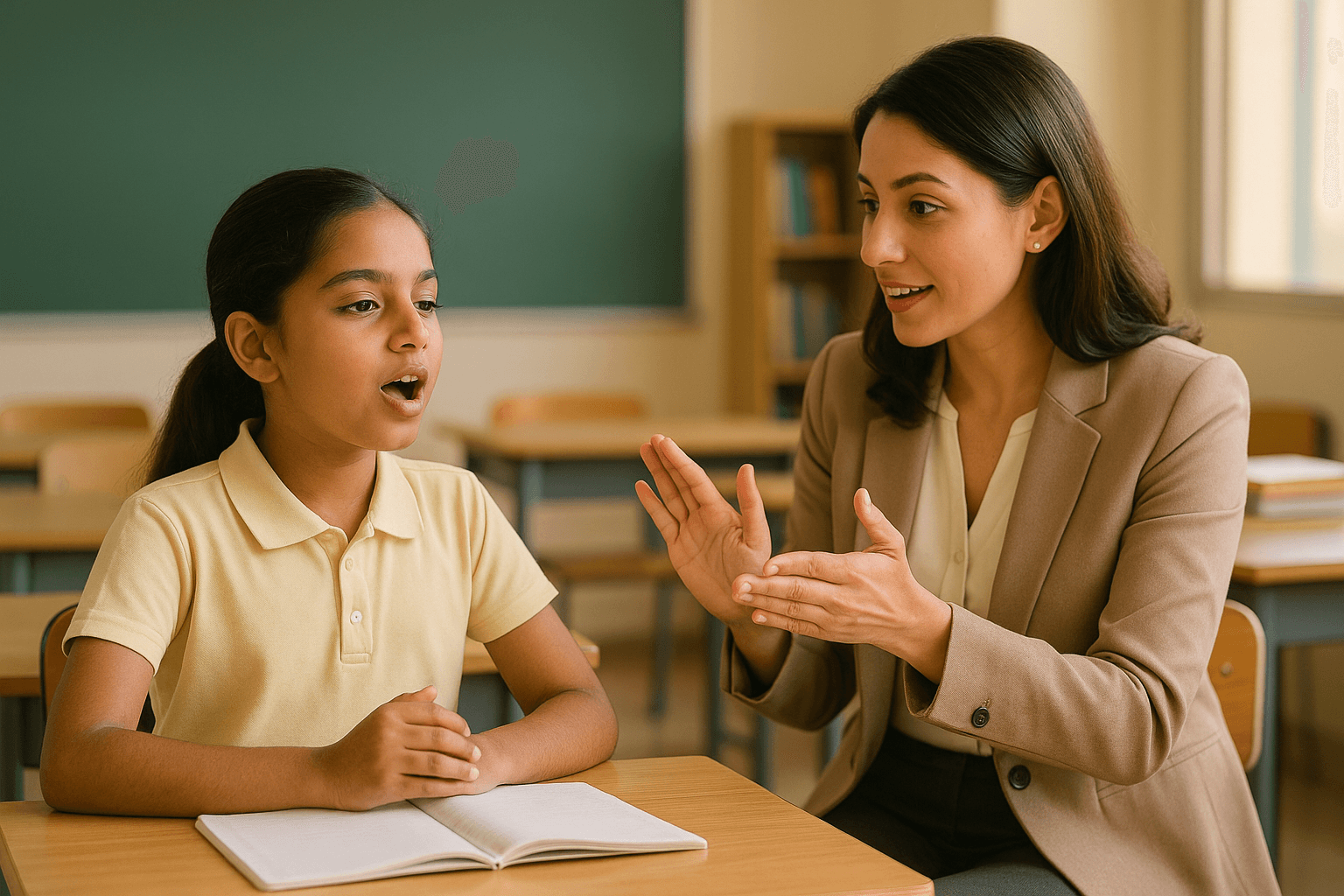
8. Explaining a doubt to the teacher
Situation: You are confused about a concept.
Example:
“Ma’am, I don’t understand how to find the area of a triangle. Can you explain it once more?”
9. Answering questions in class
Situation: Teacher asks a question about a lesson.
Example:
“The answer is photosynthesis. Plants make their own food using sunlight.”
10. Discussing plans for an event
Situation: Planning for a class function.
Example:
“Let’s decorate the board with charts, bring balloons, and prepare a welcome song. We should also get the speakers ready.”
What Does "Communication in the Workplace" Mean?
Even adults communicate all the time at work.
Communication in the workplace means:
Talking to teammates
Sharing ideas in meetings
Solving problems together
Writing emails clearly
Asking questions politely
Kids who build strong speaking skills will grow into confident professionals.
Want your child to speak clearly in real-life situations? Explore a free trial class now
4 Real-Life Examples of Effective Communication in Workplaces
Communication in the workplace means how people talk, share ideas, and work together in offices, schools, shops, hospitals, or any place where people do jobs.
Imagine your class is like a workplace:
You talk to your teacher (like talking to your boss).
You work with classmates (like working with teammates).
You discuss problems, make plans, and solve them together.
So, communication in the workplace is all about:
Speaking clearly
Listening carefully
Sharing ideas
Understanding others
Working as a team
Communication in Everyday Life
Communication is something we use every single day. It helps us talk, listen, understand, and share our thoughts with others.
Good communication makes everyday moments better, like:
Making friends and keeping them
Understanding lessons in school
Working as a team during sports
Talking with family and solving problems
Speaking clearly in presentations
Sharing ideas confidently in debates
It makes life easy, happy, and peaceful.
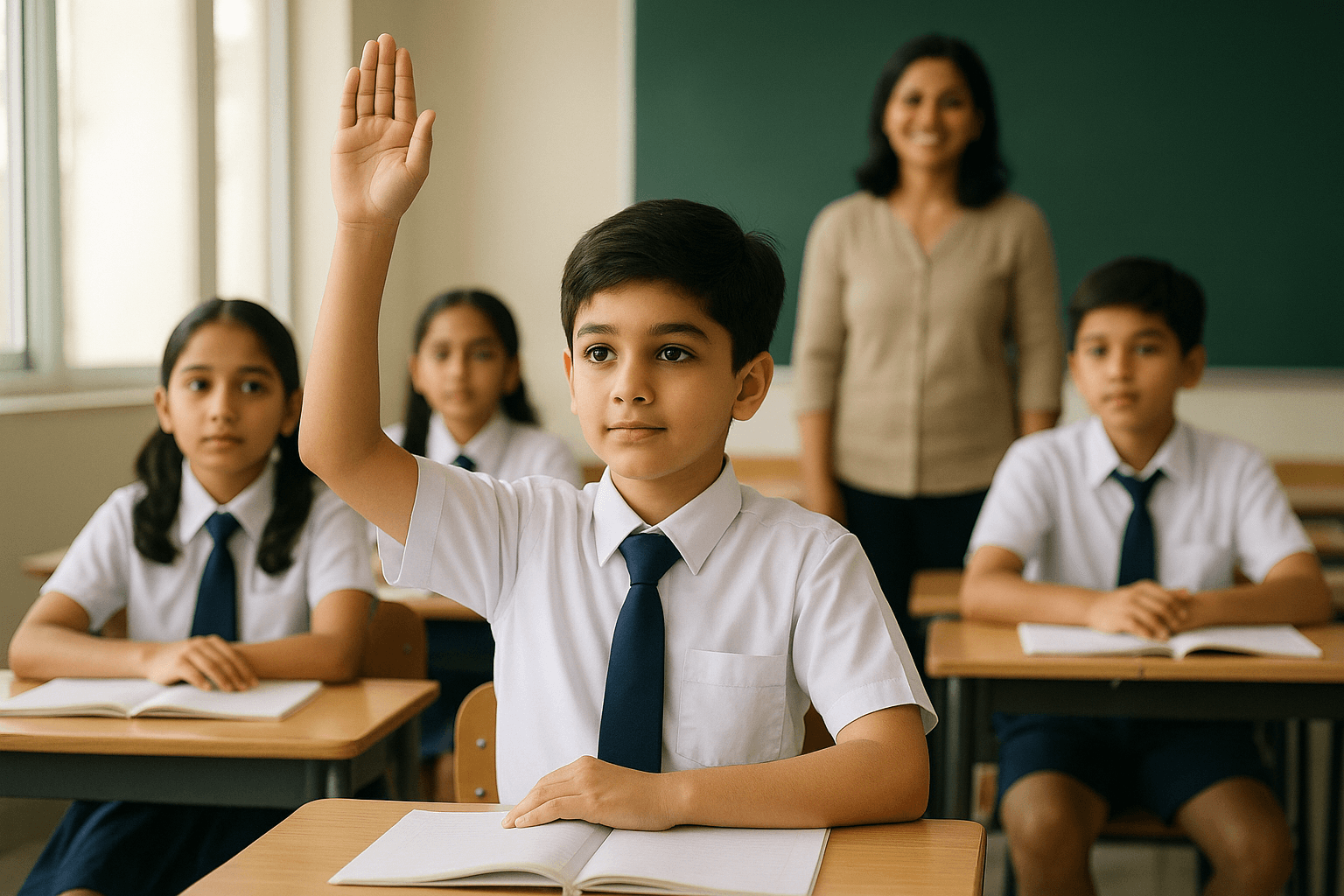
Real-Life Example of the Communication Process
The communication process has these simple steps:
Sender speaks
Message is sent
Listener hears and understands
Listener replies
Example:
Riya asks: “Can I borrow your notebook?”
Aarav listens and replies: “Yes, sure.”
Effective Communication Example Sentences
“Could you please explain that again? I want to understand better.”
“I didn’t get this part. Can you show me how to do it?”
“That’s a great idea. I agree with you.”
“Let’s work together and finish this quickly.”
“I feel very happy when we play chess after school.”
“Can I share my opinion about this project?”
“Thank you so much for helping me. I really appreciate it.”
“Excuse me, can I ask a question?”
“It’s okay, mistakes happen. Let’s solve it together.”
“You did a great job! Well done.”
Communication Scenarios for Students
Here are some real school-life examples:
1. During Lunch Break
Students talk, share stories, exchange snacks, and include everyone so no one feels left out.
2. During a Science Project
Team members discuss what model to make, divide tasks, and explain their ideas politely to each other.
3. During a Maths Doubt Session
A student asks the teacher for help respectfully and listens carefully to understand the solution.
4. During a Team Sport
Players plan strategies, motivate teammates, and communicate clearly to win as a team.
5. During an Argument
Students control their emotions, listen to each other's point of view, and solve the problem calmly.
See your child shine in school and social life — schedule a free demo session today.
How to Improve Communication (Step by Step Plan)
Students can practice communication daily.
Step 1: Listen Carefully
When someone is speaking, focus on their words.
Do not interrupt or talk over them.
Good listening shows respect.
Step 2: Speak Clearly
Use simple sentences and a calm tone.
Share your thoughts slowly so others can understand easily.
Step 3: Ask Questions
If you don’t understand something, ask politely.
Asking questions shows you care and want to learn.
Step 4: Maintain Eye Contact
Look at the person who is talking to you.
It shows you are confident and paying attention.
Step 5: Use Polite Words
Say “please,” “thank you,” “sorry,” and “excuse me.”
Being polite helps build trust and friendships.
Step 6: Understand Feelings
Think before you speak.
If someone is sad, frustrated, or confused, speak gently.
Good communication makes everyone feel safe and respected.
Daily 10-Minute Practice Routine
1. Read a Paragraph Aloud (2 minutes)
Pick any book, newspaper, or story and read it clearly.
This improves confidence, pronunciation, and fluency.
2. Talk to Parents for 2 Minutes (2 minutes)
Share something about your school day, your homework, or what you learned.
This helps kids express feelings openly.
3. Ask One Meaningful Question (2 minutes)
Ask a question like:
“Why do plants need sunlight?” or “How does the internet work?”
This improves curiosity and conversation skills.
4. Share Your Opinion About a Topic (3 minutes)
Choose a topic like “Online learning” or “Sports vs indoor games.”
Speak confidently about what you think and why.
5. End with a ‘Thank You’ (1 minute)
Learning to end politely shows respect and good manners.
Communication and Problem Solving
Good communication helps students deal with daily challenges. When children learn to talk clearly and listen patiently, they become better at solving problems. Here’s how:
Solve misunderstandings
When two friends disagree, using calm and honest words helps them understand each other and fix the issue quickly.Handle peer pressure
If someone forces them to do something they don’t like, they can confidently say “No, I’m not comfortable,” and explain their reasons respectfully.Stay confident
Students who communicate well are more open to asking questions in class, sharing ideas, and speaking without fear.Build leadership
Leaders guide others through clear instructions, polite teamwork, and supportive communication skills that help students in group projects, school events, and games.
Real Life Examples of Effective Communication
1. Sharing ideas during a school project
A student explains his idea clearly and listens to the ideas of others.
The team makes decisions together, without anyone feeling ignored.
2. Asking a senior for help politely
A junior approaches an older student and says kindly,
“Could you please help me understand this topic?”
The senior feels respected and is happy to help.
3. Expressing fear or worries to a parent
A child tells their mother,
“I’m worried about tomorrow’s test.”
The parent understands and supports the child instead of scolding.
4. Giving feedback kindly
While reviewing a group mate’s drawing, a student says,
“I like your colors. Maybe we can make the border neater.”
This builds confidence instead of hurting feelings.
5. Solving a fight with calm words
Two friends accidentally take each other’s pens.
Instead of shouting, they explain their sides calmly and agree to share.
Effective communication helps students:
Avoid misunderstandings
Build trust
Work better in groups
Express feelings in a healthy way
Mini Scripts Students Can Copy
1. Script: Asking for Help
“Hey, I am not able to understand this part. Could you please explain it to me?”
Where to use:
✔ Homework ✔ Classroom doubts ✔ Exam revisions
2. Script: Solving a Disagreement
“I think we both have different ideas. Can we talk calmly and choose what works best for everyone?”
Where to use:
✔ Group tasks ✔ Misunderstandings ✔ Friend conflicts
3. Script: Class Presentation
“Good morning! Today I will talk about solar energy. I will explain what it is, why it's useful, and how it helps us.”
Where to use:
✔ Assembly ✔ Science project ✔ Speaking assignments
4. Script: Asking Permission
“May I please borrow your marker for a minute? I will return it right after I finish.”
Where to use:
✔ Borrowing books ✔ Stationery ✔ Sports equipment
5. Script: Thanking Someone
“Thank you for helping me. I really appreciate it!”
Where to use:
✔ After receiving help ✔ Group success ✔ Teacher support
Communication Checklist for Students
Do I listen before speaking?
Good communication starts with listening. When we listen, we show respect and understand others better.
Am I polite?
Using kind words like please, thank you, and sorry helps conversations stay friendly and respectful.
Are my sentences clear?
Short and simple sentences help others understand what we are saying without confusion.
Do I understand feelings?
Good communicators think about how others feel and choose words that don’t hurt or upset someone.
Do I use positive words?
Words like good job, thank you, I understand, and let’s try again make conversations smooth and happy.
Help your child express ideas clearly — explore one-to-one learning with a free demo session
About PlanetSpark : Communication Skills
PlanetSpark helps children develop effective communication, confidence, and social skills through engaging 1:1 live classes. Our Communication Skills Program focuses on speaking, listening, presentation, and interpersonal abilities helping kids express themselves clearly and confidently in school, social settings, and beyond.
1. 1:1 Expert Coaching
Every child is guided by a certified trainer who personalises sessions to their pace, style, and goals ensuring focused learning, improved communication, and faster growth.
2. Personalised Learning Path
A customised roadmap strengthens vocabulary, fluency, social interaction, and structured expression guiding learners from basic conversation to confident, real-world communication.
3. AI-Powered Practice & Feedback
With SparkX and AI-led exercises, students receive instant, actionable feedback on clarity, tone, and body language turning practice into measurable skill development.
4. Interactive & Gamified Learning
Fun tools like roleplays, quizzes, and communication challenges make learning engaging and consistent, helping kids practice speaking, listening, and presenting through play.
5. Confidence for Every Situation
Through presentations, group activities, and real-life simulations, children build the confidence to communicate clearly, think critically, and express themselves naturally anywhere, anytime.
Conclusion
Children learn communication best by practicing in real life, not by memorising rules. Daily speaking, listening, and sharing helps them build confidence, think clearly, and solve problems effectively. Strong communication skills today make them better students, good friends, and confident individuals ready for the challenges of tomorrow.
Frequently Asked Questions
Communication for real-life situations means speaking, listening, and understanding others effectively in everyday scenarios.
It helps children build confidence, solve problems, and succeed in school and social life.
Yes. Daily practice, role-playing, and parent guidance significantly boost communication skills.
PlanetSpark provides 1-to-1 coaching tailored to each child, focusing on speaking, listening, and confidence-building.
Storytelling, asking questions, summarizing lessons, and role-playing scenarios at home.