
Why Do Fluent Speakers Struggle With Communication Gaps? PlanetSpark


Table of Contents
- What Is Communication Gap?
- Why Fluency Does Not Guarantee Effective Communication
- Where Messages Break and Meaning Gets Lost
- Why Structured Communication Training Matters
- A Voice That Won Hearts and First Prize
- How to Reduce Communication Gap Effectively
- Why Addressing Communication Gap Early Matters
- PlanetSpark: The Leading Hub for Powerful Communication Skil
- Turn Fluency Into Influence With PlanetSpark
Ever noticed how confident speakers still get misunderstood?
Communication gaps often appear not because of weak language skills, but due to tone, clarity, structure, or audience awareness. This guide explains why fluency alone isn’t enough and where messages start to break down. You’ll learn practical strategies to bridge these gaps, improve real-world expression, and connect with impact. PlanetSpark supports learners with structured speaking practice, expert feedback, and age-appropriate guidance to turn fluent speech into clear, confident communication.
What Is Communication Gap?
To truly understand the problem, we must first answer a basic question: what is communication gap?
A communication gap occurs when the message a speaker intends to convey is not fully understood by the listener. This gap can appear even when the speaker is fluent, articulate, and confident. The issue is not language ability alone, but about clarity, context, intent, and interpretation.
Communication Gap Meaning Explained
The communication gap meaning refers to the difference between what is said and what is understood. This gap can arise due to:
- Differences in perception
- Emotional barriers
- Cultural context
- Poor listening
- Lack of structure or purpose
In simple terms, a communication gap exists when communication fails to achieve its goal.
Why Fluency Does Not Guarantee Effective Communication
Fluent speakers often assume that speaking well equals being understood. However, fluency is only one part of communication. Let’s explore why fluent speakers still experience a communication gap.
1. Lack of Message Clarity
One of the biggest reasons for a communication gap is unclear messaging.
Many fluent speakers:
- Speak too fast
- Overuse complex words
- Jump between ideas
- Assume prior knowledge
Even with perfect grammar, the listener may feel confused. The communication gap meaning here, lies in poor organization rather than poor language.
2. Poor Listening Skills
Communication is a two-way process. Fluent speakers often focus on speaking well but overlook listening.
A communication gap develops when:
- Speakers interrupt instead of listening
- Responses are prepared before understanding
- Emotional cues are ignored
Understanding what a communication gap includes recognizing that listening failures create as many gaps as speaking errors.
3. Emotional and Psychological Barriers
Confidence in language does not equal emotional intelligence.
Common emotional causes of communication gaps include:
- Anxiety or nervousness
- Fear of judgment
- Overconfidence
- Lack of empathy
When emotions block understanding, the communication gap widens even between fluent speakers.
Want your child to practise real conversations instead of just listening? Explore PlanetSpark’s interactive communication programmes!
4. Cultural and Contextual Differences
Cultural background significantly influences communication styles.
A communication gap may occur when:
- Tone is misunderstood
- Body language differs
- Expressions are interpreted differently
The communication gap meaning expands beyond words into behavior, gestures, and unspoken signals.
5. Poor Structure and Organization
Fluent speakers may speak at length without direction.
Common mistakes:
- No clear beginning or conclusion
- Too many ideas at once
- Lack of examples
This makes it hard for listeners to follow, creating a communication gap despite fluent delivery.
6. Overuse of Jargon and Complex Language
Using advanced vocabulary does not always improve understanding.
Fluent speakers sometimes:
- Use technical jargon unnecessarily
- Avoid simplifying ideas
- Forget the audience’s level
This leads to a communication gap where listeners disengage or misunderstand.
7. Mismatch Between Speaker and Audience
Understanding your audience is key to reducing communication gaps.
A communication gap occurs when:
- Language level doesn’t match the listeners
- Examples are irrelevant
- Tone is inappropriate
Knowing the communication gap involves recognizing that communication must adapt to the audience.
8. Lack of Non-Verbal Communication Awareness
Non-verbal cues play a major role in communication.
Fluent speakers may ignore:
- Facial expressions
- Eye contact
- Posture
- Voice modulation
These elements either reinforce or contradict spoken words, contributing to the communication gap.
See how personalised feedback helps children speak clearly and confidently in PlanetSpark’s live classes!
Where Messages Break and Meaning Gets Lost
A communication gap happens when intended messages aren’t clearly received, causing confusion, delays, and misunderstandings. These gaps stem from unclear language, cultural differences, weak feedback loops, or poor channels, affecting relationships, teamwork, and organizational effectiveness across multiple levels.
Common Causes
- Lack of Clarity: Vague instructions, jargon, or poor word choice reduce understanding.
- Information Silos: Information is not shared across teams or departments.
- Unclear Expectations: Roles, goals, and responsibilities remain undefined.
- Cultural Barriers: Differences in background and communication styles create confusion.
- Fear or Silence: People hesitate to ask questions or voice concerns.
- Poor Channels: Wrong or overused communication tools weaken the message.
- Distractions or Poor Listening: Lack of attention leads to missed information.
Types of Gaps
- Vertical Gaps: Occur between management levels, such as leaders and employees.
- Horizontal Gaps: Happen between peers or across teams and departments.
- Internal Gaps: Exist within a single team or department.
- External Gaps: Arise between organizations and clients or stakeholders.
How to Bridge Them
- Be Clear and Concise: Use simple language and repeat key points.
- Encourage Feedback: Create safe spaces for questions and clarification.
- Listen Actively: Focus fully and understand different perspectives.
- Use Multiple Channels: Combine emails with discussions or follow-ups.
- Understand Diversity: Respect varied communication styles and cultures.
- Check for Comprehension: Confirm understanding with questions and summaries.
- Foster Open Culture: Make it safe to admit confusion and raise concerns.
Why Structured Communication Training Matters
Casual practice improves fluency, but structured training addresses communication gaps holistically.
This is where programs focused on real-world speaking, critical thinking, and feedback become essential.
Looking for flexible learning that fits your child’s routine? Experience PlanetSpark’s expert-led online communication sessions!
Learning Fluent Speaking With PlanetSpark
PlanetSpark focuses on helping learners move beyond fluency to effective communication.
Rather than teaching only grammar or vocabulary, PlanetSpark emphasizes:
- Thought structuring
- Confidence building
- Active listening
- Emotional expression
- Real-life speaking scenarios
This approach directly targets the root causes of the communication gap.
How PlanetSpark Helps Bridge Communication Gaps
PlanetSpark programs help students:
- Understand communication gap meaning through practice
- Learn what is communication gap using real examples
- Improve clarity, logic, and expression
- Develop audience awareness
- Speak confidently across situations
Through debates, storytelling, presentations, and interactive sessions, learners gain practical skills that close communication gaps.
Communication Gap and Confidence Building
Confidence grows when speakers feel understood.
PlanetSpark nurtures:
- Safe speaking environments
- Constructive feedback
- Personalized learning paths
This reduces hesitation and strengthens clarity.
Communication Gap in the Digital Age
Online communication has increased communication gaps due to:
- Lack of non-verbal cues
- Short attention spans
- Misinterpreted tone
Learning how to communicate effectively online is now just as important, and PlanetSpark integrates these skills into its programs.
A Voice That Won Hearts and First Prize
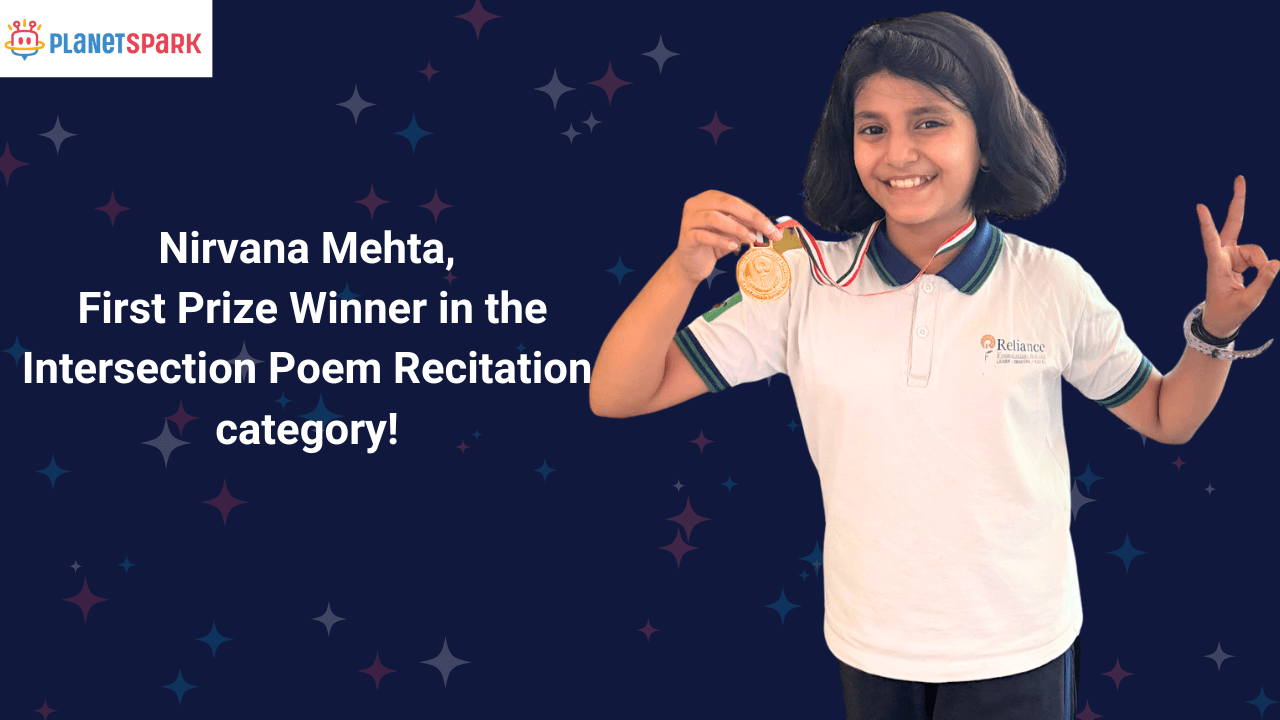
Nirvana Mehta shines as the First Prize Winner in the Intersection Poem Recitation category, showcasing remarkable confidence, expression, and voice control. Her journey reflects the power of strong communication and public speaking skills nurtured through consistent practice and guided learning at PlanetSpark.
Want to bridge communication gaps and turn fluent speaking into confident expression like Nirvana? Join PlanetSpark and help your child build clarity, confidence, and powerful communication skills that truly make an impact
How to Reduce Communication Gap Effectively
Bridging the communication gap requires focused skill development, not just language practice.
Key Strategies Include:
1. Organizing Thoughts Clearly
Structure ideas with:
- Clear introductions
- Logical flow
- Strong conclusions
2. Active Listening
Listen to understand, not respond.
3. Adapting to the Audience
Adjust tone, vocabulary, and examples.
4. Practicing Emotional Intelligence
Understand emotions like yours and others’.
5. Using Non-Verbal Communication
Align gestures, expressions, and voice with your message.
Why Addressing Communication Gap Early Matters
Children and teens who learn to bridge communication gaps early:
- Perform Better Academically: Clear communication helps students understand concepts, ask questions confidently, and express ideas effectively in classrooms.
- Build Stronger Relationships: Early communication skills improve emotional expression, empathy, and meaningful connections with peers and adults.
- Excel in Interviews and Leadership: Confident communication enables students to articulate thoughts clearly, lead discussions, and stand out in interviews.
- Develop Lifelong Confidence: Mastering communication early builds self-belief, reduces hesitation, and supports success in personal and professional life.
Understanding the communication gap early prevents long-term challenges.
PlanetSpark: The Leading Hub for Powerful Communication Skills
PlanetSpark empowers children to become clear, confident, and effective communicators through personalised training and interactive learning methods. With expert mentors and engaging practice modules, students develop articulation, fluency, active listening, and expressive skills that shape their communication for life.
Why PlanetSpark Is the Best Choice for Communication Skills Training
- 1:1 personalised communication coaching focused on improving clarity, tone, expression, and confident interaction.
- Certified communication coaches guide children through structured, engaging, and practical learning sessions.
- Conversation-building and expression modules that help students communicate ideas confidently in both formal and informal settings.
- Live discussions, dialogues, and group interactions that enhance listening skills, quick thinking, and respectful communication habits.
- SparkX AI video-based feedback offering detailed insights on voice, tone, pace, and clarity for continuous improvement.
- Gamified communication learning with SparkBee to strengthen vocabulary, sentence formation, and linguistic accuracy.
- AI-led speaking and conversation practice sessions to help students improve articulation and expression independently anytime.
- Creative clubs, storytelling events, and communication showcases give children real platforms to practise interaction and express ideas effortlessly.
Turn Fluency Into Influence With PlanetSpark
Fluent speaking is an important skill, but it is not enough. The real challenge lies in ensuring that messages are understood, emotions are conveyed, and connections are built. That is where the communication gap emerges.
By understanding the communication gap meaning, recognizing what is communication gap, and learning structured communication skills, anyone can transform fluency into impact.
Programs like PlanetSpark empower learners to bridge these gaps and become confident, effective communicators, ready for academics, careers, and life.
Also Read:
How to Improve Communication Skills: Tips for All Ages
7 Activities to Improve Communication Skills for Preschool Kids
Frequently Asked Questions
A communication gap occurs when the message intended by the speaker is not fully understood by the listener. It can happen due to unclear expression, poor listening, emotional barriers, or differences in perception.
The communication gap in daily life refers to misunderstandings during conversations, instructions, or discussions where people speak fluently but fail to connect, clarify ideas, or convey emotions effectively.
Yes, fluent speakers can face communication gaps when they lack clarity, structure, emotional awareness, or audience understanding. Fluency alone does not guarantee effective communication or meaningful interaction.
Students can reduce communication gaps by practicing active listening, organizing thoughts clearly, using appropriate tone, and engaging in real-life speaking activities that improve confidence, clarity, and audience awareness.
PlanetSpark helps learners overcome communication gaps through structured speaking programs focused on clarity, critical thinking, emotional expression, and real-world communication practice guided by expert mentors.
PlanetSpark focuses on transforming fluent speakers into effective communicators by addressing communication gaps through interactive classes, personalized feedback, and skill-based learning for academic, social, and professional success.