
Communication in Education for Better Learning
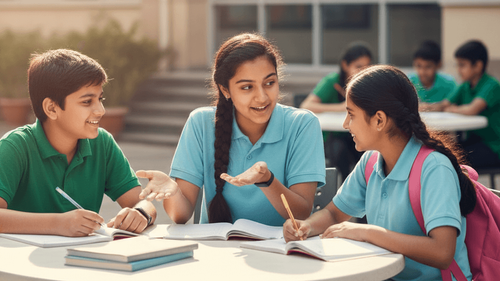

Table of Contents
- Why Communication Matters in Today’s Education System
- How Communication Shapes Learning Outcomes
- Core Communication Skills Students Must Develop
- How Communication Strengthens Academic Performance
- Practical Ways Schools and Parents Can Strengthen Communicat
- The Role of Guided Training in Developing Communication
- About PlanetSpark
- Key Takeaways
Communication in education is the foundation of how students understand concepts, express ideas, and build confidence across subjects. It affects classroom engagement, clarity of thinking, and a child’s ability to learn independently. Parents searching for the role of communication in learning want a clear, direct answer: strong communication skills make students better listeners, clearer speakers, and more effective learners. This blog breaks down what communication truly means in the learning environment and how children can develop it meaningfully.
PlanetSpark offers structured, child-focused communication training that strengthens speaking, listening, articulation, and expression through live sessions and real-world practice.
Why Communication Matters in Today’s Education System
Communication drives how children take in information, process it, and convey their understanding. It influences every stage of learning, from listening to a teacher’s explanation to expressing answers in class or writing responses in exams. Schools often emphasize academic output, but the real foundation of strong performance lies in how well a child communicates. A student who can ask clear questions, articulate doubts, explain concepts in their own words, and link ideas across subjects naturally performs better than a child who passively absorbs information without interaction.
Most parents focus on marks, but marks are simply the result of a deeper process. The actual learning curve depends on how actively a child engages with the content being taught. Communication turns learning into a two-way experience where students respond, question, analyze, and reflect. When children ask questions, it signals curiosity. When they participate, it shows engagement. When they explain a concept, it reflects true understanding. When they connect ideas, it demonstrates strong cognitive development. Without communication, learning becomes passive and children rely more on memorization than comprehension.
How Communication Shapes Learning Outcomes
Strong communication does not mean speaking more. It means speaking clearly, listening actively, and engaging meaningfully. In education, these abilities shape how students absorb information, express ideas, and connect concepts. When communication becomes an intentional skill rather than a passive act, learning becomes more structured, efficient, and reflective. Here is how each communication element directly influences a child’s educational growth.
Listening as the First Layer of Learning
Active listening is the entry point to effective learning because it determines how accurately students receive information. Children who listen with focus grasp instructions the first time, reducing confusion and the need for repetition. Active listening also strengthens memory because students process information with intention rather than letting it passively wash over them. Over time, this habit leads to stronger comprehension, better note-taking, and fewer mistakes in written or oral tasks. In group discussions, good listeners understand context quickly, respond appropriately, and contribute meaningfully instead of guessing their way through.
Speaking for Clarity and Cognitive Growth
Speaking is not just about expressing ideas it is a thinking exercise. When students verbalise what they understand, they organize their thoughts, identify gaps in knowledge, and refine their reasoning. Speaking also builds the mental discipline to explain complex ideas in simple, structured ways. This improves class participation, boosts confidence, and strengthens analytical skills. Children who speak clearly are also more likely to ask questions, challenge assumptions, and share perspectives, leading to deeper classroom engagement. Over time, this supports stronger academic confidence and better performance in both oral and written assessments.
Reading as a Communication Tool
Reading shapes communication by exposing students to new words, viewpoints, and writing styles. Through stories, explanations, and informational texts, children learn how ideas are built and conveyed. This makes reading much more than a passive activity it becomes a training ground for comprehension, empathy, and critical thinking. Readers learn to interpret meaning beyond the surface, understand tone, and identify structure. These skills naturally transfer into speaking and writing. Children who read regularly tend to express themselves more confidently, use richer vocabulary, and understand classroom content with greater depth.
Writing to Build Thought Organization
Writing forces structure. It requires students to arrange ideas logically, choose appropriate vocabulary, and maintain clarity from start to finish. This process strengthens their thinking patterns and improves retention. Writing also plays a crucial role in academic performance, as exams, essays, projects, and assignments demand coherence and precision. When children develop strong writing habits, they learn to reflect, analyze, and communicate with impact. Whether it’s summarizing a chapter, creating a story, or explaining a concept, writing reinforces every aspect of learning and communication.
Book a free demo class with PlanetSpark and see real communication growth in action.
Core Communication Skills Students Must Develop
Parents often ask what “good communication” in education actually includes. The term is broad, but its components are practical and teachable. These elements shape how a child thinks, responds, expresses, and interacts in an academic environment. Each skill strengthens a different aspect of learning and together they form the foundation of a strong communicator.
Clarity in Thought and Speech
Children should be able to express ideas without confusion or hesitation. Clarity develops when students learn to organise their thoughts before speaking. This includes understanding the main idea, choosing the right words, and explaining points in a simple, structured way. Building vocabulary also plays an important role because it helps children express complex ideas with precision. Reducing fillers such as “um,” “like,” and “you know” strengthens their confidence and helps them communicate more effectively in classrooms, discussions, and presentations.
Listening With Understanding
Good learners do not simply hear. They interpret. Active listening helps children absorb information accurately and respond with relevance. When students listen with intention, they improve retention, reduce misunderstandings, and follow instructions with greater accuracy. This skill also supports classroom discipline because students become more attentive and focused. Listening with understanding helps children identify key points, recognise tone and context, and participate meaningfully in both academic and social interactions.
Confidence in Expression
Confidence in expression allows students to participate openly, ask questions without fear, and share ideas even when they are unsure. This confidence grows when children receive positive reinforcement and regular speaking opportunities. It helps them manage stage anxiety, develop a strong voice, and engage in group work with ease. Confident communicators often take initiative, lead discussions, and present ideas with conviction. This ability also builds leadership traits that benefit them beyond academics.
Articulation and Voice Modulation
Effective communication depends on how clearly a child speaks and how well they use their voice. Articulation involves pronouncing words correctly and maintaining clarity at various speaking speeds. Voice modulation helps children convey meaning through tone, pitch, and variation, which keeps listeners engaged. These skills are essential for debates, storytelling, presentations, and classroom explanations. When students develop strong articulation and voice control, their communication becomes more expressive, persuasive, and impactful.
Non-Verbal Communication
Non-verbal cues such as body language, eye contact, facial expressions, and gestures significantly influence how children are understood. These signals communicate interest, confidence, and emotional awareness. Students who maintain open posture, appropriate eye contact, and positive facial expressions are perceived as attentive and engaged. Non-verbal skills also help students build stronger relationships with peers and teachers, create a positive impression during presentations, and express emotions appropriately.
Sign up now for PlanetSpark’s live 1:1 Communication Skills Program.
How Communication Strengthens Academic Performance
Communication is not a soft skill on the side. It is a multiplier that amplifies learning across subjects. When children know how to express ideas clearly, listen actively, and interact meaningfully, every academic skill becomes stronger. Communication turns subjects from isolated topics into interconnected knowledge, which helps students understand faster and perform better. It also encourages children to take ownership of their learning rather than depending solely on teachers or textbooks.
Better Classroom Participation
Students who communicate well ask relevant questions, contribute thoughtfully to discussions, and share their ideas willingly. This involvement makes learning active because it forces them to think, respond, and engage with the content. Participation also helps teachers understand where a child is struggling or excelling, which leads to better support. When children express themselves clearly, they become more confident learners who enjoy being part of class conversations instead of avoiding them.
Improved Concept Clarity
When children start verbalising what they understand, they immediately recognise which parts are clear and which areas need more work. Explaining a concept out loud forces them to organise thoughts and identify missing pieces. This self-correction is much faster and more effective than passive learning. It helps children retain information longer, develop analytical thinking, and build a deeper understanding of the subject. Verbal expression becomes a tool for checking comprehension rather than just communicating knowledge.
Stronger Performance in Exams and Projects
Academic performance is closely linked to communication because most assessments require clarity, structure, and reasoning. Students who communicate well write organised answers, structure essays logically, and present information with confidence. Projects and presentations also become easier because children know how to explain their thought process, justify decisions, and showcase their work clearly. Strong communication helps them move beyond memorisation and demonstrate real understanding.
Greater Collaboration Skills
Group activities rely heavily on communication. Students must listen to others, divide tasks, ask for clarification, and express ideas respectfully. Children who communicate well help teams function smoothly because they can explain their role, guide peers, resolve confusion, and coordinate effectively. This skill prepares them for future academic environments and real-world situations where teamwork is essential. Good communication turns group work into an opportunity for learning rather than a source of conflict or confusion.
Practical Ways Schools and Parents Can Strengthen Communication Skills
Communication improvement is deliberate. These strategies build long-term capability and help children move from passive learners to confident communicators. When these habits are practiced regularly, they create measurable progress in clarity, confidence, and expression.
Encourage Daily Conversations
Whether at home or in class, meaningful conversations help children think aloud, shape opinions, and learn expression. Daily discussions teach children to organize thoughts, respond clearly, and listen actively. Regular conversation also reduces hesitation and makes children more comfortable sharing ideas. Even simple conversations about their day, a book they read, or a problem they solved help them practice articulation without pressure.
Promote Reading and Reflection
Reading expands vocabulary, comprehension, and exposure to different ways of expressing ideas. It introduces children to new concepts, sentence structures, and perspectives that strengthen their communication foundation. Reflection adds another layer by encouraging children to think about what they read, form opinions, and understand deeper meanings. This combination builds analytical skills and helps children interpret information instead of accepting it blindly.
Use Structured Speaking Activities
Structured speaking activities turn communication development into a consistent practice. Debates develop reasoning and quick thinking. Storytelling improves imagination, sequencing, and expression. Small presentations teach organization and confidence. Asking children to explain what they learned each day strengthens retention and clarity. These activities make speaking a natural part of learning rather than an occasional task.
Practice Questioning
Encourage children to ask how, why, and what if. These questions build curiosity and push children to explore ideas more deeply. Questioning also helps them challenge assumptions, think independently, and develop confidence in expressing doubts. A child who questions learns actively instead of memorizing information without understanding it. Over time, this habit strengthens critical thinking and problem-solving.
Join now to help your child communicate clearly and confidently with PlanetSpark.
Include Writing in Daily Routine
Writing essays, journals, summaries, or creative pieces helps students organize ideas and present them logically. Writing strengthens clarity because children must think through each sentence, choose appropriate vocabulary, and structure ideas in sequence. Journaling encourages reflection. Essays build reasoning. Creative writing enhances imagination and expression. Consistent writing improves both academic performance and communication skills.
Offer Safe Speaking Spaces
Children communicate better when they are not judged harshly or corrected aggressively. Safe environments help them experiment with new words, express ideas freely, and overcome hesitation. When children know they can speak without embarrassment, they take more risks, participate more often, and build genuine confidence. This supportive atmosphere is essential for long-term communication growth.
The Role of Guided Training in Developing Communication
While schools teach subjects, communication training requires focused, systematic coaching. Children often need individual attention to correct articulation, enhance fluency, and refine expression. This is where structured programs add real value.
Personalised coaching identifies gaps early such as hesitation, unclear speech, or weak listening and fixes them through targeted practice. Regular evaluation helps students build measurable improvement rather than progress randomly.
About PlanetSpark
PlanetSpark transforms how children learn to communicate with confidence. Through live 1:1 sessions, expert mentors, and immersive speaking activities, learners develop clarity, confidence, and expression. Every session is designed to help students speak effectively, listen attentively, and connect meaningfully in real conversations.
1:1 Expert Coaching Students receive focused guidance on voice, tone, and articulation from certified communication coaches.
Real World Speaking Practice Interactive debates, storytelling sessions, and discussions enable learners to apply communication skills in real time.
Video Feedback and Analysis Learners review their recorded performances with mentors to refine body language, gestures, and delivery.
Leadership and Expression Focus Each lesson helps students build stage confidence, emotional awareness, and authentic self-expression.
Continuous Growth Tracking Progress is consistently measured through performance insights that strengthen communication at every level.
Key Takeaways
Communication in education is not just a skill. It is the backbone of academic success, confidence, participation, and future readiness. Children who communicate well think better, express clearly, and learn faster across all subjects. When communication is nurtured intentionally, it changes how students absorb knowledge and interact with the world.
Parents who want genuine, lifelong improvement must focus on structured speaking, listening, reading, and writing development not shortcuts. With the right guidance, every child can become a confident communicator who performs better academically and socially.
Frequently Asked Questions
Communication is important in education because it influences how students understand lessons, express ideas, and interact with teachers and peers. Strong communication skills help children ask better questions, clarify doubts, participate confidently, and build deeper comprehension. When communication improves, academic performance, retention, and independent learning also improve.
Communication shapes learning outcomes by improving clarity, organisation, and understanding. Students who express concepts aloud or in writing identify gaps in knowledge faster. They perform better in exams because they can explain ideas clearly using structured reasoning. Communication also strengthens listening, which helps students follow instructions accurately and retain information.
Students should learn clarity in thought and speech, active listening, confident expression, articulation, voice modulation, and non-verbal communication. These skills help children participate effectively, collaborate with peers, handle presentations, and understand subjects more deeply. Together, they form the foundation of strong academic and social communication.
Parents can improve communication at home through daily conversations, reading habits, structured speaking activities, and regular writing practice. Encouraging children to share opinions, explain their day, read aloud, ask questions, and reflect on books builds expression and thinking clarity. A supportive environment also helps them speak without fear or hesitation.
Communication training helps children understand subjects better by teaching them to express ideas clearly and think logically. When children can explain math steps, summarize science concepts, or interpret literature, their comprehension becomes stronger. Communication skills also improve exam writing, project work, presentations, and classroom discussions across all subjects.
Children can begin communication skills training as early as 5 to 6 years old. Early exposure helps them build confidence, vocabulary, clarity, and expressive habits during foundational learning years. Starting young also prevents hesitation, fear of speaking, and unclear communication patterns from developing later.