Comprehension skills are the foundation of
clear thinking, confident speaking, and effective writing. Whether a child is reading a story or a working professional is understanding a report, comprehension skills help the brain make sense of information. When we understand well, we express better.
In simple words, comprehension skills allow
a person to read, listen, think, and then respond correctly. These skills are not limited to academics. They play a major role in daily conversations, presentations, interviews, meetings, and even storytelling. Strong comprehension skills improve confidence, reduce confusion, and help people share their thoughts in a structured way.
Many people can read or hear words, but true learning happens only when the meaning is understood. This is why comprehension skills are so important from an early age and continue to matter throughout life. Reading comprehension skills help in understanding written text, while listening comprehension skills help in understanding spoken language. Together, they shape how well a person can express ideas.
This blog will help you understand what comprehension skills are, their meaning, why they matter, and how they improve expression in students and professionals alike.
What Are Comprehension Skills?
Comprehension skills are the ability to understand, process, and interpret information that we read, hear, or see. When someone understands a message clearly and can explain it in their own words, it shows strong comprehension skills.
What Is Comprehension Skills Meaning?
The comprehension skills meaning is simple. It means understanding the message, not just reading or hearing words.
For example:
Reading a story and explaining it in your own words
Listening to instructions and following them correctly
Understanding a question before answering it
All these actions show good comprehension skills.
What Is Comprehension Skills in Daily Life?
Comprehension skills are used every day by both kids and adults.
For children:
Understanding stories and lessons
Answering questions correctly
Expressing thoughts in speaking and writing
For working professionals:
Understanding emails and reports
Listening during meetings
Responding clearly and confidently
Core Areas of Comprehension Skills
Comprehension skills are built on multiple areas:
Reading comprehension skills help understand written content
Listening comprehension skills help understand spoken information
Thinking skills help connect ideas and form opinions
Expression skills help share understanding clearly
Simple Table: Comprehension Skills Explained
Skill Type
What It Helps With
Reading comprehension skills
Understanding books, articles, and instructions
Listening comprehension skills
Understanding conversations and lectures
Thinking comprehension
Connecting ideas and forming meaning
Expression
Speaking and writing clearly
Strong comprehension skills allow learners to move from understanding to expression smoothly.
Comprehension skills are important because they affect how well a person learns, communicates, and grows. Without understanding, learning becomes memorization, and expression becomes unclear.
Importance of Comprehension Skills for Students
For students, comprehension skills help in:
Understanding lessons instead of cramming
Answering questions with clarity
Expressing ideas confidently
Improving reading comprehension skills
Developing better writing and speaking abilities
When students understand deeply, they can explain concepts in their own words, which improves confidence and academic performance.
Importance of Comprehension Skills for Professionals
For professionals, comprehension skills are equally valuable:
Understanding complex information quickly
Communicating ideas clearly in meetings
Improving listening comprehension skills during discussions
Making better decisions
Reducing errors caused by misunderstanding
Strong comprehension skills lead to better leadership, teamwork, and professional growth.
How Comprehension Skills Improve Expression
When comprehension skills are strong:
Thoughts become organized
Vocabulary usage improves naturally
Speaking becomes fluent and confident
Writing becomes clear and structured
Expression is not about speaking more. It is about speaking with clarity. That clarity comes from understanding.
Key Benefits of Strong Comprehension Skills
Better academic performance
Improved communication
Higher confidence
Stronger problem-solving ability
Clear expression of ideas
Understanding how to improve comprehension skills early helps learners and professionals succeed in every stage of life.
Comprehension skills are not just one single ability. They are a combination of different skills that work together to help a person understand and express information clearly. Knowing the types of comprehension skills makes it easier to identify where improvement is needed.
Main Types of Comprehension Skills
There are different types of comprehension skills used in learning and communication.
Reading Comprehension Skills
Reading comprehension skills help a person understand written content such as stories, books, emails, articles, and instructions.
These skills include:
Understanding the main idea
Finding important details
Understanding new words from context
Making sense of paragraphs and sentences
Connecting ideas across the text
Strong reading comprehension skills help students answer questions correctly and help professionals understand written communication without confusion.
Listening Comprehension Skills
Listening comprehension skills help a person understand spoken language. This includes conversations, instructions, lectures, meetings, and presentations.
Listening comprehension skills involve:
Paying attention
Understanding tone and meaning
Remembering key points
Following instructions correctly
Good listening comprehension skills improve responses, reduce misunderstandings, and build stronger communication.
Visual Comprehension Skills
Visual comprehension skills help understand information shown through pictures, charts, diagrams, and videos.
Examples include:
Understanding graphs and tables
Interpreting images in stories
Learning from visual presentations
These skills are important for both kids and working professionals.
Critical Comprehension Skills
Critical comprehension skills help a person think deeper and form opinions.
This includes:
Asking questions
Comparing ideas
Understanding cause and effect
Making judgments based on information
Quick Comparison Table
Type of Skill
Purpose
Reading comprehension skills
Understand written information
Listening comprehension skills
Understand spoken messages
Visual comprehension
Understand images and visuals
Critical comprehension
Analyze and think deeply
All these types of comprehension skills work together to improve understanding and expression.
To build strong comprehension skills, certain components and strategies are essential. These elements help learners understand better and express ideas clearly.
Key Components of Comprehension Skills
Vocabulary Understanding
Understanding words is the base of comprehension skills. A strong vocabulary helps in:
Understanding meaning faster
Improving reading comprehension skills
Expressing thoughts clearly
When learners know more words, comprehension becomes easier.
Attention and Focus
Comprehension skills improve when focus is strong.
Paying attention while reading
Listening carefully during conversations
Avoiding distractions
Focus helps the brain process information correctly.
Background Knowledge
Prior knowledge helps in understanding new information.
Reading comprehension skills are the ability to read text, understand its meaning, and use that understanding to express ideas clearly. These skills play a major role in academic learning and professional communication. Strong reading comprehension skills help learners move beyond reading words to understanding thoughts, emotions, and ideas behind the text.
What Reading Comprehension Skills Include
Reading comprehension skills involve multiple abilities working together.
Understanding the Main Idea
The main idea tells what the text is mostly about. Strong comprehension skills help readers identify the central message quickly.
Helps summarize content
Improves clarity while explaining
Supports better written and spoken expression
Identifying Key Details
Details support the main idea. Good reading comprehension skills allow readers to pick important points and ignore unnecessary information.
Helps in answering questions accurately
Improves content retention
Builds structured thinking
Understanding Vocabulary in Context
Words often have meanings based on how they are used.
Improves comprehension skills meaning
Reduces dependency on memorization
Builds confidence in reading
Understanding vocabulary through context is a core part of learning how to improve comprehension skills.
Making Connections
Readers connect new information with what they already know.
Personal connections
Text-to-text connections
Real-world connections
This makes understanding deeper and long-lasting.
Common Challenges in Reading Comprehension Skills
Some learners face difficulties like:
Reading too fast without understanding
Struggling with complex sentences
Limited vocabulary
Losing focus while reading
These challenges can be overcome with practice and the right strategies.
Simple Techniques to Strengthen Reading Comprehension Skills
Read small sections at a time
Ask questions while reading
Highlight important points
Summarize after reading
Mini Table: Reading Comprehension Skills Benefits
Skill Area
Benefit
Main idea
Clear understanding
Key details
Accurate expression
Vocabulary
Better communication
Connections
Deeper learning
Strong reading comprehension skills directly improve expression by helping learners organize thoughts clearly before speaking or writing.
Listening comprehension skills are the ability to understand spoken information accurately. These skills are essential for conversations, instructions, discussions, and presentations. Strong listening comprehension skills help both children and professionals respond confidently and correctly.
What Listening Comprehension Skills Involve
Listening is more than hearing words. It requires active mental engagement.
Focused Listening
Focused listening means paying full attention to the speaker.
Avoiding distractions
Maintaining eye contact
Staying mentally present
This improves overall comprehension skills.
Understanding Tone and Meaning
Tone helps convey emotions and intent.
Improves understanding of context
Helps respond appropriately
Strengthens communication skills
Listening comprehension skills help identify emotions and hidden meanings in speech.
Following Instructions
Good listening comprehension skills help in:
Understanding step-by-step directions
Completing tasks correctly
Reducing mistakes
This is especially important in classrooms and workplaces.
Remembering Key Information
Retention plays a major role in listening comprehension skills.
Helps summarize conversations
Improves responses
Supports better expression
Common Barriers to Listening Comprehension Skills
Lack of focus
Interrupting too quickly
Background noise
Overthinking responses
Understanding these barriers helps in learning how to improve comprehension skills.
Effective Ways to Improve Listening Comprehension Skills
Listen without interrupting
Take mental or written notes
Repeat key points silently
Ask clarifying questions
Quick Comparison: Reading vs Listening Comprehension
Aspect
Reading
Listening
Speed control
Reader controls pace
Speaker controls pace
Visual support
Text available
No text support
Memory role
Lower
Higher
Strong listening comprehension skills improve expression by helping learners respond clearly, confidently, and correctly.
Learning how to improve comprehension skills is important for both students and working professionals. Strong comprehension skills help in understanding information clearly and expressing ideas confidently. Improvement happens through consistent practice and the right methods.
Build a Strong Reading Habit
Reading regularly is one of the most effective ways to improve comprehension skills.
Read age-appropriate books and articles
Start with short content and increase gradually
Focus on understanding, not speed
This directly strengthens reading comprehension skills.
Practice Active Reading
Active reading keeps the mind engaged.
Techniques for Active Reading
Ask questions while reading
Highlight or note important points
Pause and reflect after each section
Active reading improves comprehension skills meaning and understanding depth.
Improve Listening Skills Daily
Listening comprehension skills improve with conscious effort.
Listen carefully during conversations
Avoid multitasking while listening
Summarize what you heard
This helps in understanding spoken information clearly.
Expand Vocabulary Naturally
A strong vocabulary supports comprehension skills.
Learn new words through context
Use new words in sentences
Avoid rote memorization
Vocabulary growth improves both understanding and expression.
Use the Read–Listen–Explain Method
This method works for all age groups.
Read or listen to information
Understand the message
Explain it in simple words
This technique strengthens comprehension skills and expression together.
Practice with Different Content Types
Exposure to variety improves comprehension.
Stories and articles
Audio content and discussions
Visual content like charts and videos
Daily Habits That Improve Comprehension Skills
Reading for 15 minutes
Listening without interruption
Writing short summaries
Asking meaningful questions
Improving comprehension skills is a gradual process, but consistent practice leads to clear understanding and confident expression.
Practicing comprehension skills does not have to feel boring. Fun activities help learners enjoy the process while building strong comprehension skills naturally.
Story Retelling Games
After reading or listening to a story:
Retell it in your own words
Change the ending creatively
Act out the story
This improves reading comprehension skills and expression.
Listening and Guessing Games
Listen to a short story or audio
Guess what happens next
Answer simple questions
These activities strengthen listening comprehension skills.
Simple daily conversations help improve comprehension.
Talk about daily activities
Share thoughts and opinions
Listen carefully and respond
Simple Table: Fun Practice Activities
Activity
Skill Improved
Story retelling
Reading comprehension skills
Listening games
Listening comprehension skills
Picture talks
Visual comprehension
Q&A games
Expression and clarity
Fun practice keeps learners engaged and helps develop strong comprehension skills without pressure.
Why PlanetSpark Is the Right Learning Partner
PlanetSpark helps learners develop strong comprehension skills through a structured and practical learning approach. The focus is on understanding information clearly and expressing ideas confidently, rather than memorizing content.
Skill-Focused Learning Approach
PlanetSpark programs are designed to strengthen core comprehension skills, including reading comprehension skills and listening comprehension skills. Learners are guided to understand the meaning of what they read or hear before expressing it in their own words.
Balanced Learning for Real Expression
The learning structure supports both understanding and communication. Activities combine reading, listening, thinking, and speaking, which helps improve comprehension skills meaningfully and naturally.
Interactive and Practice-Based Method
Interactive discussions and guided exercises improve attention, understanding, and clarity of thought. Regular practice helps learners apply comprehension skills in real-life situations such as conversations, presentations, and everyday communication.
Clear Progress and Confidence Building
With step-by-step guidance and consistent feedback, PlanetSpark helps learners gradually improve comprehension skills and turn understanding into confident expression.
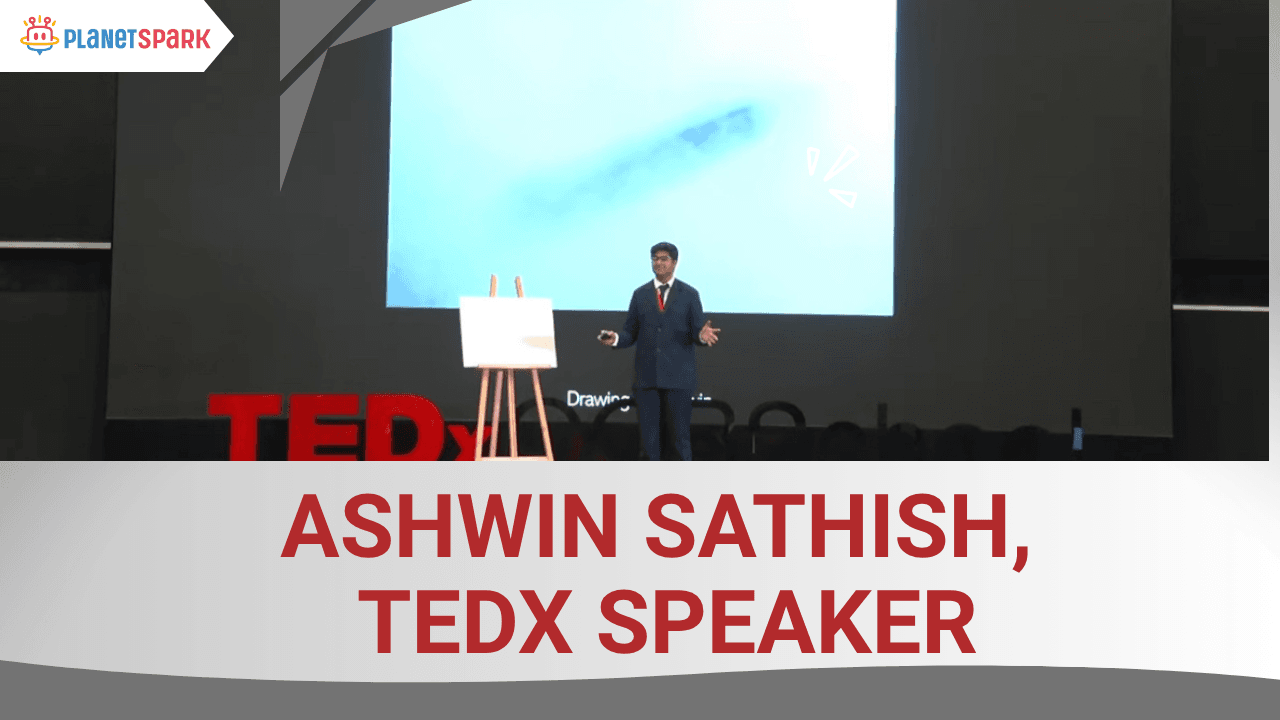
Ashwin Sathish: From Classroom Confidence to TEDx Stage
Ashwin Sathish, an inspiring Grade 8 student from New Delhi, captivated audiences as a TEDx speaker. His journey showcases how confidence, vision, and courage can transform classroom skills into powerful public speaking on a global stage, inspiring others to express their ideas fearlessly.
Conclusion: How Comprehension Skills Boost Understanding and Expression
Comprehension skills play a vital role in learning, communication, and personal growth. Whether it is understanding a story, listening to instructions, or expressing ideas clearly, strong comprehension skills form the base of effective expression.
Understanding what is comprehension skills helps learners focus on meaning rather than memorization. Reading comprehension skills support clear thinking, while listening comprehension skills improve communication and response accuracy. Together, they help learners organize thoughts, build confidence, and express ideas with clarity.
Learning how to improve comprehension skills is a continuous process that involves reading, listening, thinking, and practicing daily. With the right strategies and consistent effort, comprehension skills can be strengthened at any stage of life.
Strong comprehension skills do not just help in understanding information. They transform understanding into confident expression, making communication clear, meaningful, and impactful.
Comprehension skills are the ability to understand, process, and interpret information that we read, hear, or see. They help in thinking clearly and expressing ideas confidently.
They improve learning, communication, and problem-solving. Strong comprehension skills help both children and professionals understand information and respond accurately.
Comprehension skills meaning is understanding the message fully, not just reading or hearing words. It’s about grasping the idea and expressing it clearly.
Reading comprehension skills are the ability to understand written text, find key ideas, and make connections between concepts. They help in learning, exams, and effective communication.
Listening comprehension skills involve understanding spoken information, paying attention to tone, recalling details, and responding appropriately in conversations or instructions.
You can improve comprehension skills by reading regularly, practicing active listening, expanding vocabulary, summarizing information, and using techniques like questioning and retelling.