
Master Conversation Flow Techniques for Better Communication


Table of Contents
- What Are Conversation Flow Techniques?
- Why Conversation Flow Matters More Than Most People Realise
- Core Conversation Flow Techniques That Actually Work
- How to Keep Conversation Flowing in Professional Settings
- Natural Conversation Practice: How to Build These Skills
- Common Mistakes That Break Conversation Flow
- How This Helps in Communication Skills
- Who Benefits Most from Developing Conversation Flow Techniqu
- How PlanetSpark Helps You Build Conversation Flow Techniques
- Start Your Journey with PlanetSpark
Most people have been there. A conversation that starts well, then hits an awkward pause. A meeting where you wanted to contribute but could not find the right moment. A networking event where you ran out of things to say after the first two minutes.
Smooth conversation skills are not something a few naturally gifted people are born with. They are trainable. And once you understand how conversation flow works, the way you engage with people at work, in interviews, in social settings, and in everyday interactions changes completely.
What Are Conversation Flow Techniques?
Conversation flow techniques are deliberate communication strategies that help you keep a discussion moving, avoid awkward silence, and build a natural rhythm with the person or people you are speaking with.
At their core, these techniques address two things most people struggle with: knowing what to say next and knowing how to respond in a way that invites the other person to keep talking.
For working professionals, this means smoother client calls, more confident team discussions, and stronger networking interactions. For students, it means less anxiety in group settings, more productive conversations with peers and professors, and better performance in interviews and group discussions.
Why Conversation Flow Matters More Than Most People Realise
Think about the last time a conversation felt genuinely effortless. Both people were engaged. The exchange had energy. Neither person was grasping for what to say next. That experience did not happen by accident. It happened because both people were using smooth conversation skills, even if neither of them named it that way.
Poor conversation flow has real professional consequences. It affects how colleagues perceive your confidence. It influences how clients feel about doing business with you. It shapes how interviewers evaluate your suitability for a role. It even determines whether people enjoy spending time with you socially.
The ability to avoid awkward silence skills and keep an interaction moving is not a soft or optional skill. For anyone building a career or a professional reputation, it is a core communication competency.
Core Conversation Flow Techniques That Actually Work
Learning how to keep conversation flowing starts with understanding the specific habits and techniques that create natural momentum in any exchange. Here are the ones that make the biggest difference in real-world settings.
Active Listening as the Foundation
Most people think of conversation flow as a speaking skill. It is actually a listening skill first. When you listen with genuine attention, you naturally pick up on things to respond to, questions to ask, and directions to take the conversation. When you are thinking about what to say next while the other person is still talking, the flow breaks.
Active listening means staying fully present with what the other person is saying, not just waiting for your turn to speak. It creates the raw material every good conversationalist works with.
The Bridge Technique
One of the most effective conversation flow techniques is learning to bridge from what was just said to something new. Instead of letting a topic die and scrambling for a new one, find a connecting thread.
If someone mentions they just returned from a trip, you do not pivot to a completely different subject. You bridge: ask about the trip, share a related experience, or use it to transition to something connected. This keeps the exchange feeling continuous rather than choppy.
Open-Ended Questions as a Core Tool
Questions that can be answered with yes or no are conversation killers. Questions that invite someone to share, explain, or reflect are conversation builders.
Developing the habit of asking open-ended questions is one of the most immediately effective natural conversation practice habits you can build. Instead of "Did you enjoy that project?" ask "What was the most interesting part of working on that project?" The second version gives the other person something to actually talk about.
Relating and Contributing, Not Just Responding
A conversation is not an interview. If you only ask questions, the other person starts to feel interrogated. After asking and listening, contribute something of your own. A related experience. A perspective. A follow-up thought.
This back and forth rhythm, question, listen, contribute, respond, is what creates the natural conversation flow that both people enjoy being part of.
The Pause Recovery Technique
Every conversation hits a natural pause at some point. The difference between an awkward silence and a comfortable one is what you do with it. One of the most useful avoid awkward silence skills is having a set of reliable go-to moves for pause recovery.
This could be a follow-up question about something mentioned earlier, a topic pivot using a connecting phrase, or even acknowledging the pause lightly and redirecting. The key is practising these in advance so they come naturally when you need them.
How to Keep Conversation Flowing in Professional Settings
The stakes for smooth conversation skills are often highest in professional environments. Whether it is a one-on-one with your manager, a client meeting, a job interview, or a networking event, the ability to keep a conversation moving confidently matters enormously.
Here is how conversation flow techniques apply specifically in the workplace:
- In meetings and team discussions, strong conversational flow helps you contribute meaningfully, build on others' ideas, and create the kind of collaborative dynamic that makes meetings productive rather than painful.
- In client interactions, the ability to keep conversation moving naturally builds rapport faster, builds trust more effectively, and creates a professional impression that transactional small talk simply cannot achieve.
- In interviews, interviewers consistently report that candidates who create genuine conversational flow, rather than reciting prepared answers, perform better and leave stronger impressions.
- In networking, the ability to avoid awkward silence and sustain engaging conversation is the difference between making a connection that lasts and exchanging cards that go straight into a drawer.
Natural Conversation Practice: How to Build These Skills
Knowing the techniques is only half the work. The other half is consistent, structured natural conversation practice that turns these habits from conscious effort into second nature.
Here is how to approach it:
Start with low-stakes environments.
Practice keeping conversations going in casual settings with colleagues, friends, or family before applying these techniques in high-pressure professional situations. The repetition builds automaticity.
Record and review.
One of the most powerful natural conversation practice tools is recording yourself in mock conversations or even phone calls and listening back. You will quickly notice where you close off topics, where you miss opportunities to ask follow-up questions, and where you default to filler phrases when you run out of things to say.
Practice specific techniques in isolation.
Do not try to work on everything at once. Spend one week focused entirely on asking better open-ended questions. The next week, focus on bridging between topics. Building one habit at a time makes the development feel manageable and the results feel measurable.
Seek feedback.
Ask someone you trust to have a conversation with you and give honest feedback on how the exchange felt from their side. Where did it feel natural? Where did it feel stiff or one-sided? Feedback like this accelerates development far faster than self-assessment alone.
Common Mistakes That Break Conversation Flow
Understanding what disrupts natural conversation flow is as important as knowing what supports it. These are the most common habits that hold people back:
Talking too much without checking in.
Dominating a conversation might feel like you are keeping things moving, but it is actually shutting the other person out. Balance is essential to flow.
Giving short, closed answers.
When someone asks you something and you give a one-word or one-sentence response with no follow-up offer, you are putting the full burden of the conversation on the other person. Expand your answers and add a return question or comment.
Changing topics abruptly.
Jumping to a completely unrelated subject without a transition feels jarring. Use bridging phrases to connect one topic to the next.

Letting your attention drift.
People can tell when someone is not fully present. Distraction breaks rapport and makes natural conversation flow impossible. Giving your full attention is the simplest and most powerful conversation skill there is.
Overthinking what to say.
Trying too hard to come up with the perfect thing to say often leads to longer, more uncomfortable pauses. Conversation is not a performance. A genuine, imperfect response lands better than a polished one that arrives too late.
How This Helps in Communication Skills
Conversation flow techniques are not just social tools. They are a direct investment in your broader communication skills development, and the benefits show up across every area of professional and personal life.
When you build strong smooth conversation skills, you become a more confident communicator in every context. The ability to keep an exchange moving naturally means you can hold your own in high-pressure discussions, navigate difficult conversations without shutting down, and build the kind of ongoing rapport with colleagues, clients, and leaders that creates lasting professional credibility.
These techniques help you develop:
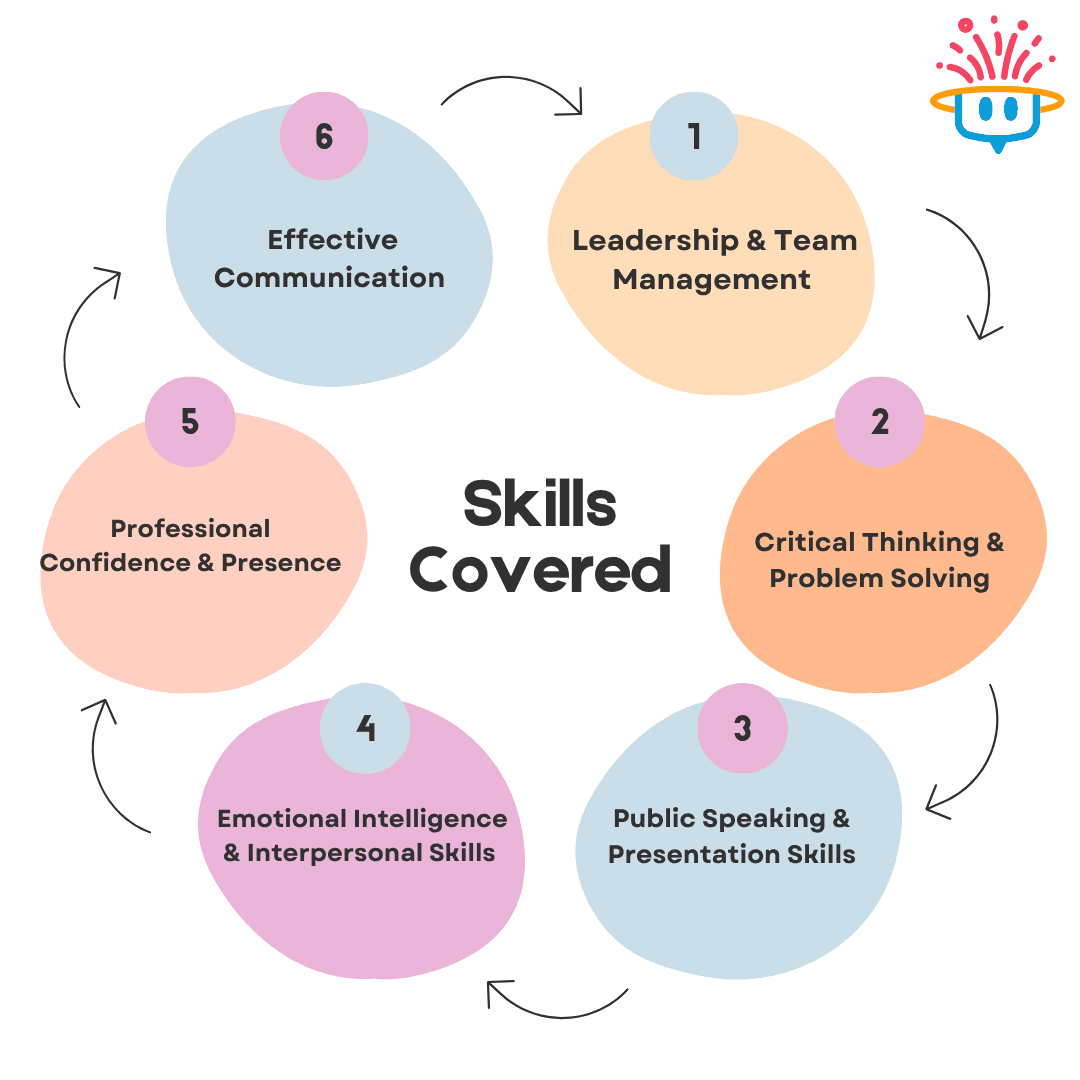
- Clarity and responsiveness in expression, so your communication feels effortless rather than laboured. When you are not anxious about what to say next, your thinking becomes sharper and your delivery becomes more direct.
- Confidence in real-time communication, across meetings, interviews, presentations, and casual interactions. The fear of running out of things to say fades when you have reliable techniques to fall back on.
- Listening as a genuine skill, not just a polite habit. Active listening is the engine that powers every other conversation flow technique, and developing it makes you a better communicator in every format.
- Emotional intelligence and awareness, because understanding conversation rhythm, reading energy, and knowing when to lead and when to follow are deeply interpersonal competencies that transfer directly into leadership, management, and teamwork.
- Professional presence and relatability, the quality that makes people enjoy talking to you, trust you faster, and want to continue the conversation. In professional settings, this is one of the most underestimated career advantages anyone can build.
Who Benefits Most from Developing Conversation Flow Techniques
Conversation flow is not a skill only extroverts need. In fact, introverts often benefit even more because these techniques replace the guesswork of spontaneous conversation with reliable structure that reduces anxiety and builds confidence.
Working professionals benefit when stronger conversational flow improves their client relationships, team dynamics, and leadership communication. Students benefit when natural conversation practice makes group discussions, interviews, and networking interactions feel manageable rather than overwhelming.
If you have ever felt that your ideas are stronger than your ability to express them in conversation, this is exactly the skill set that closes that gap.
How PlanetSpark Helps You Build Conversation Flow Techniques
Building smooth conversation skills requires more than reading about techniques. It requires live practice, real feedback, and a structured environment where you can apply what you learn in realistic situations.
PlanetSpark's communication skills training is designed to give you exactly that. Through personalised one-on-one live coaching, trainers work with you on your specific communication patterns, the places where your conversational flow breaks down, and the exact techniques that will move you forward fastest.
The program includes live interactive sessions with expert coaches who provide real-time feedback on your responses, your listening habits, your question-asking skills, and your ability to sustain natural conversation flow across different professional scenarios.
Training covers natural conversation practice in contexts that matter most for working professionals and students. Client conversations, team discussions, interviews, networking interactions, and high-stakes professional exchanges are all part of how PlanetSpark builds the skills you actually need.
Start Your Journey with PlanetSpark
Every learner receives a personalised development roadmap built around their specific communication strengths and development areas, so the training is targeted, measurable, and directly connected to the outcomes you are working toward.
With consistent practice and expert coaching, most learners see meaningful improvement in conversation confidence, flow, and naturalness within a few weeks of starting the program.
If awkward silences, one-sided exchanges, or the feeling of not knowing what to say next are limiting your communication, PlanetSpark's training is where that changes.
Frequently Asked Questions
Conversation flow techniques are communication strategies that help you keep a discussion moving naturally, avoid awkward silences, and create a comfortable rhythm in any exchange. They include active listening, open-ended questioning, bridging between topics, and pause recovery methods. These are trainable skills that improve with consistent practice and guidance.
The most effective approach is to combine active listening with open-ended questions and the habit of contributing your own perspective after listening. When you genuinely engage with what the other person says, follow-up topics and questions appear naturally. Techniques like topic stacking and the bridge method also give you reliable ways to extend and redirect conversations smoothly.
Awkward silences usually happen when both people have closed off the current topic and neither has a natural way to move forward. Avoid awkward silence skills include using open-ended questions, bridging to connected topics with transitional phrases, and having a few go-to topic areas ready. Practising pause recovery in low-stakes settings makes these responses automatic in higher-pressure situations.
Smooth conversation skills are the ability to engage, listen, respond, and redirect in a way that feels natural and effortless to both parties. In professional environments, they directly influence how colleagues perceive your confidence, how clients feel about your interactions, and how interviewers evaluate your suitability for roles. They are a core communication competency, not just a social nicety.
With structured practice and consistent feedback, most people notice meaningful improvement within a few weeks. The key is not just knowing the techniques but applying them regularly in real conversations. Guided coaching through a program like PlanetSpark's accelerates this process by giving you targeted feedback on the specific habits that are holding your conversational flow back.
Absolutely. In many ways, introverts benefit even more from learning specific conversation flow techniques because these strategies replace the uncertainty of spontaneous conversation with reliable structure. Knowing how to bridge topics, ask the right questions, and recover from pauses reduces the social anxiety that often makes conversation feel draining and replaces it with a calm, practised confidence.