
Conversational English Activities for Kids to Improve Fluency


Table of Contents
- Why Conversational English Activities Are Essential for Kids
- Top Conversational English Activities for Kids
- Creative English Activities for Students to Boost Fluency
- How to Make Conversational English Practice More Effective
- Nirvan now communicates confidently, speaks with clarity, an
- How PlanetSpark Enhances Conversational English Skills
- PlanetSpark Spoken English Classes
Is your child able to understand English but struggles to speak confidently? This is a common challenge in many households. Children often learn vocabulary and grammar in school but hesitate when it comes to real conversations. The missing link is not knowledge, but practice in real-life speaking situations.
This is where conversational english activities play a powerful role. Instead of memorizing answers, children learn to think, respond, and express themselves naturally. These activities bridge the gap between knowing English and actually using it.
In this blog, you will discover practical and engaging activities in English that improve fluency, confidence, and thinking skills. You will also learn how structured platforms like PlanetSpark can accelerate this journey through guided practice and expert feedback.
Why Conversational English Activities Are Essential for Kids
Learning English is not just about grammar rules or memorizing vocabulary lists. It is about using the language naturally and confidently in real situations.
Conversational english activities create an environment where children learn by doing. They help children transition from passive learners to active speakers.
Building Confidence Through Activities Speaking Practice
Confidence is often the biggest barrier in speaking English. Many children hesitate because they fear making mistakes or being judged.
Activities speaking exercises remove this fear by creating a relaxed and engaging environment. When children participate in fun speaking tasks, they begin to understand that mistakes are a natural part of learning.
Over time, this leads to:
- Reduced hesitation
- Improved self-expression
- Increased willingness to participate
For example, a child practicing role play regularly will feel more comfortable during school presentations or group discussions.
Confidence does not come from knowing rules alone. It comes from repeated usage in real situations. This is why guided sessions offered by platforms like PlanetSpark focus heavily on practice-based learning rather than theory-heavy instruction.
Improving Listening and Quick Thinking Skills
Speaking is not just about talking. It also involves listening, understanding, and responding quickly.
Conversational activities train children to:
- Listen actively
- Understand tone and context
- Respond clearly and confidently
These skills are essential not only for communication but also for academic success and social interactions.
Encouraging Natural Language Use
Textbooks often teach structured and formal English. However, real-life conversations are more dynamic and natural.
Conversational english activities help children:
- Use everyday phrases
- Ask questions naturally
- Express opinions clearly
This shift from textbook English to real-life communication is what builds true fluency.
Top Conversational English Activities for Kids
The best way to improve fluency is through engaging and interactive activities. These activities in English make learning enjoyable while delivering real results.
Role Play for Real Life Conversations
Role play is one of the most effective activities speaking exercises. It allows children to simulate real-world situations such as:
- Buying something from a shop
- Asking for directions
- Introducing themselves
This prepares them for actual conversations outside the classroom.
How to Make Role Play More Effective
- Avoid giving fixed scripts
- Encourage improvisation
- Change scenarios regularly
For example:
- Returning a faulty product
- Talking to a teacher
- Ordering food at a restaurant
Adding small challenges like “ask two questions” or “use descriptive words” can further enhance the learning experience.
Structured programs from PlanetSpark often include guided role play sessions where children receive real-time feedback, making the learning process more impactful.
Storytelling for Expression and Creativity
Storytelling is one of the most powerful creative english activities for students. It encourages imagination, expression, and logical thinking.
Children can:
- Narrate known stories
- Create their own stories
- Continue a story from a given point
Benefits of Storytelling
- Improves vocabulary
- Enhances sentence structure
- Builds confidence for longer speaking
Ways to Make It Fun
- Use picture prompts
- Add time limits
- Encourage expressive voice modulation
Collaborative storytelling, where each child adds a line, also improves listening skills alongside speaking.
Question and Answer Games
Simple Q&A sessions are highly effective in building fluency.
Examples:
- What is your favorite food and why
- Describe your best day
- What would you do if you could fly
These questions encourage children to think and respond quickly.
Pro Tip
Turn it into a rapid-fire round to improve speed and confidence.
Picture Description for Vocabulary Building
In this activity, children describe what they see in an image.
This helps them:
- Observe details
- Use descriptive language
- Form complete sentences
You can increase difficulty by asking:
- What happened before this moment
- What might happen next
Creative English Activities for Students to Boost Fluency
Creativity keeps children engaged and motivated. These activities make learning enjoyable and effective.
Debate Activities for Logical Thinking
Debates help children express opinions clearly and confidently.
Simple topics include:
- Should homework be reduced
- Online vs offline classes
Skills Developed
- Logical thinking
- Structured speaking
- Active listening
Even informal debates help children gain confidence in expressing their thoughts.
Build Communication confidence of your child with expert guidance
Start your journey with PlanetSpark.
Book a Free Trial today!
Conversation Circles for Group Practice
Conversation circles involve group discussions where each child participates.
Benefits
- Builds group communication skills
- Encourages participation
- Reduces fear of speaking
Setting simple rules like “no interruptions” ensures better engagement.
Vocabulary Games for Better Expression
Vocabulary plays a key role in fluency.
Fun games include:
- Word association
- Synonym challenges
- Guess the word
These games make learning interactive and enjoyable.
Daily Conversation Practice at Home
Consistency is the most important factor.
Encourage children to:
- Talk about their day
- Ask questions
- Share opinions
Even 10–15 minutes daily can create noticeable improvement.
For parents who find it difficult to maintain consistency, enrolling children in guided programs like those offered by PlanetSpark can ensure structured daily practice with expert supervision.
How to Track Your Child’s Speaking Progress Effectively
One of the most overlooked aspects of improving fluency is tracking progress. Without measuring improvement, it becomes difficult to understand what is working and where a child needs support.
Tracking progress does not have to be complicated. Simple methods can give clear insights into a child’s development in conversational English.
Observe Confidence Levels
Pay attention to how willingly your child participates in conversations. Are they initiating conversations more often? Are they speaking without hesitation? Increased participation is a strong indicator of growing confidence.
Monitor Sentence Formation
Notice how your child forms sentences over time. Initially, responses may be short or incomplete, but with regular conversational english activities, children begin to form longer and more structured sentences.
Record Speaking Practice
Recording short speaking sessions can be very helpful. Listening to past recordings allows both parents and children to identify improvements in pronunciation, fluency, and clarity.
Set Small Speaking Goals
Instead of aiming for perfection, set achievable goals such as:
- Speaking for one minute without pause
- Using five new words in a conversation
- Asking at least two questions in a discussion
These small milestones keep children motivated and make progress visible.
Use Structured Feedback Systems
While home tracking works well, structured platforms like PlanetSpark provide detailed performance insights, regular assessments, and expert feedback. This helps parents clearly understand their child’s strengths and areas of improvement.
By consistently tracking progress, parents can ensure that conversational practice is not just happening, but actually leading to measurable growth in fluency and confidence.
How to Keep Kids Consistently Engaged in Speaking Practice
One of the biggest challenges parents face is maintaining consistency in speaking practice. Children may start with enthusiasm but lose interest over time if the activities become repetitive or feel like a task.
Keeping children engaged requires a mix of creativity, flexibility, and the right learning environment.
Rotate Activities Regularly
Doing the same activity every day can become monotonous. Rotate between role play, storytelling, debates, and games to keep the experience fresh and exciting.
Make It Part of Daily Routine
Instead of treating speaking practice as a separate task, integrate it into everyday life. Encourage conversations during meals, travel time, or while discussing daily events.
Use Reward-Based Motivation
Small rewards can boost participation. These can be simple, such as:
- Extra playtime
- Choosing the next activity
- Earning stars or points
Rewards make learning feel enjoyable rather than forced.
Encourage Real-Life Application
Ask children to use English in real situations like ordering food, talking to relatives, or asking questions in class. Real-world success increases motivation significantly.
Learn with Peers
Children often feel more comfortable speaking when they are with peers. Group activities or interactive sessions can make practice more engaging and less intimidating.
Combine Fun with Structured Learning
While home activities are important, consistency improves when learning is guided. Platforms like PlanetSpark combine fun, interaction, and structure, ensuring that children stay engaged while steadily improving their fluency.
By keeping activities dynamic and meaningful, children are more likely to enjoy the process and continue practicing regularly, which is the key to long-term fluency.
How to Make Conversational English Practice More Effective
Doing activities alone is not enough. The approach matters.
Create a Comfortable Environment
Children learn better when they feel safe. Avoid constant correction.
Use Simple Instructions
Clear instructions improve participation.
Encourage Every Child
Give shy children time and support.
Give Positive Feedback
Appreciation builds confidence.
Maintain Consistency
Short daily sessions are more effective than long occasional ones.
Structured platforms such as PlanetSpark integrate all these elements into their teaching methodology, ensuring consistent and measurable progress.
Common Mistakes to Avoid in Conversational Practice
Avoiding these mistakes can significantly improve results.
Overemphasis on Grammar
Too much focus on correctness reduces confidence.
Lack of Practice
Fluency requires regular speaking.
Comparing Children
Each child learns at their own pace.
Ignoring Real-Life Application
Practice should extend beyond activities into daily conversations.
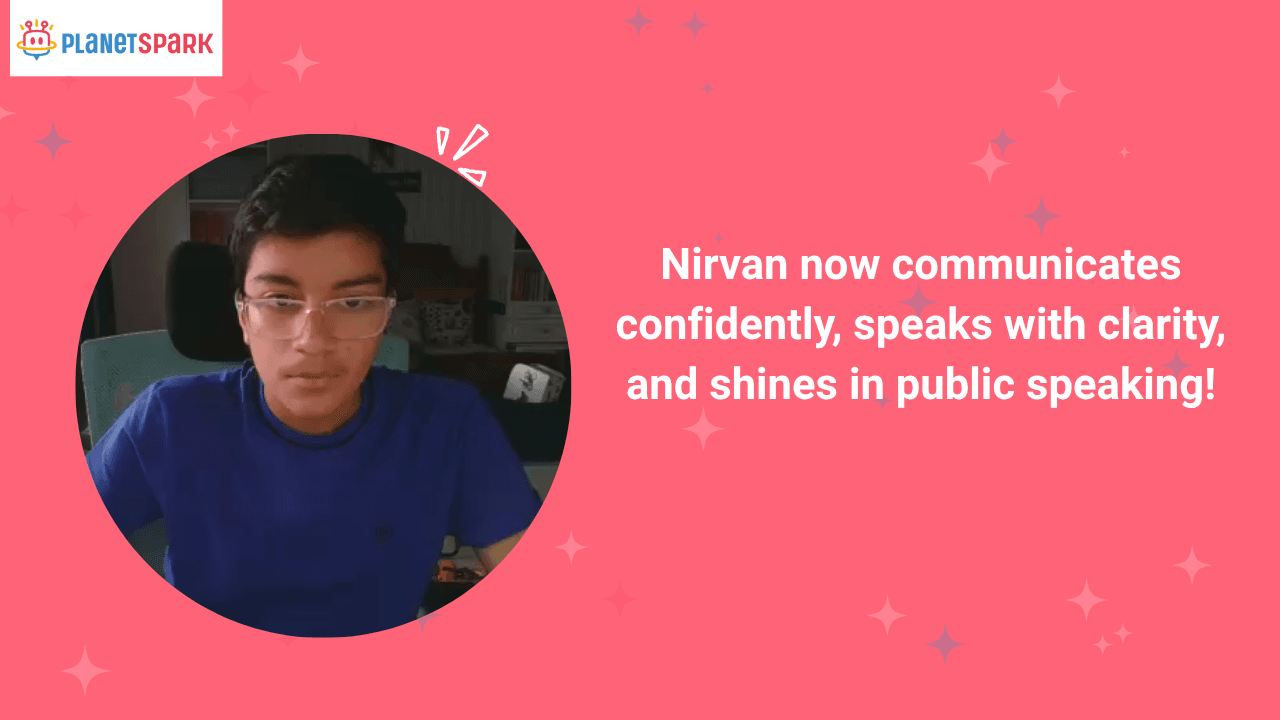
Nirvan now communicates confidently, speaks with clarity, and shines in public speaking!
How PlanetSpark Enhances Conversational English Skills
While home practice is helpful, structured learning accelerates results significantly.
PlanetSpark offers a comprehensive approach to learning through conversational english activities designed by experts.
What Makes It Effective
Guided Speaking Practice= Children participate in live interactive sessions where they actively speak and engage.
Personalized Feedback- Each child receives targeted feedback to improve specific areas.
Activity-Based Learning- Programs include role play, storytelling, debates, and real-life simulations.
Confidence Building Framework- Children are encouraged to express freely without fear of mistakes.
Structured Curriculum- Lessons are designed to ensure steady and consistent improvement.
Unlike traditional methods, this approach focuses on real communication rather than rote learning, making it highly effective for fluency development.
PlanetSpark Spoken English Classes
Build Fluency with Conversational English Programs
PlanetSpark spoken English classes are designed to improve fluency, confidence, and communication skills in children.
Key Features
Live Interactive Classes
Children engage directly with expert teachers.
Real World Practice
Focus on everyday communication scenarios.
Personalized Feedback
Helps identify and improve weak areas.
Confidence Building Approach
Encourages fearless speaking.
Structured Curriculum
Ensures step-by-step progress.
Engaging Learning Methods
Makes learning enjoyable and effective.
For parents looking for a reliable and result-driven solution, this acts as a service-like support system that complements home practice and ensures consistent improvement.

Build Fluency with Consistent Practice
Fluency in English is not achieved overnight. It is built through regular practice, confidence, and the right guidance.
Conversational english activities provide a fun and effective way for kids to improve speaking skills. By engaging in daily conversations, participating in creative exercises, and practicing consistently, children can become confident communicators.
When combined with structured learning from platforms like PlanetSpark, this journey becomes faster, more effective, and more enjoyable.
With the right balance of practice, encouragement, and expert guidance, every child can develop strong communication skills and express themselves confidently.
Frequently Asked Questions
Storytelling, role play, debates, and vocabulary games are highly effective. These activities make learning fun and interactive. They also encourage creativity and active participation.
Daily practice is ideal for consistent and steady improvement. Even short sessions can make a big difference. Regular use helps build fluency and confidence faster.
Yes, they focus on real communication instead of rote learning. Students learn how to use language in practical situations. This leads to better understanding and long-term retention.
PlanetSpark offers structured programs with expert guidance and interactive sessions. It provides real-life speaking practice and feedback. This helps students build confidence and fluency effectively.
Yes, these activities can be adjusted according to the learner’s level. Beginners as well as kids can start with simple exercises and gradually progress. This makes learning comfortable and effective.