
Deep Talk Versus Small Talk: Key Differences and Benefits
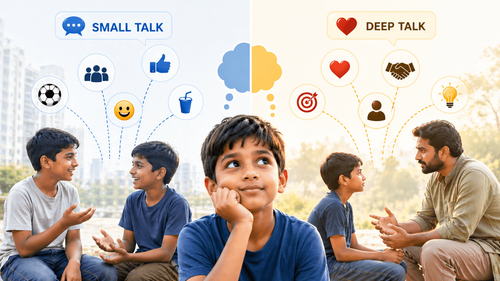

Do quick chats really build strong connections or do we need something deeper to truly understand each other? In today’s fast paced world, communication shapes relationships and personal growth more than ever. The debate around deep talk versus small talk continues to grow as people seek more meaningful interactions. While casual conversations create comfort, deeper discussions build lasting bonds. Understanding meaningful vs casual conversation can transform how you connect with others. This blog explores both styles and how mastering them improves communication. It also highlights how PlanetSpark helps learners build confidence and express ideas effectively in impactful conversations.
What Is Small Talk?
Small talk refers to light, informal conversations that typically revolve around everyday topics such as weather, hobbies, current events, or general pleasantries.
Characteristics of Small Talk:
- Short and surface-level
- Safe and non-controversial topics
- Often used in social or professional settings
- Helps break the ice
- Focuses on social ease rather than emotional depth
Examples include:
- “Nice weather today, isn’t it?”
- “How was your weekend?”
- “Did you watch the match last night?”
Small talk thrives on simplicity in communication, making it accessible and low-risk. It doesn’t demand vulnerability or deep thinking, which is why it’s commonly used in unfamiliar or formal settings.
What Is Deep Talk?
Deep talk, on the other hand, involves meaningful, thoughtful conversations that go beyond surface-level topics. These discussions often explore emotions, beliefs, personal experiences, values, and aspirations.
Characteristics of Deep Talk:
- Emotionally engaging
- Thought-provoking
- Requires trust and openness
- Builds strong connections
- Focuses on authentic communication
Examples include:
- “What motivates you to keep going during tough times?”
- “What’s a life lesson that changed your perspective?”
- “How do you define success in your life?”
Deep talk emphasizes quality of conversation, prioritizing understanding over convenience.
Deep Talk Versus Small Talk: The Core Differences
Understanding the contrast between deep talk and small talk helps you use both effectively depending on the situation.
1. Purpose: Connection vs Convenience
- Small Talk: Serves as a social lubricant. It helps initiate conversations and maintain politeness.
- Deep Talk: Aims to build genuine relationships through shared understanding.
2. Depth vs Simplicity in Communication
- Small Talk: Simple, easy, and quick.
- Deep Talk: Complex, layered, and introspective.
3. Emotional Depth vs Social Ease
- Small Talk: Comfortable and non-invasive.
- Deep Talk: Requires vulnerability and emotional investment.
4. Authentic vs Superficial Communication
- Small Talk: Often perceived as superficial but necessary.
- Deep Talk: Seen as authentic and meaningful.
5. Time and Effort
- Small Talk: Requires minimal effort and time.
- Deep Talk: Demands attention, patience, and active listening.
Help your child become a confident communicator with PlanetSpark today.
Book your free demo today.
Why Small Talk Still Matters
It’s tempting to dismiss small talk as trivial, but that would be a mistake. Small talk plays a crucial role in everyday communication.
Benefits of Small Talk:
1. Breaks the Ice
Small talk helps reduce awkwardness in new or unfamiliar situations. It creates a comfortable starting point that makes people feel at ease.
2. Builds Social Confidence
Engaging in small talk allows individuals to practice basic communication skills. Over time, this helps build confidence, especially for children and introverts.
3. Maintains Social Norms
Small talk plays an important role in maintaining polite and respectful interactions. It helps people navigate both professional and social environments smoothly.
4. Opens the Door to Deeper Conversations
Small talk often acts as the first step toward more meaningful discussions. It creates a natural transition that can lead to deeper and more engaging conversations.
The Power of Deep Talk
While small talk helps you start conversations, deep talk is what sustains and enriches them.
1. Strengthens Relationships
Deep conversations help build trust and create stronger emotional connections. They allow people to understand each other on a more personal level.
2. Encourages Self Reflection
Talking about meaningful topics helps individuals explore their thoughts and beliefs. It leads to better self awareness and understanding of others.
3. Enhances Emotional Intelligence
Deep talk improves your ability to recognize and understand emotions. It also helps you respond more thoughtfully in different situations.
4. Boosts Mental Well Being
Sharing your thoughts and feelings can help relieve stress and emotional pressure. It supports a healthier and more balanced state of mind.
5. Improves the Quality of Conversation
Meaningful conversations create a stronger impact and lasting impressions. They make interactions more engaging and valuable.

Meaningful vs Casual Conversation: Finding the Balance
The goal isn’t to eliminate small talk but to strike a balance between the two.
When to Use Small Talk:
- Networking events: Small talk helps start conversations and create initial connections in professional settings.
- Meeting new people: It allows you to interact comfortably without diving into personal topics too quickly.
- Professional environments: Small talk maintains politeness and builds rapport with colleagues and clients.
- Casual social gatherings: It keeps conversations light, friendly, and easygoing in relaxed settings.
When to Engage in Deep Talk:
- With close friends or family: Deep talk strengthens emotional bonds and builds deeper understanding.
- During one on one conversations: It allows for more focused and meaningful discussions.
- In mentoring or coaching sessions: Deep conversations help in sharing insights and guiding personal development.
- When discussing personal growth: It encourages reflection and meaningful exchange of ideas.
Balancing connection vs convenience ensures that your communication is both effective and appropriate.
Teaching Children the Art of Conversation
In today’s digital age, children often lack opportunities for meaningful interactions. Teaching them the difference between deep talk versus small talk early on can set them up for success.
Skills Children Should Learn:
- Active listening
- Asking open-ended questions
- Expressing opinions clearly
- Understanding emotions
- Engaging respectfully in discussions
PlanetSpark integrates these skills into its curriculum, helping children master both emotional depth vs social ease.
Why Many People Struggle with Deep Conversations
Despite the benefits, many people find deep talk challenging.
Common Reasons:
1. Fear of Judgment
Many people hesitate to engage in deep conversations because they worry about being judged, misunderstood, or rejected. This fear often prevents them from expressing their true thoughts and emotions, keeping conversations at a surface level. Over time, this can limit genuine connection and openness in relationships.
2. Lack of Communication Skills
Not everyone is naturally skilled at expressing complex ideas or emotions. Without proper guidance or practice, people may find it difficult to articulate their thoughts clearly, which makes deep conversations feel uncomfortable or overwhelming.
3. Limited Vocabulary or Expression
A restricted vocabulary can make it challenging to convey deeper thoughts and feelings. When individuals lack the right words, they may avoid meaningful discussions altogether and stick to simple, safe topics.
4. Cultural Norms Favoring Reserved Communication
In some cultures or environments, open expression of emotions and personal thoughts is discouraged. People may be taught to keep conversations formal or reserved, which can make deep talk feel inappropriate or unfamiliar.
5. Over Reliance on Digital Communication
Frequent use of texting and social media often leads to shorter and less expressive interactions. This reduces opportunities for meaningful face to face conversations, making it harder for individuals to develop the skills needed for deep and engaging discussions.
This is where structured communication training becomes essential.
Unlock powerful speaking skills and meaningful conversations with PlanetSpark.
Book your free demo today.
Practical Tips to Move from Small Talk to Deep Talk
If you want to elevate your conversations, here are some actionable tips:
1. Ask Better Questions
Moving beyond basic questions can instantly elevate the quality of your conversations. Instead of asking predictable things like “What do you do?”, try open ended questions such as “What inspired you to choose your career?” or “What excites you most about what you do?”. These types of questions invite thoughtful responses and encourage the other person to share their experiences, passions, and values, leading to more meaningful dialogue.
2. Practice Active Listening
Active listening means fully focusing on what the other person is saying rather than just waiting for your turn to speak. Maintain eye contact, nod to show understanding, and respond in a way that reflects you are truly engaged. Avoid interrupting and ask follow up questions to show genuine interest, which helps build trust and deeper connection.
3. Share Personal Experiences
Opening up about your own experiences, thoughts, or feelings makes conversations more authentic and relatable. When you share something meaningful, it signals trust and encourages the other person to do the same. This mutual exchange creates a comfortable space for deeper and more engaging discussions.
4. Be Curious, Not Judgmental
Approach conversations with an open mind and a genuine desire to understand the other person’s perspective. Avoid jumping to conclusions or forming quick judgments, as this can shut down meaningful interaction. Curiosity fosters respect and allows conversations to flow more naturally and deeply.
5. Create a Safe Space
People are more willing to engage in deep conversations when they feel emotionally safe and respected. Be supportive, maintain confidentiality, and show empathy in your responses. A safe and comfortable environment encourages honesty, making it easier to move beyond small talk into truly meaningful conversations.
The Role of Communication in Personal and Professional Growth
Mastering the balance between meaningful vs casual conversation can significantly impact your life.
In Personal Life:
- Builds stronger relationships
- Enhances emotional connection
- Promotes understanding
In Professional Life:
- Improves networking
- Strengthens leadership skills
- Encourages collaboration
Effective communication is not just about speaking, it’s about connecting.
Digital Communication: A Barrier or Opportunity?
With the rise of social media and messaging apps, communication has become faster but often less meaningful.
Challenges:
- Short attention spans
- Superficial interactions
- Lack of emotional cues
Opportunities:
- Access to diverse perspectives
- Platforms for meaningful discussions
- Tools for learning communication skills
Programs like PlanetSpark help individuals navigate this landscape by teaching authentic vs superficial communication.
Start your child’s journey to confident communication with PlanetSpark now.
Book your free demo today
Why Communication Skills Are the Future
In an increasingly automated world, human skills like communication, empathy, and critical thinking are more valuable than ever. The ability to engage in both small talk and deep talk ensures:
- Better relationships
- Greater career opportunities
- Improved mental well-being
How PlanetSpark Helps Build Strong Communication Skills
- Bridging the gap between small talk and deep talk requires the right mix of guidance and consistent practice, and PlanetSpark provides a structured platform to achieve this.
- PlanetSpark is a leading learning platform that focuses on developing communication skills in children through live and interactive classes designed for real world impact.
- The platform emphasizes essential skills such as public speaking, creative writing, and conversational fluency to help learners express themselves effectively.
Why PlanetSpark Stands Out
- Focus on real life communication: PlanetSpark teaches learners how to express their thoughts clearly and confidently in everyday situations, not just in theory.
- Encourages deep thinking: Students are trained to think critically and share meaningful ideas, helping them move beyond surface level conversations.
- Builds confidence: Regular practice and expert feedback help learners overcome hesitation and speak with clarity and self assurance.
- Enhances vocabulary and expression: Learners develop a strong vocabulary that allows them to communicate complex thoughts with ease.
- Interactive learning approach: Live sessions, debates, storytelling, and discussions ensure that learning remains engaging, practical, and highly effective.

Master Conversations That Truly Matter
The discussion around deep talk versus small talk is not about choosing one but knowing when to use each effectively. Small talk opens doors, while deep talk builds lasting connections and trust. By mastering both, you can improve the quality of conversation, balance connection and convenience, and navigate depth with ease. With the right guidance from PlanetSpark, anyone can develop these essential communication skills. If you want your child to become a confident and expressive communicator, PlanetSpark offers expert led programs that make learning engaging and practical. Start today and help them grow into a strong, impactful communicator for life.
Learn More:-
Frequently Asked Questions
Deep talk involves meaningful, emotional, and thought-provoking discussions, while small talk focuses on light, casual, and surface-level conversations.
Small talk helps break the ice, build social comfort, and maintain polite interactions, especially in new or professional settings.
You can improve by asking open-ended questions, practicing active listening, expanding your vocabulary, and being genuinely curious.
You can shift when a level of comfort and trust is established, allowing for more personal and engaging discussions.
PlanetSpark offers live, interactive classes focused on public speaking, storytelling, and critical thinking to enhance both casual and meaningful conversations.
Yes, PlanetSpark is designed for learners at all levels, helping beginners build confidence and gradually move toward advanced communication skills.
PlanetSpark emphasizes structured learning, real-life practice, and expert feedback, enabling learners to express ideas clearly and engage in deeper discussions.