
The Difference Between Interpersonal and Intrapersonal Communication


Table of Contents
- What is Interpersonal Communication?
- What is Intrapersonal Communication?
- Key Difference Between Interpersonal and Intrapersonal Commu
- Why Are Both Types of Communication Important?
- Types of Interpersonal Communication
- Types of Intrapersonal Communication
- How Interpersonal and Intrapersonal Skills Work Together
- Common Barriers to Effective Communication
- How to Improve Interpersonal Communication
- How to Improve Intrapersonal Communication
- Key Differences Between Interpersonal and Intrapersonal Comm
- PlanetSpark Advantage in Communication Skills
- Conclusion
Communication is more than just talking; it’s about connecting and with others and with ourselves. Understanding the difference between interpersonal and intrapersonal communication helps children, students, and professionals express ideas clearly, build relationships, and gain self-confidence. This blog breaks down both types of communication, their importance, examples, and how developing these skills can create confident speakers and thoughtful listeners.
What is Interpersonal Communication?
Interpersonal communication is the process of exchanging ideas, thoughts, and emotions between two or more people. It’s what helps us collaborate, build relationships, and share knowledge in schools, workplaces, and families.
This type of communication involves both verbal and non-verbal elements such as spoken words, tone, gestures, facial expressions, and even silence. For instance, when a student explains a project to their teacher or shares feedback during a group discussion, they are engaging in interpersonal communication.
Interpersonal communication can be formal, like in an interview or presentation, or informal, like chatting with friends. Regardless of the setting, it requires active listening, empathy, and clarity. The ability to express one’s point of view while understanding others’ perspectives makes it an essential life skill.
Example: Imagine a group of students working on a science project. One student confidently explains the experiment, listens to others’ inputs, and resolves differences respectfully. This shows strong interpersonal skills and clarity, teamwork, and understanding.
In today’s interconnected world, interpersonal communication determines how well students adapt to group settings, manage conflicts, and succeed in collaborative tasks. As they grow, these skills extend to professional environments like interviews, leadership roles, and team-based projects.
What is Intrapersonal Communication?
Intrapersonal communication happens entirely within one’s mind. It’s the conversation you have with yourself like your thoughts, reflections, and self-analysis. It’s invisible but incredibly powerful because it shapes confidence, emotional health, and decision-making.
Every child, teen, or adult engages in intrapersonal communication daily. When you think about your goals, reflect on mistakes, or motivate yourself before a challenge, you are communicating internally.
Example: A student nervous before a speech might say to themselves, “I’ve practiced well; I can do this.” That self-assurance is intrapersonal communication in action and it transforms anxiety into confidence.
This type of communication helps individuals process emotions and experiences. It enables better focus, introspection, and awareness. Students who regularly reflect on what went right or wrong after a task learn faster because they connect behavior with outcomes.
There are several forms of intrapersonal communication:
Self-talk – Motivational or analytical inner dialogue.
Reflection – Looking back to learn from experiences.
Visualization – Mentally rehearsing success.
Self-awareness – Recognizing one’s strengths, emotions, and weaknesses.
A student who can manage their inner thoughts effectively is less likely to be overwhelmed by stress or fear of judgment. They can regulate emotions and respond thoughtfully rather than impulsively.
Developing intrapersonal communication skills early helps children grow into emotionally intelligent, resilient individuals. Schools often focus on outward communication, but self-communication is equally crucial and also it’s where confidence begins.
Key Difference Between Interpersonal and Intrapersonal Communication
While both types involve communication, the main difference lies in their direction and interpersonal looks outward; intrapersonal looks inward. Together, they form the complete spectrum of how we understand and express ourselves.
| Aspect | Interpersonal Communication | Intrapersonal Communication |
|---|---|---|
| Meaning | Interaction between two or more people. | Communication within oneself. |
| Purpose | Build relationships, share ideas, resolve conflicts. | Reflect, analyze, and make decisions. |
| Participants | At least two individuals. | Only one person. |
| Medium | Spoken words, gestures, facial expressions. | Thoughts, self-talk, reflection. |
| Example | Discussing with classmates. | Mentally preparing before a presentation. |
Interpersonal communication happens in classrooms, meetings, or casual conversations and it’s external and observable. Intrapersonal communication, on the other hand, is silent and it’s the thought process behind every decision, response, or emotional reaction.
Example: Before a debate, a student might mentally practice arguments (intrapersonal) and then present them to the audience (interpersonal). Both stages are necessary and preparation within and performance outside.
In essence, intrapersonal communication builds self-understanding, while interpersonal communication builds understanding with others. A confident communicator blends both: they think clearly and speak clearly.
Why Are Both Types of Communication Important?
Effective communication is incomplete without balance between inner and outer dialogue. Here’s why both types are vital for students and young professionals:
1. Confidence and Self-Awareness
Intrapersonal communication fosters confidence by turning negative self-talk into positive motivation. When combined with interpersonal skills, it helps students express that confidence openly. For example, a child who believes “I can speak well” is more likely to perform confidently in a class presentation.
2. Emotional Intelligence
Understanding emotions internally (intrapersonal) and expressing them respectfully (interpersonal) is emotional intelligence. Children who master both are more empathetic and patient listeners.
3. Relationship Building
Healthy friendships and teamwork depend on how well students communicate. Reflecting before responding prevents conflicts, while empathy builds trust.
4. Academic and Career Growth
Strong communication directly impacts academic scores, leadership opportunities, and career readiness. Clear communication helps in interviews, presentations, and workplace interactions.
5. Decision-Making and Problem-Solving
Intrapersonal thinking leads to better judgment, while interpersonal and group discussions bring fresh perspectives. Together, they produce well-rounded, thoughtful decisions.
Students trained in both communication types not only perform better academically but also thrive socially and emotionally. PlanetSpark emphasizes this holistic approach and it helping learners think smartly and speak confidently, which builds success beyond classrooms.
Types of Interpersonal Communication
Interpersonal communication can take many forms, and each plays a vital role in daily life:
1. Verbal Communication
It involves words that are spoken or written. The tone, volume, and clarity affect how messages are received. In classrooms, it happens during debates, storytelling, or presentations.
Example: A student explaining a concept to classmates using simple language shows strong verbal communication.
2. Non-Verbal Communication
Body language, facial expressions, and gestures often convey more than words. A confident smile, firm posture, or attentive nod expresses interest and sincerity.
Example: During a competition, eye contact with judges shows attentiveness and confidence.
3. Written Communication
From essays to social media posts, written communication showcases structure and precision. It helps students organize thoughts and convey them effectively.
Example: Writing a heartfelt thank-you note to a teacher.
4. Listening Skills
Listening is half of communication. Active listening and paying attention, understanding, and responding appropriately and builds mutual respect.
Example: When a student listens carefully to teammates during a project discussion, it ensures smooth collaboration.
Discover Your Inner Speaker
Uncover your hidden potential with PlanetSpark’s expert-led communication classes.
Build confidence, fluency, and emotional strength and one session at a time.
Book a free demo today
Types of Intrapersonal Communication
Intrapersonal communication also has multiple forms that shape thinking patterns:
1. Self-Talk
The inner voice that motivates, guides, or questions decisions. Positive self-talk leads to growth; negative self-talk limits potential.
Example: A student thinking, “I can improve next time” instead of “I failed again.”
2. Self-Awareness
Understanding one’s strengths, weaknesses, and emotions helps make better decisions.
Example: Realizing that nervousness before speaking is normal and can be managed through practice.
3. Visualization
Mentally picturing success before an event boosts confidence.
Example: Imagining delivering a perfect speech before stepping on stage.
4. Reflection
Analyzing past experiences helps refine future behavior.
Example: Reviewing how you handled a class discussion and identifying areas of improvement.
Intrapersonal communication builds emotional maturity and helps learners control fear, anxiety, and overthinking. It integrates reflection and visualization exercises in its sessions, training students to manage their inner dialogue and transform it into strength.
How Interpersonal and Intrapersonal Skills Work Together
Communication isn’t just speaking and also it’s thinking before speaking. That’s where these two skills meet. Intrapersonal skills prepare the mind, while interpersonal skills project the message.
Example: A child preparing for a storytelling contest first imagines success, practices alone, and then confidently narrates in front of others. Both forms and internal rehearsal and external delivery and also it combine to create impact.
These skills complement each other in every situation:
Intrapersonal reflection improves interpersonal understanding.
Interpersonal feedback strengthens intrapersonal growth.
Together, they create balanced communicators.
Common Barriers to Effective Communication
Despite best efforts, certain barriers can limit communication effectiveness:
1. Emotional Barriers
Fear of judgment, nervousness, or overconfidence can block expression.
Example: A student may avoid answering in class due to fear of being wrong.*
2. Language Barriers
Using complex or unclear words confuses listeners.
Example: Overusing technical terms in a school presentation.*
3. Lack of Focus or Listening
Interrupting or not paying attention often leads to miscommunication.
4. Negative Self-Talk
Telling yourself “I can’t do this” weakens both confidence and clarity.
5. Cultural Differences
Non-verbal cues like gestures or tone vary across regions and may lead to misunderstanding.
How to Improve Interpersonal Communication
Interpersonal communication is more than just talking and also it’s the art of expressing thoughts clearly, listening actively, and connecting meaningfully. Developing this skill can help children and young learners stand out in classrooms, interviews, and social settings. When students know how to express ideas with confidence and empathy, they not only build better relationships but also learn to become leaders who inspire others.
Improving interpersonal communication takes practice, patience, and awareness. Below are key ways to strengthen this vital life skill:
Learn. Speak. Shine.
Turn your thoughts into powerful words and ideas that inspire.
PlanetSpark’s one-on-one coaching helps you express, engage, and excel.
Book your free demo and begin your communication journey today!
1. Practice Active Listening
Listening is one of the most underrated parts of communication. Most people listen to reply, not to understand. Encouraging students to listen attentively before responding teaches respect and patience. Active listening involves maintaining eye contact, nodding to show understanding, and asking follow-up questions.
Example: During a class discussion, instead of interrupting, a student waits for their friend to finish and then adds their point thoughtfully. This creates a balanced and respectful conversation.
When children learn to listen carefully, they build stronger friendships and perform better in group activities. Listening also helps reduce conflicts and misunderstandings and its a skill essential in both personal and professional spaces.
2. Develop Empathy
Empathy means seeing a situation from someone else’s perspective. Teaching children to think, “How would I feel if I were in their place?” makes communication more kind and effective. Empathetic communicators respond thoughtfully and make others feel heard.
Example: If a classmate seems upset, instead of ignoring them, saying, “You look worried and also want to talk about it?” shows emotional intelligence.
Empathy builds trust and creates a supportive environment where everyone feels valued.
3. Maintain Positive Body Language
Non-verbal signals often speak louder than words. A confident posture, steady eye contact, and friendly gestures convey openness and sincerity. Teaching children to be aware of their expressions and tone helps them appear approachable and confident.
Example: Smiling while greeting a teacher or standing upright during a presentation projects confidence and respect.
Positive body language also includes avoiding fidgeting or crossing arms, as these can appear defensive. When students master body language, they naturally appear more self-assured during interactions.
4. Build Vocabulary and Clarity
Having a strong vocabulary helps express thoughts precisely. However, clarity is more important than complexity. Encourage children to use simple words and examples to make their points relatable. Reading books, watching educational shows, and practicing storytelling can expand vocabulary and improve sentence structure.
Example: Instead of saying, “It was an advantageous situation,” saying, “It worked out well for us,” sounds clearer and natural.
At PlanetSpark, learners practice structuring thoughts into short, impactful sentences through debates, impromptu speeches, and guided feedback. This makes their communication both confident and easy to follow.
5. Join Speaking Activities
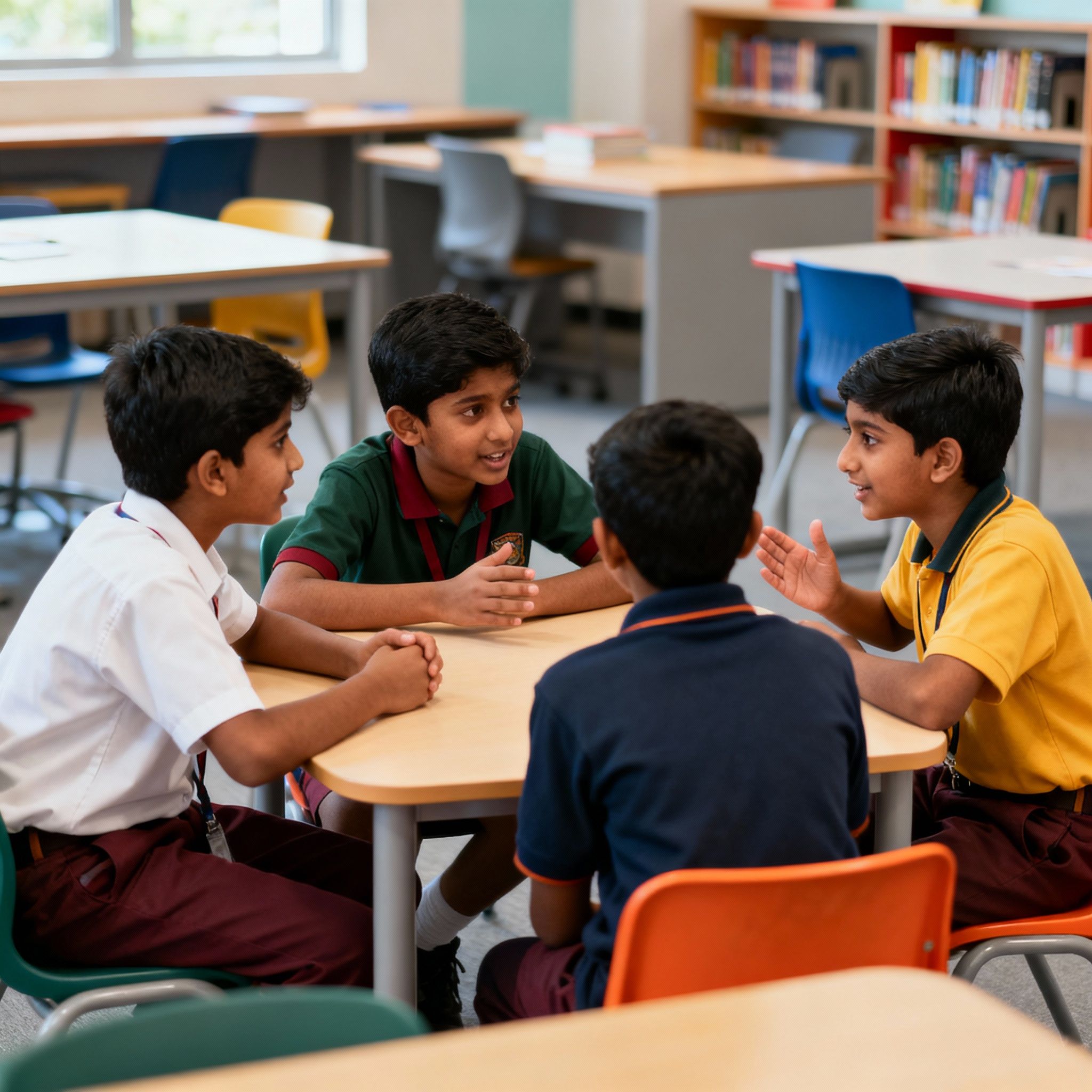
Confidence grows through practice. Activities like storytelling, debates, extempore sessions, and group discussions help children apply interpersonal skills in real-life scenarios.
Example: Participating in a “Mock Interview” session where students practice answering confidently while maintaining eye contact builds long-term social confidence.
Regular participation in such exercises not only enhances speech fluency but also teaches teamwork, adaptability, and composure under pressure.
6. Seek Constructive Feedback
Feedback acts as a mirror and also it helps identify strengths and areas of improvement. Encourage learners to seek feedback from teachers, parents, or peers after a presentation or conversation. Positive criticism, when accepted gracefully, can significantly improve communication style.
Example: A student who receives feedback about speaking too fast can consciously slow down in the next attempt.
How to Improve Intrapersonal Communication
While interpersonal communication helps us connect with others, intrapersonal communication is the bridge to connect with ourselves. It’s the quiet conversation we have in our minds and our self-talk, reflections, and inner thoughts that shape our confidence, emotions, and decisions. Strengthening intrapersonal communication means understanding our emotions, setting clear goals, and nurturing a positive mindset.
At its core, intrapersonal communication helps students and young learners build self-awareness as the ability to understand what they feel, why they feel it, and how to respond positively. Here’s how one can improve it:
1. Practice Self-Reflection
Taking a few minutes each day to think about what went well, what didn’t, and what could improve helps children become more mindful.
Example: Before sleeping, a student reflects, “I was nervous during my class presentation, but I did better than last time. Next time, I’ll practice my opening lines more.”
This simple reflection helps build emotional intelligence and resilience. Over time, it creates self-awareness and its a vital life skill for handling stress, feedback, and change.
Self-reflection can be done through journaling, meditation, or even quiet walks. PlanetSpark often encourages students to maintain a “confidence journal,” where they write about daily achievements, however small, to track growth and build self-belief.
2. Develop Positive Self-Talk
The way we speak to ourselves internally matters more than we realize. Positive self-talk motivates and builds confidence, while negative self-talk creates doubt and fear.
Example: Instead of thinking, “I’m bad at speaking,” saying, “I can improve with practice,” shifts mindset from failure to growth.
Teachers and parents can encourage children to use affirmations like:
“I am improving every day.”
“I can express my ideas clearly.”
“Mistakes help me learn.”
This change in mindset transforms how learners perceive challenges and boosts confidence in public speaking or new environments.
3. Set Personal Goals
Goal-setting gives purpose to our inner dialogue. It helps students focus their thoughts on actionable steps rather than self-doubt.
Example: A child sets a goal that: “I’ll speak for 1 minute in tomorrow’s storytelling class confidently.” When achieved, it builds momentum and trust in their abilities.
Setting short-term, achievable goals creates motivation and direction. It also reduces anxiety about performance because the child learns to focus on progress, not perfection.
4. Manage Emotions Mindfully
Children often struggle to express what they feel. Teaching them to name emotions such as like anger, joy, fear, or excitement that improves emotional control.
Example: Instead of saying, “I don’t know why I’m upset,” a child says, “I’m upset because my idea wasn’t heard.” This awareness helps them address the issue calmly instead of reacting impulsively.
Simple breathing exercises, art activities, or mindfulness sessions can help them stay calm during stressful situations like exams or competitions.
5. Build Self-Motivation
Intrapersonal communication strengthens when children learn to motivate themselves even without external praise.
Example: A student practices a speech repeatedly, not because the teacher asked, but because they want to do better than last time.
When learners find internal motivation, they develop independence, perseverance, and long-term confidence and traits that go beyond academics.
Key Differences Between Interpersonal and Intrapersonal Communication
While both interpersonal and intrapersonal communication play vital roles in shaping personality and emotional intelligence, the key difference lies in who we are communicating with. Interpersonal communication involves others and it’s external and visible. Intrapersonal communication happens within ourselves and also it’s internal and reflective.
Understanding these differences helps learners become more mindful communicators, capable of expressing their thoughts clearly and managing their emotions intelligently. Let’s break this down for better clarity.
1. Definition and Focus
Interpersonal Communication:
It is the exchange of ideas, emotions, and information between two or more people. This can happen face-to-face, over a call, or even through digital platforms.
Example: A classroom discussion, a debate competition, or even a friendly chat with a peer are all forms of interpersonal communication.Intrapersonal Communication:
It refers to self-talk or the internal process of analyzing thoughts and feelings. It helps individuals plan, reflect, and understand their own emotions.
Example: A student mentally rehearsing their speech before going on stage is engaging in intrapersonal communication.
2. Purpose and Outcome
Interpersonal: Its main purpose is to build relationships, share perspectives, and achieve cooperation.
Outcome: Improved teamwork, stronger friendships, and better emotional bonding.Intrapersonal: The goal is self-awareness and personal growth.
Outcome: Enhanced confidence, clarity in decision-making, and emotional stability.
3. Communication Channels
Interpersonal Communication happens through spoken words, gestures, facial expressions, and tone. It requires both verbal and non-verbal cues.
Example: Smiling during a conversation, maintaining eye contact, or listening actively.Intrapersonal Communication uses internal channels such as thoughts, memories, or self-reflection. There are no external gestures involved.
Example: Thinking about how to respond in a tough situation before speaking.
4. Feedback and Interaction
Interpersonal Communication involves immediate feedback. The other person responds to your message, helping you gauge understanding.
Example: During a group discussion, if your peer nods in agreement, it shows they understand.Intrapersonal Communication has no direct feedback from others. The feedback comes from self-assessment and internal reflection.
Example: After a test, thinking about what you did right or wrong is a self-feedback loop.
5. Influence and Scope
Interpersonal Communication influences external relationships such as friendships, teamwork, and collaboration.
Intrapersonal Communication influences internal growth such as confidence, motivation, and emotional regulation.
Both are interconnected. A student with strong intrapersonal skills (self-confidence, clarity, calmness) can communicate more effectively with peers and teachers in interpersonal settings.
Comparison Snapshot
| Aspect | Interpersonal Communication | Intrapersonal Communication |
|---|---|---|
| Meaning | Exchange of messages between individuals | Communication with self |
| Purpose | Build relationships, express ideas | Self-reflection and emotional control |
| Feedback | Comes from others | Comes from self |
| Medium | Verbal & non-verbal cues | Thoughts and self-talk |
| Example | Group discussions, teamwork | Goal-setting, journaling |
PlanetSpark Advantage in Communication Skills
Many students and even young professionals lose opportunities not because they lack knowledge, but because they struggle to communicate it effectively. In today’s competitive world, employers and educators value clarity, confidence, and the ability to express ideas with logic and empathy. These skills are not innate — they are built through structured communication training, and that’s exactly where PlanetSpark excels.
PlanetSpark focuses on nurturing essential life and workplace communication skills that empower learners to express ideas, lead discussions, and make lasting impressions.
1:1 Public Speaking Coaching by Communication Experts
Every learner at PlanetSpark receives personalized one-on-one coaching. This ensures they get targeted feedback based on their strengths and areas of improvement.
The trainers are certified professionals in both communication and child psychology, which means every session is supportive, motivating, and growth-oriented.
Through customized guidance, students build confidence in speaking, learn how to present complex ideas simply, and gradually overcome stage fear.
Step-by-Step Skill Building
It covers all the vital pillars of public speaking and expressive communication:
Body Language: Learn to master facial expressions and gestures that reinforce confidence and assertiveness.
Voice Modulation: Use tone, pauses, and pitch variation to create vocal impact and hold attention.
Speech Structuring & Storytelling: Build engaging narratives with clear beginnings, middles, and endings that audiences remember.
Persuasive Techniques & Debating: Practice counterarguments, rebuttals, and techniques like ethos, pathos, and logos through activities such as turncoat debates, mock parliaments, and group discussions.
Each concept is taught through interactive sessions, encouraging children to apply what they learn in real-life communication scenarios.
TED-Style Training Modules
Inspired by TEDx speakers, PlanetSpark trains learners to structure speeches using the “Hook → Message → Story → Call-to-Action” framework.
This approach helps them create speeches that not only inform but inspire and engage their listeners.
Students learn to speak with purpose, deliver emotional depth, and connect with their audience using storytelling, examples, and confident delivery.
Real-Time Practice and Growth
Panel discussions and storytelling circles to develop teamwork and listening skills.
Q&A practice to handle tough questions confidently.
Critical thinking sessions that teach them how to respond intelligently under pressure.
Conclusion
In conclusion, both interpersonal and intrapersonal communication are not just skills but life assets that shape who we are. Interpersonal communication enables us to connect, collaborate, and convey ideas effectively, while intrapersonal communication builds self-awareness, emotional intelligence, and confidence. Together, they create balanced personalities capable of leading, listening, and learning with empathy. Whether in schools, colleges, or professional settings, success often depends on how well one harmonizes these two forms of communication. Developing these skills early helps children become more resilient, expressive, and confident.
Platforms like PlanetSpark play a vital role in this journey by offering guided coaching and structured learning experiences to help learners master both interpersonal and intrapersonal communication. When children learn to speak clearly with others and think clearly within themselves, they evolve into unstoppable communicators of tomorrow and get ready to lead, inspire, and make an impact.
Frequently Asked Questions
Interpersonal communication happens between two or more people, while intrapersonal communication occurs within oneself and it’s self-talk and reflection.
Both are essential — one builds relationships, and the other strengthens self-awareness. Together, they help in personal and professional growth.
Yes. Positive self-talk and self-reflection improve self-esteem, clarity, and emotional balance, which directly boost confidence in public speaking or decision-making.
Through role plays, storytelling, debates, and group discussions. Regular speaking practice with feedback is key to improvement.
Absolutely. It’s the foundation of emotional intelligence because it helps individuals identify and manage their feelings effectively.
PlanetSpark provides 1:1 public speaking training, TED-style modules, and real-time practice sessions to strengthen both interpersonal and intrapersonal communication.
PlanetSpark combines expert coaching, interactive learning, and real time performance tracking. Every session is designed to help children communicate with authenticity, creativity, and confidence.
Most learners notice visible improvement in fluency, confidence, and presentation within 4–6 weeks of consistent participation and practice.