
Enhance Your Expressive Communication Skills Easily
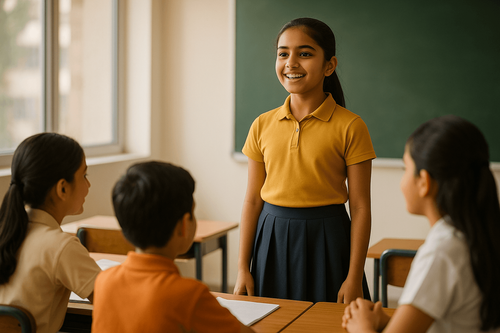

Table of Contents
- Expressive Communication Skills
- Why Expressive Communication Matters for Children
- Types of Expressive Communication Skills
- Key Elements of Good Expressive Communication
- Common Communication Problems Children Face
- Skills Children Should Develop for Better Expression
- How Parents Can Help at Home
- How Teachers Can Support Children in School
- Fun Activities to Improve Expressive Communication
- Checkpoints for Children
- Checkpoints for Parents
- Table: Verbal vs Non-Verbal Communication
- Table: Tips for Better Expression
- How to Help Children Express Emotions
- How to Build Confidence in Communication
- Classroom Strategies for Expressive Communication
- Mistakes Children Commonly Make
- Real-Life Situations Where Children Use Expressive Communica
- How Expressive Communication Helps in Future
- Practice Plan for 30 Days
- How to Build Expressive Communication Through Reading
- How Writing Supports Expressive Communication
- Simple Topics Children Can Practise
- Advanced Topics for Class 6
- Story Starters to Improve Expression
- Group Games That Build Communication Skills
- Tips for Children to Improve Expressive Skills
- Tips for Parents to Support Progress
- When to Seek Extra Support
- About PlanetSpark : Communication Skills
- Conclusion
Confident speakers get noticed first whether in school, interviews, or everyday interactions. Expressive communication is the edge every child needs.
Wondering how to help your child speak clearly, confidently, and naturally? This guide shows what expressive communication really means, why it matters, and simple ways to build it early. PlanetSpark’s live classes use expert trainers, interactive activities, and real-world speaking practice to help children express ideas with clarity, confidence, and impact.
Expressive Communication Skills
Expressive communication skills refer to the ability to clearly convey thoughts, feelings, ideas, or information to others using words, gestures, tone, and body language. For children and students, these skills are critical for social interaction, academic success, and overall confidence.
Key Components:
Verbal Skills – Vocabulary, sentence formation, clarity of speech.
Non-verbal Skills – Gestures, facial expressions, posture, and eye contact.
Social Communication – Turn-taking, listening actively, responding appropriately.
Emotional Expression – Conveying feelings effectively and empathetically.
Give your child the voice that stands out — Book a Free Demo Class.
These skills include:
• Speaking clearly
• Using the right words
• Organising thoughts
• Using expressions and gestures
• Sharing feelings in a healthy way
• Listening and responding properly
• Understanding when and how to speak
Developing expressive communication skills helps children perform better in school, make new friends, and feel confident in different situations.
Why Expressive Communication Matters for Children
Good communication helps children express themselves without fear. It also supports learning and emotional growth.
Helps in Academic Success
When children communicate well, they can ask questions, answer confidently, and explain their ideas during classroom activities. This improves their understanding of subjects and helps them perform better.
Builds Confidence
Children who communicate clearly feel comfortable speaking in front of others. Confidence also grows when they share their thoughts without hesitation.
Improves Social Skills
Communication plays a strong role in friendships. Children can make friends easily when they know how to greet, start conversations, and share ideas respectfully.
Strengthens Emotional Expression
Expressive communication helps children share their feelings. It reduces stress, confusion, and misunderstandings. When children express emotions properly, parents and teachers can guide them better.
Types of Expressive Communication Skills
Verbal Communication
This includes the actual words children speak. Good verbal communication means choosing words wisely and speaking in full sentences.
Non-Verbal Communication
This includes body language, facial expressions, gestures, eye contact, and posture. Non-verbal signals help children express emotions even without speaking.
Written Communication
Children express ideas through writing in school assignments, letters, diary entries, or stories. Writing strengthens clarity and organisation.
Visual Communication
Sometimes children use drawings, charts, or diagrams to explain ideas. These visual forms also strengthen expressive ability.
Key Elements of Good Expressive Communication
Clear Voice
A clear and audible voice helps others understand children easily.
Proper Vocabulary
Choosing the right words makes communication accurate. A strong vocabulary improves speaking and writing.
Organised Thoughts
Children should express ideas in sequence: beginning, middle, and end. This makes communication easy to follow.
Listening Skills
Listening is part of expressive communication. Children must hear others before responding.
Right Facial Expressions
Smiling, showing excitement, or expressing concern makes communication meaningful.
Confident Body Language
Standing straight, maintaining eye contact, and avoiding unnecessary movements makes a child look confident.
Common Communication Problems Children Face
Many children struggle with communication. Here are common issues and how they affect expression.
Confidence begins with the first step. Take it today — Book a Free Demo Class
Shyness or Fear of Speaking
Children may feel nervous or afraid of making mistakes. This stops them from speaking freely.
Limited Vocabulary
When children do not know words to express ideas, they stay quiet or speak in very short sentences.
Speaking Too Fast or Too Slowly
Both can make communication unclear. Children need to control their pace.
Lack of Clarity
Some children jumble sentences or skip important details.
Low Confidence
Children may hesitate even when they know the answer. This affects participation.
Weak Eye Contact
Not looking at the listener can make communication less effective.

Skills Children Should Develop for Better Expression
Sentence-Framing Skills
Children should learn to speak in full sentences rather than broken phrases. For example, instead of saying:
Went to park
They can say:
I went to the park with my friends.
Thought Organisation
Children need to learn how to arrange their points. A simple method is:
First point
Then explanation
Then example
Voice Modulation
Using a flat voice makes communication dull. Changing tone, pitch, and speed helps keep the listener engaged.
Vocabulary Building
Learning new words daily helps children express themselves better.
Practising Conversations
Speaking with parents, siblings, or friends improves fluency.
How Parents Can Help at Home
Parents play a major role in helping children grow into expressive communicators.
Encourage Daily Conversations
Talk to your child every day about school, friends, or interesting events.
Ask Open-Ended Questions
Use questions that need more than yes or no answers. For example:
What was the most exciting part of your day?
Read Together
Reading improves language. Parents can discuss characters, settings, and events with children.
Teach New Words Daily
Introduce three new words every day with meanings and examples.
Practice Storytelling
Let children narrate short stories or explain pictures.
Clear speech creates strong leaders — Book a Free Demo Class now.
How Teachers Can Support Children in School
Teachers help children build communication skills through structured activities.
Encourage Class Participation
Simple questions help children build confidence.
Use Group Activities
Group discussions improve listening and speaking.
Provide Speaking Opportunities
Activities like show-and-tell, debates, and role-play encourage expression.
Give Clear Feedback
Teachers can guide children on voice clarity, expression, and organisation.
Use Games and Learning Tools
Games like word puzzles and picture storytelling make communication fun.

Fun Activities to Improve Expressive Communication
Here are activities that make communication practice enjoyable and effective.
Activity 1: Show and Tell
Children bring an object and talk about it for one minute. This helps them speak confidently and organise ideas.
Steps:
Choose an object
Introduce it
Explain its use
Share why it is special
End with a simple conclusion
Activity 2: Picture Description
Show a picture and ask children to describe everything they see. This builds observation and verbal skills.
Activity 3: Story Building
Start a story with one line. Let the child add the next line. Continue until the story is complete.
This improves imagination and sequencing.
Activity 4: Role-Play
Children act out scenes like visiting a doctor, buying something, or helping a friend. Role-play makes communication practical and fun.
Activity 5: Mirror Speaking
Children stand in front of a mirror and speak for one minute. This helps improve clarity, confidence, and expressions
Activity 6: Vocabulary Box
Children create a small box to keep new words. Every day, they add three new words with meanings and sample sentences
Activity 7: Conversation Cards
Write conversation topics on small cards such as:
My favourite book
A place I want to visit
Something new I learned
Children pick a card and talk about it for one minute.
Checkpoints for Children
Children can use this checklist to improve their skills.
• Did I speak clearly
• Did I use full sentences
• Did I look at the listener
• Did I speak at the right speed
• Did I organise my thoughts
• Did I use new vocabulary
• Did I listen before responding
Every confident speaker was once a learner — Book a Free Demo Class.
Checkpoints for Parents
Parents can use these checkpoints to guide children.
• Did my child speak without fear
• Do they explain ideas clearly
• Can they describe events in detail
• Do they show interest in reading
• Are they learning new words daily
• Do they participate in conversations
• Are they able to express emotions properly
Table: Verbal vs Non-Verbal Communication
| Type | What It Includes | Importance |
|---|---|---|
| Verbal | Words, sentences, tone | Helps share ideas clearly |
| Non-Verbal | Expressions, eye contact, gestures | Makes communication meaningful |
Table: Tips for Better Expression
| Skill | Tip |
|---|---|
| Vocabulary | Learn 3 new words daily |
| Speaking | Use full sentences |
| Confidence | Practise 1 minute talks |
| Listening | Wait for others to finish |
| Expression | Use face and hands meaningfully |
| Organisation | Use beginning, middle, end |
How to Help Children Express Emotions
Expressing feelings is a part of communication. Children should learn how to express joy, sadness, anger, worry, and excitement in healthy ways.
Teach Feeling Words
Instead of saying I feel bad, children can say:
I feel worried
I feel angry
I feel disappointed
Knowing emotion words improves clarity.
Use the Emotion Wheel
Parents can show children simple groups like:
Happy
Sad
Angry
Scared
Excited
Children pick the right word and explain it.
Encourage Writing
Children can write about their feelings in a diary.

How to Build Confidence in Communication
Children become expressive when they feel confident.
Practise Small Speeches
One minute talks on simple topics help children improve fluency.
Avoid Interrupting
Let children finish their sentences. Interrupting makes them lose confidence.
Celebrate Effort
Praise the attempt, not just the result.
Build a Safe Speaking Environment
Make home a place where children feel free to speak.
Classroom Strategies for Expressive Communication
Group Discussions
Students share ideas in groups. This teaches listening, turn-taking, and expressing different opinions.
Peer Sharing
Pair children to talk about a topic. This reduces fear.
Brainstorming Sessions
Children share ideas without fear of being wrong.
Creative Writing
Writing stories and essays strengthens expressive thinking.
Presentations
Short presentations build clarity and confidence.
Mistakes Children Commonly Make
Speaking in Broken Sentences
Children sometimes speak in incomplete phrases.
Fix: Encourage full sentences with clear structure.
Using Mother Tongue Words in English
Mixing languages reduces clarity.
Fix: Teach simple English alternatives.
Fear of Making Mistakes
Children avoid speaking due to fear.
Fix: Praise effort and progress.
Speaking Too Softly
Low volume makes communication unclear.
Fix: Practise reading aloud daily.
Poor Eye Contact
Avoiding eye contact affects connection.
Fix: Mirror practice can help.
Real-Life Situations Where Children Use Expressive Communication
At School
Answering questions
Presenting in class
Speaking in assemblies
Explaining homework
Working in groups
At Home
Talking to parents
Sharing daily experiences
Asking for help
Explaining problems
Playing with siblings
With Friends
Making new friends
Solving problems
Sharing ideas
Playing games that need communication
How Expressive Communication Helps in Future
Children who speak clearly grow into confident teenagers and adults. Good communication helps them:
• Build leadership skills
• Do well in interviews
• Speak confidently in public
• Express emotions in healthy ways
• Build strong relationships
These skills stay with them for life.
Help your child speak with clarity, courage, and impact — Book a Free Demo Class.
Practice Plan for 30 Days
| Day Range | Activity |
|---|---|
| Days 1–5 | Mirror speaking |
| Days 6–10 | Vocabulary building |
| Days 11–15 | Picture description |
| Days 16–20 | Storytelling |
| Days 21–25 | One minute talks |
| Days 26–30 | Role-play and presentation |
This 30-day plan helps children improve gradually.
How to Build Expressive Communication Through Reading
Reading strengthens language and imagination.
Read Aloud
Children read for ten minutes daily. This improves fluency.
Discuss Stories
Parents can ask:
What happened
Why did the character do that
What would you do differently
Create Story Maps
Children draw main events of the story. This helps organise thoughts.
How Writing Supports Expressive Communication
Writing and speaking are connected.
Journaling
Children write a short daily entry.
Story Writing
Using pictures or prompts, children create small stories.
Letter Writing
Writing letters to family members teaches expressive clarity.
Simple Topics Children Can Practise
My favourite game
A place I want to visit
My best friend
A day at the beach
What I want to be when I grow up
A festival I enjoy
My favourite teacher
These topics help children practise without pressure.
Advanced Topics for Class 6
How technology helps in education
Why reading is important
My role model
A problem in my school and how to fix it
How to protect the environment
Practising advanced topics builds strong expressive skills.
Story Starters to Improve Expression
Start with any of these lines:
Yesterday, something unexpected happened
If I could change one thing in the world
The best surprise of my life
One day, while walking home
The moment I felt proud of myself
Children complete the story using imagination.
Group Games That Build Communication Skills
Pass the Story
Students sit in a circle. One person starts a story, and others continue it.
Mystery Bag
A bag contains objects. Children pick one and describe it.
Guess the Emotion
Children act out an emotion without speaking. Others guess.
These activities make communication enjoyable.
Tips for Children to Improve Expressive Skills
• Speak slowly and clearly
• Use full sentences
• Look at the listener
• Practise every day
• Learn new words
• Use gestures and expressions
• Stay confident even if you make mistakes
Tips for Parents to Support Progress
• Provide speaking opportunities
• Avoid correcting every small mistake
• Encourage reading
• Celebrate improvement
• Have daily conversations
• Model good communication
Let your child’s voice shine brighter every day — Book a Free Demo Class.
When to Seek Extra Support
Some children may need additional help. Parents can check for signs:
• Child avoids speaking
• Very limited vocabulary
• Difficulty forming sentences
• Trouble expressing emotions
• Poor clarity
In such cases, communication classes or expert guidance can help.
About PlanetSpark : Communication Skills
PlanetSpark helps children become confident, expressive, and impactful communicators through interactive 1:1 live classes. Our Communication Skills Program builds clarity, fluency, creativity, and strong speaking skills empowering kids to express themselves boldly in school, on stage, and in everyday conversations.
1. 1:1 Expert Communication Coaches
Each child learns with a certified communication trainer who tailors every session to their personality, strengths, and challenges ensuring focused growth in clarity, confidence, and expression.
2. Personalised Communication Roadmap
A customised curriculum strengthens storytelling, grammar, vocabulary, body language, listening skills, and structured speaking guiding students from basic communication to advanced articulation.
3. AI-Powered Feedback for Real Improvement
With SparkX and AI-led speaking tools, learners receive instant insights on clarity, tone, pace, confidence, and pronunciation helping them refine their speaking style with measurable progress.
4. Interactive & Gamified Learning
Modules like Word Wisdom, Grammar Guru, Spell Knockout, and Presentation Games keep learning exciting, helping children practise consistently through fun, engaging challenges.
5. Confidence for Every Situation
Through debates, roleplays, storytelling, interviews, and real-life speaking drills, students build the confidence to communicate naturally at school, on stage, in groups, and in public.
Conclusion
Expressive communication skills help children share ideas, express emotions, and interact confidently with others. These skills are important for academic success, social connections, emotional growth, and future opportunities. With simple daily practice, fun activities, parent support, and structured learning, every child can become a confident communicator.
The goal is not perfection, but progress. When children learn to express themselves clearly and confidently, they grow into strong thinkers and responsible individuals. Expressive communication is a lifelong skill that supports learning, builds relationships, and makes children feel heard, understood, and valued.
Frequently Asked Questions
Expressive communication skills help children share their thoughts, feelings, and ideas clearly through speech, body language, and tone.
They improve confidence, school performance, teamwork, and social interaction, making children better speakers and listeners.
Parents can encourage daily conversations, storytelling, reading aloud, and simple speaking activities at home.
Yes. With gentle practice, small speaking tasks, and the right guidance, even very shy children can learn to communicate confidently.
PlanetSpark trains kids through interactive classes, practice-based activities, personalised feedback, and fun speaking challenges.