
Five Finger Rule for Reading: How It Helps Kids to Read
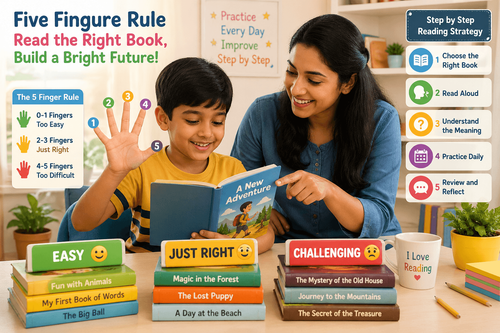

Table of Contents
- Step by Step Reading Strategy for Beginners
- What is the Five Fingure Rule for Reading?
- Why Kids Struggle with Reading in Early Stages
- How the Five Fingure Rule Supports Effective Reading Growth
- Common Mistakes to Avoid While Teaching Reading
- Develop Real-World Communication Skills with PlanetSpark
- Why Strong Reading Skills Lead to Better Communication?
Many kids struggle to choose the right books and often feel frustrated while reading. Have you ever seen a child lose interest just because a book felt too hard or too easy? This leads to low confidence and poor comprehension. The five fingure rule for reading is a simple and effective method that helps children pick books at the right level and improve their reading skills.
In this blog, you will learn how this method works, why it is useful, and how it fits into beginner reading strategies, active reading techniques, and a step by step reading strategy for beginners. By the end, you will have practical tips to help kids read with confidence and understanding.
Step by Step Reading Strategy for Beginners
A structured approach is essential for improving reading skills, especially for children who are just starting their learning journey. A clear plan helps them build confidence, stay consistent, and gradually improve both fluency and comprehension. Here is a step by step reading strategy for beginners that works effectively:
Step 1: Choose the Right Book
The first and most important step is selecting a book that matches the child’s reading level. Using the five fingure rule for reading, children can easily identify whether a book is too easy, too difficult, or just right.
A suitable book keeps them engaged and motivated, making learning enjoyable instead of stressful.
Step 2: Read Aloud
Encourage children to read out loud rather than silently. Reading aloud helps improve pronunciation, clarity, and confidence.
It also allows parents or teachers to identify mistakes and guide the child in real time. Over time, this practice builds fluency and reduces hesitation.
Want to become a confident speaker? Join PlanetSpark Communication Skills Classes. Book a free trial now!
Step 3: Understand the Meaning
Reading is not just about recognizing words but also about understanding them. After reading a paragraph or page, ask simple questions like:
- What was the story about?
- Who were the characters?
- What happened next?
This step helps children focus on comprehension and not just speed.
Step 4: Practice Daily
Consistency plays a major role in improving reading skills. Even a short daily reading session of 10 to 15 minutes can lead to noticeable improvement.
Regular practice strengthens vocabulary, improves fluency, and builds a habit of reading.
Step 5: Review and Reflect
After finishing a reading session, encourage children to talk about what they learned. They can summarize the story, share their favorite part, or explain a new word they discovered.
This reflection helps improve memory, understanding, and communication skills.
This step by step reading strategy for beginners ensures that children learn in a structured and stress-free way. It combines the right book selection, regular practice, and active understanding.
When supported with active reading techniques and the five fingure rule for reading, this method helps children develop strong reading habits, better comprehension, and long-term confidence in learning.

What is the Five Fingure Rule for Reading?
The five fingure rule for reading is a simple technique used to help children select books that match their reading ability. It ensures that the book is neither too easy nor too difficult, creating the perfect balance for learning.
Here is how it works:
- Ask the child to read a page from the book
- Every time they find a difficult word, they raise one finger
- If they raise five fingers on a page, the book is too difficult
Understanding the Results
- 0–1 difficult words: Too easy
- 2–3 difficult words: Just right
- 4–5 difficult words: Too challenging
This method helps children build confidence and avoid frustration. It is one of the most effective beginner reading strategies for developing strong reading habits.
Want to improve your reading and communication skills?
Join PlanetSpark Communication Skills Classes.
Book a free trial now!
Why Kids Struggle with Reading in Early Stages
Many children face difficulties in reading because they are introduced to books that do not match their skill level. When the material is too hard, they feel overwhelmed. When it is too easy, they lose interest. This imbalance often leads to:
- Loss of interest in reading
- Difficulty in understanding content
- Fear of reading aloud
In the early stages, children are still developing basic skills like word recognition, pronunciation, and comprehension. If they repeatedly struggle, they may start associating reading with stress instead of enjoyment.
Another major issue is the lack of structured learning. Without proper active reading techniques, children tend to read passively. They may go through the words without truly understanding the meaning or connecting ideas. This slows down their overall progress.
Common Challenges Faced by Beginners
- Limited vocabulary: Children often come across unfamiliar words, which interrupts their reading flow and reduces confidence.
- Lack of focus: Young learners can easily get distracted, especially if the content is not engaging or is too difficult.
- Poor pronunciation: Without guidance, children may misread words, which affects fluency and clarity.
- Hesitation while reading: Fear of making mistakes can make children pause frequently or avoid reading altogether.
- Low confidence: Repeated struggles can make children feel that they are not good at reading, which impacts their willingness to try.
Building the Right Foundation
These challenges highlight the importance of choosing the right approach. The five fingure rule for reading helps solve many of these problems by guiding children toward books that suit their level. When children read material they can handle, they feel more confident and stay motivated.
When combined with active reading techniques and a step by step reading strategy for beginners, this approach creates a strong foundation. It allows children to improve gradually, understand better, and develop a positive attitude toward reading.
How the Five Fingure Rule Supports Effective Reading Growth
The five fingure rule for reading is not just a tool for picking books. It plays a key role in shaping effective beginner reading strategies by helping children learn at the right pace. When kids read material that matches their ability, they feel more comfortable, stay motivated, and are more likely to continue practicing regularly.
For beginners, reading is not only about recognizing words. It is about building confidence, understanding meaning, and developing a habit. If the reading level is too difficult, children may feel discouraged. If it is too easy, they may lose interest. This rule creates the perfect balance, which is essential in the early stages of learning.
Benefits for Beginners
Using this method as part of beginner reading strategies offers several advantages:
- Builds reading confidence: Children feel successful when they can read most of the words correctly. This boosts their confidence and encourages them to read more.
- Encourages independent learning: Kids learn to assess books on their own, which develops decision-making skills and independence.
- Reduces frustration: By avoiding overly difficult books, children do not feel overwhelmed or stressed while reading.
- Improves comprehension: When children understand most of the words, they can focus on meaning rather than decoding every sentence.
- Promotes consistent reading habits: A positive reading experience motivates children to practice daily.
How It Supports Other Beginner Reading Strategies
The five fingure rule works best when combined with other techniques such as:
- Reading aloud to improve pronunciation
- Asking questions to check understanding
- Re-reading passages for better clarity
- Using simple active reading techniques like summarizing or predicting
These methods together create a structure and engaging learning process.
Want to speak clearly and confidently in class?
Join PlanetSpark Communication Skills Classes.
Book a free trial now!
Example
Imagine a child picks up a book and struggles with every second word. They may quickly lose interest and feel discouraged. On the other hand, if the book has only a few challenging words, the child stays engaged, understands the story, and learns new vocabulary naturally.
When combined with other beginner reading strategies, the five fingure rule for reading helps children develop a strong foundation. It teaches them how to choose the right material, stay motivated, and enjoy the learning process. Over time, this leads to better comprehension, improved fluency, and a lifelong habit of reading.
Common Mistakes to Avoid While Teaching Reading
Even with the right strategies in place, certain mistakes can slow down a child’s reading progress. Being aware of these challenges helps parents and teachers create a smoother and more effective learning journey.
Avoid These Mistakes
- Forcing difficult books too early: Giving children books that are beyond their reading level can lead to frustration and loss of confidence. Instead, use the five fingure rule for reading to choose books that are slightly challenging but still manageable.
- Ignoring comprehension: Many children learn to read words but do not understand what they are reading. Focus on asking simple questions, discussing the story, and encouraging children to explain what they understood.
- Skipping regular practice: Reading is a skill that improves with consistency. Irregular practice can slow down progress. Even 10 to 15 minutes of daily reading can make a big difference.
- Not encouraging discussion: Reading should be interactive. When children talk about what they read, they improve both comprehension and communication skills. Encourage them to share opinions, ask questions, and connect the story to real life.
- Focusing only on speed, not accuracy: Some learners are pushed to read faster, but speed without understanding is not helpful. Accuracy and comprehension should always come first.
- Lack of positive reinforcement: If children are only corrected and not praised, they may lose motivation. Appreciating small improvements helps build confidence and encourages continued effort.
Parents and teachers should focus on making reading a positive and engaging experience. A supportive environment includes patience, encouragement, and the use of effective methods.
Combining the five fingure rule for reading with active reading techniques ensures that children read at the right level, stay engaged, and develop strong comprehension skills. Over time, this approach helps build confidence and creates a lifelong habit of reading.
Develop Real-World Communication Skills with PlanetSpark
PlanetSpark Communication Skills Classes are designed for kids and students who want to improve their reading, speaking, and overall communication abilities. Many learners struggle with hesitation, lack of clarity, and low confidence while expressing ideas. Structured learning helps bridge this gap.
- Live interactive classes: Students learn in real time through engaging sessions, not pre-recorded videos. This allows active participation, instant doubt-solving, and better understanding.
- Expert teachers: Classes are conducted by trained educators who specialize in communication and skill development. They guide students with the right techniques and consistent support.
- Real-world communication practice: Learners practice speaking through activities like storytelling, debates, and presentations. This helps them apply skills in real-life situations.
- Personalized feedback: Each student receives individual feedback on their performance. This helps identify strengths and areas of improvement for faster progress.
- Confidence-building framework: The program focuses on reducing hesitation and building self-confidence step by step, making students comfortable in expressing their ideas.
- Structured curriculum: Lessons are designed in a clear progression, ensuring that students learn concepts in the right order without feeling overwhelmed.
- Focus on practical skills: Instead of only theory, the emphasis is on hands-on learning, helping students develop skills they can use in school, conversations, and future careers.
These classes help learners transform reading skills into strong communication abilities.

Why Strong Reading Skills Lead to Better Communication?
Reading is one of the most important skills a child can develop. The five fingure rule for reading provides a simple way to start this journey. When combined with beginner reading strategies, active reading techniques, and a step by step reading strategy for beginners, it creates a strong foundation for learning.
With consistent practice and the right guidance, every child can become a confident reader. Over time, this confidence extends beyond reading and helps in communication, academics, and overall personality development.
Also Read- How to Develop Reading Habit in Kids: 11 Smart Ways
Frequently Asked Questions
It is a simple method to help kids choose the right book by counting difficult words on a page.
It ensures that children read books at the right level, improving confidence and comprehension.
Using the right books, reading aloud, and practicing daily are key strategies for beginners.
PlanetSpark offers structured classes that combine reading, speaking, and confidence-building activities.
Yes, the classes are designed for all levels with personalized guidance and interactive learning.