
More Than Words: Gesticulation in Student Communication
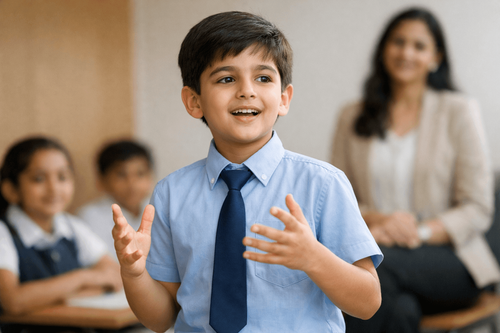

Table of Contents
- What Does Gesticulate Mean?
- Why Do Children Gesticulate Naturally?
- Importance of Gesticulate for Children
- Everyday Situations Where Children Gesticulate
- Types of Gestures Used in Gesticulation
- Table: Types of Gestures and Their Purpose
- Gesticulate in Storytelling
- Gesticulate and Learning in the Classroom
- Checkpoint for Parents and Teachers
- Fun Activity 1: Gesture and Tell
- Fun Activity 2: Silent Actions Game
- Gesticulate and Social Interaction
- Gesticulate and Emotional Expression
- Gesticulate and Listening Skills
- Table: How Gesticulation Supports Communication Skills
- Controlling Gesticulation
- Cultural Differences in Gesticulation
- Checkpoint for Parents and Teachers
- Fun Activity 3: Gesture Match Game
- Fun Activity 4: Mirror Speaking Practice
- Gesticulate and Academic Learning
- Gesticulate and Memory Improvement
- Common Challenges Children Face
- Tips for Parents to Support Gesticulation at Home
- Gesticulate and Public Speaking Skills
- Gesticulate and Leadership Skills
- Gesticulate in Group Discussions
- Gesticulate and Problem-Solving Skills
- Table: Long-Term Benefits of Gesticulation
- Gesticulate and Emotional Intelligence
- Gesticulate and Classroom Discipline
- Fun Activity 5: Gesture-Based Role Play
- Fun Activity 6: Gesture Story Building
- Checkpoint for Parents and Teachers
- Common Mistakes to Avoid
- Tips to Improve Gesticulation Over Time
- Gesticulate as a Life Skill
- About PlanetSpark : Communication Skills
Communication is more than just words, children speak with their hands, faces, and bodies long before they master perfect sentences. Ever noticed how a child’s gestures grow bigger when their excitement does? This natural use of movement while speaking is called gesticulation, and it plays a powerful role in making messages clearer, stronger, and more confident.
In this blog, you’ll learn what gesticulate really means, why it matters in a child’s communication journey, and how body language supports better speaking and listening skills. At PlanetSpark, expert trainers help children channel their natural gestures into confident expression through 1:1 live classes, combining spoken English with effective body language to build clear, impactful communicators.
What Does Gesticulate Mean?
Simple Meaning of Gesticulate
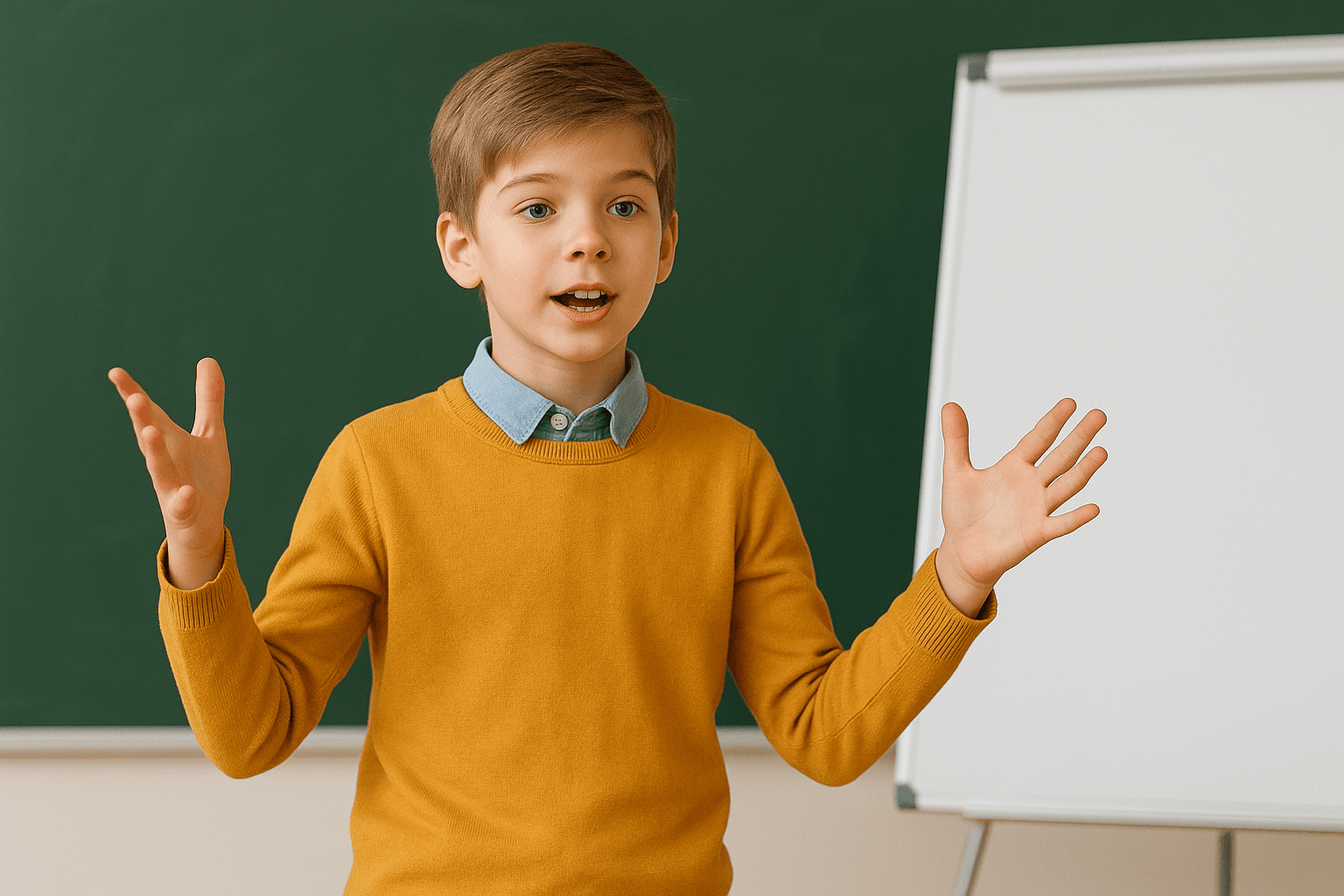
Gesticulate means to use hand movements, facial expressions, or body actions while speaking in order to explain ideas more clearly.
When children talk and move their hands to show size, shape, direction, or emotions, they are gesticulating. These movements add meaning to spoken words.
Understanding the Meaning with Easy Examples
Example 1
A child says, “The fish was very big,” and stretches their arms wide. This action helps listeners understand how big the fish was.
Example 2
A child explains how to open a box and moves their hands to show each step. These hand movements support the explanation.
In both cases, the child is gesticulating to make communication clearer.
Why Do Children Gesticulate Naturally?
Gestures Begin Before Words
Even before children learn to speak, they use gestures to communicate. Babies point, wave, clap, and move their hands to show needs and feelings. This shows that gestures are a natural part of communication.
As children grow older, gestures continue to support speech. Gestures help children express ideas when words are not enough.
Connection Between Thinking and Gestures
The brain controls both speech and movement. When children think deeply, their hands often move automatically. These movements help children organise their thoughts and explain ideas step by step.
This is why children often gesticulate more when they are explaining something difficult or exciting.
Importance of Gesticulate for Children
Helps Children Express Ideas Clearly
Sometimes children know what they want to say but cannot find the right words. Gestures help them show ideas visually.
For example, when a child explains how a toy works, hand movements help show actions clearly even if words are missing.
Builds Confidence in Speaking
Using gestures helps children feel more comfortable while speaking. It gives them something natural to do with their hands, which reduces nervousness.
Children who gesticulate often:
Feel less shy while speaking
Speak more confidently
Explain ideas more smoothly
Supports Language Development
Research shows that children who use gestures while speaking often develop language skills faster. Gestures help children learn new words, form sentences, and remember information better.
Everyday Situations Where Children Gesticulate
Gesticulate at Home
Children gesticulate when:
Talking about their day at school
Explaining a game or activity
Describing a movie or cartoon
Sharing exciting news
Parents may notice hand movements when children are eager to explain something.
Gesticulate at School
Children gesticulate during:
Classroom discussions
Explaining math problems
Science demonstrations
Group activities
Teachers often encourage gestures because they help children explain answers clearly.
Help Your Child Become a Confident Speaker
Read More to learn how body language and speech work together.
Types of Gestures Used in Gesticulation
Hand Gestures
Hand gestures are the most common form of gesticulation. These include pointing, waving, counting on fingers, and showing size or direction.
Hand gestures help children explain actions and ideas clearly.
Facial Expressions
Facial expressions show emotions such as happiness, surprise, fear, or confusion. They add emotional meaning to spoken words.
For example, a smiling face shows happiness, while raised eyebrows show surprise.
Head Movements
Nodding the head often shows agreement, while shaking the head shows disagreement. These movements support spoken responses.
Body Movements and Posture
Standing straight, leaning forward, or stepping back can show confidence, interest, or caution. Body posture plays an important role in communication.
Table: Types of Gestures and Their Purpose
| Type of Gesture | Purpose |
|---|---|
| Hand movements | Explain actions, size, direction |
| Facial expressions | Show emotions |
| Head movements | Show agreement or confusion |
| Body posture | Show confidence and attention |
Gesticulate in Storytelling
Why Gestures Make Stories Interesting
Stories become more exciting when children use gestures. Gestures help listeners imagine scenes and understand actions clearly.
When children act out parts of a story, listeners feel more connected to the story.
Example of Storytelling with Gestures
While telling a story about a jungle:
Hands move to show tall trees
Face shows fear when describing danger
Arms move to show animals running
These gestures bring the story to life.
Gesticulate and Learning in the Classroom
How Gestures Help Learning
Teachers often use gestures while teaching because gestures make lessons visual and easy to understand. Children remember lessons better when words and gestures are used together.
Benefits for Students
Children who gesticulate while learning:
Understand concepts faster
Participate more in class
Explain answers confidently
Checkpoint for Parents and Teachers
Ask yourself:
Is the child using gestures naturally?
Do gestures match what the child is saying?
Is the child more confident while speaking?
If the answer is yes, the child is using gesticulation effectively.
Fun Activity 1: Gesture and Tell
How to Play
Ask the child to choose an object
The child describes the object using words and gestures
Encourage clear hand movements
This activity helps children practice expressive communication.
Fun Activity 2: Silent Actions Game
Instructions
One child performs an action using only gestures
Others guess the action
This activity improves observation and understanding of gestures.
Gesticulate During Presentations and Public Speaking
Speaking in front of others can feel scary for many children. Presentations, class talks, and stage performances often make children nervous. Gesticulation plays an important role in helping children feel calm and confident during such situations.
When children use natural hand movements while speaking, they feel less stiff and more relaxed. Their body supports their words, which makes speaking easier.
How Gesticulation Improves Presentations
Using gestures during presentations helps children in many ways:
It keeps the audience interested
It helps explain points clearly
It reduces fear and nervousness
It makes speech sound natural
Children who stand still without moving often feel tense. Gentle hand movements help release that tension.
Example of Gesticulation in a Classroom Presentation
If a child is explaining the life cycle of a butterfly:
Hands can show the size of the egg
Fingers can trace the shape of a caterpillar
Arms can move gently to show flying
These gestures help the audience understand the topic visually.
Communication Is More Than Words
Enroll your child in interactive classes that build speaking confidence and expression.
Gesticulate and Social Interaction
Role of Gestures in Daily Conversations
Gestures play an important role in daily conversations. Children use gestures when talking to friends, teachers, and family members. These gestures help express feelings, reactions, and responses clearly.
For example:
Shrugging shoulders can show confusion
Open palms can show honesty
Waving hands can show excitement
These movements support spoken words.
Helping Children Make Friends
Children who use friendly gestures often appear more approachable. Smiling, nodding, and open hand movements help children connect with others easily.
Gestures help children:
Start conversations
Show interest in others
Respond politely
Gesticulate and Emotional Expression
Why Gestures Help Show Feelings
Children sometimes find it difficult to express emotions using words. Gestures and facial expressions help them show how they feel without needing many words.
For example:
Clenched fists may show anger
Drooping shoulders may show sadness
Jumping movements may show excitement
Understanding these gestures helps parents and teachers support children emotionally.
Teaching Children to Use Healthy Gestures
Children should be encouraged to express emotions using calm and appropriate gestures. This helps them communicate feelings without shouting or becoming upset.
Gesticulate and Listening Skills
How Watching Gestures Improves Understanding
Communication is not only about speaking. Listening also involves watching. When children watch gestures while listening, they understand messages better.
Gestures help listeners:
Understand instructions clearly
Follow stories easily
Learn new concepts
This is especially helpful for visual learners.
Classroom Example
When a teacher explains shapes using hand movements, children understand faster than by listening alone.
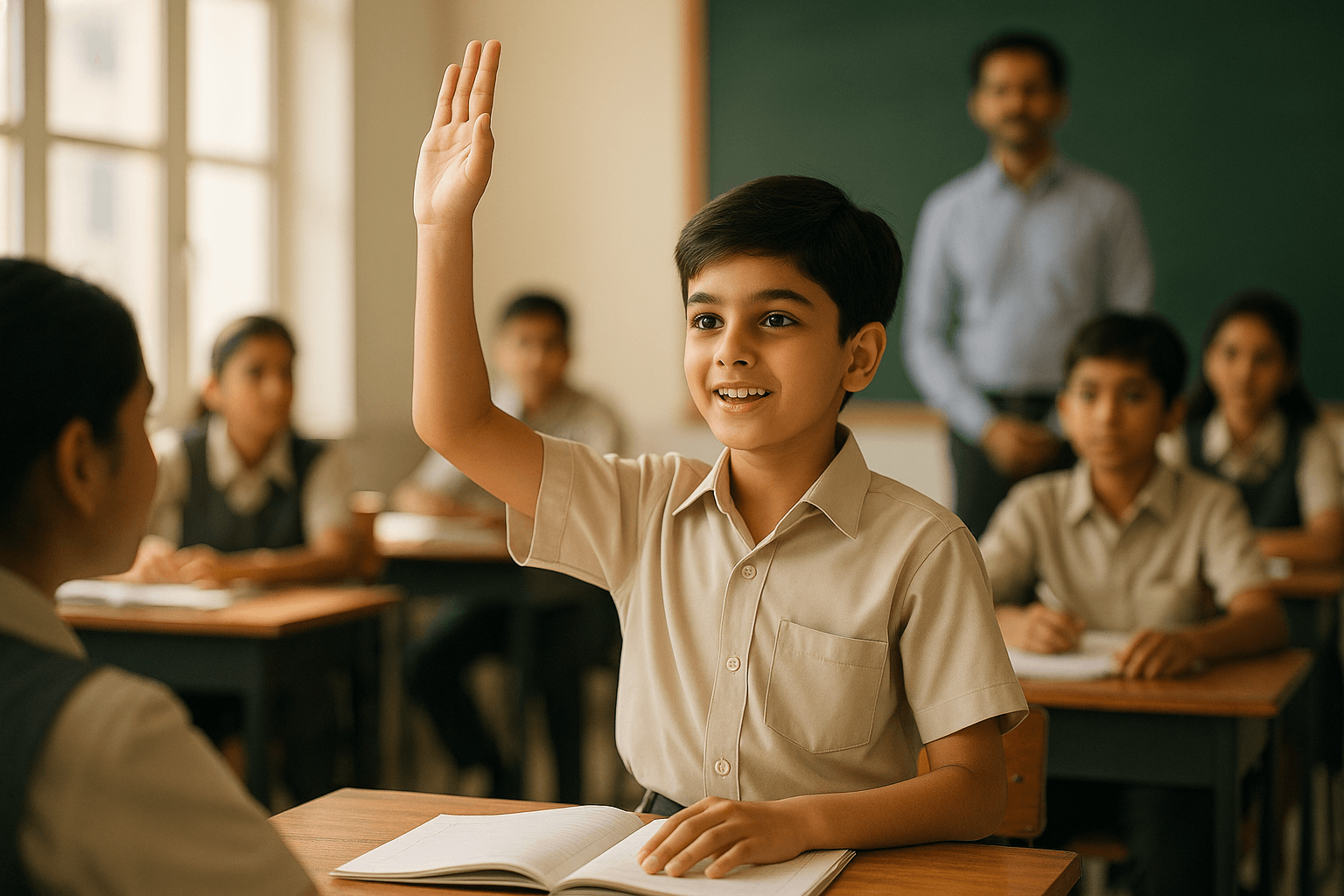
Table: How Gesticulation Supports Communication Skills
| Communication Skill | How Gesticulation Helps |
|---|---|
| Speaking | Makes ideas clear |
| Listening | Improves understanding |
| Confidence | Reduces nervousness |
| Emotional expression | Shows feelings clearly |
| Social skills | Builds better interaction |
Controlling Gesticulation
Importance of Balanced Gestures
While gestures are helpful, too many gestures can distract listeners. Children should learn to use gestures that match their words.
Balanced gesticulation means:
Calm hand movements
Gestures that support speech
Avoiding unnecessary movements
Signs of Over-Gesticulation
Parents and teachers should watch for:
Very fast hand movements
Repeating the same gesture again and again
Gestures that do not match the topic
Children can be gently guided to slow down and use meaningful gestures.
Cultural Differences in Gesticulation
Understanding That Gestures Can Change Meaning
Gestures do not have the same meaning everywhere. Some hand movements may mean different things in different cultures.
Examples:
Nodding may not always mean yes
Hand signs may have different meanings
Teaching children about cultural differences helps them communicate respectfully with people from different backgrounds.
Teach Your Child to Express Clearly
Discover fun and engaging programs that strengthen verbal and non-verbal skills
Checkpoint for Parents and Teachers
Pause and reflect:
Does the child use gestures naturally?
Are gestures calm and meaningful?
Is the child confident while speaking?
If the answer is yes, the child is developing strong communication skills.
Fun Activity 3: Gesture Match Game
How to Play
Write actions on slips of paper
Children pick one slip
Act out the action using gestures only
Others guess the action
This activity builds gesture awareness.
Fun Activity 4: Mirror Speaking Practice
Instructions
Ask the child to stand in front of a mirror
Speak about a topic while watching gestures
Encourage natural movements
This helps children understand their body language.
Gesticulate and Academic Learning
How Gestures Support Subjects Like Math and Science
Gestures help children understand abstract concepts.
Examples:
Using fingers to count
Showing shapes with hands
Demonstrating steps of an experiment
These actions make learning practical and memorable.
Gesticulate and Memory Improvement
Why Gestures Help Children Remember Better
When children use gestures while learning, they remember information longer. The brain connects movement with memory.
This is why children often remember lessons taught with actions more clearly.
Common Challenges Children Face
Shyness About Using Gestures
Some children feel shy about moving their hands while speaking. Gentle encouragement and practice help them feel comfortable.
Copying Gestures Unnaturally
Children may copy gestures from videos or others. They should be encouraged to use gestures that feel natural to them.
Tips for Parents to Support Gesticulation at Home
Parents can help by:
Encouraging storytelling at home
Asking children to explain daily events
Playing role-play games
Watching speeches and discussing gestures
Small daily practice makes a big difference.
Gesticulate and Confidence Building
Confidence plays a very important role in how children communicate. Many children know the correct answer but hesitate to speak because they feel nervous or unsure. Gesticulation helps children overcome this fear.
When children use hand movements naturally while speaking, their body feels involved in the communication. This reduces tension and makes them feel more comfortable. Instead of focusing on fear, children focus on explaining their ideas.
Children who gesticulate confidently often:
Speak louder and clearer
Maintain eye contact
Feel proud of expressing their thoughts
Over time, gesticulation becomes a strong support for confident speaking.
Gesticulate and Public Speaking Skills
Why Public Speaking Feels Difficult for Children
Public speaking requires children to stand in front of others, remember content, and speak clearly. This can feel overwhelming. Gesticulation makes public speaking easier by supporting memory and expression.
How Gestures Improve Public Speaking
Gestures help children:
Remember key points
Organise speech better
Engage the audience
Appear confident and relaxed
Children who use gestures during speeches appear more natural and expressive.
Example of a Speech with Gesticulation
If a child gives a speech on trees:
Hands show how trees grow tall
Fingers show branches spreading
Arms move gently to show leaves swaying
These gestures make the speech interesting and meaningful.
Strong Speakers Start Young
Support your child’s communication journey with expert-led learning.
Gesticulate and Leadership Skills
Communication as a Leadership Skill
Good leaders communicate clearly. They express ideas confidently and connect with others. Gesticulation helps children develop these leadership qualities early.
Children who gesticulate effectively:
Express opinions clearly
Explain ideas to groups
Guide others during activities
These skills help children become confident leaders in school activities and group tasks.
Gesticulate in Group Discussions
Role of Gestures in Group Learning
Group discussions are an important part of classroom learning. Gesticulation helps children explain ideas clearly and take part actively.
Gestures help children:
Show agreement or disagreement politely
Ask questions confidently
Support explanations
Children who use gestures often feel more involved in discussions.
Gesticulate and Problem-Solving Skills
How Gestures Help Thinking
Gestures do not only help speaking. They also help thinking. When children move their hands while solving problems, they understand concepts better.
For example:
Using fingers while counting
Showing steps of a solution
Drawing shapes in the air
These actions help children think clearly and solve problems step by step.
Table: Long-Term Benefits of Gesticulation
| Area of Growth | Benefit |
|---|---|
| Confidence | Reduced fear while speaking |
| Learning | Better understanding and memory |
| Social skills | Clear and friendly communication |
| Leadership | Strong expression of ideas |
| Public speaking | Natural and engaging delivery |
Gesticulate and Emotional Intelligence
Understanding Emotions Through Gestures
Emotional intelligence means understanding and managing emotions. Gestures help children recognise emotions in themselves and others.
Children learn to:
Read facial expressions
Understand body language
Respond kindly to emotions
This helps build empathy and strong relationships.
Expressing Emotions Safely
Gestures allow children to express feelings without shouting or becoming upset. Calm hand movements and facial expressions help children communicate emotions in a healthy way.
Gesticulate and Classroom Discipline
How Gestures Support Classroom Behaviour
Teachers often use gestures to manage classrooms, such as raising a hand to ask for silence or pointing to instructions. Children learn to respond to these gestures quickly.
Children who understand gestures:
Follow instructions better
Stay attentive
Respect classroom rules
Fun Activity 5: Gesture-Based Role Play
How to Do the Activity
Create short situations such as asking for help or giving directions
Children act out the situation using words and gestures
Others observe and share feedback
This activity builds confidence and communication skills.
Fun Activity 6: Gesture Story Building
Instructions
One child starts a story with a sentence and a gesture
The next child continues with a sentence and gesture
Continue until the story ends
This improves creativity, listening, and teamwork.
Checkpoint for Parents and Teachers
Review the child’s progress:
Is the child more confident while speaking?
Are gestures natural and meaningful?
Is the child participating actively in discussions?
Positive answers show healthy communication development.
Help your child communicate with impact – Book a FREE Demo Class
Common Mistakes to Avoid
Using Too Many Gestures
Children should avoid moving hands too much, as it can distract listeners.
Copying Gestures Unnaturally
Gestures should feel comfortable and natural, not copied from others.
Ignoring Body Language
Children should learn that body posture and facial expressions matter along with hand gestures.
Tips to Improve Gesticulation Over Time
Parents and teachers can:
Encourage daily conversations
Praise confident expression
Practice speeches at home
Give gentle feedback
Consistency helps children improve naturally.
Gesticulate as a Life Skill
Gesticulation is not just a classroom skill. It is a life skill that helps children communicate clearly in many situations.
It supports:
Friendships
Learning
Leadership
Self-expression
Strong communication skills help children succeed in school and beyond.
About PlanetSpark : Communication Skills
PlanetSpark helps children become confident, expressive, and effective communicators through engaging 1:1 live classes. Our Communication Skills Program strengthens speaking, listening, writing, and presentation abilities while building confidence, clarity, and real-world expression skills for school and life.
1. 1:1 Expert Communication Coaching
Every child is paired with a certified communication trainer who personalises sessions based on the child’s pace, personality, and goals ensuring focused guidance and faster improvement.
2. Personalised Communication Learning Path
A customised roadmap develops core skills like articulation, vocabulary, grammar, storytelling, and public speaking guiding learners from basic expression to confident communication.
3. AI-Powered Feedback for Clear Expression
With SparkX video analysis and AI-led practice sessions, students receive instant feedback on clarity, tone, body language, and structure making communication improvement measurable.
4. Interactive & Gamified Skill Building
Engaging tools like Grammar Guru, Word Wisdom, storytelling challenges, and speaking games make learning fun, helping children practise communication skills daily.
5. Confidence for Real-Life Communication
Through storytelling, roleplays, discussions, and presentations, children learn to express ideas clearly and confidently in classrooms, on stage, and in everyday conversations.
Frequently Asked Questions
Children often gesticulate naturally because it helps them explain their thoughts better and feel more confident while speaking.
Gesticulating is good when used naturally and politely. It makes communication clearer. Too much gesturing can be distracting, so balance is important.
Yes. Gesticulating helps children express emotions, explain ideas clearly, and engage listeners during conversations or speeches.
No. Some gestures can have different meanings in different cultures, so children should learn to use simple and respectful gestures.
Children can practice speaking in front of a mirror, recording themselves, or telling stories while focusing on natural hand movements.