
How Reflective Thinking Helps Children Become Better Speakers and Thinkers
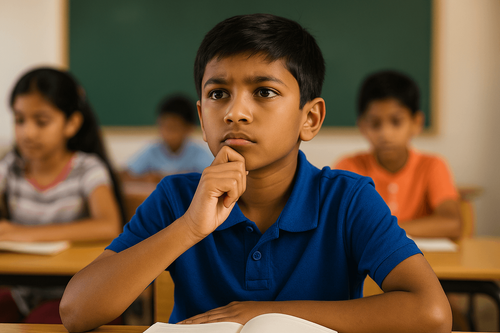

Table of Contents
- What Reflective Thinking in Children Really Means
- Why Reflective Thinking Makes Children Better Speakers
- How Reflective Thinking Strengthens Cognitive Growth
- How Reflective Thinking Helps Children Become Better Thinker
- What Happens When Children Do Not Develop Reflective Thinkin
- How Daily Experiences Shape Reflective Thinking in Children
- How Parents Can Nurture Reflective Thinking at Home
- How Reflective Thinking Builds Confidence in Speaking
- Reflective Thinking Helps Children Become Independent Learne
- How Reflective Thinking Improves Listening and Attention
- Activities That Build Reflective Thinking in Children
- How Reflective Thinking Supports Academic Success
- How PlanetSpark Helps Build Reflective Thinking in Children
- Building Thoughtful Minds and Confident Voices
Reflective thinking is one of the most powerful habits a child can develop. It helps children pause, understand their thoughts, evaluate ideas, and express themselves with clarity. Many parents assume communication skills depend mainly on vocabulary or confidence, but the truth is deeper. A child becomes a strong speaker when they first become a strong thinker, and that process begins with reflective thinking in children.
Reflective thinking encourages children to observe, understand, and adjust their thoughts before responding. When this habit becomes part of daily life, children communicate better, analyse problems more effectively, and make thoughtful decisions. This blog explores how reflective thinking forms, why it is essential for communication, and how parents can nurture it at home.
What Reflective Thinking in Children Really Means
Reflective thinking is the ability to take a mental step back and examine thoughts before acting or speaking. Instead of reacting instantly, a child learns to explore what they understand, how they feel, and what they want to say.
Reflective thinking includes:
Noticing personal thoughts and feelings
Evaluating whether an idea makes sense
Connecting new learning with past experience
Breaking down complex information
Asking deeper questions
Understanding cause and effect
Reviewing behaviour or decisions
Children who reflect before speaking develop richer, more organised communication. They learn to express thoughts confidently because they first understand them clearly.
Why Reflective Thinking Makes Children Better Speakers
When a child speaks without reflecting, their sentences often sound unclear or incomplete. They may jump quickly from one idea to another or struggle to explain what they mean. Reflective thinking in children helps solve this by giving them space to plan their thoughts first.
Reflective thinking supports communication by helping children:
Organise thoughts into logical order
Form complete sentences
Identify the main point before speaking
Use examples to describe ideas clearly
Respond with confidence instead of hesitation
Children who reflect learn to speak meaningfully, not just quickly. They develop the habit of thinking before talking, which leads to clarity and stronger expression.
How Reflective Thinking Strengthens Cognitive Growth
Thinking and speaking are tightly connected. When children improve their thinking abilities, their communication naturally improves.
Reflective thinking supports cognitive development by strengthening:
Problem-solving
Reasoning
Memory recall
Understanding of patterns
Perspective-taking
Self-awareness
Analytical thought
Reflective children learn to explore the “why” behind ideas, not just the “what.” This creates deeper intellectual understanding and boosts long-term learning.
Give your child the clarity they need to express themselves with confidence.
Join a PlanetSpark session to strengthen both thinking and communication.
How Reflective Thinking Helps Children Become Better Thinkers
Thinking is not automatic. Some children think reactively while others think reflectively. Reflective children become better thinkers because they learn to slow down, evaluate information, and make thoughtful decisions.
Reflective thinking helps children:
Identify the reasoning behind their ideas
Understand multiple perspectives
Break challenges into manageable parts
Improve judgment and decision-making
Reflect on consequences before acting
Strengthen their ability to learn independently
This leads to emotional maturity, intellectual depth, and strong communication.
What Happens When Children Do Not Develop Reflective Thinking
Children who lack reflective thinking often struggle with clarity, patience, and emotional regulation. This is not due to low intelligence; it’s simply that their thoughts move faster than their decision-making process.
Common challenges include:
Rushing through answers
Speaking unclearly
Repeating mistakes
Being easily overwhelmed
Struggling to explain reasoning
Interrupting or reacting impulsively
Feeling confused during new tasks
These behaviors improve significantly when reflective thinking becomes part of daily learning.
How Daily Experiences Shape Reflective Thinking in Children
Reflective thinking grows naturally through everyday life. Children develop reflective habits when they pause, observe, and understand small experiences that happen throughout the day.
Daily moments that build reflection include:
Trying to solve a puzzle
Thinking about why a drawing didn’t match imagination
Reflecting after a disagreement with a friend
Noticing what went well at school
Reviewing homework mistakes
Understanding emotions during a difficult moment
Making small decisions with parental guidance
Reflection grows best when children experience consistent, gentle guidance rather than pressure.
How Parents Can Nurture Reflective Thinking at Home
Parents play the most significant role in shaping reflective habits. Children learn reflection from how adults speak, respond, guide, and question.
Encourage slow thinking
Give children time to think before they answer questions.
Ask reflective questions
Simple prompts develop reflective habits:
“Why do you think that happened?”
“What would you try differently next time?”
“How did that make you feel?”
Discuss thoughts and feelings
Conversations about emotions help children understand inner experiences.
Let children face small challenges
Growth happens when children think through problems instead of having everything solved for them.
Model reflection aloud
When parents reflect verbally, children learn the process naturally.
How Reflective Thinking Builds Confidence in Speaking
Children often stay quiet not because they lack knowledge but because they lack mental clarity. Reflective thinking reduces hesitation by helping them understand their thoughts clearly before sharing.
Reflective thinking boosts speaking confidence by:
Making ideas easier to express
Helping children structure responses
Reducing fear of mistakes
Increasing pride in communication
Encouraging thoughtful interaction
Children who reflect feel prepared and self-assured.
Reflective Thinking Helps Children Become Independent Learners
Independent learning means taking ownership of learning, not studying alone. Reflective children become independent learners because they can evaluate their understanding, identify mistakes, and seek clarity.
Reflective children:
Ask meaningful questions
Understand gaps in knowledge
Analyse instructions calmly
Adjust their learning strategies
Solve problems with patience
This independence improves academic performance and emotional maturity.
Help your child develop clarity, independence, and expressive thinking.
Book a free session and experience the difference.
How Reflective Thinking Improves Listening and Attention
Reflective thinking strengthens listening because it teaches children to process meaning rather than react quickly.
Reflective children learn to:
Listen carefully before responding
Identify important points in conversations
Connect information with personal experience
Respect different viewpoints
Stay present and attentive
Better listening leads to better communication and healthier peer relationships.
Activities That Build Reflective Thinking in Children
You don’t need special tools to develop reflection. Simple activities work best.
1. Daily Reflection Talks
Ask your child:
What was the best part of your day?
What was challenging today?
What did you learn about yourself?
2. Story Reflection
After reading, discuss:
Why did the character make that choice?
How would you handle the situation differently?
3. Think-Aloud Practice
Encourage children to talk through thoughts during puzzles, homework, or creative play.
4. Memory and Observation Games
Games that require pattern recognition support reflective habits.
5. Art-Based Thinking
Drawing emotions or experiences builds self-awareness.
6. Pausing Before Responding
Teach children to take a small pause before answering questions.
7. Everyday Decisions
Let children choose outfits, snacks, study order, or games to build reflective decision-making.
How Reflective Thinking Supports Academic Success
Academic success depends heavily on thinking skills, not just subject knowledge. Reflective thinking helps children learn more deeply and communicate answers more clearly.
Reflective thinking improves academics by:
Encouraging active learning
Improving comprehension
Reducing careless mistakes
Increasing patience during hard tasks
Supporting reasoning and analysis
Helping children perform better during exams
Reflective learners understand concepts, not just answers.
How PlanetSpark Helps Build Reflective Thinking in Children
PlanetSpark strengthens reflective thinking in children by integrating it into communication-based learning experiences.
AI Tools
Children receive instant feedback on clarity, tone, and expression.
Gamified Learning
Fun challenges encourage children to think, analyse, and reflect.
Personalised Curriculums
Every child follows a unique learning path built around their thinking and communication needs.
Progress Reports
Parents can track improvements in expression, reflection, and clarity.
Club-Based Learning Modules
Peer-based activities help children think, express, and reflect socially.
PlanetSpark sessions combine clarity-building activities and guided reflection.
Start with a free trial to see visible improvement in thinking and speaking.
Building Thoughtful Minds and Confident Voices
Reflective thinking is one of the most valuable habits a child can develop. It strengthens clarity, improves decision-making, enhances communication, and builds emotional maturity. When children learn to pause, observe, and understand their own thoughts, they naturally become better speakers and deeper thinkers.
Parents do not need complex tools or advanced techniques to nurture this skill. Everyday conversations, small decisions, thoughtful questions, and gentle pauses create the perfect environment for reflective thinking in children to grow. Over time, these simple habits form a strong foundation for academic success, confident communication, and lifelong learning.
Frequently Asked Questions
It is the ability to understand thoughts, evaluate ideas, and respond thoughtfully.
Children express thoughts more clearly when they first understand them well.
Yes, through daily reflection questions, conversations, and gentle guidance.
Strongly. It supports comprehension, reasoning, and problem-solving.
Yes. It gives them clarity that reduces hesitation and increases confidence.
You can book a free trial class directly through the PlanetSpark website. Select your preferred time slot, enter basic details, and a certified communication coach will conduct a personalised session for your child.
PlanetSpark accepts all major payment modes including UPI, debit and credit cards, net banking, and EMI options. Once your child’s learning plan is finalised, you can complete the payment securely using your preferred method.