
How Kids Can Greet People Politely : A Simple Guide
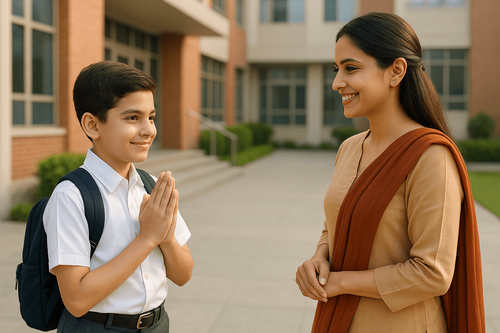

Table of Contents
- How to Greet People Politely – Kids Guide
- Why Greeting People Politely Matters
- How to Teach Your Child Manners and Respect
- 10 Good Manners for Students
- 5 Good Manners at School
- Good Manners at Home
- How to Greet People Politely – Best Way
- Ways to Greet People in Different Situations
- Teaching Children Cultural Greetings
- Fun Activities to Practice Greetings
- Conclusion
- About PlanetSpark : Communication Skills
Greeting people politely is a superpower every child can learn! Imagine walking into a room and instantly making friends just by saying “hello” with a smile. Knowing how to greet people shows respect, builds confidence, and makes interactions happy for everyone. Whether it’s at home, in school, or even online, a polite greeting can create a positive impression that lasts a lifetime.
PlanetSpark helps children practice these skills with 1:1 live classes, boosting confidence, fluency, and real life communication so they can greet anyone politely anywhere.
How to Greet People Politely – Kids Guide
Learning to greet people politely is one of the simplest and strongest skills a child can have. A friendly “hello,” a bright smile, or a small gesture of respect can make someone’s entire day better. When children greet others kindly, they show confidence, good manners, and the ability to make friends with ease. These little habits help them feel comfortable in new places and build positive relationships everywhere they go. Parents, teachers, and adults play an important role in guiding kids to develop these valuable social skills.
In this guide, we’ll explore fun and easy ways for kids to greet people politely at home, at school, online, and even in different countries. You’ll find enjoyable activities, real-life examples, cultural greetings, and simple tips that make learning manners exciting. By the end, children will feel ready to say “hello” to the world with confidence and kindness!
Why Greeting People Politely Matters
Greeting someone politely is more than just saying words. It shows that we respect others and care about how they feel. Polite greetings help children:
Make a good impression on teachers, friends, and family
Build strong relationships and friendships
Show confidence and social skills
Make interactions more pleasant and happy
Show respect to others
Feel confident in social situations
Fun Fact: Did you know that smiling while greeting someone can make them feel happier instantly? Smiles are like magic!
Teaching children how to greet people politely is a lifelong skill. It begins at home and continues at school, with friends, and in the community.
How to Teach Your Child Manners and Respect
Teaching good manners is like planting seeds. With care and practice, children grow into polite and respectful individuals. Here are some ways parents can help children learn greetings and manners:
Checkpoints for Parents:
| Method | How to Use It |
|---|---|
| Be a Role Model | Children copy what they see. Greet others politely yourself. |
| Practice at Home | Role-play greetings with family members during meals or playtime. |
| Praise Good Behavior | Encourage your child when they greet someone politely. |
| Read Stories | Storybooks showing polite behavior help children learn. |
| Consistency | Gently remind your child about greetings every day. |
Fun Tip: Make greeting practice a daily game! For example, see who can greet three family members first in the morning.
10 Good Manners for Students
Good manners help children make friends and enjoy school. Here are ten important manners that students should follow:
Say “please” and “thank you.”
Greet teachers and classmates politely.
Listen carefully when someone is speaking.
Raise your hand before speaking in class.
Share with friends.
Wait for your turn.
Apologize when you make a mistake.
Compliment others sincerely.
Help classmates who need assistance.
Respect school property.
Checkpoint for Kids: Try to use at least three polite words today at school, like “please,” “thank you,” or “excuse me.”
Fun Fact: Students who use polite words often make more friends and are happier at school.

5 Good Manners at School
Some manners are especially important in school. They include:
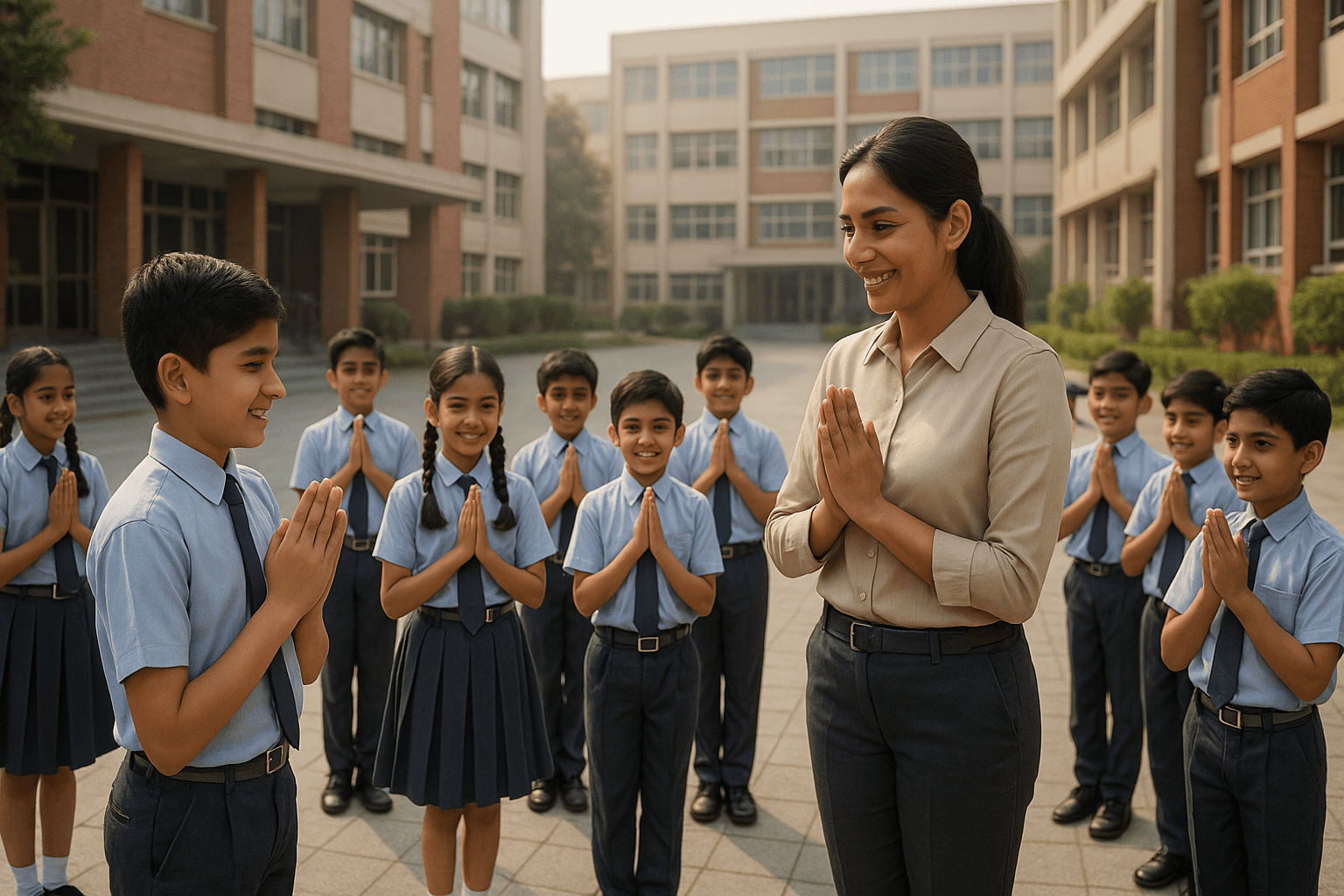
Greeting Teachers: Always say “Good morning, Sir/Ma’am” when entering the classroom.
Respecting Classmates: Don’t interrupt or tease others.
Using Table Manners: Eat politely in the cafeteria.
Tidying Up: Keep your classroom and desk clean.
Being Kind: Help new students feel welcome and comfortable.
Activity Idea: Practice greeting three classmates today. Notice how it makes them smile!
Good Manners at Home
Politeness starts at home. Children can practice manners with family members in many simple ways. Here are examples:
| Manners | Example |
|---|---|
| Greeting | “Good morning, Mom/Dad!” |
| Saying Please | “Please pass me the book.” |
| Saying Thank You | “Thank you for helping me with homework.” |
| Sharing | Offer snacks or toys to siblings politely. |
| Listening | Pay attention when parents talk, without interrupting. |
Fun Fact: Children who greet family members every day grow up feeling more confident and loved.
Checkpoint for Parents: Encourage your child to greet everyone in the family every morning and evening.
How to Greet People Politely – Best Way
Learning polite greetings is fun and important. Children can greet people in different ways depending on the situation.
Greeting Someone in English
Smile and say “Hello” or “Hi.”
Ask politely: “How are you today?”
Shake hands if appropriate.
Checkpoint: Practice greeting your teacher or friend at least once a day.
Greeting Someone in Japanese
Bow slightly to show respect.
Say “Konnichiwa” during the day.
Say “Ohayou gozaimasu” in the morning.
Fun Fact: In Japan, a bow shows respect and politeness, even more than words!
Greeting Someone in French
Say “Bonjour” during the day.
Say “Bonsoir” in the evening.
A light handshake or friendly wave is polite.
Greeting Someone in Spanish
Say “Hola” (Hello).
A small hug or handshake is okay if you know the person.
Use “Buenos días” in the morning.
Greeting Someone in Email
Start with “Dear [Name],”
Use polite words like “Please” and “Thank you.”
End with “Best regards” or “Sincerely.”
Checkpoint for Kids: Try writing a short email to your teacher using polite words this week.
Ways to Greet People in Different Situations
| Situation | Polite Greeting |
|---|---|
| Morning at home | “Good morning, Mom!” |
| Meeting a teacher | “Good morning, Sir/Ma’am” |
| Meeting friends | “Hi! How are you?” |
| Evening at a neighbor’s | “Good evening!” |
| On email | “Dear [Name], I hope you are well.” |
Fun Fact: In Thailand, people greet by joining palms together and saying “Sawadee ka/krub.”
Checkpoint: Ask your child to greet three people in different ways today smile, bow, wave!
Teaching Children Cultural Greetings
Learning how people greet around the world teaches children respect for other cultures.
Examples of Cultural Greetings:
Japan: Bowing politely.
France: Cheek kisses among friends.
India: Namaste with hands folded.
Middle East: Handshakes or placing hand on heart.
Fun Fact: Understanding greetings from other cultures helps children feel confident when traveling or meeting new people.
Activity: Teach your child a new greeting style each week, like bowing, waving, or saying hello in another language.
Confident kids communicate confidently , Build your child’s confidence Book a Free Demo Class today!
Fun Activities to Practice Greetings
Greeting Game: Role-play different greeting situations at home.
Mirror Practice: Practice smiling and saying “Hello” in front of a mirror.
Greeting Chart: Make a weekly chart and tick each time your child greets politely.
Story Time: Read stories with characters using good manners.
Craft Activity: Make greeting cards for friends and family.
Fun Fact: Children who enjoy learning manners through games remember them longer.
Fun Fact: Children learn manners faster when they see adults using polite greetings regularly.
Fun Fact: A polite greeting can make someone’s day better in just three seconds!
Fun Fact: In India, the Namaste gesture not only means “hello” but also shows deep respect.
Conclusion
Learning how to greet people politely is a small skill that creates a big impact in a child’s life. A simple smile, a kind “hello,” or a respectful gesture can open doors to new friendships, stronger relationships, and greater confidence. When children learn to greet others with kindness at home, in school, online, or in different cultures they grow into polite, thoughtful, and socially aware individuals.
With regular practice, fun activities, and gentle guidance from parents and teachers, every child can master this beautiful habit. And with PlanetSpark’s engaging classes, children learn not only how to greet politely but also how to communicate clearly, speak confidently, and express themselves with ease. After all, good manners aren’t just rules they’re superpowers that help kids shine wherever they go!

About PlanetSpark : Communication Skills
PlanetSpark helps children become confident, articulate, and expressive communicators through engaging 1:1 live classes. Our Communication Skills Program builds clarity, confidence, expression, and fluency helping kids speak, present, and interact effortlessly in school and real life.
1. 1:1 Expert Communication Coaches
Each child learns with a certified communication trainer who tailors every session to their personality, pace, and goals ensuring better clarity, expression, and confidence in every conversation.
2. Personalised Communication Roadmap
A customised learning path strengthens speaking, listening, grammar, vocabulary, storytelling, and overall expression guiding kids from basic communication to confident, impactful speaking skills.
3. AI-Powered Feedback for Clarity & Delivery
With SparkX and AI-based speech practice, children receive instant insights on tone, pronunciation, clarity, confidence, pause control, and expression helping them improve faster.
4. Interactive & Gamified Communication Practice
Fun modules like Story Builder, Word Wizards, and SpeakSmart Games make communication exciting, boosting consistency and helping kids practise daily through engaging activities.
5. Confidence for Real-Life Speaking
Through debates, dialogues, roleplays, presentations, and storytelling, kids develop the confidence to express themselves naturally whether in class, on stage, or with peers.
Frequently Asked Questions
Start with polite words like “Hello” or “Good morning,” and show them when to shake hands or wave.
Yes! Using polite words in emails, messages, and video calls shows respect.
Games, stories, and regular practice help children remember.
Gently remind them. Praise them the next time they greet correctly.
Encourage morning greetings, polite words in class, and role-playing activities.