Strong English language skills help children
communicate clearly, understand instructions, and express their thoughts with confidence. When children learn how to speak, listen, read, and write effectively in English, they perform better in school, participate more actively in class, and feel comfortable sharing ideas in everyday situations.
Many parents wonder how to improve English language skills so their child can succeed academically and socially. English is not just a subject in school; it is the foundation of learning across subjects like maths, science, and social studies.
When children improve English language skills, they understand lessons more easily, ask questions confidently, and express answers clearly. Strong communication also helps children build self-confidence and form better relationships with teachers and peers.
Understanding the Key Areas: Speaking, Listening, Reading, and Writing
To understand how to improve my English language effectively, it is important to focus on four key areas that work together. These skills support one another, and steady progress in all four helps children become confident and clear communicators.
Speaking helps children share ideas, tell stories, and express opinions with confidence. Regular speaking practice improves pronunciation, sentence formation, and fluency. When children speak often, they become less afraid of making mistakes and more comfortable using English in everyday situations.
Listening allows children to understand instructions, follow conversations, and respond correctly. Good listening skills help children pick up correct pronunciation, tone, and common expressions, making it easier for them to speak naturally and confidently.
Reading plays a major role in building vocabulary and improving comprehension. As children read stories, poems, and simple articles, they learn new words, sentence structures, and ways to express ideas clearly. Reading also strengthens spelling and grammar without the need for memorization.
Writing helps children organize their thoughts and express them clearly on paper. Writing practice improves grammar, sentence structure, and clarity of expression. Simple activities like journaling or short paragraphs help children turn ideas into well-formed sentences.
Balanced practice across speaking, listening, reading, and writing is essential to improve English language skills in a natural and lasting way. When children work on all four areas together, they develop strong communication abilities that support learning in school and everyday life.
Daily Habits to Build Strong English Foundations at Home
Parents often ask, "How can I improve my English language skills for my child at home?" The answer lies in small, consistent daily habits rather than long or stressful study sessions. When English becomes a natural part of everyday life, children learn faster and with more confidence.
Read Aloud and Explore Stories Every Day Reading aloud exposes children to new words, expressions, and sentence patterns in a natural way. It helps improve pronunciation, listening skills, and comprehension at the same time. When parents pause to discuss the story or ask simple questions, children also learn how to think and respond in English. This habit is one of the most effective tips to improve English language skills at home.
Listen to English Songs, Podcasts, and Cartoons Listening to English content helps children become familiar with natural pronunciation, rhythm, and tone. Songs and cartoons make learning enjoyable, while podcasts and short audio stories improve attention and understanding. Regular listening builds comfort with the language and is an easy way to improve English language skills without pressure.
Practice Speaking in Fun, Low-Pressure Ways Casual conversations, storytelling, role-play, and pretend games encourage children to speak freely. Talking about their day, describing pictures, or acting out simple scenes helps children practice English naturally. These activities are especially helpful for parents who wonder, "How can I improve my English language skills without making learning feel stressful or forced?"
By following these simple habits every day, parents can help children build strong English foundations while keeping learning enjoyable and stress-free.
Effective Tips to Boost Vocabulary and Confidence
Parents looking for tips to improve English language should focus on building confidence along with accuracy. When children feel comfortable using English, they are more willing to try new words, form sentences, and express their thoughts without fear of making mistakes.
Use Games, Role-Play, and Everyday Conversations Games and role-play give children a safe and enjoyable space to practice new words and sentence structures. Activities like pretend shopping, storytelling games, or simple word games make learning feel like play. Everyday conversations during meals, travel, or family time also help improve English language skills naturally and consistently, as children learn to use English in real situations.
Encourage Thinking and Journaling in English Encouraging children to think in English or write short daily entries helps them organise their thoughts and express ideas clearly. Simple journaling, such as writing about their day or favourite activity, improves fluency and sentence formation. Over time, this habit supports long-term efforts to improve English language skills and builds strong writing confidence.
By combining fun activities with regular practice, parents can help children develop both confidence and accuracy in English communication.
Common Challenges Kids Face and How to Overcome Them
Many children hesitate to speak English because they are afraid of making mistakes or being corrected. Others may struggle with limited vocabulary or find it difficult to form correct sentences, which can reduce their confidence over time.
Parents often ask how to improve my English language learning when a child feels shy or unsure. The key is to create a supportive environment that encourages effort rather than perfection. Patience, positive reinforcement, and regular exposure to English through speaking, listening, and reading activities help children feel more comfortable using the language.
Mistakes should be treated as a natural and important part of learning. When children are gently guided instead of corrected harshly, they gain confidence gradually and become more willing to express themselves in English.
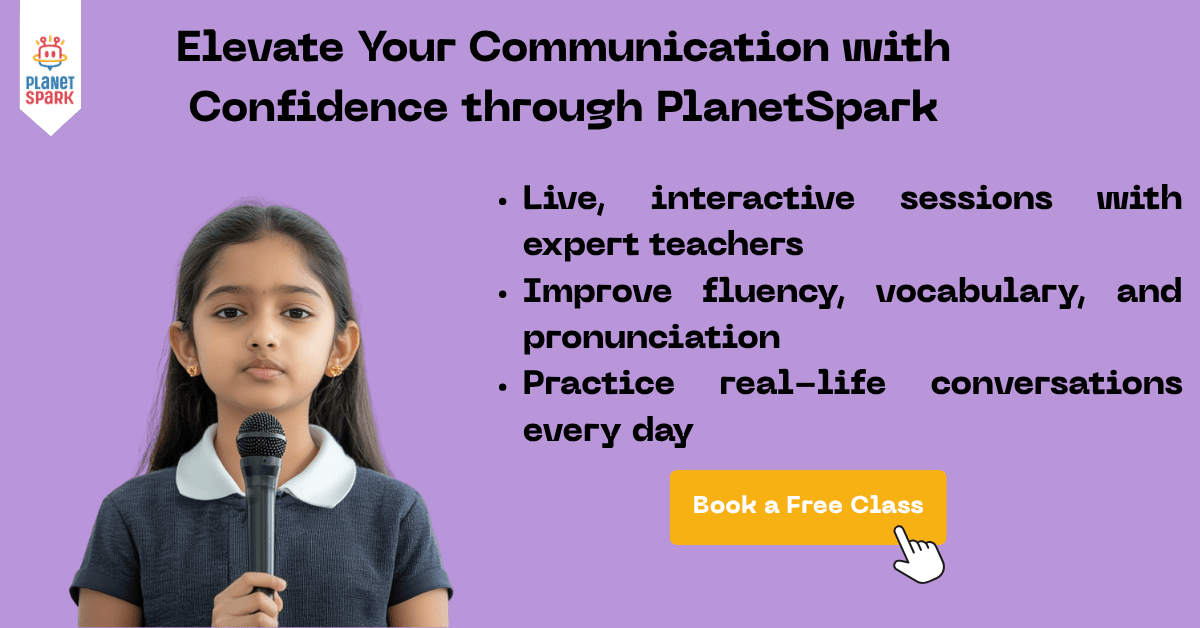
PlanetSpark transforms how children learn to communicate with confidence. Through live 1:1 sessions, expert mentors and immersive speaking activities, learners develop clarity, confidence and expression. Every session is designed to help students speak effectively, listen attentively and connect meaningfully in real conversations.
1:1 Expert Coaching Students receive focused guidance on voice, tone and articulation from certified communication coaches.
Real-World Speaking Practice Interactive debates, storytelling sessions and discussions enable learners to apply communication skills in real time.
Video Feedback and Analysis Learners review their recorded performances with mentors to refine body language, gestures and delivery.
Leadership and Expression Focus Each lesson helps students build stage confidence, emotional awareness and authentic self-expression.
Continuous Growth Tracking Progress is consistently measured through performance insights that strengthen communication at every level.
Neel’s Journey: Strengthening English Grammar with Confidence
Neel Kandul, a bright Grade 3 learner aged 8, achieved first position in his class and secured state rank 810 in the International Olympiad of English Language. His success reflects a strong foundation in English grammar, built through structured practice and clear understanding of language rules. With guided learning at PlanetSpark, Neel improved sentence construction, grammar accuracy, and usage skills. His journey shows how focused grammar training helps young learners build precision, confidence, and consistency in English.
Building Confident Communicators Through Everyday English Practice
Learning how to improve English language skills is not about memorising grammar rules or forcing long study hours. It is about building simple, consistent habits that make English a natural part of a child’s daily life. When parents encourage regular practice across speaking, listening, reading, and writing, children gradually improve English language clarity and develop confidence in expressing their thoughts.
With the right guidance and a positive learning environment, children begin to overcome hesitation and fear of making mistakes. They expand their vocabulary, form better sentences, and communicate more effectively in both school and everyday situations. Understanding how to improve my English language early gives children a strong foundation, helping them grow into confident communicators who are prepared for academic success and real-life interactions.
You can improve your child’s English language skills at home by making English a regular part of daily life. Simple habits such as reading aloud together, listening to English stories or songs, and having short conversations in English help children become comfortable with the language. Encouraging your child to speak without fear of mistakes and gently guiding them when needed builds confidence and fluency over time.
The most important skills needed to improve English language are speaking, listening, reading, and writing. Speaking builds confidence and fluency, listening improves understanding and pronunciation, reading expands vocabulary, and writing helps organise thoughts clearly. When children practise all four skills together, they develop strong and balanced communication abilities.
The time needed to see improvement varies from child to child and depends on regular practice. With consistent daily exposure and encouragement, many children start showing better confidence and clearer expression within a few weeks. Stronger fluency, vocabulary, and accuracy develop gradually with continued practice over several months.
If your child is shy or afraid to speak English, focus on creating a safe and supportive environment. Avoid correcting every mistake and instead encourage effort and participation. Fun activities like role-play, storytelling, and casual conversations help children speak more freely and build confidence at their own pace.
Yes, games and storytelling are highly effective ways to improve English language skills. They allow children to practise vocabulary, sentence formation, and speaking in a relaxed and enjoyable way. These activities reduce pressure, increase engagement, and help children use English naturally in real situations.
Improving English language skills at an early age helps children develop confidence, clarity, and strong communication habits. Early learning makes it easier for children to understand school lessons, express ideas clearly, and interact confidently with others. A strong foundation in English supports long-term academic success and everyday communication.