
How to Sound Smart Without Complex Language | PlanetSpark


Table of Contents
- How to Sound Smart: Mastering Clarity Over Complexity
- The Power of Simple Language in a Complex World
- Sound Confident While Speaking: The Hidden Ingredient of Sma
- How PlanetSpark Helps You Sound Smart Naturally
- Why “Sounding Smart” Is Often Misunderstood
- Speak Intelligently at Work Without Using Jargon
- Confidence That Turns Ideas Into Recognition
- Developing a Professional Communication Tone That Feels Natu
- Common Mistakes That Make People Sound Less Smart
- PlanetSpark: The Leading Hub for Powerful Communication Skil
- Turn Everyday Words into Powerful Impact with PlanetSpark
Ever noticed how the smartest people sound clear, not complicated?
How to sound smart isn’t about fancy words or long sentences but about clarity, confidence, and connection. This guide shows how to express ideas powerfully, choose the right words, and speak with impact in everyday and professional situations. You’ll learn practical techniques to sound polished without overthinking your language. PlanetSpark helps learners master these skills through structured communication programs, expert guidance, and real-world speaking practice that builds confidence fast.
How to Sound Smart: Mastering Clarity Over Complexity
If you truly want to understand how to sound smart, the first rule is simple: clarity beats complexity every time.
Some of the smartest people in the world, leaders, innovators, educators, are known for using simple language. Why? Because clarity shows mastery. When you understand something deeply, you can explain it simply.
1. Think Clearly Before You Speak
Sounding smart starts in the mind. If your thoughts are scattered, your speech will be too.
Before speaking, ask yourself:
- What is my main point?
- What do I want my listener to understand?
- Can I explain this in one or two sentences?
Clear thinking leads to clear speaking.

2. Use Simple Words With Strong Meaning
Simple words are powerful. Instead of trying to impress with complex vocabulary, choose words that are precise and familiar.
For example:
- Say “help” instead of “facilitate.”
- Say “use” instead of “utilize.”
- Say “idea” instead of “conceptual framework.”
Smart speakers don’t hide behind difficult words—they communicate openly.
3. Structure Your Thoughts
Unstructured speech feels confusing, even if the ideas are good.
Use basic structures like:
- Problem → Solution
- Point → Example → Conclusion
- Cause → Effect
This logical flow makes you sound organized, confident, and intelligent.
4. Pause Instead of Filling Silence
Many people rush to speak because silence feels awkward. But pauses actually make you sound thoughtful and confident.
A short pause:
- Gives you time to think
- Emphasizes your point
- Shows control over your speech
Smart speakers are never afraid of silence.
5. Focus on Being Understood, Not Admired
The goal of smart communication isn’t to impress but to connect.
When your listener understands you easily, they automatically perceive you as intelligent.
That’s the real secret of how to sound smart.
The Power of Simple Language in a Complex World
In professional and academic settings, people often feel pressure to sound “formal” or “advanced.” But excessive formality can distance your audience.
Simple language:
- Builds trust
- Improves understanding
- Makes conversations productive
This is why great leaders, teachers, and speakers rely on clarity, not complexity.
At PlanetSpark, we teach learners that effective communication is inclusive communication by everyone should understand what you’re saying.
Try a free demo class with PlanetSpark to see how guided practice builds your child’s communication confidence!
Sound Confident While Speaking: The Hidden Ingredient of Smart Communication
Confidence is not about volume or dominance. It’s about certainty, calmness, and self-belief.
To sound confident while speaking, focus on these key habits:
1. Speak at a Steady Pace
Speaking too fast makes you sound nervous. Speaking too slowly can sound unsure.
Aim for a steady, conversational pace because it signals control and confidence.
2. Use Assertive Language
Replace weak phrases like:
- “I think maybe…”
- “I’m not sure, but…”
With:
- “I believe…”
- “Based on my experience…”
Assertive language strengthens your message without sounding aggressive.
3. Maintain an Open Tone
Your tone should sound approachable, not rigid. A calm, open tone shows confidence and intelligence at the same time.
4. Practice Out Loud
Confidence grows with practice. Reading aloud, recording yourself, or practicing with feedback can dramatically improve how confident you sound.
At PlanetSpark, guided speaking practice is a core part of building lasting confidence.
How PlanetSpark Helps You Sound Smart Naturally
PlanetSpark focuses on building real-world communication skills, not memorized speeches.
Our programs help learners:
1. Organize Thoughts Clearly
PlanetSpark trains learners to structure ideas logically, helping them speak and write with clarity, flow, and purpose instead of sounding scattered or overexplained.
Examples:
- Structuring points clearly during a project update.
- Explaining a process step-by-step to a new team member.
Help yourself to gain confidence through storytelling, debates, and role-plays with PlanetSpark!
2. Speak Confidently in Any Situation
Learners practice speaking across formal and informal scenarios, building confidence to communicate comfortably with seniors, peers, and clients without hesitation or fear.
Examples:
- Speaking confidently during performance reviews.
- Sharing ideas assertively in team meetings.
3. Develop a Natural, Professional Tone
PlanetSpark helps balance professionalism and authenticity, ensuring learners sound respectful, polished, and natural by never being stiff, robotic, or overly casual.
Examples:
- Writing professional yet friendly emails.
- Communicating calmly during workplace disagreements.
4. Express Ideas With Impact
Learners are guided to choose the right words, tone, and delivery so their message is persuasive, memorable, and effective across real-world communication settings.
Examples:
- Pitching ideas clearly to management.
- Communicating solutions during problem-solving discussions.
Through personalized feedback, live practice, and expert guidance, PlanetSpark empowers learners to sound smart naturally without pressure, pretence, or memorized speeches.
Why “Sounding Smart” Is Often Misunderstood
Let’s start by busting a common myth.
Sounding smart does not mean:
- Using fancy vocabulary unnecessarily.
- Speaking fast to appear knowledgeable.
- Overloading sentences with jargon.
- Quoting complex theories without clarity.
These habits often do the opposite, and they confuse listeners and weaken credibility.
Sounding smart actually means:
- Explaining ideas clearly.
- Choosing the right words for the situation.
- Structuring thoughts logically.
- Speaking with confidence and purpose.
Intelligent communication is about making ideas easy to understand, not hard to decode.
Speak Intelligently at Work Without Using Jargon
The workplace is where communication skills are tested the most. Meetings, presentations, emails, and discussions require clarity and professionalism.
To speak intelligently at work, focus on effectiveness but not complexity.
1. Be Clear and Direct
Busy professionals appreciate clarity. Get to the point quickly, then add details if needed.
2. Avoid Unnecessary Buzzwords
Corporate jargon often confuses more than it clarifies. Use it only when it truly adds value.
3. Support Ideas With Logic
You don’t need big words, just solid reasoning. Use examples, data, or real outcomes to support your points.
4. Listen Actively
Smart communication is two-way. Listening carefully before responding shows maturity, respect, and intelligence.
Professionals who communicate clearly are more likely to be trusted, promoted, and respected.
Confidence That Turns Ideas Into Recognition
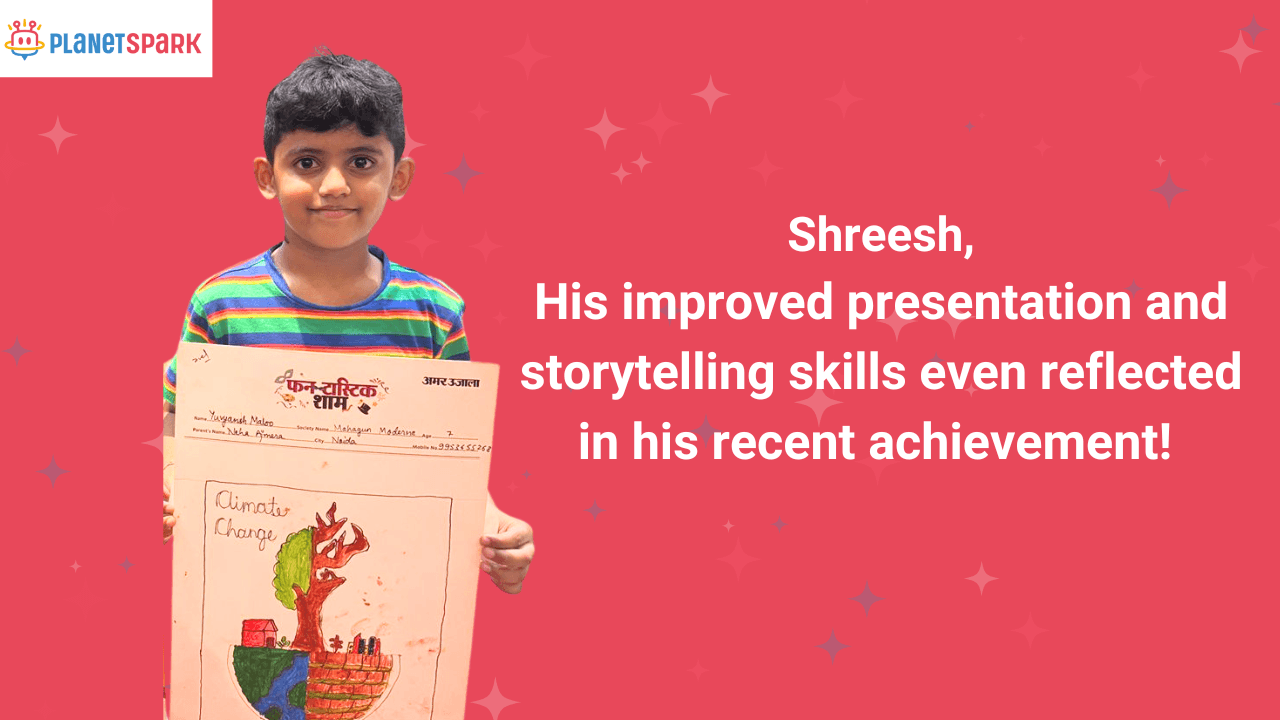
PlanetSpark has helped Shreesh express his ideas creatively and confidently. His improved presentation and storytelling skills even reflected in his recent achievement — winning second place in the Junior Category of a drawing competition on ‘Climate Change’ organized by the Amar Ujala team.
If you’re a professional aiming to sound smart, clear, and confident without overcomplicating your language, PlanetSpark can help you communicate with impact in every workplace situation. Join PlanetSpark and elevate how you speak, present, and lead.
Developing a Professional Communication Tone That Feels Natural
A professional communication tone doesn’t mean sounding robotic or overly formal. It means being respectful, clear, and purposeful.
Here’s how to strike the right balance:
1. Match the Situation
A professional tone shifts with context. Formal settings need structure and clarity, while collaborative environments allow warmth and openness without losing respect or focus.
Workplace examples:
- Using structured language and data during a client presentation.
- Speaking conversationally during a team brainstorming meeting.
2. Be Polite but Confident
Professional communication blends courtesy with confidence. Respectful language shows professionalism, while assertive phrasing reflects competence and self-belief without sounding aggressive or unsure.
Workplace examples:
- Saying “I recommend this approach because…” in meetings.
- Politely disagreeing with a colleague while backing your point with logic.
3. Avoid Emotional Overreactions
Staying calm during pressure builds trust. A composed tone helps resolve conflicts faster and positions you as thoughtful, mature, and capable of handling responsibility.
Workplace examples:
- Responding calmly to critical feedback from a manager.
- Addressing a missed deadline without blaming or reacting emotionally.
4. Choose Words Carefully
Precision matters in professional settings. Clear, intentional wording avoids confusion, saves time, and ensures your message is understood exactly as intended.
Workplace examples:
- Writing concise, goal-oriented emails.
- Giving clear instructions during task delegation.
At PlanetSpark, learners practice such real-life workplace scenarios to develop a natural, confident professional tone that feels authentic but not forced.
Common Mistakes That Make People Sound Less Smart
Even intelligent people make communication mistakes. Watch out for these:
1. Overexplaining Simple Ideas
Repeating or adding unnecessary details can confuse listeners and dilute your main message.
How to fix it: Pause before speaking, identify your core point, and explain it once—clearly and concisely.
2. Using Filler Words Excessively
Frequent use of “um,” “like,” or “you know” makes speech sound uncertain and unprepared.
How to fix it: Replace fillers with short pauses. Silence feels confident and gives you time to think.
3. Speaking Without a Clear Point
Talking without direction causes rambling and makes listeners lose interest quickly.
How to fix it: Decide your purpose before speaking to inform, suggest, or persuade and structure your message around it.
4. Trying Too Hard to Sound Impressive
Using complex words or forced jargon often sounds unnatural and confusing.
How to fix it: Choose simple, precise language. Clarity always sounds smarter than complexity.
Awareness is the first step to improvement, and consistent practice turns these fixes into confident communication habits.

PlanetSpark: The Leading Hub for Powerful Communication Skills
PlanetSpark empowers children to become clear, confident, and effective communicators through personalised training and interactive learning methods. With expert mentors and engaging practice modules, students develop articulation, fluency, active listening, and expressive skills that shape their communication for life.
Why PlanetSpark Is the Best Choice for Communication Skills Training
- 1:1 personalised communication coaching focused on improving clarity, tone, expression, and confident interaction.
- Certified communication coaches guide children through structured, engaging, and practical learning sessions.
- Conversation-building and expression modules that help students communicate ideas confidently in both formal and informal settings.
- Live discussions, dialogues, and group interactions that enhance listening skills, quick thinking, and respectful communication habits.
- SparkX AI video-based feedback offering detailed insights on voice, tone, pace, and clarity for continuous improvement.
- Gamified communication learning with SparkBee to strengthen vocabulary, sentence formation, and linguistic accuracy.
- AI-led speaking and conversation practice sessions to help students improve articulation and expression independently anytime.
- Creative clubs, storytelling events, and communication showcases give children real platforms to practise interaction and express ideas effortlessly.
Turn Everyday Words into Powerful Impact with PlanetSpark
Sounding smart isn’t about complexity but about clarity, confidence, and connection.
When you:
- Think clearly
- Speak simply
- Structure your ideas
- Maintain confidence
You naturally command attention and respect.
Whether you’re a student, professional, or lifelong learner, mastering communication is one of the most powerful skills you can develop.
And with PlanetSpark by your side, sounding smart becomes effortless and authentic.
Also Read:
Why Long Emails Fail to Get Response | Write Better With PlanetSpark
Business English Vs General English: Workplace Skills | PlanetSpark
Frequently Asked Questions
Sounding smart means communicating ideas clearly, confidently, and purposefully, using simple language, logical structure, and appropriate tone so listeners understand you easily and respect your perspective in professional conversations today.
Yes, sounding smart is a learnable skill focused on clarity, practice, and confidence, not difficult words, making it accessible for students, professionals, and everyday communicators across different situations, careers, globally.
PlanetSpark offers live, interactive spoken English sessions, grammar lessons, role plays, AI fluency reports, and personalized trainers to help learners communicate with confidence in everyday life.
Common habits include overexplaining, excessive filler words, unclear structure, and forced vocabulary, which reduce clarity and confidence, even when the speaker has strong knowledge in professional, academic, and social conversations.
Yes, PlanetSpark provides flexible schedules, personalized mentorship, and practical training, making it ideal for working professionals seeking to build future-demand skills without disrupting daily routines.
It depends on your starting level and practice frequency. With daily effort and expert feedback (like at PlanetSpark), visible improvement can happen within a few weeks.