
Best Ways for Students to Stay Calm Before Exams

Table of Contents
- How to Stay Calm Before Exams
- Why Children Feel Nervous Before Exams
- How to Stay Calm During Exam Preparation
- How to Reduce Stress and Anxiety During Exams
- Speak Positive Sentences
- How to Stay Calm the Day Before Exams
- How to Calm Nerves the Night Before an Exam
- How to Stay Calm in the Exam Hall
- How to Stay Calm Before Exam Results
- Do Not Discuss Marks With Others
- Fun Activities to Reduce Exam Stress
- Relax Before Exam Quotes (Kid-Friendly)
- Should You Relax Before an Exam?
- How to Calm Down Anxiety (For Kids & Parents)
- Special Section : How to Calm Down Before a Driving Test (Fo
- Keep Calm Exam Time : Parent Guide
- Fun Games to Stay Calm Before Exams
- About PlanetSpark : Communication Skills
Exams often make children feel worried or stressed, but staying calm is the real secret to doing well. This blog gives simple, practical tips to help kids feel relaxed during preparation, the night before the exam, and even inside the exam hall using easy breathing tricks, fun activities, smart study habits, and parent-friendly guidance.
At PlanetSpark, children learn to stay confident through fun 1:1 classes that build clear communication, strong thinking, and emotional control. With expert coaching and engaging activities, kids learn how to handle pressure calmly and perform their best in every exam.
How to Stay Calm Before Exams
Exams can make children feel nervous, confused, worried, and even scared. But the truth is this: exams are just a way to check what you have learned, not a test of your intelligence or your future. When children stay calm, their mind works better, memory becomes sharper, and confidence increases.
15 Best Ways to Stay Calm Before Exams
1. Start Your Preparation Early
Last-minute study increases panic. Start revising at least 10–15 days before your exam.
Studying early gives you more time to understand concepts and stay relaxed.
2. Make a Simple Study Plan
A plan gives clarity. A student-friendly routine could include:
2–3 study sessions per day
Enough breaks
Time for revision
Time for solving practice papers
When everything is organised, the mind stays calm.
3. Break Your Syllabus into Small Parts
Big chapters look scary.
But small topics look easy.
Study in short chunks like:
“Today I’ll finish 3 topics.”
“I’ll revise 1 chapter.”
Small goals = less pressure.
4. Practice Deep Breathing
If you feel anxious while studying, try this:
Breathe in for 4 seconds
Hold for 2 seconds
Breathe out for 6 seconds
Do this for 1 minute.
It relaxes your brain instantly and improves focus.
5. Stay Away from Negative Talk
Avoid:
Friends who scare you with “Exams are tough!”
Comparing your preparation
Thinking “I can’t do this.”
Positive environment = calm mind.
6. Revision Is the Real Game
Instead of new topics before exams, focus on:
Revising important points
Solving last-year papers
Practising sample questions
Revision builds confidence and reduces stress.
7. Take Short Breaks
The brain gets tired quickly.
Follow the 40–10 rule:
Study 40 minutes
Take a 10-minute break
This keeps your mind fresh.
8. Eat Light & Healthy Food
Avoid heavy or junk food before exams.
Instead have:
Fruits
Nuts
Home-cooked meals
Water
A healthy body keeps the mind calm.
9. Sleep Well Before Exam Day
Many students make the mistake of studying late at night.
But proper sleep:
Improves memory
Reduces nervousness
Keeps your mind sharp during the exam
Aim for 7–8 hours of sleep.
10. Avoid Last-Minute Cramming
One day before exam:
Do only revision
Don’t learn new topics
Don’t keep checking your books again and again
Last-minute study increases fear and confusion.
11. Visualise Success
Close your eyes and imagine:
Sitting confidently in the exam hall
Writing answers peacefully
Getting good marks
This builds confidence and lowers anxiety.
12. Talk to Someone You Trust
Sharing your feelings with:
Parents
Teachers
Siblings
A friend
helps reduce stress and gives motivation.
13. Stay Hydrated
Dehydration can make kids feel dizzy or anxious.
Drink enough water throughout the day, but don’t overdo it right before the exam.
14. Pack Your Bag a Night Before
Keep these things ready:
Admit card
Pens / pencils
Geometry box
Water bottle
Hall-ticket instructions
This avoids last-minute panic in the morning.
15. Keep Your Mind Positive
Tell yourself:
“I have studied well.”
“I will stay calm.”
“I can do it.”
Positive thoughts reduce fear and boost confidence.
Why Children Feel Nervous Before Exams
Every child is different, but most kids feel nervous because:
They fear making mistakes
They worry about marks
They want to make their parents happy
They compare themselves with other students
They feel they have not prepared enough
Good News: All these feelings can be handled with simple techniques.
Let’s learn how.
How to Stay Calm During Exam Preparation
Staying calm starts long before the exam day. Here are simple steps children can follow.
Make a Simple Study Plan
A study plan helps the brain stay organised instead of confused.
Example Study Plan (For Kids)
| Time | Activity | Notes |
|---|---|---|
| 6:30–7:00 PM | Revise Maths | Keep notebook ready |
| 7:00–7:15 PM | Break | Relax, walk around |
| 7:15–8:00 PM | Read Science Chapter | Mark important points |
| 8:00–8:30 PM | Practice English writing | Write one paragraph |
| 8:30 PM | Free Time | No screen time after 9 PM |
Use the “20-5-20 Break Rule”
Study for 20 minutes, relax for 5 minutes, then study again for 20 minutes.
This keeps the mind fresh and reduces stress.
Keep Your Study Table Clean
A clean space helps you stay calm.
Checklist:
Books arranged
Water bottle nearby
Pencil box ready
No distracting toys
No mobile during study
How to Reduce Stress and Anxiety During Exams
Here are simple, science-backed techniques children can follow at home.
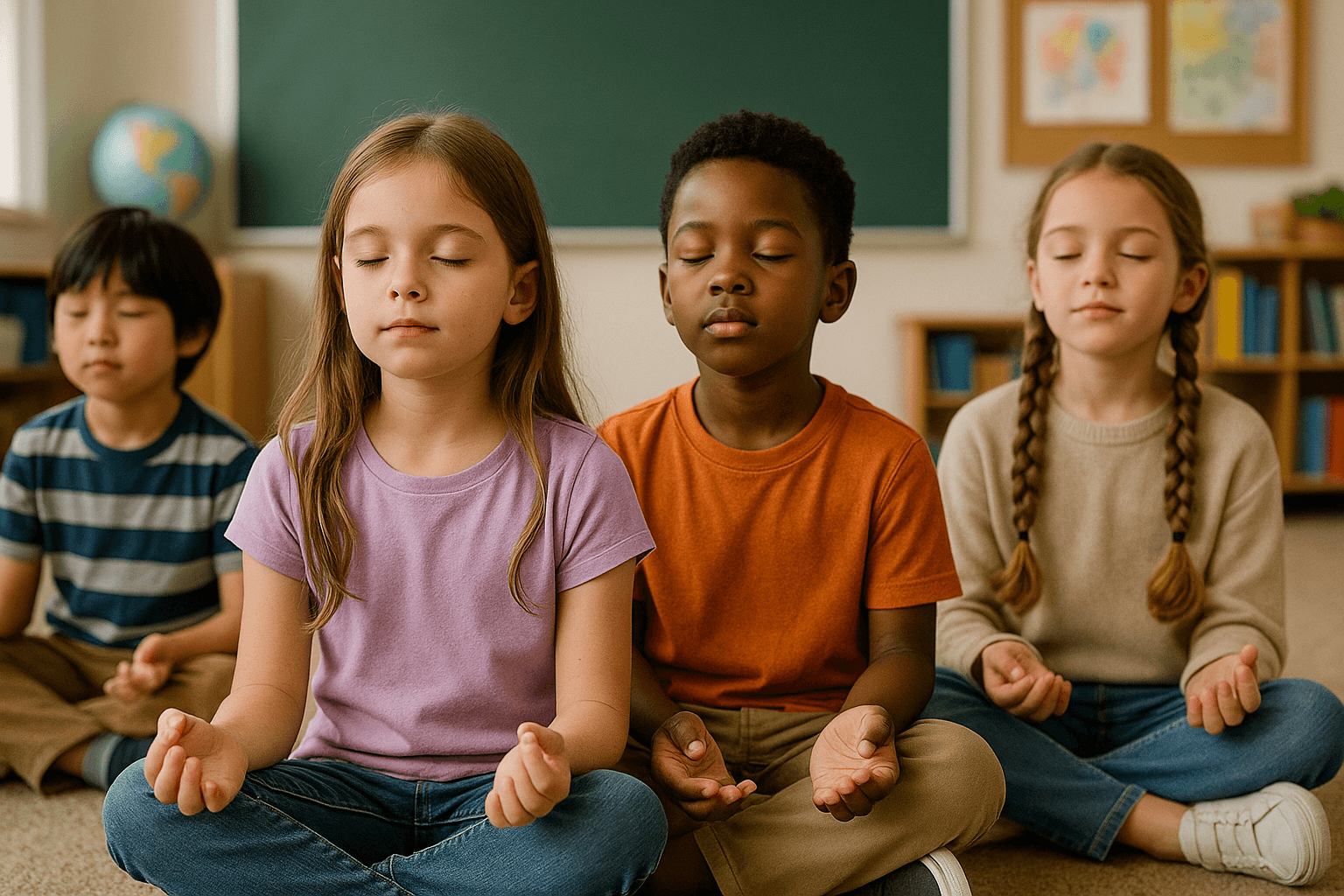
Practice Slow Breathing
Slow breathing tells your brain: “Everything is okay.”
Try this:
4-4-6 Breathing Technique
Breathe in for 4 seconds
Hold for 4 seconds
Release slowly for 6 seconds
Repeat 5 times.
Speak Positive Sentences
Children should say:
“I can do this.”
“I am prepared.”
“I will stay calm.”
“I believe in myself.”
Speaking positive words reduces anxiety quickly.
Make Small Notes Instead of Big Textbooks
Small notes help students revise faster and feel more confident.
Example Notes:
| Subject | Note Idea |
|---|---|
| Science | Key words, diagrams |
| Maths | Formula list |
| English | Grammar rules |
| SST | Dates & maps |
Avoid Comparing With Others
Every child learns differently. Comparing causes fear and reduces confidence.
Parents must help children by saying:
“Do your best; marks are not everything.”
“We care about your effort, not just your score.”
How to Stay Calm the Day Before Exams
This is one of the most stressful times for children. Here’s what to do:
Don’t Start New Topics
New topics cause panic.
Only revise what you already know.
1-Hour Revision Plan
A simple plan for the night before:
20 minutes – Read important notes
20 minutes – Practice questions
20 minutes – Quick recap
Then stop studying.
Prepare Everything at Night
Checklist:
Admit card
Pen, pencil, eraser
Geometry box
Water bottle
School uniform
Preparing early saves morning stress.
Sleep Early
No exam preparation is complete without good sleep.
Kids need 8–9 hours of sleep for better memory.
How to Calm Nerves the Night Before an Exam
Here are simple, safe, child-friendly methods.
Listen to Relaxing Music
Soft instrumental music reduces stress.
Do Light Stretching
Stretching relaxes muscles and reduces tension.
Do the “5-4-3-2-1 Grounding Method”
This method helps calm anxiety:
5 things you can see
4 things you can touch
3 things you can hear
2 things you can smell
1 thing you can taste
This brings the mind back to the present moment.
How to Stay Calm in the Exam Hall
Inside the exam hall, anxiety can return. Here’s how to control it.
Read the Question Paper Slowly
Spend the first 5 minutes reading calmly.
Attempt Easy Questions First
This boosts confidence and reduces fear.
Use the “Finger Breathing Trick”
Move your finger up → breathe in
Move your finger down → breathe out
Do this 5 times.
Very helpful inside the exam hall.

How to Stay Calm Before Exam Results
Waiting for results often creates more stress than the exam itself.
Focus on Effort, Not Marks
Ask children:
“Did you try your best?”
“What did you learn?”
These questions build confidence.
Do Not Discuss Marks With Others
Stop comparing scores. Every child grows at their own speed.
Fun Activities to Reduce Exam Stress
Children learn best through fun. Here are simple activities to release exam pressure.
Fun Activity 1 : “Stress Balloon” Game
Blow a balloon
Write your worry on it
Pop it and say loudly:
“I am bigger than my fear!”
Fun Activity 2 : “Happy Jar”
Write happy memories or achievements on small papers and keep them in a jar.
Before exams, read 3 papers to relax.
Fun Activity 3 : “Study Buddy Race”
Two children race to complete 5 questions quickly but calmly.
Helps build confidence and fun.
Relax Before Exam Quotes (Kid-Friendly)
“Stay calm, do your best, forget the rest.”
“Believe you can, and you’re halfway there.”
“Your hard work matters more than your marks.”
“Don’t stress. Do your best.”
“Exams test memory not your worth.”
4. “Worry less, learn more.”
Should You Relax Before an Exam?
Yes! Absolutely.
Relaxing helps the brain:
Remember things better
Think clearly
Avoid silly mistakes
Stay confident
Relaxation is a part of preparation, not a waste of time.
How to Calm Down Anxiety (For Kids & Parents)
Use this emergency plan:
Quick Action Anxiety Plan
Drink water
Take 5 deep breaths
Stretch your arms
Think of one happy moment
Say: “I can handle this.”
Works within 2–3 minutes.
Special Section : How to Calm Down Before a Driving Test (For Teens & Parents)
Many older children or teens feel nervous before their first driving test.
Tips:
Practice slow breathing
Reach early
Drive slowly and calmly
Focus on the road, not the examiner
Don’t aim for perfection just safe driving
Keep Calm Exam Time : Parent Guide
Parents play a huge role in reducing a child’s stress.
What Parents Should Do
Speak encouraging words
Never compare
Avoid shouting during exams
Give healthy food
Ensure proper sleep
Keep conversations positive
What Parents Should Avoid
Avoid saying “You must score 90+”
Don’t create fear
Avoid last-minute pressure
Don’t overload with too many books
Fun Games to Stay Calm Before Exams
1. The “Ball of Worries” Game
Goal: Remove exam fear from the mind.
How to Play:
Take a soft ball or crumpled paper.
Say one worry out loud (example: “I'm scared of maths”), then throw the ball away.
Pick it up again and replace it with a positive sentence:
“I can do this!”
This simple action reduces stress and brings confidence.
2. 10-Second Calm Challenge
Goal: Control quick exam anxiety.
How to Play:
Set a timer for 10 seconds.
Close your eyes and breathe deeply until the timer ends.
Kids love competing with themselves to stay calmer each time.
Great to play right before sitting for revision.
3. Formula Treasure Hunt
Goal: Make revision fun + reduce study pressure.
How to Play:
Write formulas, facts, or vocabulary on sticky notes.
Hide them around the room like treasure.
Children find the notes and read them aloud.
This turns boring revision into an exciting treasure game.
4. The Calm Colouring Race
Goal: Relax the brain through creativity.
How to Play:
Give children a small mandala or simple pattern to colour.
They colour slowly, staying within the lines.
The slower they colour, the more points they get!
This game slows the heart rate and clears the mind.
5. Memory Flip Cards
Goal: Boost confidence before exams.
How to Play:
Create small cards with questions on one side and answers on the other.
Shuffle them and place them face down.
Children flip two cards at a time to find matching pairs (Q & A).
This game builds exam confidence while keeping nerves low.
6. Laugh It Out Challenge
Goal: Release tension instantly.
How to Play:
Set a timer for 20 seconds.
The child must laugh non-stop until the timer ends.
Parents can join in too!
Forced laughter turns into real laughter instantly reducing stress.
7. The “Calm Pose” Freeze Game
Goal: Improve focus and control during exams.
How to Play:
Play soft music.
When the music stops, children must freeze in a “calm pose” (yoga pose, sitting pose, superhero pose).
The one who holds it the longest wins.
Teaches stillness and focus very useful during exams.
About PlanetSpark : Communication Skills
PlanetSpark empowers children to become confident, expressive, and effective communicators through engaging 1:1 live classes. Our Communication Skills Program builds clarity, confidence, vocabulary, body language, listening skills, and overall speaking abilities helping kids express themselves with impact in school and beyond.
1. 1:1 Expert Communication Coaches
Every child learns with a certified communication trainer who personalises each session to their personality, pace, and goals ensuring clearer speech, stronger expression, and faster progress.
2. Personalised Communication Learning Path
A tailored curriculum improves grammar, vocabulary, storytelling, conversation ability, and presentation skills helping learners grow step by step from shy speakers to confident communicators.
3. AI-Powered Speaking & Confidence Feedback
With SparkX analysis and AI-led practice sessions, students receive instant insights on clarity, tone, pace, gestures, and confidence making communication improvement measurable and motivating.
4. Interactive & Gamified Communication Activities
Engaging tools like Story Builder, Spell Knockout, Grammar Guru, and Roleplay Drills make learning fun while strengthening creativity, speaking fluency, and listening skills through play.
5. Confidence for Every Situation
Through debates, storytelling, public speaking, conversation practice, and real-life scenarios, children develop the confidence to speak naturally and effectively at home, school, stage, or social settings.
Conclusion
Staying calm before exams isn’t difficult when children follow simple habits like deep breathing, smart revision, positive thinking, and fun relaxation games. With the right guidance, exams can feel less stressful and more manageable. Parents and kids working together can turn exam time into a period of learning, focus, and confidence not fear.
PlanetSpark helps children build this calm, confident mindset through fun learning, clear communication training, and activities that improve thinking and emotional balance. When children learn how to express themselves, manage pressure, and stay positive, they naturally perform better in school and beyond. Staying calm becomes not just an exam skill but a life skill.
Frequently Asked Questions
By practicing deep breathing, preparing early, sleeping well, and avoiding last-minute studying.
Provide support, avoid comparison, keep the environment positive, and ensure rest and nutrition.
Yes! Relaxation helps the brain stay sharp and improves performance.
By breathing slowly, reading the paper calmly, and attempting easy questions first.
Minimum 8–9 hours for best memory and focus.