
Ice Breaker Activities: Fun and Engaging Ideas to Start Any Session
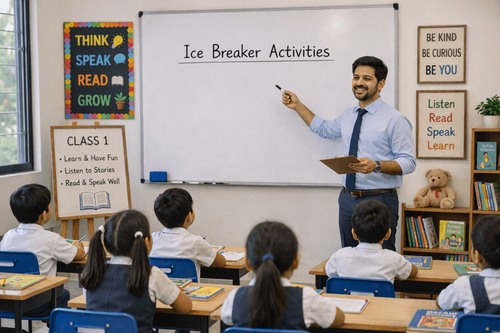

Table of Contents
- Why Ice Breaker Activities Matter
- How to Choose the Right Ice Breaker Activity
- Ice Breaker Activities for Students
- Two Truths and One Lie
- Name and Action
- Find Someone Who
- Would You Rather
- How These Activities Help Students Long-Term
- Quick Tips for Teachers
- Fun Ice Breaker Games for Any Group
- Human Bingo
- Rapid Fire Questions
- Pass the Clap
- Emoji Check-In
- Classroom Ice Breaker Ideas
- One Word Story
- Mystery Object
- Desk Debate
- Quick Draw Challenge
- Team Building Ice Breakers
- Marshmallow Tower
- Escape Challenge
- Blind Drawing
- Survival Scenario
- Ice Breakers for Kids
- Animal Walk
- Color Hunt
- Magic Microphone
- Balloon Toss Questions
- Ice Breakers for Adults
- 30-Second Introduction
- Common Ground
- Career Snapshot
- Desk Stretch and Smile
- Virtual Ice Breaker Activities
- Show and Tell
- Background Story
- Chat Storm
- Poll Predictions
- Tips to Run Ice Breakers Successfully
- Keep Instructions Clear
- Make Participation Safe
- Match the Energy
- Stay Inclusive
- Debrief Briefly
- Common Mistakes to Avoid
- Choosing Overly Complicated Games
- Ignoring Group Comfort
- Taking Too Much Time
- Repeating the Same Activity
- PlanetSpark Communication Skills Course
- A Powerful Start Leads to Better Sessions
Starting a session with silence, awkwardness, or low energy can slow down learning, teamwork, and participation. That is where ice breaker activities help. They create comfort, spark conversations, and build instant engagement among students, kids, adults, and teams. Whether you are leading a classroom, workshop, office meeting, training session, or social gathering, the right activity can transform the mood in minutes. In this blog, you will discover practical, fun, and effective ice breaker ideas for every setting, along with expert tips to run them successfully.
Why Ice Breaker Activities Matter
Ice breakers are more than just games. They are tools that improve communication, reduce hesitation, and help people connect faster.
Key Benefits of Ice Breakers
- Reduce nervousness and first-day anxiety
- Encourage participation from shy individuals
- Improve teamwork and collaboration
- Build trust in groups
- Increase attention and energy levels
- Create a positive learning environment
- Improve speaking and listening skills
- Help people remember names quickly
When people feel comfortable, they learn better, communicate better, and contribute more confidently.
How to Choose the Right Ice Breaker Activity
Not every activity works for every group. Choose based on the audience, age, and goal.
Consider These Factors
Group Size
- Small groups: discussion-based games
- Large groups: movement or quick-response games
Age Group
- Kids: playful and visual activities
- Teens: creative and interactive games
- Adults: professional yet fun exercises
Time Available
- 5 minutes: quick energizers
- 10 to 20 minutes: team-building games
- 30+ minutes: deeper collaboration activities
Objective
- Introductions
- Team bonding
- Communication practice
- Creative thinking
- Problem solving
Want your child or team to speak confidently, think clearly, and engage better in every session? Explore the PlanetSpark Communication Skills Course today.
Ice Breaker Activities for Students
Students learn best when they feel comfortable, included, and ready to participate. The first few minutes of any class can decide the energy of the entire session. If students feel shy, nervous, or disconnected, they may hesitate to speak or engage. That is why ice breaker activities for students are so effective. They help learners interact, laugh, think, and connect with classmates in a natural way.
These activities are ideal for schools, tuition centres, coaching classes, summer camps, workshops, and online sessions. They not only make the environment more welcoming but also improve communication, teamwork, confidence, and classroom participation.
Two Truths and One Lie
This is one of the most popular student ice breaker games because it is simple, fun, and highly interactive.
How to Play
Each student shares three statements about themselves:
- Two statements should be true
- One statement should be false
The rest of the class listens carefully and guesses which statement is the lie.
Example
A student says:
- I have a pet dog
- I can speak three languages
- I have climbed Mount Everest
The class then guesses which statement is false.
Why It Works
- Builds curiosity and excitement
- Helps students learn interesting facts about each other
- Encourages speaking in front of a group
- Improves listening and observation skills
- Creates laughter and natural conversation
Best For
- Middle school students
- Teenagers
- New classroom groups
- Workshops and camps
Teacher Tip
Ask students to explain the true statements after the guessing round. This adds more conversation and helps classmates connect better.
Name and Action
This activity is especially effective for younger students and new groups where children are still learning names.
How to Play
Each student says their name and adds a simple action or gesture. For example:
- “I am Riya” with a wave
- “I am Aarav” with a jump
- “I am Meera” with a clap
After each turn, the whole class repeats the student’s name and action together.
Why It Works
- Makes name learning easier and faster
- Adds movement and energy to the classroom
- Helps children feel noticed and included
- Encourages participation even from shy students
- Improves memory through repetition
Best For
- Kindergarten
- Primary classes
- First day of school
- Activity sessions
Teacher Tip
Use actions connected to the lesson theme. For example, if the topic is animals, students can choose animal movements.
Find Someone Who
This is an excellent movement-based activity that gets students talking to many classmates in a short time.
How to Play
Prepare a worksheet with prompts such as:
- Has a pet
- Likes reading
- Can dance
- Loves science
- Enjoys football
- Has visited another city
Students move around the classroom and talk to others to find someone who matches each prompt. They write that student’s name in the box.
Example Questions Students Can Ask
- Do you have a pet?
- Do you like reading books?
- Can you dance?
- What is your favourite subject?
Why It Works
- Encourages real conversations
- Helps students meet many classmates
- Improves confidence in asking questions
- Gets students physically active
- Builds friendships quickly
- Breaks social barriers in new groups
Best For
- Large classrooms
- New academic sessions
- Summer camps
- Communication classes
Teacher Tip
Add subject-based prompts like “likes maths” or “enjoys science experiments” to connect the game with learning.
Would You Rather
This activity is quick, fun, and perfect for getting students to share opinions in a relaxed way.
How to Play
Ask students a fun choice-based question. They must choose one option and explain why.
Example Questions
- Would you rather fly or be invisible?
- Would you rather eat only pizza or only burgers?
- Would you rather live in space or under the sea?
- Would you rather have super speed or super strength?
- Would you rather read books or watch movies?
Students can answer individually, in pairs, or by moving to different sides of the room based on their choice.
Why It Works
- Sparks laughter and excitement
- Builds confidence in expressing opinions
- Encourages creative thinking
- Improves speaking fluency
- Easy to run with no materials needed
- Works in both offline and online classrooms
Best For
- All age groups
- Warm-up sessions
- Speaking classes
- Fast energizers
Teacher Tip
Ask follow-up questions like “Why did you choose that?” or “Can anyone change your mind?” to create deeper discussion.
How These Activities Help Students Long-Term
Ice breaker activities are not just for fun. When used regularly, they develop important life skills such as:
- Communication
- Confidence
- Listening
- Teamwork
- Critical thinking
- Creativity
- Social interaction
- Classroom participation
Students who feel comfortable speaking in small activities often become more active in discussions, presentations, and group tasks later.
Quick Tips for Teachers
Keep It Simple
Choose activities with easy rules so students can start quickly.
Include Everyone
Make sure every student gets a chance to participate.
Match the Age Group
Use movement games for younger kids and discussion games for older students.
Keep It Positive
Focus on fun, encouragement, and participation rather than competition.
Rotate Activities
Use different games each week to keep students excited.
Strong communication starts with small moments like these. Help kids and adults become confident speakers with PlanetSpark Communication Skills Course.
Fun Ice Breaker Games for Any Group
These fun ice breaker games work well in classrooms, training sessions, parties, and events.
Human Bingo
Give everyone a bingo sheet with traits or experiences.
Examples:
- Has traveled by train
- Loves chocolate
- Plays a sport
Participants mingle and complete the grid.
Why It Works
- High energy
- Encourages networking
- Great for large groups
Rapid Fire Questions
Ask quick questions and participants answer instantly.
Examples:
- Favorite movie?
- Tea or coffee?
- Morning or night?
Why It Works
- Fast-paced and fun
- Removes hesitation
- Builds spontaneity
Pass the Clap
Participants stand in a circle and pass a clap around using eye contact and timing.
Why It Works
- Boosts focus
- Builds group rhythm
- Great energizer
Emoji Check-In
Ask everyone to choose one emoji that represents how they feel and explain why.
Why It Works
- Encourages emotional expression
- Simple and modern
- Useful for online sessions too
Classroom Ice Breaker Ideas
Teachers often need fast and effective classroom ice breaker idea options to start lessons smoothly.
One Word Story
One student starts with one word. Others add one word each to build a story.
Example:
- Once
- There
- Was
- A
- Dragon
Why It Works
- Builds creativity
- Improves listening
- Encourages participation
Mystery Object
Show an object and ask students to create a story about it.
Examples:
- Pencil
- Shoe
- Spoon
Why It Works
- Improves imagination
- Great speaking exercise
- Works across age groups
Desk Debate
Give simple topics:
- Homework should be banned
- Summer is better than winter
Students choose sides and explain why.
Why It Works
- Develops reasoning
- Builds confidence
- Improves public speaking
Quick Draw Challenge
Give a word and 30 seconds to draw it.
Examples:
- School
- Jungle
- Rocket
Why It Works
- Visual fun
- Reduces stress
- Great transition activity
Team Building Ice Breakers
Strong teams communicate better and solve problems faster. These steam building ice breakers (team building ice breakers) are perfect for offices, workshops, and group learning sessions.
Marshmallow Tower
Give teams spaghetti sticks, tape, and one marshmallow. Build the tallest tower.
Why It Works
- Encourages teamwork
- Tests planning skills
- Sparks innovation
Escape Challenge
Create a mini puzzle that teams solve together.
Why It Works
- Promotes collaboration
- Improves critical thinking
- Highly engaging
Blind Drawing
One person describes an image. The other draws without seeing it.
Why It Works
- Improves listening
- Highlights communication gaps
- Creates laughter
Survival Scenario
Ask teams to choose 5 items to survive on an island.
Why It Works
- Encourages discussion
- Builds decision-making skills
- Great for adults and teens
Whether for classrooms or workplaces, communication is the real superpower. Build it with expert coaching through PlanetSpark Communication Skills Course.
Ice Breakers for Kids
Kids respond best to movement, creativity, and excitement.
Animal Walk
Call out an animal and kids imitate it.
Examples:
- Frog
- Elephant
- Penguin
Color Hunt
Ask children to find something nearby of a specific color.
Magic Microphone
Pass a pretend microphone. Whoever gets it answers a fun question.
Examples:
- What is your dream superpower?
- What makes you happy?
Balloon Toss Questions
Write questions on slips inside balloons. Pop and answer.
Why Kids Love These
- Playful and active
- Improves expression
- Builds social comfort
Ice Breakers for Adults
Adults also need warm-up activities, especially in meetings, training, and networking events.
30-Second Introduction
Participants introduce themselves in 30 seconds.
Common Ground
Small groups find 5 things they all have in common.
Career Snapshot
Share one career lesson learned so far.
Desk Stretch and Smile
A quick physical warm-up with a smile challenge.
Why These Work
- Professional yet fun
- Reduces stiffness
- Encourages genuine connection
Virtual Ice Breaker Activities
Online sessions need engagement even more because screens can create distance.
Show and Tell
Bring one item from your desk and explain it.
Background Story
Explain your virtual background or wallpaper.
Chat Storm
Type answers in chat and send together on count of three.
Poll Predictions
Use polls and discuss results.
Virtual Success Tip
Keep online ice breakers short, visual, and interactive.
Tips to Run Ice Breakers Successfully
Keep Instructions Clear
Explain rules simply and quickly.
Make Participation Safe
No one should feel embarrassed or forced.
Match the Energy
Use calm games for formal sessions and energetic games for casual groups.
Stay Inclusive
Choose activities everyone can join.
Debrief Briefly
Ask:
- What did you learn?
- What surprised you?
- How did the activity feel?
Reflection adds value.
Common Mistakes to Avoid
Choosing Overly Complicated Games
Long rules reduce energy.
Ignoring Group Comfort
Some people dislike overly personal questions.
Taking Too Much Time
Ice breakers should support the session, not replace it.
Repeating the Same Activity
Variety keeps engagement high.
PlanetSpark Communication Skills Course
Great ice breaker activities begin conversations, but lasting confidence comes from structured learning. The PlanetSpark Communication Skills Course helps kids and adults become powerful communicators in real life.
Every learner gets 1:1 personal trainers who adapt sessions to learning style, pace, and personality. These live classes focus on fluency, storytelling, grammar, creative writing, and public speaking with instant feedback.
PlanetSpark also offers a personalised curriculum and roadmap based on skill gaps in vocabulary, confidence, speaking structure, and expression. Progress plans evolve with every milestone.
With SparkX AI Video Analysis, learners upload speeches and receive smart feedback on voice clarity, body language, grammar, confidence, and idea flow.
The platform includes AI-led practice sessions for speeches and storytelling, helping learners practise independently anytime.
Through Spark Diary, students build writing habits with stories, reflections, and structured prompts.
Learning stays exciting through gamified modules, quizzes, vocabulary games, spelling challenges, and grammar competitions.
Parents stay informed with regular PTMs and detailed progress reports covering communication, critical thinking, delivery, structure, and confidence.
Students can also join exclusive clubs like debate, podcasting, storytelling, comedy, and writers communities. Safe sharing on Sparkline plus contests and showcases gives real performance opportunities.
Ready to turn hesitation into confidence? Join PlanetSpark today and unlock communication success for kids and adults.
A Powerful Start Leads to Better Sessions
The first few minutes of any session shape everything that follows. Strong ice breaker activities create energy, trust, comfort, and participation from the beginning. Whether you are teaching students, training teams, hosting workshops, or guiding kids, the right activity helps people open up and engage faster. Choose simple, relevant, and fun ideas that match your audience. When used regularly, ice breakers do more than warm up a room, they build communication skills, confidence, and stronger relationships that last beyond the session itself.
Frequently Asked Questions
Ice breaker activities are short games or exercises used at the beginning of a session to help participants feel comfortable, interact with others, and become engaged. They are commonly used in classrooms, meetings, workshops, and events.
They reduce nervousness, improve classroom participation, help students make friends, and encourage better speaking and listening. They also create a positive environment for learning.
Some fast options include:
Two Truths and One Lie
Rapid Fire Questions
Emoji Check-In
Name and Action
Would You Rather
These usually take 5 minutes or less.
Choose based on:
Student age
Group size
Time available
Learning objective
Energy level of the class
Simple games with clear rules usually work best.
Ice breakers create a strong start, but consistent growth needs expert training. PlanetSpark helps learners with 1:1 coaching, public speaking practice, storytelling, writing development, AI feedback tools, gamified learning, and structured progress tracking, making communication improvement measurable and long-lasting.