
Master Innuendo in Subtle Narratives with PlanetSpark


Innuendo is one of the most exciting ways to make communication playful, clever, and engaging. It allows you to give hints or make suggestions without stating them directly. Using innuendo in conversations, stories, or jokes helps children think creatively, understand context, and develop critical reasoning skills. When kids learn to use innuendo, they also learn how to make their stories fun and intriguing for readers and listeners.
Children often enjoy games of subtlety, and innuendo fits perfectly into this learning style. It teaches them that language is not only about words but also about meaning, tone, and imagination. This blog will explore the world of innuendo, explain its meaning, provide simple examples, introduce synonyms, and offer tips on using it effectively in stories.
By understanding innuendo, children can:
Add creativity to their stories: Subtle hints make storytelling more engaging.
Develop humor skills: Innuendo allows them to be funny without being rude.
Improve comprehension: Reading between the lines helps understand deeper meanings.
Sharpen observation skills: Recognizing innuendos requires attention to detail.
What is Innuendo?
Innuendo is a type of subtle, indirect statement that hints at something without mentioning it explicitly. It is often used in stories, jokes, or casual conversations to make the language more playful and intelligent. Innuendo is not about being confusing; it’s about clever communication.

Why Innuendo is Exciting and Fun
Makes stories lively: Adds mystery and curiosity.
Encourages creative thinking: Children learn to suggest ideas indirectly.
Promotes playful communication: Helps them tease or joke in a friendly way.
Improves understanding of context: Children learn to read between the lines.
Important Features of Innuendo:
| Feature | Description | Example |
|---|---|---|
| Indirect | Suggests without stating directly | “That cake was interesting…” |
| Clever | Uses wit and subtlety | “Someone baked a genius dessert!” |
| Playful | Adds humor and fun | “He’s a magician on the soccer field!” |
Examples of Innuendo in Everyday Life:
When a friend says, “Looks like someone had fun with their homework,” they are hinting that the work was enjoyable without saying it directly.
In stories, a character might say, “She’s quite the detective, isn’t she?” This suggests cleverness without plainly saying it.
Innuendo is a fantastic tool for children because it teaches them how language can be layered and how meaning can be implied rather than directly stated. Understanding innuendo helps children become better storytellers and attentive readers, as they begin to notice subtle cues and hidden meanings.
The Meaning of Innuendo
The innuendo meaning is all about hints, suggestions, or indirect statements that communicate ideas subtly. Unlike direct statements, innuendos rely on imagination, clever wording, and context to convey meaning. Innuendo is like a secret message hidden in plain words, which makes communication fun and thoughtful.
Ways to Understand Innuendo Meaning
Hinting: Giving a clue about something without mentioning it.
Suggesting: Letting someone understand an idea indirectly.
Implying: Expressing something cleverly rather than plainly.
Alluding: Referring to something in a subtle manner.
Table: Understanding Innuendo Meaning Through Examples
| Scenario | Direct Statement | Innuendo |
|---|---|---|
| Talking about skill | “He is good at painting.” | “He always surprises everyone with his colors, doesn’t he?” |
| Talking about food | “This cake is yummy.” | “I wonder who baked such a clever dessert?” |
| Talking about sports | “She is fast.” | “Nobody can catch her on the field, can they?” |
Why Learning the Meaning of Innuendo is Important
Enhances storytelling: Makes narratives more intriguing.
Improves reading skills: Helps children understand jokes, subtle hints, and hidden meanings.
Encourages critical thinking: They learn to interpret what is implied rather than what is said.
Boosts creative communication: Children learn to express ideas cleverly.
By learning the innuendo meaning, children develop an understanding of subtle communication that is useful in writing, speaking, and even social interactions. They become capable of creating stories that are not only entertaining but also smart and thoughtful, capturing the attention of readers and listeners alike.
"Your voice can change the world!"
Enroll in PlanetSpark’s Communication Skills Course to speak confidently and shine on any stage.
Easy Examples of Innuendo
Understanding innuendo examples makes it easier for children to see how hints and indirect messages work in real life. Examples help make the concept practical and fun.
Simple Examples for Everyday Use
Compliments with a twist:
Instead of saying, “You are smart,” a child might say, “I wonder how you solved that puzzle so fast!” This hints at intelligence without stating it directly.Playful teasing:
A friend might say, “Looks like someone is trying extra hard to win the game today!” This is a gentle way of hinting without criticizing.Story hints:
In a story, a character might say, “I saw someone sneaking around the library…” This subtly suggests mystery or curiosity.
Examples in Table Form
| Direct Statement | Innuendo Example | What it Means |
|---|---|---|
| “He is funny.” | “He always makes everyone giggle!” | Suggests humor without directly saying “funny.” |
| “The homework is easy.” | “Looks like the teacher wants to give us a little challenge today!” | Hints that the homework is simple without saying it plainly. |
| “She is brave.” | “Nobody dares to cross her path!” | Implies courage in a clever way. |
Tips to Recognize Innuendo in Stories
Look for words that suggest rather than explain.
Pay attention to tone and context.
Watch for playful hints in dialogue.
By practicing these innuendo examples, children not only learn subtle communication but also improve their storytelling and writing. They start thinking creatively about how to make stories more engaging without directly stating everything.
Words Similar to Innuendo (Synonyms)
Understanding innuendo synonyms helps children expand their vocabulary and find different ways to express subtle hints or indirect messages.
Common Synonyms of Innuendo
Hint – A small piece of information given indirectly.
Suggestion – An idea mentioned without direct explanation.
Allusion – A reference made in a subtle or indirect way.
Implication – Something suggested without being openly stated.
Reference – Mentioning something indirectly to convey meaning.
Insinuation – A slightly negative hint about someone or something.
Table: Innuendo and Its Synonyms
| Innuendo | Synonym | Example |
|---|---|---|
| Clever hint | Hint | “Here’s a hint for solving the riddle.” |
| Subtle suggestion | Suggestion | “I have a suggestion for the story ending.” |
| Indirect reference | Allusion | “He made an allusion to the secret plan.” |
| Hidden meaning | Implication | “The implication was clear to everyone listening.” |
| Suggestive remark | Insinuation | “There was an insinuation about the new student’s talent.” |
How Synonyms Help in Communication
Makes stories varied and creative
Helps children avoid repetition in writing
Encourages clever expression using different words
Improves understanding of nuanced meanings
By learning innuendo synonyms, children can express ideas in multiple ways. For instance, instead of repeating “innuendo” in a story, they can use hint, allusion, or implication depending on the context. This makes their communication richer and smarter, helping them become confident speakers and imaginative writers.
"Great ideas deserve to be heard."
Join PlanetSpark and master storytelling, innuendo, and effective communication.
How to Use Innuendo in Stories
Using innuendo in stories makes them engaging, clever, and fun. Children can learn to add subtle hints, playful suggestions, or hidden meanings to their narratives, which makes reading and listening more interesting. Understanding how to use innuendo in stories also improves imagination, creativity, and communication skills.
Steps to Add Innuendo in Stories
Think About the Message
Decide what idea, joke, or hint you want to convey without stating it directly.Choose Words Carefully
Use clever or indirect language that gives readers a hint about the situation, character, or event.Use Context Clues
Let readers or listeners infer the meaning through the story setting, characters’ actions, or dialogue.Keep It Playful
Ensure your hints are friendly, funny, or clever—not confusing or mean.Test Your Innuendo
Read your story aloud or share it with friends. If they understand the hint, your innuendo works!
Examples of Innuendo in Stories
| Direct Statement | Innuendo Example | How It Works |
|---|---|---|
| “He is fast.” | “Nobody can catch him when he runs!” | Suggests speed without stating it plainly. |
| “She is clever.” | “She always finds the key to every problem.” | Hints at intelligence subtly. |
| “The treasure is hidden.” | “Only the sharpest eyes can find the secret spot.” | Gives a playful hint without revealing everything. |
Tips for Using Innuendo in Storytelling
Use Dialogue: Let characters hint at things instead of explaining everything.
Add Mystery: Drop small clues that readers can connect to understand the plot.
Include Humor: Funny hints make stories more enjoyable.
Mix with Emotions: Innuendo can show characters’ feelings indirectly.
Short Example Story with Innuendo:
"Mia peeked behind the curtain and whispered, 'Looks like someone left a surprise for us!' Everyone’s eyes sparkled with curiosity. No one knew what it was, but they could feel it was exciting."
In this story, the phrase “looks like someone left a surprise” is an innuendo because it hints at something exciting without saying exactly what it is. Readers are invited to imagine the surprise, making the story more engaging.
Using innuendo in stories also develops critical thinking. Children learn to interpret characters’ actions, predict outcomes, and enjoy the hidden layers of meaning in narratives. Over time, they become confident writers and clever storytellers, able to entertain and captivate their audience with subtle hints and clever phrasing.
"Speak smart, inspire more!"
Discover PlanetSpark’s Communication Skills Course and turn your words into impact.
Fun Tips to Practice Innuendo
Practicing innuendo helps children develop creativity, clever communication, and storytelling skills. Fun activities make learning innuendo enjoyable while improving their ability to hint, suggest, or imply without saying everything directly.
Daily Practice Tips
Play “Guess the Hint” Games
One child gives a subtle clue about an object, person, or event.
Others guess what it is based on the hint.
Example: “I am round and help you tell time” → Clock.
Write Mini-Stories Using Hints
Create short stories where characters hint at feelings, events, or secrets.
Encourage playful and clever language.
Example: “Sam noticed the empty plate and smiled, wondering who had a sweet tooth today.”
Spot Innuendo in Books or Shows
Look for indirect messages, jokes, or hints in stories or cartoons.
Discuss what the hints suggest and why they are clever.
Use Friendly Teasing
Give gentle, funny hints in conversations.
Example: “Looks like someone had a secret mission in the garden today!”
Create Riddles and Puzzles
Riddles are a great way to practice indirect hints.
Example: “I speak without a mouth and hear without ears. What am I?” → An echo.
Table: Fun Activities to Practice Innuendo
| Activity | How It Helps | Example |
|---|---|---|
| Guess the Hint | Improves indirect thinking | “I have wings but I don’t fly.” → Fan |
| Mini-Stories | Encourages creative writing | Hints at secret party without saying directly |
| Spot Innuendo | Builds comprehension | Find jokes or hints in cartoons |
| Friendly Teasing | Improves playful conversation | “Someone sneaked cookies again!” |
| Riddles & Puzzles | Enhances critical thinking | “I have keys but no doors. What am I?” → Piano |
Benefits of Practicing Innuendo
Boosts Creativity: Children learn to suggest ideas in clever ways.
Improves Storytelling: Makes narratives exciting and layered.
Enhances Reading Skills: Helps notice hidden meanings.
Encourages Social Skills: Improves playful and friendly communication.
By regularly practicing innuendo through games, riddles, and stories, children become confident communicators who can use subtle hints effectively in both speaking and writing.

Why Choose PlanetSpark Communication Skills Course
PlanetSpark helps children master communication skills like innuendo and creative storytelling in a fun, interactive way.
Key Features
Interactive Lessons: Games, quizzes, and storytelling activities make learning engaging.
Expert Teachers: Personalized guidance to help children express ideas clearly and cleverly.
Practical Exercises: Storytelling, riddles, and dialogues to practice innuendo in real situations.
Benefits
| Benefit | How It Helps |
|---|---|
| Boosts Creativity | Encourages imaginative thinking and clever hints |
| Builds Confidence | Helps children express themselves comfortably |
| Enhances Vocabulary | Learn synonyms, hints, and subtle expressions |
| Develops Critical Thinking | Spot hidden meanings and subtle hints in stories |
PlanetSpark ensures children learn, practice, and enjoy communication. They don’t just understand innuendo, they use it in stories, games, and conversations, making learning practical, fun, and memorable.
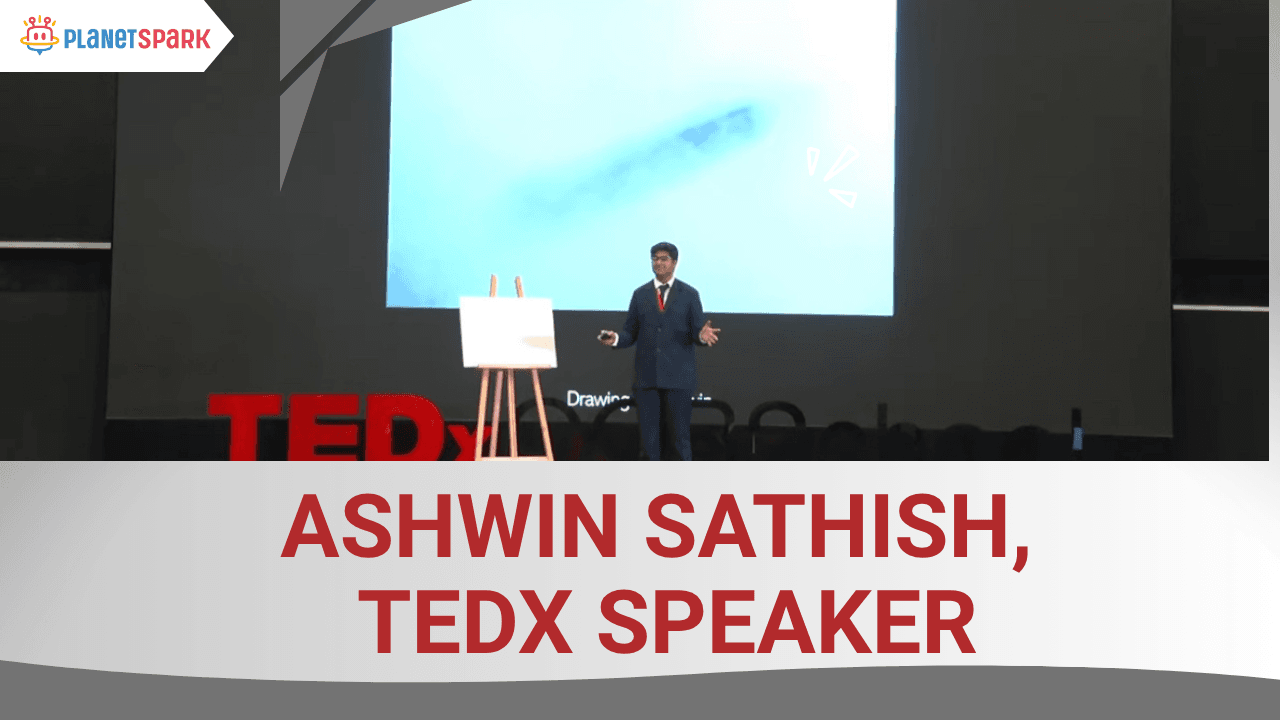
Ashwin Sathish – From Classroom to TEDx Stage
Ashwin Sathish, an inspiring Grade 8 student from New Delhi, made his mark as a TEDx Speaker, igniting meaningful conversations that resonate far and wide. His journey from building classroom confidence to commanding a global stage showcases the true power of voice, vision, and courage.
Unlock the Power of Innuendo
Learning innuendo makes communication fun, clever, and creative. By understanding its meaning, seeing examples, exploring synonyms, and practicing in stories, children can express ideas subtly and imaginatively.
Using innuendo improves storytelling, critical thinking, and confidence, making every conversation or narrative more interesting. With tools, tips, and guidance, children can master the art of hinting, implying, and suggesting, turning their stories into playful and engaging adventures.
Mastering innuendo opens the door to creative expression, clever storytelling, and confident communication, helping children enjoy language in a whole new way.
"Speak smart, inspire more!"
Discover PlanetSpark’s Communication Skills Course and turn your words into impact.
Frequently Asked Questions
Innuendo is a subtle or indirect remark that hints at something without saying it directly. It’s often used in stories, jokes, or conversations to make communication clever and fun.
The innuendo meaning is an indirect suggestion or hint. Instead of stating something plainly, it allows the listener or reader to understand the idea through context or clues.
Yes! For example, instead of saying “He is smart,” you could say, “He solved the puzzle faster than anyone else!” This hints at intelligence without stating it directly.
Common innuendo synonyms include hint, suggestion, allusion, implication, and reference. These words help express ideas subtly and creatively.
Use innuendo by dropping hints in dialogues, describing actions indirectly, or adding playful suggestions. This makes stories engaging and imaginative.
Practicing innuendo improves storytelling, creativity, reading comprehension, and communication skills. It also teaches children how to express ideas cleverly and playfully.
Yes! With simple examples, fun exercises, and stories, children can easily understand and use innuendo in their writing and conversations.