
Intelligibility in Communication: Speak Clearly with PlanetSpark


Table of Contents
- Intelligibility Meaning: Understanding the Core Concept
- Intelligibility Definition: What Experts Mean by Clear Speec
- What Is Intelligibility of Speech? A Simple Explanation
- Speech Intelligibility and Its Role in Effective Communicati
- Factors That Affect Intelligibility of Speech
- Why Intelligibility Is Crucial for Students
- Intelligibility vs Fluency: Understanding the Difference
- How PlanetSpark Improves Intelligibility in Communication
- Activities That Build Speech Intelligibility
- Long-Term Impact of Strong Intelligibility Skills
- Success Story: Shreesh’s Journey to Confident Expression
- Common Challenges in Developing Clear Speech
- PlanetSpark: The Leading Hub for Powerful Communication Skil
- Speak Clearly, Speak Confidently with PlanetSpark
Intelligibility is the ability to speak in a way that listeners can easily understand without confusion or repetition. It plays a crucial role in effective communication, especially for students expressing ideas in academic and social settings. This guide explains the meaning, importance, and development of clear speech skills while offering practical insights. PlanetSpark helps students strengthen intelligibility through structured speaking practice, expert feedback, and confidence-building communication programs.
Intelligibility Meaning: Understanding the Core Concept
The intelligibility meaning in communication refers to the degree to which a listener can clearly understand a speaker’s words without strain or repeated clarification. It focuses on the listener’s experience rather than the speaker’s effort. A speech is considered intelligible when its pronunciation, rhythm, and pacing allow the message to be easily decoded.
Intelligibility is not dependent on advanced language or accent neutrality. Even simple language can lack intelligibility if spoken unclearly. For students, intelligibility ensures that ideas are heard, understood, and valued. It supports participation in discussions, oral exams, and presentations.
Key components contributing to intelligibility include:
Clear pronunciation of sounds
Proper stress on syllables and keywords
Logical pauses between ideas
Consistent speech volume
When intelligibility is strong, communication becomes smooth and effective, building both academic success and self-confidence.
Intelligibility Definition: What Experts Mean by Clear Speech
The intelligibility definition in linguistics and communication studies refers to the extent to which speech can be understood accurately by a listener. It is often assessed by measuring how many spoken words or sentences a listener can correctly identify without additional context.
Unlike fluency or vocabulary range, intelligibility does not focus on how fast or complex speech is. A student may speak fluently yet lack clarity, reducing intelligibility. Similarly, a speaker with an accent can still have high intelligibility if pronunciation and stress patterns are clear.
Difference Between Related Concepts
Understanding this definition helps parents and educators prioritise clarity over unnecessary perfection. Interested students can click this link to access the positive communication patterns of confident students.
What Is Intelligibility of Speech? A Simple Explanation
What is intelligibility of speech? It refers to how easily spoken language is understood by others in real-life communication situations. If listeners can understand speech without asking for repetition, the speech has high intelligibility.
Intelligibility of speech depends on multiple elements working together, including articulation, pacing, stress, and tone. Children often develop intelligibility gradually as they gain control over speech sounds and rhythm. However, without guidance, unclear habits can persist.
Factors influencing intelligibility of speech include:
Accurate pronunciation of consonants and vowels
Balanced speech rate
Proper use of pauses
Confidence while speaking
Improving intelligibility enables students to express ideas clearly, reduces communication anxiety, and supports strong academic and social interactions.
Give your child the advantage of strong communication skills with PlanetSpark’s guided learning approach!
Speech Intelligibility and Its Role in Effective Communication
Speech intelligibility plays a critical role in effective communication across academic, social, and professional contexts. It determines whether a message is understood as intended or distorted due to unclear delivery. For students, strong speech intelligibility directly impacts classroom participation and oral assessments.
Low speech intelligibility may cause:
Frequent misunderstandings
Reluctance to speak publicly
Reduced confidence
High speech intelligibility leads to:
Clear expression of ideas
Strong listener engagement
Confident public speaking
PlanetSpark emphasises speech intelligibility by focusing on clarity, structure, and confidence. Through guided speaking activities and real-time feedback, students learn to communicate ideas effectively and make a lasting impression.
Factors That Affect Intelligibility of Speech
Several internal and external factors influence the intelligibility of speech. Identifying these factors allows targeted improvement and better communication outcomes.
Major factors include:
Pronunciation patterns: Unclear sounds reduce understanding
Speech rate: Speaking too fast causes words to merge
Stress and intonation: Incorrect emphasis alters meaning
Volume and breath control: Affects audibility
Emotional state: Nervousness impacts clarity
Support your child’s growth in speaking, listening, and expression with PlanetSpark!
Impact Overview
Addressing these areas helps students improve clarity systematically and confidently.
Why Intelligibility Is Crucial for Students
Intelligibility is essential for students because it directly affects learning, participation, and confidence. Even when students understand concepts well, unclear speech can prevent effective expression of knowledge. In classrooms, teachers assess understanding largely through verbal responses, making intelligibility critical.
Strong intelligibility helps students:
Answer questions confidently
Participate in group discussions
Deliver presentations clearly
Perform better in oral exams
Beyond academics, intelligibility supports social interactions and leadership development. Students who communicate clearly are more likely to express opinions, collaborate effectively, and build self-esteem. PlanetSpark recognises intelligibility as a core life skill and integrates it into all communication-focused programs.
Intelligibility vs Fluency: Understanding the Difference
Although often used interchangeably, intelligibility and fluency are distinct communication skills. Fluency refers to how smoothly speech flows, while intelligibility focuses on how well the speech is understood by listeners.
A student may speak fluently but unclearly, reducing intelligibility. Conversely, a student may pause often yet remain intelligible if pronunciation and stress are clear.
PlanetSpark programs develop both skills together, ensuring students speak smoothly and clearly.
Build a strong foundation in communication skills that supports academic and personal success with PlanetSpark!
How PlanetSpark Improves Intelligibility in Communication
PlanetSpark adopts a structured and student-friendly approach to improving intelligibility in communication. Instead of focusing on correction alone, PlanetSpark emphasises guided practice, encouragement, and real-time feedback.
Key methods include:
One-on-one live speaking sessions
Pronunciation and articulation exercises
Storytelling and role-play activities
Personalised performance feedback
Confidence-building public speaking tasks
By practicing in a supportive environment, students gradually refine clarity, pacing, and stress. This approach ensures intelligibility improves naturally while maintaining confidence and creativity. Students interested in learning lessons of logical fallacies can click here.
Activities That Build Speech Intelligibility
Consistent practice using the right activities significantly improves speech intelligibility. Activities should focus on clarity, pacing, and listener understanding rather than speed or complexity. When students engage in structured speaking tasks, intelligibility improves steadily over time.
Effective activities include:
Read-aloud sessions with guided correction
Tongue twisters to improve articulation
Story narration focusing on pauses and stress
Role-play conversations for real-life practice
PlanetSpark incorporates these activities into interactive lessons, ensuring students practice intelligibility in meaningful contexts. Regular exposure to guided speaking tasks helps students build clear speech habits that transfer to academic and everyday communication.
Long-Term Impact of Strong Intelligibility Skills
Strong intelligibility has a lasting impact on a student’s academic, social, and professional journey. When students communicate clearly, they gain confidence in expressing ideas and opinions. This confidence supports leadership, teamwork, and problem-solving skills.
Long-term benefits of strong intelligibility include:
Better performance in interviews and presentations
Stronger interpersonal relationships
Increased self-confidence
Effective leadership communication
Students with high intelligibility are more likely to articulate thoughts clearly in competitive environments. PlanetSpark equips students with intelligibility skills that continue to benefit them beyond school, shaping confident communicators for life.
Success Story: Shreesh’s Journey to Confident Expression
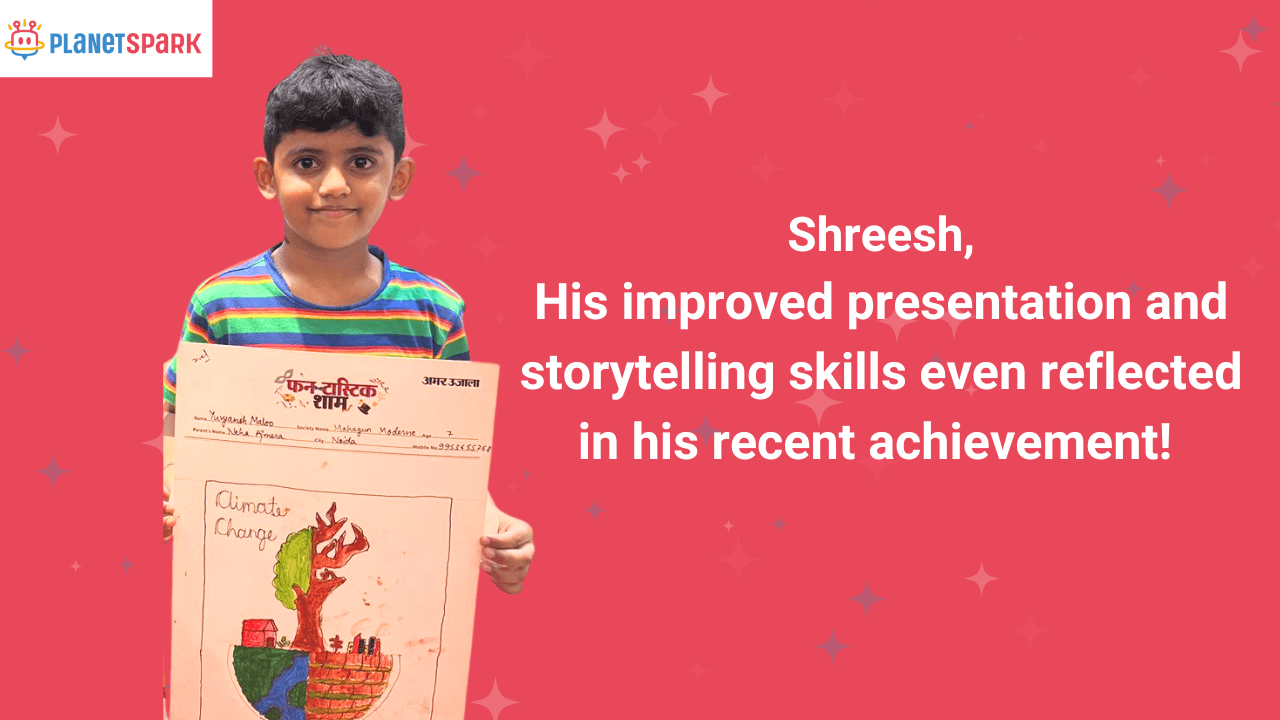
“PlanetSpark has helped Shreesh express his ideas creatively and confidently. His improved presentation and storytelling skills even reflected in his recent achievement — winning second place in the Junior Category of a drawing competition on ‘Climate Change’ organized by the Amar Ujala team.”
Shreesh’s success highlights how strong communication skills can elevate creativity and confidence, helping students present their ideas clearly and stand out across academic and creative platforms. With the right guidance and consistent practice, many more students can build similar skills to join PlanetSpark to help your child grow into a confident and effective communicator.
Common Challenges in Developing Clear Speech
Many students experience difficulties when learning to speak clearly, especially during early academic years or when communicating in a second language. These challenges are usually part of natural development, but they can affect confidence and participation if left unaddressed. Awareness of these issues is the first step toward improvement.
Common challenges include:
Unclear pronunciation of certain sounds or words
Speaking too quickly, causing words to blend together
Skipping syllables or sounds while speaking
Incorrect stress or emphasis on words
Low or inconsistent voice volume
Nervousness leading to rushed or unclear speech
These challenges can make it harder for listeners to understand the message, even when ideas are strong. With regular practice, focused speaking exercises, and thoughtful feedback, students can gradually overcome these difficulties and develop clearer, more confident speech.
PlanetSpark: The Leading Hub for Powerful Communication Skills
PlanetSpark empowers children to become clear, confident, and effective communicators through personalised training and interactive learning methods. With expert mentors and engaging practice modules, students develop articulation, fluency, active listening, and expressive skills that shape their communication for life.
Why PlanetSpark Is the Best Choice for Communication Skills Training
1:1 personalised communication coaching focused on improving clarity, tone, expression, and confident interaction.
Certified communication coaches guide children through structured, engaging, and practical learning sessions.
Conversation-building and expression modules that help students communicate ideas confidently in both formal and informal settings.
Live discussions, dialogues, and group interactions that enhance listening skills, quick thinking, and respectful communication habits.
SparkX AI video-based feedback offering detailed insights on voice, tone, pace, and clarity for continuous improvement.
Gamified communication learning with SparkBee to strengthen vocabulary, sentence formation, and linguistic accuracy.
AI-led speaking and conversation practice sessions to help students improve articulation and expression independently anytime.
Creative clubs, storytelling events, and communication showcases give children real platforms to practise interaction and express ideas effortlessly.
Speak Clearly, Speak Confidently with PlanetSpark
To sum it up, Clear communication is essential for meaningful interaction in both academic and everyday settings. When speech is easy to understand, ideas flow smoothly, misunderstandings reduce, and conversations become more engaging. Clarity in speaking allows listeners to focus on the message rather than struggling to decode words, making communication more effective and purposeful.
For students, clear speech supports classroom participation, presentations, and collaborative learning. It helps them express knowledge confidently, respond accurately, and build positive relationships with peers and teachers. Over time, strong communication clarity also boosts self-esteem and encourages active involvement in discussions.
Developing clear speech is a gradual process that improves with awareness, practice, and feedback. When students learn to organise thoughts and express them clearly, they gain a skill that supports lifelong learning and effective interaction.
Frequently Asked Questions
Intelligibility refers to how clearly spoken words are understood by a listener. It focuses on clarity of speech, pronunciation, stress, and pacing rather than vocabulary complexity or speaking speed.
Intelligibility helps students express ideas clearly in classrooms, presentations, and discussions. When speech is easily understood, confidence increases, misunderstandings reduce, and academic participation improves significantly.
Fluency relates to the smooth flow of speech, while intelligibility focuses on listener understanding. A student may speak smoothly but still be unclear if pronunciation and stress patterns are weak.
Pronunciation habits, speech rate, confidence, stress patterns, and listening environment influence intelligibility. Consistent practice and guided feedback help students gradually improve clarity and speech control.
PlanetSpark improves intelligibility through live speaking sessions, pronunciation practice, storytelling activities, and expert feedback, helping students develop clear, confident speech in academic and real-life situations.
PlanetSpark programs support students from early school years onward, offering age-appropriate communication activities that strengthen clarity, confidence, and effective expression through structured and engaging learning methods.