
Interactive Activities: Fun Ways to Boost Student Engagement and Learning
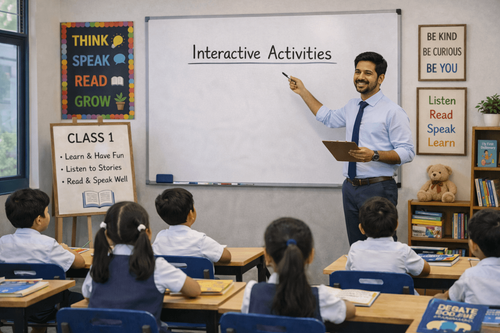

Table of Contents
- Why Interactive Activities Matter in Modern Learning
- How Interactive Activities Improve Student Engagement
- Best Interactive Classroom Activities for Daily Learning
- Think Pair Share
- Quiz Relay
- Role Play Learning
- Brainstorm Board
- Fun Learning Activities for Students by Subject
- Interactive Activities for English
- Interactive Activities for Math
- Interactive Activities for Science
- Interactive Activities for Social Studies
- Group Activities for Learning That Build Teamwork
- Puzzle Solving Teams
- Poster Creation Project
- Build and Present
- Student Engagement Activities for Online Learning
- Live Polls
- Breakout Room Discussions
- Show and Tell Online
- Virtual Whiteboard Tasks
- Quiz Apps and Gamified Platforms
- Interactive Activities by Age Group
- For Preschool and Early Learners
- For Primary Students
- For Middle School Students
- For Teenagers
- How Teachers Can Plan Effective Interactive Activities
- Keep Learning Goals Clear
- Give Simple Instructions
- Manage Time Well
- Include Everyone
- Use Reflection Time
- Reward Effort, Not Just Winners
- Common Mistakes to Avoid
- How Parents Can Use Interactive Activities at Home
- Easy Home Ideas
- Why Communication Skills Grow Through Interactive Activities
- Measuring Success of Interactive Learning
- Creative Interactive Activities to Try This Week
- Mystery Box
- Silent Line Up
- Teach the Teacher
- Two Truths and One Fact
- Idea Speed Round
- PlanetSpark Communication Skills Course for Confident Learne
- Make Learning Active, Meaningful, and Memorable
Interactive activities are powerful learning tools that turn passive lessons into active experiences. Instead of only listening, students participate, think, discuss, create, and solve problems together. This improves attention, memory, confidence, and academic performance. In this blog, you will discover the benefits of interactive activities, practical classroom ideas, group learning games, digital engagement methods, age-wise strategies, and tips for teachers and parents to make learning exciting and effective.
Why Interactive Activities Matter in Modern Learning
Traditional one-way teaching often leads to boredom and low retention. Interactive learning creates two-way participation where students become part of the lesson.
Key Benefits of Interactive Activities
- Improve focus and classroom attention
- Increase concept understanding through practice
- Build communication and teamwork skills
- Develop creativity and problem-solving ability
- Reduce fear of participation
- Make learning enjoyable and memorable
- Encourage leadership and confidence
What Research Suggests
Students learn better when they actively engage with content. Activities involving speaking, doing, discussing, and reflecting help strengthen long-term memory and deeper understanding.
How Interactive Activities Improve Student Engagement
Student engagement is the level of attention, curiosity, interest, participation, and commitment a student shows during learning. It is not limited to simply being present in class. True engagement happens when students are emotionally connected, mentally involved, and actively participating in the learning process. Interactive activities are one of the most effective ways to build this engagement because they turn students from passive listeners into active learners.
When students discuss ideas, solve challenges, work in teams, present opinions, or take part in games and projects, they become more invested in the lesson. This creates a classroom environment where learning feels exciting, purposeful, and rewarding.
1. Emotional Engagement
Emotional engagement refers to how students feel about learning, their classroom environment, and the activities they take part in. If students feel interested, happy, safe, and valued, they are more likely to participate and stay motivated.
Interactive activities make lessons enjoyable and meaningful. Instead of only reading or listening, students get to experience learning through games, creative tasks, storytelling, movement, and collaboration. This reduces boredom and helps students build a positive connection with education.
How Interactive Activities Support Emotional Engagement
- Make lessons fun and enjoyable
- Reduce stress and fear of making mistakes
- Build excitement for classroom participation
- Increase confidence through small wins
- Help students feel included and valued
- Create stronger teacher-student and peer relationships
Example
A shy student may avoid speaking during a regular lecture. But in a team quiz or storytelling game, the same student may feel more comfortable contributing and gradually become more confident.
2. Cognitive Engagement
Cognitive engagement is about how deeply students think and process information. It goes beyond memorizing facts. It includes understanding concepts, asking questions, analyzing ideas, solving problems, and applying knowledge in new situations.
Interactive tasks challenge students to use their brains actively. Instead of receiving answers directly, they explore solutions, discuss viewpoints, test ideas, and make decisions. This leads to stronger understanding and better retention of knowledge.
How Interactive Activities Support Cognitive Engagement
- Encourage critical thinking and reasoning
- Improve problem-solving skills
- Help students connect theory with real-life situations
- Strengthen memory through active participation
- Promote curiosity and questioning
- Develop creativity and independent thinking
Example
In a science prediction activity, students guess what will happen in an experiment before seeing the result. This makes them think logically, observe carefully, and understand the concept more deeply.
3. Behavioral Engagement
Behavioral engagement focuses on visible participation in learning. It includes attending class, following instructions, completing tasks, contributing to discussions, and working responsibly with others.
Interactive activities naturally increase student involvement because learners have a role to play. Whether they are answering questions, solving a puzzle, presenting a project, or collaborating in groups, they stay active instead of becoming distracted.
How Interactive Activities Support Behavioral Engagement
- Increase participation during lessons
- Improve focus and classroom attention
- Encourage teamwork and cooperation
- Build responsibility for tasks and deadlines
- Reduce passive behavior and distractions
- Create consistent involvement in learning routines
Example
During a group poster project, each student may be responsible for research, design, writing, or presentation. Because everyone has a task, participation increases and students stay engaged.
Why All Three Types of Engagement Matter Together
The best learning happens when emotional, cognitive, and behavioral engagement work together.
- If students enjoy learning, they stay motivated
- If they think deeply, they understand better
- If they participate actively, they learn by doing
Interactive activities combine all three elements, making them one of the most effective teaching strategies for modern classrooms.
Help your child build confidence, speaking power, and creativity with PlanetSpark Communication Skills Course through live, engaging learning experiences.
Best Interactive Classroom Activities for Daily Learning
These interactive classroom activities can be used in schools, tuition classes, or home learning setups.
Think Pair Share
A simple but effective strategy.
How It Works
- Teacher asks a question
- Students think individually
- Discuss with a partner
- Share answers with class
Why It Works
It gives every child a chance to think and speak.
Quiz Relay
Turn revision into a fun race.
Steps
- Divide class into teams
- Ask subject questions
- Students answer one by one
- Team with highest score wins
Skills Developed
- Quick thinking
- Recall ability
- Team spirit
Role Play Learning
Students act out real-life or story-based situations.
Examples
- Science experiment presenter
- Shopkeeper and customer
- Historical leader speech
- News reporter
Role play improves expression, confidence, and creativity.
Want your child to speak confidently in any situation? Explore PlanetSpark Communication Skills Course with live speaking practice and expert guidance.
Brainstorm Board
Use a board or chart to collect ideas around one topic.
Example Topics
- Save water
- Healthy habits
- My dream city
- Story ending ideas
This builds creative thinking and collaborative learning.
Fun Learning Activities for Students by Subject
Interactive learning works across subjects.
Interactive Activities for English
Story Chain
One student starts a story, others continue line by line.
Vocabulary Hunt
Students find new words from a text and explain meanings.
Debate Challenge
Give simple topics like:
- Homework should be shorter
- Summer is better than winter
Interactive Activities for Math
Math Treasure Hunt
Hide clues with sums around the room.
Number Bingo
Students solve answers and mark numbers.
Budget Game
Give imaginary money and ask students to plan spending.
Interactive Activities for Science
Prediction Lab
Ask students to predict results before experiments.
Build a Model
Create solar systems, volcanoes, or food chains.
Science News Talk
Students share one interesting science fact weekly.
Interactive Activities for Social Studies
Map Challenge
Locate countries, rivers, capitals, or states.
Time Travel Interview
One student acts as a historical figure.
Community Problem Solving
Discuss traffic, pollution, or cleanliness solutions.
Group Activities for Learning That Build Teamwork
Group learning teaches collaboration, leadership, and responsibility.
Puzzle Solving Teams
Give each group a challenge to solve together.
Examples
- Word puzzle
- Logic puzzle
- Science mystery
- Math code breaker
Poster Creation Project
Students design posters on educational themes.
Themes
- Climate action
- Reading habits
- Kindness matters
- Internet safety
Build and Present
Groups create something and explain it.
Examples
- Bridge from straws
- Story comic strip
- Business idea pitch
- Classroom rules campaign
These tasks combine creativity and communication.
Student Engagement Activities for Online Learning
Digital classes also need active participation.
Live Polls
Ask instant questions during class.
Breakout Room Discussions
Small groups discuss and return with ideas.
Show and Tell Online
Students present objects, hobbies, or projects.
Virtual Whiteboard Tasks
Students solve, draw, or brainstorm together.
Quiz Apps and Gamified Platforms
Use time-based quizzes to make revision exciting.
Give your child a smarter way to learn with PlanetSpark Communication Skills Course, where technology and expert mentors make speaking practice exciting every day.
Interactive Activities by Age Group
Different age groups need different approaches.
For Preschool and Early Learners
Best Activities
- Action songs
- Color matching
- Letter treasure hunt
- Puppet storytelling
- Shape sorting games
Focus Areas
Motor skills, vocabulary, listening, confidence.
For Primary Students
Best Activities
- Reading circles
- Quiz games
- Show and tell
- Drawing explanations
- Group storytelling
Focus Areas
Communication, curiosity, teamwork.
For Middle School Students
Best Activities
- Debates
- Research projects
- Presentations
- Logic games
- Peer teaching
Focus Areas
Critical thinking, expression, responsibility.
For Teenagers
Best Activities
- Case studies
- Public speaking
- Career role plays
- Entrepreneurship challenges
- Collaborative projects
Focus Areas
Leadership, confidence, problem-solving.
How Teachers Can Plan Effective Interactive Activities
Good planning makes activities meaningful, not chaotic.
Keep Learning Goals Clear
Every activity should support a concept or skill.
Give Simple Instructions
Explain rules in short steps.
Manage Time Well
Use fixed time slots for each stage.
Include Everyone
Ensure shy students also participate.
Use Reflection Time
Ask students:
- What did you learn?
- What was challenging?
- What would you improve?
Reward Effort, Not Just Winners
Celebrate participation and progress.
Common Mistakes to Avoid
Even good activities can fail if poorly managed.
Avoid These Errors
- Activities without learning purpose
- Too much competition
- Long instructions
- Ignoring quiet students
- Repeating same games often
- No follow-up discussion
Balance fun with outcomes.
How Parents Can Use Interactive Activities at Home
Learning does not stop after school.
Easy Home Ideas
Reading Discussion
Read a story and ask questions.
Kitchen Math
Measure ingredients and calculate quantities.
Family Debate
Choose light topics and discuss politely.
Memory Games
Use cards, objects, or word lists.
Storytelling Night
Each family member tells a story.
These activities build bonding and learning together.
Why Communication Skills Grow Through Interactive Activities
Many activities require students to speak, listen, explain, and respond. This naturally improves communication skills.
Students Learn To
- Express ideas clearly
- Listen actively
- Ask questions
- Speak confidently
- Present in groups
- Organize thoughts logically
Strong communication skills help in academics and future careers.
Measuring Success of Interactive Learning
How do you know activities are working?
Signs of Progress
- Higher participation
- Better confidence
- Improved test understanding
- More curiosity
- Better teamwork
- Stronger speaking ability
- Positive classroom energy
Creative Interactive Activities to Try This Week
Mystery Box
Students guess object using clues.
Silent Line Up
Arrange by height, birthdays, or numbers without speaking.
Teach the Teacher
Students explain a topic to the class.
Two Truths and One Fact
Great for revision and engagement.
Idea Speed Round
Students share ideas quickly in one minute.
PlanetSpark Communication Skills Course for Confident Learners
If your child enjoys interactive activities, structured communication training can accelerate growth. PlanetSpark Communication Skills Course helps kids and students become confident speakers, creative thinkers, and expressive learners through highly engaging methods.
Every learner gets 1:1 personal trainers who understand pace, personality, and learning style. A personalised curriculum identifies gaps in grammar, fluency, vocabulary, confidence, and structuring. With SparkX AI video analysis, children receive performance feedback on body language, clarity, confidence, and delivery.
Students also practise through AI-led speech and storytelling sessions for independent improvement. Spark Diary develops daily writing habits through journals, speeches, poems, and reflections. Gamified tools like quizzes, spelling challenges, vocabulary games, and grammar missions make learning enjoyable.
Regular PTMs and progress reports keep parents informed with measurable growth insights. Children can also join vibrant communities like Debate Club, Story Writing Club, Podcasting Club, Comedy Club, and more. Through Sparkline, a safe platform for kids, students share ideas and creative work confidently. Frequent contests, showcases, and recognition events motivate learners to perform and grow.
Give your child the confidence to speak, write, and lead with PlanetSpark Communication Skills Course.
Make Learning Active, Meaningful, and Memorable
Interactive activities are not just classroom games, they are powerful tools that improve learning outcomes, confidence, and student participation. When children ask questions, solve problems, create ideas, and communicate with others, they develop skills that textbooks alone cannot teach. Whether used in schools, online classes, or at home, these methods make education more enjoyable and effective. Start with simple activities, stay consistent, and watch students become more curious, confident, and capable learners.
You can also read:
Frequently Asked Questions
Interactive activities are learning methods where students actively participate instead of only listening. These include discussions, games, projects, role plays, quizzes, debates, experiments, and collaborative tasks. Such activities improve understanding, retention, communication, and motivation because students learn by doing and engaging.
Interactive classroom activities help maintain attention and reduce boredom. They make lessons practical, improve concept clarity, encourage participation, and support different learning styles. Students also develop teamwork, confidence, leadership, and problem-solving skills that are useful beyond school.
Popular fun learning activities for students include quiz competitions, story chains, treasure hunts, debate games, science experiments, poster making, brainstorming sessions, math bingo, and role play tasks. These activities combine enjoyment with learning outcomes and keep students interested.
Teachers can improve engagement by setting clear goals, using age-appropriate tasks, mixing individual and group work, rotating activity formats, using technology, encouraging reflection, and ensuring all students participate. Positive feedback and consistent variety also increase engagement levels.
A structured platform like PlanetSpark helps children improve communication through interactive learning. With 1:1 live trainers, AI-powered feedback, gamified lessons, storytelling practice, writing tools, clubs, contests, and personalised roadmaps, children build speaking confidence, creativity, and real-world communication skills effectively.