In today’s hyper-competitive job market, technical
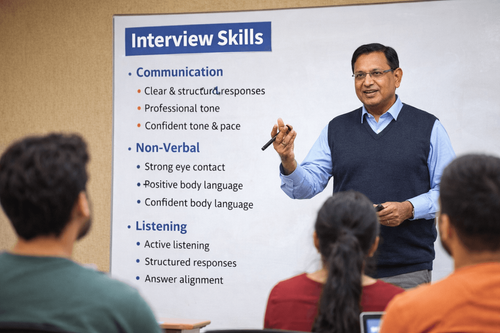
knowledge alone is no longer enough. Employers closely evaluate interview skills, especially how candidates communicate, think, and present themselves. Interview skills are not just about answers; they reflect clarity, confidence, and professionalism. This bog explains what interview skills are, why they matter, and how they influence hiring decisions. You’ll learn about interview skills in communication, the most important skills for interview success, and the different skills required during interview situations, from HR and technical rounds to leadership interviews. The blog also shows why structured communication training matters and how programs like PlanetSpark’s Business Communication Learning help professionals build job-ready interview confidence.
What Are Interview Skills and Why Do They Matter?
To truly understand what interview skills are, it’s important to move beyond the outdated belief that interviews are merely question-and-answer sessions. In reality, interviews are structured evaluations of a candidate’s communication ability, professional mindset, decision-making approach, and overall readiness for the role. Interview skills represent a strategic combination of communication, behavioral, cognitive, and professional competencies that allow a candidate to present their experience, personality, and value proposition effectively.
Interview skills determine not only what you say, but how you say it,and more importantly, how it is perceived. Employers use interviews to assess whether a candidate can think clearly under pressure, articulate ideas logically, and align their responses with real business challenges.
Strong interview skills influence:
How clearly and confidently you articulate your experience and achievements, especially when explaining complex responsibilities or outcomes
How effectively you handle pressure, ambiguity, and follow-up questions
How professionally you respond to unexpected, situational, or behavioral questions
How well you align your answers with the organization’s goals, values, and business needs
In today’s hiring environment, where multiple candidates may have similar qualifications, interview skills often become the deciding factor. Even highly skilled professionals risk rejection if they lack clarity, confidence, or structured communication during interviews.
Strong interview skills in communication help candidates present concise, relevant, and impactful answers. They enable professionals to avoid common pitfalls such as rambling, over-explaining, or giving vague responses. On the other hand, poor interview skills frequently lead to missed opportunities,not because of a lack of competence, but because the candidate fails to communicate their competence effectively.
Interview Skills in Communication: The Core Differentiator
Among all the competencies assessed during interviews, interview skills in communication stand out as the most visible and influential. While technical expertise may be evaluated through tests or portfolios, communication skills are assessed in real time,through conversation, tone, structure, and presence.
Interviewers may not remember every technical detail you shared, but they will remember how confidently you spoke, how clearly you structured your answers, and how professionally you carried yourself throughout the interaction. Communication creates the first impression,and often the lasting one.
Key communication-based interview skills include:
Clear articulation of ideas, ensuring your thoughts are easy to follow and logically presented
Structured responses using frameworks such as STAR (Situation, Task, Action, Result) or CAR (Context, Action, Result), which demonstrate clarity and professionalism
Active listening and response alignment, showing that you understand the question and can respond with relevance rather than rehearsed answers
Professional tone, vocabulary, and body language, which convey confidence, maturity, and credibility
In leadership, managerial, and client-facing roles, interview skills in communication become even more critical. Employers assess how well you will communicate with teams, manage stakeholders, resolve conflicts, and represent the organization externally. Your interview performance becomes a preview of how you will perform in real workplace situations.
In essence, strong interview communication skills don’t just help you get hired,they signal your long-term potential within the organization.
Discussing the Different Skills Required During an Interview
When we discuss the different skills required during interview, it becomes evident that interviews are not designed to test knowledge alone. Instead, they assess a candidate’s overall professional readiness, communication maturity, emotional intelligence, and decision-making approach. Interviewers evaluate how candidates think, respond, adapt, and communicate under real-time pressure,often mirroring workplace situations.
These skills go far beyond what is listed on a résumé. While qualifications may open the door, interview skills determine whether a candidate walks through it.
1. Verbal Communication Skills
Verbal communication forms the foundation of interview performance. It includes clarity of speech, logical flow, vocabulary choice, tone modulation, and confidence in delivery. Strong verbal interview skills allow candidates to convey competence without sounding rehearsed or unsure.
Professionals with well-developed verbal interview skills are able to:
Explain complex ideas and responsibilities in simple, relatable terms, especially when speaking to non-technical interviewers
Maintain a clear structure in responses, avoiding unnecessary tangents or excessive detail
Adjust language, tone, and depth of explanation based on interviewer seniority, whether speaking to HR, a technical expert, or senior leadership
Interview skills in communication directly influence how credible, confident, and capable a candidate appears. Even subject-matter experts may be overlooked if their verbal communication lacks clarity or coherence.
2. Non-Verbal Communication Skills
Non-verbal communication plays a powerful, often subconscious role in interviews. Elements such as posture, eye contact, facial expressions, hand movements, and overall presence significantly impact how interviewers perceive confidence and trustworthiness.
Effective non-verbal interview skills include:
Maintaining steady and natural eye contact, demonstrating engagement and honesty
An open, upright posture, which signals confidence and readiness
Controlled and purposeful hand movements, reinforcing verbal points rather than distracting from them
Calm and composed facial expressions, even when responding to challenging or unexpected questions
Poor non-verbal communication,such as slouching, avoiding eye contact, or nervous gestures,can undermine even the strongest verbal responses. Interviewers often interpret such signals as a lack of confidence or preparedness.
3. Listening and Comprehension Skills
One of the most underestimated interview skills is the ability to listen actively and accurately. Many candidates struggle not because they lack knowledge, but because they misunderstand questions or respond prematurely.
Strong listening skills for interview success involve:
Identifying the intent behind each question, not just the surface wording
Pausing briefly to process the question, rather than rushing into an answer
Asking clarifying questions when appropriate, especially for complex or multi-part questions
Responding precisely and relevantly, without drifting away from what was asked
Active listening demonstrates professionalism, emotional intelligence, and respect for the interviewer’s time. It is a critical component of interview skills in communication that separates average candidates from high-performing ones.
4. Behavioral and Situational Skills
Behavioral and situational interview rounds are designed to evaluate how candidates have handled real workplace challenges,and how they are likely to respond in the future. Employers rely heavily on these skills to predict on-the-job performance.
Key behavioral interview skills include:
Structuring answers logically, using frameworks such as STAR or CAR to maintain clarity
Demonstrating accountability, including ownership of outcomes and mistakes
Highlighting learning and growth, rather than presenting a flawless but unrealistic narrative
Clearly communicating impact and results, linking actions to measurable outcomes
Framework-based answering is a crucial skill for interview success, especially in leadership, managerial, and client-facing roles. It shows that a candidate can think systematically and communicate with intent.
5. Confidence and Emotional Control
Confidence is one of the most decisive interview skills, yet it is often misunderstood. True confidence is not about dominance or arrogance,it is about self-assurance, composure, and emotional stability under pressure.
Confidence-based interview skills include:
Managing nervousness without letting it affect clarity or tone
Handling difficult, ambiguous, or unexpected questions calmly
Maintaining composure during panel interviews, stress interviews, or high-stakes discussions
Projecting belief in one’s experience and decisions, even when discussing challenges or failures
Professionals who invest in structured interview skills training tend to demonstrate higher emotional control, clearer thinking, and stronger presence. As a result, they often outperform equally qualified peers who rely solely on experience without refining their interview skills.
When combined, these skills form a comprehensive interview skill set that enables professionals to perform consistently, confidently, and convincingly,regardless of role, industry, or interview format.
Skills for Interview Success Across Different Interview Types
Modern hiring processes involve multiple interview formats. Each format tests different skills for interview success.
HR Interviews
HR rounds assess cultural fit, communication style, and motivation.
Key interview skills required:
Clear career narrative
Honest yet strategic responses
Professional self-presentation
Technical Interviews
Technical interviews evaluate subject knowledge and problem-solving communication.
Skills for interview success here include:
Explaining thought processes clearly
Asking the right clarifying questions
Communicating logic, not just answers
Managerial and Leadership Interviews
These interviews focus heavily on interview skills in communication.
Required skills include:
Strategic thinking articulation
Stakeholder communication examples
Decision-making clarity
Virtual and Online Interviews
With remote hiring becoming standard, digital interview skills are essential.
Key skills required during interview in virtual settings:
Even experienced professionals often struggle with:
Unstructured answers
Over-explaining or under-explaining
Lack of confidence despite experience
Poor storytelling in behavioral questions
These gaps highlight why interview skills must be trained deliberately, not assumed to develop naturally with experience.
How Interview Skills Directly Impact Career Growth
Strong interview skills lead to:
Faster job transitions
Higher salary negotiations
Better role alignment
Leadership opportunities
Interview skills in communication also translate into workplace effectiveness, making professionals more confident presenters and collaborators.
PlanetSpark Communication Skills Course for Interview Readiness
PlanetSpark’s Communication Skills Course is designed specifically for professionals who want job-ready communication and interview confidence,not theoretical learning.
What Makes PlanetSpark’s Course Different?
Structured interview skills training aligned with real hiring practices
Focus on business communication, not generic speaking tips
Live sessions with expert trainers
Personalized feedback on interview responses
Interview-Focused Learning Outcomes
Professionals enrolled in PlanetSpark’s communication skills course develop:
Clear and confident interview communication
Structured behavioral and situational responses
Professional vocabulary and tone
Leadership-ready communication presence
Business Communication Meets Interview Performance
Interview success is deeply connected to business communication. PlanetSpark integrates:
Workplace scenarios
Managerial communication drills
Presentation and articulation exercises
This ensures learners don’t just perform well in interviews,but also excel once hired.
Step Into Interviews with Confidence and Clarity
Interviews are not tests of luck,they are tests of preparation, communication, and confidence. For professionals, mastering interview skills is no longer optional; it is essential for career mobility and long-term growth.
By understanding what interview skills are, improving interview skills in communication, and developing the right skills for interview success across formats, professionals can consistently stand out in competitive hiring environments.
Structured learning accelerates this transformation. PlanetSpark’s communication skills course empowers professionals to present their expertise with clarity, confidence, and credibility,exactly what modern employers seek.
Interview skills are the abilities that help candidates communicate their experience, skills, and value effectively during interviews. They are important because employers assess not just qualifications, but confidence, clarity, and professionalism.
Strong interview skills in communication help candidates present structured answers, build rapport, and demonstrate leadership potential. Poor communication often leads to rejection despite strong technical profiles.
Key skills for interview success include verbal and non-verbal communication, listening, behavioral response structuring, confidence management, and adaptability across interview formats.
Yes. Interview skills improve significantly with guided practice, structured feedback, and communication training focused on real interview scenarios rather than generic tips.
PlanetSpark’s communication skills course focuses on interview skills in communication, business articulation, structured responses, and confidence building—helping professionals perform consistently across interviews and advance their careers.