
Levels of Communication: Learn practical communication skills


What Are Levels of Communication?
Levels of communication refer to the different ways people communicate depending on the number of people involved and the purpose of communication.
In simple words, levels of communication answer these questions:
Who am I communicating with?
How many people are involved?
What is the purpose of communication?
"Help your child speak with confidence in every situation , book a FREE demo class today!"
There are five main levels of communication that children should know:
Intrapersonal communication
Interpersonal communication
Group communication
Public communication
Mass communication
Each level is used in different situations and needs different skills.
Why Should Children Learn About Levels of Communication?
Children often speak the same way in every situation. For example, they may talk to a teacher the same way they talk to a friend. Learning levels of communication helps children understand that different situations need different styles of communication.
Benefits of learning levels of communication:
Builds confidence in speaking
Improves listening skills
Helps children express emotions clearly
Develops social and leadership skills
Prepares children for school presentations and group work
Understanding these levels early makes children better communicators as they grow.

Level 1: Intrapersonal Communication
Intrapersonal communication is communication that happens within a person. It means talking to yourself or thinking silently in your mind.
This level of communication helps children:
Think before speaking
Understand their feelings
Make decisions
Improve self-confidence
Examples of intrapersonal communication:
Thinking about answers before raising a hand in class
Encouraging yourself before a test
Planning what to say in a speech
Reflecting on mistakes
Simple Example of Intrapersonal Communication
A child thinks:
“I will stay calm and answer confidently.”
This thought is intrapersonal communication.
Importance of Intrapersonal Communication for Children
Intrapersonal communication helps children understand themselves better. It helps them control emotions, reduce fear, and build confidence.
Children who practice positive self-talk:
Feel less anxious
Perform better in exams
Speak confidently on stage
Handle failure positively
Activity: Practice Positive Self-Talk
Activity Name: Talk to Yourself Kindly
Instructions:
Ask children to write three positive sentences about themselves.
Examples:
I can speak confidently.
I am improving every day.
I can try again if I make a mistake.
This activity strengthens intrapersonal communication.
Level 2: Interpersonal Communication
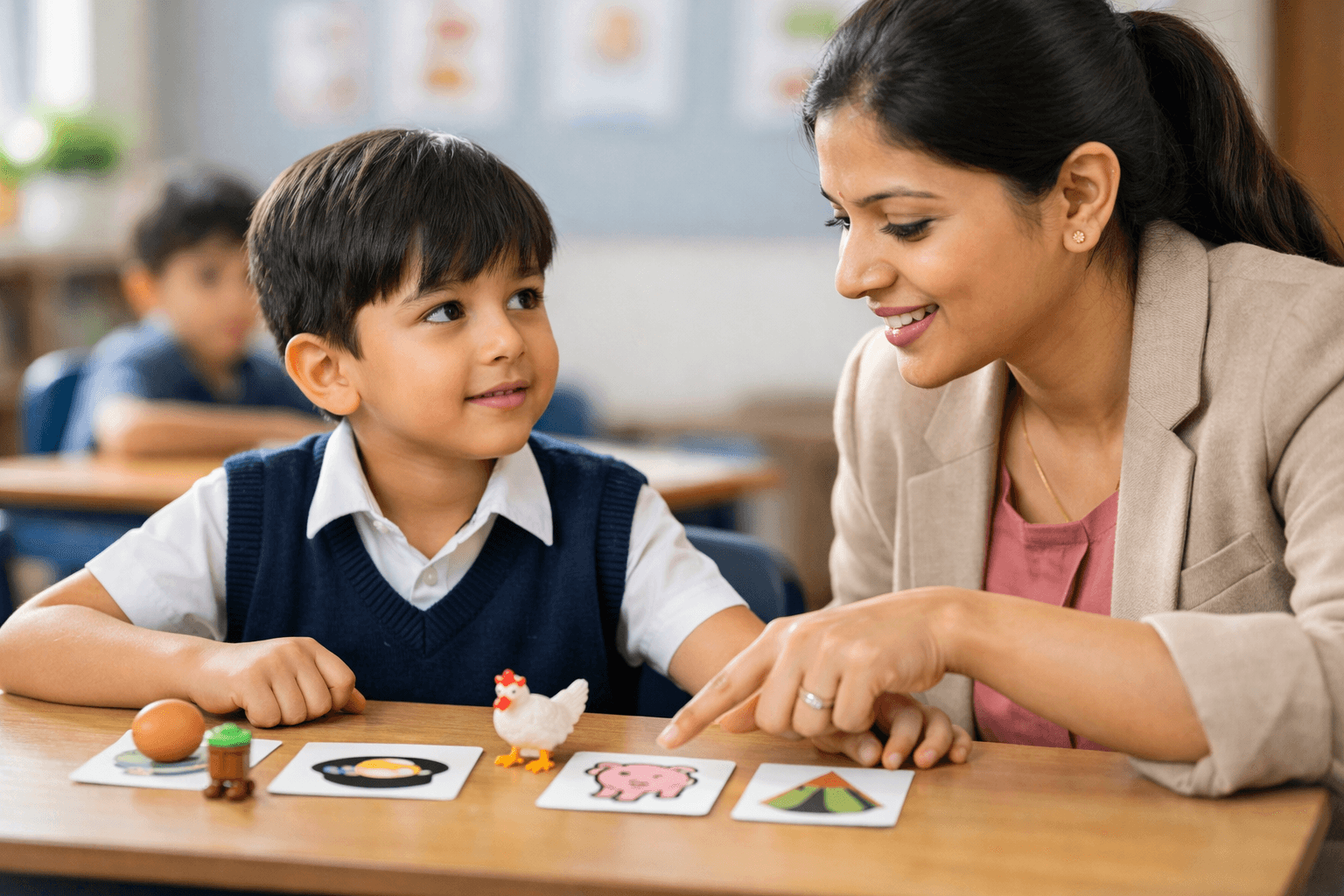
Interpersonal communication happens between two people. It is the most common level of communication in daily life.
Children use interpersonal communication when they:
Talk to parents
Speak to teachers
Chat with friends
Ask questions
This level includes both speaking and listening.
"Turn everyday conversations into powerful communication skills. Try a FREE PlanetSpark demo class!"
Examples of Interpersonal Communication
Situation | Example
Talking to a friend | Sharing a story
Talking to a teacher | Asking a doubt
Talking to parents | Explaining a problem
Skills Needed for Interpersonal Communication
Good interpersonal communication needs:
Clear speech
Active listening
Respectful tone
Eye contact
Proper body language
Children should learn to listen carefully and respond politely.
Common Mistakes in Interpersonal Communication
Some common mistakes children make:
Interrupting while others speak
Speaking too softly or too loudly
Not listening properly
Using rude words unknowingly
Learning about communication levels helps correct these mistakes.
Activity: Role Play with a Partner
Activity Name: Talk It Out
Instructions:
Pair two children.
Give them a situation like asking for help or greeting a teacher.
Let them practice polite conversation.
This builds interpersonal communication skills.
Checkpoint: Can You Identify the Level?
Ask children to answer:
Talking to yourself is which level?
Talking to a friend is which level?
Correct answers:
Intrapersonal
Interpersonal
Level 3: Group Communication
Group communication happens when more than two people communicate together. It usually takes place in classrooms, teams, or clubs.
Children use group communication when they:
Work on group projects
Participate in discussions
Play team games
Attend class activities
Importance of Group Communication
Group communication teaches children:
Teamwork
Cooperation
Respect for others’ opinions
Leadership skills
It also helps shy children speak up gradually.
Example of Group Communication
Situation | Example
Class discussion | Sharing ideas
Group project | Planning together
Team game | Giving instructions
Rules for Effective Group Communication
Children should remember:
Speak one at a time
Listen to others
Share ideas politely
Encourage teammates
Let your child learn how to express ideas the right way, every time: Read More
Activity: Small Group Discussion
Activity Name: Share Your Idea
Instructions:
Divide children into small groups.
Give a simple topic like “My favourite hobby”.
Let each child speak for one minute.
This builds confidence and teamwork.
Parent Tip
Parents can encourage group communication by:
Allowing children to discuss family decisions
Encouraging teamwork in games
Letting children express opinions respectfully
Teacher Tip
Teachers can:
Use group activities in class
Encourage every child to speak
Praise effort, not just answers
Level 4: Public Communication
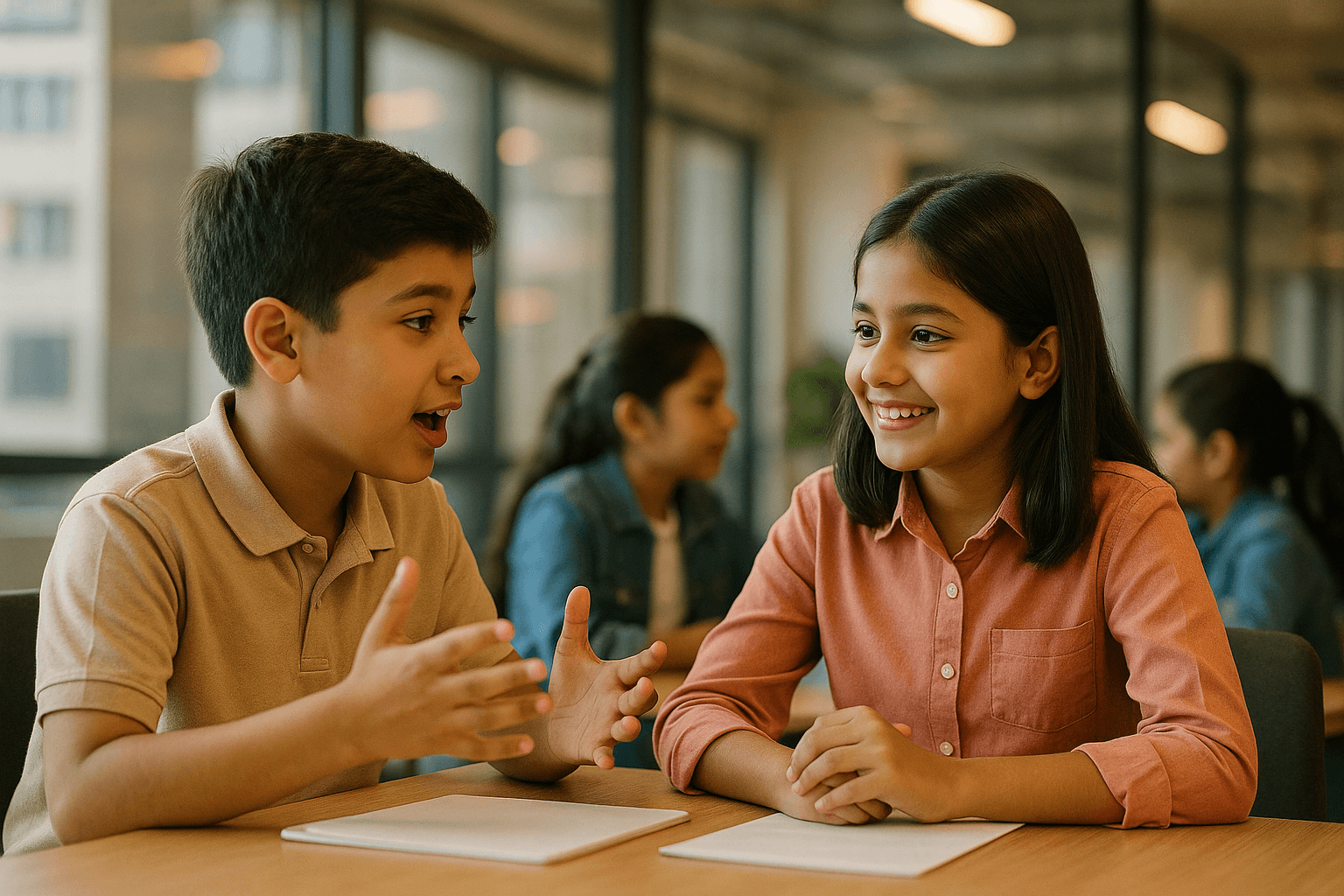
Public communication happens when one person speaks to a large group of people. The speaker usually prepares in advance and speaks loudly and clearly so everyone can hear.
Children experience public communication when they:
Speak in school assemblies
Give a speech in class
Perform on stage
Participate in debates or storytelling competitions
Simple Meaning of Public Communication
Public communication means:
One speaker → Many listeners
The speaker shares ideas, stories, or information with a group of people.
Examples of Public Communication
Situation | Example
School assembly | Morning speech
Classroom | Presentation on a topic
Stage | Storytelling or poem recitation
Competition | Debate or speech contest
Why Public Communication Is Important for Children
Public communication helps children:
Build confidence
Improve speaking skills
Overcome stage fear
Learn to express ideas clearly
Develop leadership qualities
Children who practice public speaking early feel more confident later in life.
Skills Needed for Public Communication
Public communication needs more skills than talking to one person.
Important skills include:
Clear and loud voice
Proper pronunciation
Confident body posture
Eye contact with the audience
Use of expressions and gestures
Support Your Child’s Speaking and Listening Skills Early
Confidence in communication starts with structured learning.
Common Challenges in Public Communication
Many children feel nervous when speaking in front of others. Some common challenges are:
Fear of forgetting words
Shaky voice
Speaking too fast
Avoiding eye contact
These challenges can be reduced with regular practice and encouragement.
Activity: Mini Speech Practice
Activity Name: Speak with Confidence
Instructions:
Ask the child to choose a simple topic like “My Favourite Food”.
Let them speak for one minute in front of family members.
Encourage smiling and clear voice.
This activity builds confidence step by step.
Checkpoint: Identify the Level
Question:
A child is speaking on stage during the school assembly.
Which level of communication is this?
Correct answer:
Public communication
Level 5: Mass Communication
Mass communication is communication that reaches a very large number of people at the same time. It usually uses tools like television, newspapers, radio, internet, and social media.
Children may not speak directly in mass communication, but they receive information through it every day.
Simple Meaning of Mass Communication
Mass communication means:
One message → Many people through media
Examples of Mass Communication
Medium | Example
Television | News and educational shows
Newspapers | Articles and stories
Internet | Websites and videos
Radio | Educational programmes
How Children Experience Mass Communication
Children experience mass communication when they:
Watch educational videos
Read newspapers or online articles
Listen to radio programmes
Attend online classes
Mass communication helps children learn about the world.
Difference Between Public and Mass Communication
Feature | Public Communication | Mass Communication
Audience size | Large group present | Very large, not present
Medium | Face-to-face | Media tools
Interaction | Possible | Mostly one-way
Importance of Mass Communication for Children
Mass communication helps children:
Stay informed
Learn new ideas
Improve language skills
Understand global events
However, children should also learn to use media wisely.
Media Awareness for Children
Children should learn:
Not everything online is true
Educational content is helpful
Screen time should be limited
Parents should guide media use
This builds responsible communication habits.
Activity: Media Observation Task
Activity Name: Media Detective
Instructions:
Ask children to watch one educational programme or read one article.
Let them answer:
What was the message?
Who was the audience?
Was it helpful?
This builds understanding of mass communication.
Help Your Child Become a Confident Communicator
Strong communication skills shape academic success and life skills.
Communication Levels at a Glance
Level | Who Is Involved | Example
Intrapersonal | Self | Thinking
Interpersonal | Two people | Talking to a friend
Group | Small group | Class discussion
Public | One to many | School speech
Mass | Media to many | TV or internet
Real-Life Example for Better Understanding
Situation:
A child thinks about what to say in a speech.
This is intrapersonal communication.
The child practices with a friend.
This is interpersonal communication.
The child discusses ideas with classmates.
This is group communication.
The child speaks on stage.
This is public communication.
The speech is recorded and shared online.
This is mass communication.
Parent Tip for Supporting Public Speaking
Parents can:
Encourage children to speak in family gatherings
Appreciate effort, not perfection
Help children practice calmly
Avoid forcing children to perform
Support builds confidence.
Teacher Tip for Classroom Practice
Teachers can:
Organize short speaking activities
Give positive feedback
Encourage shy children gently
Create a safe speaking environment
Understanding Barriers to Communication
Even when people want to communicate, sometimes messages are not understood clearly. These difficulties are called barriers to communication. Barriers can happen at any level of communication and can affect how well a message is shared or received.
Children may face communication barriers when:
They feel shy or nervous
They do not know the right words
They are distracted
They are not listening properly
They are afraid of making mistakes
Learning about these barriers helps children become better communicators.
Common Communication Barriers Faced by Children
Barrier Type | Simple Explanation | Example
Emotional barrier | Strong feelings block communication | Fear during a speech
Language barrier | Lack of words or clarity | Not knowing correct words
Listening barrier | Not paying attention | Daydreaming in class
Confidence barrier | Low self-belief | Hesitating to speak
How Barriers Affect Different Levels of Communication
Communication barriers affect each level differently.
In intrapersonal communication, negative thoughts like “I cannot do this” reduce confidence.
In interpersonal communication, poor listening can cause misunderstandings between friends or teachers.
In group communication, some children may dominate while others stay silent.
In public communication, stage fear may affect voice and posture.
In mass communication, wrong or unclear messages can confuse people.
Understanding these effects helps children work on improving communication step by step.
Improving Intrapersonal Communication
Improving intrapersonal communication helps children think positively and clearly.
Helpful habits include:
Positive self-talk
Calm thinking before speaking
Setting small goals
Reflecting on learning
Example of positive self-talk:
“I can try my best even if I feel nervous.”
Book a Free Demo Class Today
Discover how structured learning builds confidence and clarity.
Activity: Thought Check
Activity Name: Change the Thought
Instructions:
Write one negative thought.
Rewrite it as a positive thought.
Example:
Negative: I will fail.
Positive: I will try my best.
This activity builds strong intrapersonal communication.
Improving Interpersonal Communication
Good interpersonal communication depends on speaking clearly and listening carefully.
Children can improve by:
Waiting for their turn to speak
Using polite words
Making eye contact
Asking questions when confused
Activity: Listening Game
Activity Name: Listen and Respond
Instructions:
One child speaks for one minute about a topic.
The listener repeats two key points.
This builds listening skills.
Improving Group Communication
Group communication improves when everyone feels respected and included.
Children should:
Share ideas politely
Respect different opinions
Encourage teammates
Stay focused on the task
Common Group Communication Problems
Problem | Solution
One child speaks too much | Set speaking turns
Shy children stay silent | Gentle encouragement
Arguments arise | Respect opinions
Activity: Group Role Rotation
Activity Name: Everyone Gets a Turn
Instructions:
Assign roles like speaker, listener, note-taker.
Rotate roles during group work.
This builds teamwork and confidence.
Build clear, confident communicators for life. Book your child’s FREE demo class today!
Improving Public Communication
Public communication needs preparation and confidence.
Children can improve by:
Practicing aloud
Using simple language
Speaking slowly
Using expressions and gestures
Tips to Reduce Stage Fear
Practice in front of a mirror
Start with small audiences
Focus on the message, not mistakes
Take deep breaths
Activity: Mirror Speech Practice
Activity Name: Speak to Yourself
Instructions:
Stand in front of a mirror.
Speak for one minute on a simple topic.
This builds self-confidence.
Improving Mass Communication Awareness
Children should learn to be smart receivers of mass communication.
They should:
Choose educational content
Avoid too much screen time
Ask questions about what they watch
Discuss content with parents or teachers
Table: Communication Improvement at a Glance
Level | Skill to Improve | Simple Action
Intrapersonal | Self-thinking | Positive thoughts
Interpersonal | Listening | Eye contact
Group | Teamwork | Respect opinions
Public | Confidence | Practice
Mass | Awareness | Think critically
Real-Life Situation Practice
Situation:
A child is preparing for a class presentation.
Steps involved:
Thinking about ideas (intrapersonal)
Practicing with a friend (interpersonal)
Discussing in a group (group)
Presenting in class (public)
Watching similar talks online (mass)
This shows how all levels work together.
Success Story: Nirvana's Journey to Confident Communication
Nirvana, 9, used to hesitate while speaking in class and felt nervous during public speaking. After joining PlanetSpark, he learned how to express his thoughts clearly, adapt his words for different situations, and communicate with confidence.

Parent Support Strategies
Parents can:
Encourage children to express feelings
Listen patiently
Praise effort
Avoid correcting too much
Supportive communication builds confidence.
Teacher Support Strategies
Teachers can:
Create safe speaking spaces
Encourage participation
Use group activities
Focus on improvement, not mistakes

About PlanetSpark : Communication Skills
PlanetSpark helps children become confident, expressive, and effective communicators through engaging 1:1 live classes. Our Communication Skills Program strengthens speaking, listening, writing, and presentation abilities while building confidence, clarity, and real-world expression skills for school and life.
1. 1:1 Expert Communication Coaching
Every child is paired with a certified communication trainer who personalises sessions based on the child’s pace, personality, and goals ensuring focused guidance and faster improvement.
2. Personalised Communication Learning Path
A customised roadmap develops core skills like articulation, vocabulary, grammar, storytelling, and public speaking guiding learners from basic expression to confident communication.
3. AI-Powered Feedback for Clear Expression
With SparkX video analysis and AI-led practice sessions, students receive instant feedback on clarity, tone, body language, and structure making communication improvement measurable.
4. Interactive & Gamified Skill Building
Engaging tools like Grammar Guru, Word Wisdom, storytelling challenges, and speaking games make learning fun, helping children practise communication skills daily.
5. Confidence for Real Life Communication
Through storytelling, roleplays, discussions, and presentations, children learn to express ideas clearly and confidently in classrooms, on stage, and in everyday conversations.
Frequently Asked Questions
Levels of communication are different ways people communicate depending on who they are talking to and how many people are involved.
It helps children speak confidently, listen carefully, and behave appropriately in different situations.
Intrapersonal communication is the easiest because it happens inside our mind.
Public communication is used in school assemblies.
No. Children also experience mass communication through television, internet, and online learning.