
Build Receptive Speech Skills with PlanetSpark
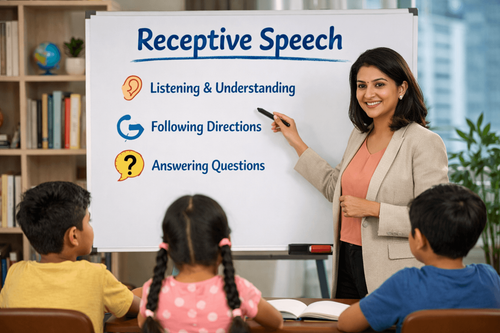

Table of Contents
- Understanding Receptive Speech: Meaning and Importance
- How Receptive Language Skills Develop in Kids
- Signs of Strong vs Weak Receptive Language Skills
- Receptive Language vs Expressive Language - Key Differences
- How Receptive Language Impacts Learning and School Success
- Activities and Strategies to Build Receptive Skills
- When to Seek Professional Support
- Structured Learning for Receptive Speech Development With Pl
- Key Takeaways
Receptive speech, commonly referred to as receptive language, is one of the most essential foundations of a child’s communication development. Before children learn to speak clearly, form sentences, or express ideas confidently, they must first develop the ability to understand what is being said to them. This ability to process, interpret, and comprehend spoken language is known as receptive language.
For children, especially in their early developmental years, receptive language shapes not only communication but also learning ability, classroom success, emotional regulation, and social interaction. When receptive skills are strong, children can follow instructions, understand stories, answer questions correctly, and engage meaningfully in conversations. When receptive skills are weak, learning challenges often follow.
This guide explores receptive speech in depth, how it develops, how it affects academic performance, signs parents should watch for, practical strategies to strengthen it, and how structured learning programs like PlanetSpark help children build lasting language confidence.
Understanding Receptive Speech: Meaning and Importance
Receptive speech refers to the ability to understand spoken language. It involves processing words, sentences, gestures, tone, and meaning. When a child listens to a parent say, “Please put your shoes near the door,” and follows the instruction correctly, that is receptive language in action.
Receptive language includes several core components:
- Understanding vocabulary
- Recognizing sentence structure
- Interpreting tone and context
- Processing multi-step directions
- Comprehending stories and conversations
Unlike expressive language, which focuses on speaking and producing words, receptive language is about understanding language input. It is the “input system” of communication.

This skill is critical because comprehension always precedes expression. Children typically understand many more words than they can say. If comprehension is limited, expressive growth also becomes restricted.
Strong receptive speech enables children to:
- Follow classroom instructions accurately
- Participate in discussions
- Answer comprehension questions
- Build reading skills
- Develop social understanding
Without adequate receptive language development, children may struggle academically and socially, even if they appear verbally active.
How Receptive Language Skills Develop in Kids
Receptive language development begins at birth and evolves steadily throughout childhood. It follows predictable stages, although each child progresses at their own pace.
Infancy (0–12 Months)
Even before speaking, babies respond to sound patterns. They recognize familiar voices and show reactions to tone changes. They begin associating certain sounds with meaning, such as responding to their name.
Toddler Stage (1–3 Years)
Toddlers begin understanding simple instructions such as:
- “Give me the ball.”
- “Come here.”
- “Sit down.”
Vocabulary comprehension increases rapidly during this stage. Children may understand hundreds of words even if they can only say a fraction of them.
Preschool Years (3–5 Years)
Children begin following two-step and three-step directions. They understand basic concepts like colors, shapes, size comparisons, and simple sequencing.
For example:
- “Pick up the book and place it on the table.”
- “Touch your nose, then clap your hands.”
They also begin understanding short stories and answering basic comprehension questions.
Early School Years (6+ Years)
Receptive language becomes more complex. Children must understand abstract concepts, infer meaning from context, process longer instructions, and interpret figurative language.
At this stage, receptive skills directly influence academic success. Children must understand teacher explanations, subject concepts, and written instructions.
Receptive development is not just about vocabulary size. It involves cognitive processing speed, attention control, working memory, and language decoding ability. That is why structured guidance often accelerates growth significantly.
Help your child build stronger receptive language skills today.
Book a personalized assessment session with PlanetSpark now.
Signs of Strong vs Weak Receptive Language Skills
Identifying receptive strengths and weaknesses early can prevent long-term academic challenges.
Signs of Strong Receptive Language Skills
Children with strong receptive abilities typically:
- Follow instructions without repetition
- Answer questions appropriately
- Stay engaged during storytelling
- Understand new vocabulary with minimal explanation
- Interpret social cues correctly
- Retell stories in their own words
They demonstrate comprehension not only through verbal responses but also through correct actions.
Signs of Receptive Language Difficulties
Some children may appear distracted or inattentive when the underlying issue is comprehension difficulty. Common signs include:
- Frequently asking for repetition
- Struggling with multi-step directions
- Giving unrelated answers to questions
- Difficulty understanding classroom discussions
- Seeming confused during group instructions
- Trouble understanding story plots
These signs are often mistaken for behavioral problems or a lack of focus. In reality, the child may not be fully processing what is being communicated.
Early recognition allows parents and educators to intervene before the gap widens.
Give your child the confidence to understand, respond, and succeed.
Receptive Language vs Expressive Language - Key Differences
Receptive and expressive language work together, but they serve different roles.
Receptive language involves understanding spoken or written language. It includes listening comprehension, reading comprehension, and processing instructions.
Expressive language involves producing language, speaking, forming sentences, explaining ideas, and writing.
A child may have strong expressive skills but weak receptive skills. For example, a child might speak confidently yet misunderstand instructions. Conversely, some children understand everything but struggle to articulate responses.
Typically, receptive language develops earlier and forms the base for expressive development. Without comprehension, expression lacks clarity and accuracy.
Parents and teachers must assess both aspects carefully to ensure balanced communication growth.
How Receptive Language Impacts Learning and School Success
Receptive language is directly tied to academic performance.
In classrooms, children must:
- Listen to the teacher's instructions
- Understand lesson explanations
- Interpret assignment guidelines
- Follow multi-step tasks
- Comprehend reading material
- Participate in group discussions
If a child does not fully understand instructions, mistakes occur even when knowledge exists. This can lead to frustration and declining confidence.
Reading comprehension heavily depends on receptive language. A child may decode words correctly but fail to understand the meaning if receptive skills are weak.
Socially, receptive challenges may affect peer interaction. Children must understand jokes, conversational cues, and implied meaning to build friendships successfully.
Research consistently shows that early receptive language skills predict later academic achievement. Strengthening receptive speech early therefore has long-term educational benefits.
If your child struggles to follow instructions, don’t wait.
Schedule a trial class and see the difference expert guidance can make.
Activities and Strategies to Build Receptive Skills
Parents and educators can strengthen receptive language through consistent practice and structured interaction.
1. Intentional Listening Practice
Before giving instructions, ensure the child is attentive. Maintain eye contact and minimize distractions. Clear listening improves comprehension accuracy.
2. Use Clear and Structured Instructions
Start with single-step commands and gradually move to multi-step directions. Avoid overwhelming the child initially.
Example progression:
Level 1: “Open the book.”
Level 2: “Open the book and turn to page five.”
Level 3: “Open the book, turn to page five, and underline the title.”
Gradual complexity builds processing stamina.
3. Expand Vocabulary Daily
Introduce new words naturally in conversation. After using a new word, explain its meaning in context.
For example:
“This puzzle is challenging. Challenging means it is not very easy.”
Contextual exposure strengthens retention.
4. Ask Open-Ended Questions
Instead of yes/no questions, ask:
- “Why do you think that happened?”
- “What do you think will happen next?”
- “Can you explain what the story was about?”
This encourages deeper comprehension.
Unlock better comprehension and classroom confidence.
5. Story Retelling Practice
After reading a story, ask the child to retell it in sequence. This improves memory organization and comprehension.
6. Play Direction-Based Games
Games like instruction relays, treasure hunts, or following clue-based activities improve receptive sequencing.
7. Use Visual Support
Some children benefit from visual cues combined with verbal instructions. Charts, pictures, and diagrams reinforce understanding.
Consistency is key. Receptive learning improves when comprehension is practiced daily in structured and engaging ways
When to Seek Professional Support
While developmental variations are normal, persistent comprehension difficulties require attention.
Parents should consider a professional evaluation if:
- The child consistently misunderstands instructions
- Multi-step tasks cause frustration
- Academic performance drops despite effort
- Teachers report comprehension concerns
- Vocabulary understanding is significantly below the age level
Early intervention is highly effective. Speech-language professionals can assess receptive abilities and create targeted improvement plans.

Structured Learning for Receptive Speech Development With PlanetSpark
Building receptive language skills requires structured guidance, consistent reinforcement, and personalized attention. This is where PlanetSpark plays a transformative role.
PlanetSpark designs its communication programs to strengthen both receptive and expressive abilities in children.
Delaying support may widen learning gaps and reduce confidence.
What Makes PlanetSpark Different
The program focuses on:
- Practical communication frameworks
- Business-focused scenarios
- Confidence-building exercises
- Behavioral communication strategies
Learners gain hands-on experience in:
- Presentations and public speaking
- Workplace conversations
- Leadership communication
- Social media communication for professionals
Key Takeaways
Receptive speech is the foundation of communication and learning. It involves understanding language, processing instructions, and interpreting meaning.
Receptive development begins in infancy and grows progressively through structured exposure and practice.
Signs of difficulty include trouble following instructions, misunderstanding questions, and struggling with story comprehension.
Daily activities such as storytelling, open-ended questioning, vocabulary expansion, and multi-step instruction practice significantly strengthen receptive abilities.
Early intervention is crucial if challenges persist.
Structured programs like PlanetSpark provide personalized support that helps children build strong receptive foundations, ensuring long-term communication success.
Frequently Asked Questions
Receptive speech refers to a child’s ability to understand spoken language. It includes processing words, sentences, instructions, and meaning from conversations. This skill develops before expressive language and forms the foundation for communication. Strong receptive speech helps children follow directions, understand stories, and participate effectively in classroom learning.
Receptive language is about understanding information, while expressive language is about sharing ideas, thoughts, or feelings. A child may understand perfectly but still struggle to explain or speak clearly.
Receptive language begins developing from birth. Babies respond to familiar voices and sounds within the first few months. By toddler age, children can follow simple directions, and by preschool, they understand multi-step instructions. Development continues through early school years as children begin understanding abstract and complex language concepts.
Common signs include difficulty following instructions, frequently asking for repetition, giving unrelated answers, or appearing confused during conversations. Children may struggle to understand stories or classroom explanations. Sometimes these challenges are mistaken for inattentiveness, but the root cause may be comprehension difficulties.
In school, children must understand teacher instructions, lesson explanations, and assignment guidelines. Weak receptive skills can lead to academic struggles even when the child is intelligent. Strong comprehension supports reading, problem-solving, participation, and confidence in learning environments.
Yes, it is possible. Some children speak fluently but misunderstand instructions or questions. They may appear confident verbally but struggle with comprehension. Balanced development of both receptive and expressive language is important for effective communication and academic growth.
Parents can engage in conversations, read aloud together, ask open-ended questions, narrate daily activities, and play listening games. Consistent practice strengthens comprehension and confidence.
Yes, receptive language directly impacts reading comprehension. If a child cannot understand spoken language clearly, understanding written text becomes challenging. Vocabulary knowledge, sentence structure awareness, and contextual interpretation are all part of receptive processing and essential for strong reading skills.
If a child consistently struggles to follow directions, misunderstand conversations, or falls behind academically due to comprehension issues, it may be time to consult a professional. Early intervention improves outcomes significantly. A speech-language assessment can identify specific gaps and guide targeted improvement strategies.
Structured learning programs provide guided listening activities, vocabulary development, and progressive instruction complexity. Expert educators monitor comprehension and adjust strategies accordingly. This systematic approach ensures children strengthen foundational skills that support long-term academic and communication success.