

Poor conceptual understanding: Students memorise information without understanding the logic behind it, making learning shallow and fragile.
Difficulty applying knowledge: Memorised facts are hard to use in real-life situations or unfamiliar problems, limiting practical learning.
Limited problem-solving and creativity: Rote learning discourages critical thinking, reducing a child’s ability to analyse, innovate, or think independently.
Reduced confidence with new questions: When questions change slightly, students feel unsure because they rely on memorised answers rather than understanding.
Low engagement and motivation: Repetitive memorisation can feel boring and stressful, leading to reduced interest, motivation, and long-term academic growth.
Rote Learning vs Concept-Based Learning: Why PlanetSpark Leads

Table of Contents
- What Is Rote Learning?
- How Rote Learning Works in Traditional Education
- Limitations of Rote Learning
- What Is Concept-Based Learning?
- Success Story: Ashwin Sathish’s Journey to the TEDx Stage
- Rote Learning vs Meaningful Learning
- Rote Learning vs Conceptual Learning
- How Concept-Based Learning Builds Strong Foundations
- Why PlanetSpark Is Shifting Students Away from Rote Learning
- How PlanetSpark Moves Students Beyond Rote Learning
- Conclusion
Memorising answers may help children pass exams, but does it help them truly understand? Learning methods shape how children think, remember, and apply knowledge in real life. For years, traditional education has relied on repetition and recall, often prioritising marks over meaning. This is where rote learning comes in. To answer what is rote learning, it is a method focused on memorising facts, formulas, or definitions without understanding the reasoning behind them. In contrast, concept-based learning builds clarity, confidence, and real-world skills. Platforms like PlanetSpark are shifting students away from rote learning towards meaningful, thinking-driven learning.
What Is Rote Learning?
Rote learning is a method of learning that focuses on memorization through repetition rather than understanding. To clearly explain the rote learning meaning, it refers to learning information exactly as it is presented, without exploring the reasons or logic behind it. When people ask what is rote learning, it simply means remembering facts, definitions, formulas, or answers by repeating them again and again.
This learning method is commonly used because it helps students recall information quickly, especially during exams. However, memorization alone does not guarantee that students understand what they are learning or can apply it in real-life situations.
Common examples of rote learning include:
Memorizing multiplication tables without understanding how multiplication works
Learning grammar rules without using them in speaking or writing
Remembering scientific definitions without understanding the concept
While rote learning can be useful for basic recall, depending on it as the main learning method often limits deeper understanding and long-term retention.
How Rote Learning Works in Traditional Education
In traditional education systems, rote learning plays a central role in teaching and evaluation. The focus is mainly on memorizing textbook content and reproducing it accurately in exams. Students are often encouraged to remember answers rather than question or explore ideas.
This approach relies heavily on repetition-based practices such as copying notes, memorizing answers, and practicing the same questions repeatedly. While repetition helps store information temporarily, it does not always help students understand the subject clearly.
A key limitation of this system is the difference between short-term recall and long-term learning. Information learned through rote methods is often forgotten after exams because it is not connected to understanding or real-world use. As a result, students may perform well in tests but struggle when asked to explain concepts in their own words or apply them in unfamiliar situations.
Over time, this learning style can reduce curiosity and independent thinking, making students dependent on memorized answers.
Limitations of Rote Learning
Rote learning has several drawbacks that affect a child’s overall learning experience and skill development. One major limitation is the lack of critical thinking. Since students focus on remembering answers, they do not learn how to analyze or reason.
Book a free demo class and see how concept-based learning transforms understanding.
What Is Concept-Based Learning?
Concept-based learning is an approach that focuses on understanding ideas deeply rather than memorizing information. Instead of asking students to remember answers, this method encourages them to understand how and why something works. When children learn through concepts, they build connections between ideas, which helps them retain knowledge for a longer time.
This learning method places strong emphasis on reasoning, logic, and clarity. Students are encouraged to ask questions, explore relationships, and explain concepts in their own words. For example, in math, instead of memorizing a formula, children first understand the concept behind it and then learn how the formula is derived. This clarity reduces confusion and builds confidence.
Concept-based learning also supports deeper comprehension. Since students understand the foundation of what they are learning, they can easily apply the same knowledge to new or unfamiliar problems. This approach helps learners move beyond textbooks and use their understanding in real-life situations. Over time, it develops independent thinking, problem-solving skills, and a genuine interest in learning, making education more meaningful and effective.
Success Story: Ashwin Sathish’s Journey to the TEDx Stage
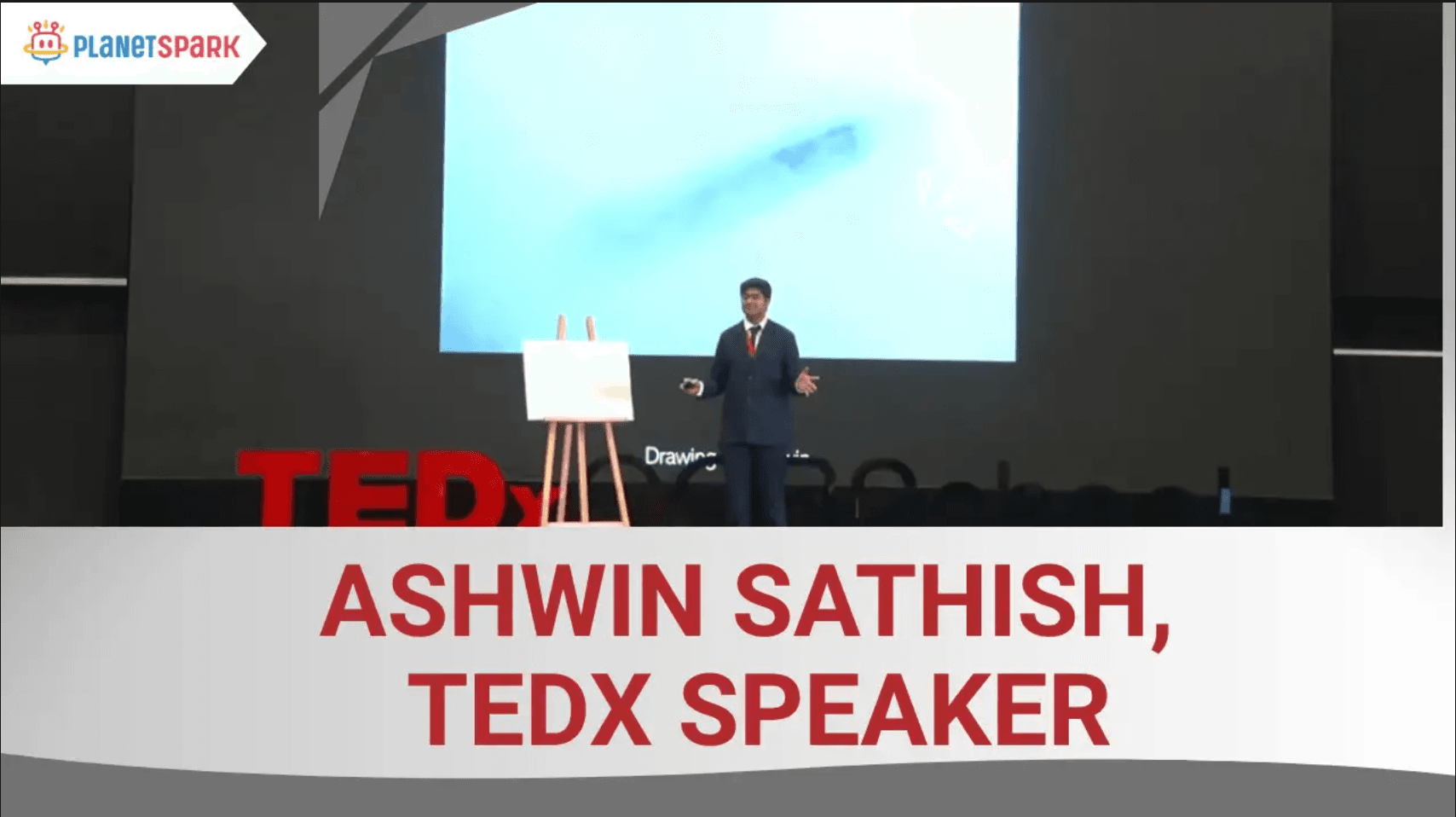
Ashwin Sathish, an 8th grader from New Delhi, began his journey with a strong desire to express himself confidently. Like many students, he initially faced challenges in presenting ideas clearly and speaking confidently in front of an audience. With guidance and structured learning, Ashwin gradually developed not just clarity in his thoughts but also the confidence to communicate them effectively.
Through consistent practice, interactive sessions, and personalized mentorship, Ashwin honed his public speaking and communication skills. He learned how to engage listeners, structure his ideas, and deliver them with poise and conviction. PlanetSpark’s concept-based and confidence-building approach provided the perfect environment for Ashwin to experiment, learn, and grow without fear of judgment.
This dedication and growth culminated in a remarkable achievement: Ashwin became a TEDx Speaker, captivating audiences and sparking conversations that truly matter. His journey from classroom confidence to commanding a global stage showcases the impact of guided learning, consistent practice, and the courage to find one’s voice. Ashwin’s story reflects how skill, vision, and confidence, nurtured with the right support—can empower children to achieve extraordinary milestones
Rote Learning vs Meaningful Learning
| Aspect | Rote Learning | Meaningful Learning |
|---|---|---|
| Focus of learning | Memorizing facts, formulas, and answers | Understanding concepts and making connections |
| Understanding & retention | Leads to short-term memory and quick forgetting | Builds long-term retention by linking ideas |
| Problem-solving ability | Struggles with unfamiliar or changed questions | Can analyse, adapt, and solve problems independently |
| Creativity & thinking | Limits critical and creative thinking | Encourages curiosity, reasoning, and creativity |
| Learning experience | Repetitive, exam-focused, and stressful | Engaging, interactive, and concept-driven |
| Confidence level | Low confidence when patterns change | High confidence due to strong understanding |
| Application beyond exams | Difficult to apply in real-life situations | Easy application in real-world contexts |
| Overall outcome | Performance-focused learning | Skill-based, confident, and meaningful learning |
Rote Learning vs Conceptual Learning
The comparison between rote learning vs conceptual learning highlights the shift from memorization to understanding. Rote learning trains students to remember information, while conceptual learning helps them grasp the core ideas behind what they study.
Some major differences include:
Memorization vs understanding concepts:
Rote learning depends on repetition, whereas conceptual learning focuses on understanding principles and relationships.Application-based learning:
Conceptual learners can apply knowledge in real-life situations, while rote learners often struggle outside exam patterns.Long-term academic and skill development:
Conceptual learning builds critical thinking, adaptability, and lifelong learning skills, while rote learning limits growth to exam performance.
Overall, conceptual learning prepares students for future challenges by strengthening reasoning and application skills. This is why modern education platforms like PlanetSpark prioritize concept-based learning over rote memorization, helping students truly understand and excel.
Help your child develop confidence, communication, and critical thinking with PlanetSpark.
How Concept-Based Learning Builds Strong Foundations
Concept-based learning helps students build strong academic foundations by focusing on understanding rather than memorization. When children are encouraged to explore why something works, learning becomes meaningful and long-lasting. This approach naturally encourages curiosity and questioning, as students feel comfortable asking questions and seeking clarity instead of fearing mistakes. Curiosity turns learning into an active process rather than a passive one.
Another key benefit is that it improves confidence and independent thinking. When students understand concepts clearly, they rely less on notes or memorized answers. They begin to trust their own reasoning and feel confident explaining ideas in their own words. This confidence reduces exam anxiety and helps children approach new topics with a positive mindset.
Concept-based learning also prepares students for advanced learning. Subjects become more complex as students move to higher classes, and memorization alone is no longer sufficient. A strong conceptual foundation allows students to connect new information with what they already know. This makes advanced topics easier to grasp and helps students adapt to new challenges across subjects, not just in academics but also in real-life problem-solving.
Why PlanetSpark Is Shifting Students Away from Rote Learning
PlanetSpark recognizes that traditional rote learning does not equip children with the skills needed for today’s world. That is why it is actively shifting students toward concept-based learning that focuses on understanding and application.
The first reason is a strong focus on clarity over memorization. Instead of asking children to remember answers, PlanetSpark helps them understand concepts deeply so they can apply them confidently. This clarity reduces confusion and builds long-term retention.
PlanetSpark also follows an interactive and engaging learning approach. Classes are designed to encourage participation, discussion, and thinking rather than one-way instruction. This keeps students interested and motivated throughout the learning process.
Another important reason is personalized learning paths for each child. Every child learns differently, and PlanetSpark adapts its teaching to match individual learning styles and pace. This ensures that no child feels left behind or pressured, making learning more effective and enjoyable.

How PlanetSpark Moves Students Beyond Rote Learning
PlanetSpark helps children shift from memorisation to meaningful understanding through a concept-first, confidence-driven learning approach.
Concept Clarity Before Memorisation: Every topic is taught by explaining the “why” behind concepts, ensuring students understand ideas before learning formulas or answers.
Interactive, Thinking-Focused Sessions: Classes encourage questioning, discussion, and reasoning, helping students actively engage instead of passively memorising content.
Personalised Learning Paths: Each child’s learning pace and understanding level is assessed, and lessons are adapted to strengthen weak concepts without pressure.
Real-Life Application of Concepts: Students learn how concepts apply beyond textbooks, making learning practical, relatable, and easier to retain long-term.
Strong Focus on Communication and Expression: By encouraging children to explain ideas in their own words, PlanetSpark builds confidence, critical thinking, and deeper understanding.
Conclusion
Concept-based learning is shaping the future of education by focusing on understanding, clarity, and application rather than memorization. It helps children build strong foundations, think independently, and stay confident as learning becomes more advanced.
Moving beyond rote learning is essential for long-term academic success and real-world readiness. By prioritizing concept-based learning, PlanetSpark ensures that students are not just learning for exams, but learning for life.
Frequently Asked Questions
Rote learning is memorizing information through repetition without understanding the underlying concepts.
Rote learning focuses on memorization, while concept-based learning emphasizes understanding, reasoning, and application.
It helps children retain knowledge longer, improves problem-solving skills, encourages critical thinking, and boosts confidence.
Yes, relying solely on memorization limits creativity, understanding, and the ability to apply knowledge in new situations.
PlanetSpark uses interactive sessions, real-life examples, guided practice, and personalized learning paths to help children understand concepts deeply.
PlanetSpark focuses on building deep understanding and reasoning through real-life examples, interactive practice, and guided thinking, rather than memorizing answers without context.
Yes. PlanetSpark teaches concepts that children can use in problem-solving, communication, and real-world scenarios, helping them develop confidence and practical skills.