
Sandwich Method for Balanced Feedback | Guide 2025
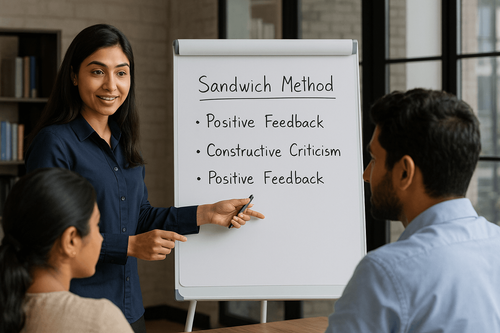

Table of Contents
- Understanding the Sandwich Method: A Complete Breakdown for
- Step-by-Step Structure of the Sandwich Method
- When Should Professionals Use the Sandwich Method?
- Mistakes Professionals Make With the Sandwich Method
- Advanced Tips: How Professionals Can Master the Sandwich Met
- Real Corporate Examples of the Sandwich Method in Action
- How the Sandwich Method Compares to Other Feedback Models
- PlanetSpark: Transforming Communication Skills for Professio
- Become the Communicator Everyone Respects
Sandwich Method: Learn balanced and effective feedback with PlanetSpark
Giving feedback is an essential part of professional communication, leadership development, and team performance. Yet, most working professionals,managers, trainers, team leads, educators, startup founders, and even HR professionals,struggle to deliver feedback that is honest but not demotivating. That is exactly where the Sandwich Method steps in.
The search intent behind learning the Sandwich Method is simple: professionals want a communication technique that helps them share corrective feedback without damaging trust, relationships, or morale. You want to guide someone toward improvement, but also ensure they remain confident and engaged. This blog will help you master that balance.
This guide covers what the Sandwich Method is, why it works psychologically, how it improves workplace communication, and real corporate examples of how teams use it effectively. You will also learn how this method compares to other common feedback techniques such as constructive feedback, positive reinforcement model, and the SBI feedback framework (secondary keywords included strategically).
By the end of this blog, you’ll not only understand the technical formula behind the feedback sandwich method, but you'll know how to apply it confidently during performance reviews, peer discussions, presentations, leadership conversations, and even client interactions.
You’ll also learn how companies use the Sandwich Method to strengthen interpersonal communication skills, increase productivity, and cultivate leadership-ready employees. The blog includes practical scripts, workplace use-cases, and best practices for high-stakes professional conversations.
If you’re serious about becoming a clear, confident, and influential communicator, this guide is your starting point. And if you want to take your communication mastery further, PlanetSpark’s Spoken English & Leadership Communication Programs can help you elevate your speaking skills with expert trainers and structured practice.

Understanding the Sandwich Method: A Complete Breakdown for Professionals
The Sandwich Method,also known as the feedback sandwich method,is one of the most widely used workplace communication techniques. The idea is simple:
Positive Feedback → Constructive Feedback → Positive Reinforcement
But the deeper intent is to create a psychologically safe environment where the receiver feels respected, valued, and motivated to improve.
What Is the Sandwich Method?
At its core, the Sandwich Method is a structured way of giving feedback that ensures:
The person remains open to listening
The relationship stays positive
The required improvement is understood clearly
The overall conversation feels balanced, not demoralizing
Professionally, it is used across:
Performance reviews
Annual evaluations
Team meetings
Project discussions
Leadership and managerial roles
Training and development conversations
Peer-to-peer feedback
Why the Sandwich Method Works (The Psychology Behind It)
Humans naturally resist criticism. It triggers a sense of threat. The Sandwich Method lowers that perceived threat by anchoring the conversation in positivity before and after corrective feedback.
Professionals across industries,corporate, tech, education, healthcare, marketing, and management,use this method because it strengthens:
Trust
Emotional acceptance
Receptiveness
Motivation
Behavioural follow-through
This communication strategy works because of three psychological principles:
1. Priming Effect
The first positive comment opens the mind, setting a receptive tone.
2. Cognitive Ease
Balancing corrections with appreciation reduces emotional resistance.
3. Recency Effect
The final positive comment is what people remember the most, helping them leave the conversation feeling motivated rather than criticised.
Build mastery in communication frameworks with PlanetSpark’s expert-led courses.
Step-by-Step Structure of the Sandwich Method
Let’s dive deep into how the method works when applied correctly.
1. Start With Genuine Appreciation
Avoid generic praise. Make it specific and relevant.
This builds trust.
Example:
“You managed the client’s concerns extremely well this week, and your quick responses helped maintain the relationship.”
2. Deliver the Constructive Feedback
Now give the improvement point clearly, without hesitation.
Example:
“One thing you could work on is keeping project documentation updated so the whole team stays aligned.”
This phase must be:
Clear
Action-oriented
Respectful
Focused on behaviour, not personality
3. End With Encouragement and Support
This final layer reinforces confidence and reaffirms your belief in their abilities.
Example:
“I’m confident that once you integrate documentation into your workflow, your already strong client-handling skills will shine even more.”
This final note ensures high morale and a growth-driven mindset.
When Should Professionals Use the Sandwich Method?
The Sandwich Method is ideal when:
You want to maintain a positive relationship
The receiver is sensitive or new to feedback
You’re giving feedback for the first time
The mistake isn’t major but needs correction
You want to coach someone toward improvement
You want to strengthen communication culture
Workplace Scenarios
1. Performance Appraisals
Managers use the sandwich method to highlight achievements while guiding improvements.
2. Team Collaboration
For smoother workflow and accountability conversations.
3. Leadership Development
Senior leaders use it to mentor junior employees.
4. Client Management
Professionals use this technique to diplomatically handle client communication.
5. Conflict Resolution
It helps shift criticism into solution-focused dialogue.
Mistakes Professionals Make With the Sandwich Method
Although widely used, many execute it poorly.
Here are the biggest mistakes:
1. Using Fake or Forced Praise
Insincere compliments reduce trust.
2. Hiding Criticism Too Deeply
The feedback becomes unclear, vague, or superficial.
3. Overusing the Method
Employees start expecting criticism every time you praise them.
4. Not Giving Clear Action Steps
Without clarity, improvement doesn’t happen.
5. Not Being Specific
Generic statements don’t help professionals grow.
Advanced Tips: How Professionals Can Master the Sandwich Method
1. Make the Positive Points Meaningful
Tie them to real performance metrics.
2. Keep the Correction Focused
Address one behaviour at a time.
3. Use Evidence
Refer to specific incidents, timelines, or data (similar to the SBI feedback framework).
4. End on a Growth Note
Show confidence in the person’s capability.
5. Practice With a Coach
Confidence comes from repeated real-time practice.
Real Corporate Examples of the Sandwich Method in Action
Example 1 – Manager to Employee
“You handled the product launch presentation impressively. Your clarity was strong. One improvement area would be reducing filler words to sound even more confident. With your preparation skills, I’m sure you’ll perfect this in no time.”
Example 2 – Peer Feedback
“I appreciate how you’ve supported the team this month. One suggestion,if you can share updates earlier, it will help us align better. You're already a strong team player, so this will elevate collaboration further.”
Example 3 – Leadership Training Session
Trainers use the method to help participants refine speaking and presentation skills.
How the Sandwich Method Compares to Other Feedback Models
Professionals often search for alternatives such as:
SBI feedback framework (Situation–Behavior–Impact)
Constructive feedback techniques
Radical candor model
Positive reinforcement model
Comparison Summary
| Model | Best For | Strengths | Limitations |
|---|---|---|---|
| Sandwich Method | Balanced feedback | Motivational, relationship-friendly | Overuse may reduce sincerity |
| SBI Framework | High-stakes communication | Data-driven, structured | Can feel too direct |
| Radical Candor | Experienced teams | Honest & transparent | Can appear harsh without maturity |
| Positive Reinforcement Model | Motivation & morale | Builds confidence | Lacks corrective clarity |

PlanetSpark: Transforming Communication Skills for Professionals
PlanetSpark offers a specialised communication development program designed exclusively for working professionals who want to improve clarity, confidence, and executive presence. The course focuses on practical workplace communication, helping adults speak with impact in meetings, presentations, interviews, and leadership settings.
1:1 Expert Coaching for Professionals
Learners receive personalised, live coaching sessions with certified communication experts. These sessions focus on improving spoken English, articulation, presentation skills, persuasive speaking, and overall confidence.
Structured Communication Skill Building
The curriculum covers essential professional communication elements such as body language, voice modulation, storytelling, structuring ideas, spontaneous speaking, and strategic clarity in conversations.
TED-Style Presentation Training
Professionals learn to present using a clear:
Hook → Message → Story → Call-to-action
This model strengthens delivery for meetings, pitches, and leadership communication.
Practice With Global Peers
Live sessions allow learners to engage in discussions, debates, and collaborative activities with professionals from different countries, enhancing global communication exposure.
AI-Based Feedback & Video Analysis
PlanetSpark blends expert coaching with AI-driven insights to help adults identify improvement areas in speech clarity, tone, pace, and confidence. Video reviews accelerate progress.
Writing & Business Communication Support
Learners practise structured writing,emails, reports, and presentation notes,to improve clarity and professional expression.
Continuous Assessment & Growth Tracking
Regular feedback, progress reviews, and structured evaluations ensure measurable improvement over time.
Professional Learning Communities
Exclusive clubs and communication circles help adults practice in safe, supportive environments and refine leadership communication skills.
Become the Communicator Everyone Respects
The Sandwich Method is more than a feedback framework,it’s a practical leadership tool that helps professionals communicate with clarity, empathy, and confidence. In any workplace, people respond best when they feel understood, respected, and encouraged. This method allows you to guide others without discouraging them, turning feedback into a positive and growth-focused conversation.
Mastering this approach helps you:
✔ Strengthen relationships
By appreciating strengths first, you create a supportive environment where conversations stay open and cooperative.
✔ Deliver improvement-oriented feedback
The structure ensures your message is clear, actionable, and easier for the receiver to accept.
✔ Build trust and credibility
When you balance honesty with appreciation, people see you as a fair and thoughtful communicator.
✔ Reduce conflict and defensiveness
The method softens the impact of criticism and keeps discussions solution-driven rather than emotional.
✔ Lead with emotional intelligence
You learn to communicate in a way that motivates others while still addressing areas that need change.
In today’s workplace, clear and respectful communication sets great leaders apart. The Sandwich Method gives you a simple yet effective system to provide guidance without harming morale,and to help others grow with confidence. If you want to elevate your communication skills even further, expert-led training can make a powerful difference in how you speak, lead, and influence.
Take your professional communication to the next level with PlanetSpark’s adult learning programs.
Frequently Asked Questions
The Sandwich Method is a communication technique where you give positive feedback, followed by constructive feedback, and end with positive reinforcement. This structure ensures the receiver stays motivated and open to improvement.
It works because it reduces emotional defensiveness. When people feel appreciated, they are more receptive to corrective feedback. The positive reinforcement at the end boosts confidence and encourages action.
Yes, it is widely used across corporate teams, leadership settings, HR processes, and client communication. It helps maintain professionalism while promoting growth and accountability.
If used too frequently or without sincerity, people may start anticipating criticism behind every compliment. Additionally, if the constructive feedback is not clear, it may dilute the message.
Practicing with real conversations, coaching, and structured training helps. PlanetSpark offers expert-guided communication programs where professionals practice feedback delivery using frameworks like the Sandwich Method, SBI method, and more.