
Sensory Play Ideas: Fun and Engaging Activities for Children
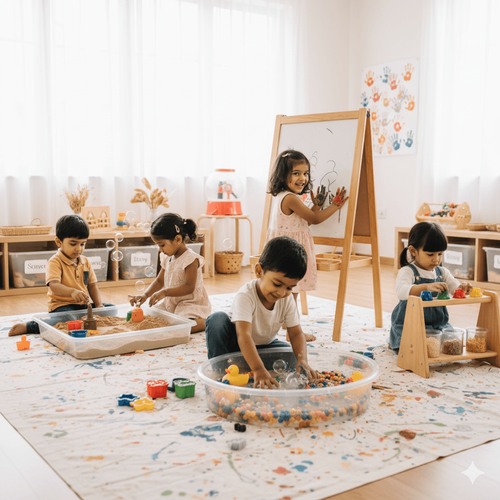

Table of Contents
- What Is Sensory Play?
- Simple Sensory Play Ideas for Students
- Creative Sensory Play Ideas for 5-Year-Olds
- Benefits of Sensory Play for Students
- Incorporating Sensory Play Into Learning
- DIY Sensory Play Materials
- Seasonal Sensory Play Ideas
- Tips for Safe Sensory Play
- Sensory Play for Emotional Development
- Technology and Sensory Play
- Ready to See Your Child Shine with PlanetSpark?
- Let Your Child Explore and Grow with PlanetSpark
Sensory play enables children to explore the world through touch, sight, sound, taste, and smell, all while having fun. This blog is filled with exciting sensory play ideas that spark curiosity, boost learning, and naturally develop skills. From colorful activities to imaginative projects, students can explore and grow with every experience. PlanetSpark guides children through playful learning, helping them build confidence, creativity, and a love for discovery.
What Is Sensory Play?
Sensory play includes any activity that engages a child’s senses. It can involve feeling different textures, listening to sounds, smelling various scents, or tasting new flavors. For students, sensory play is more than just fun. It helps them develop problem-solving abilities, fine motor skills, and emotional control. When sensory activities are part of learning, children improve focus, coordination, and self-confidence while enjoying the process.
Simple Sensory Play Ideas for Students
Here’s a list of sensory activities that students can enjoy both at school and at home. These activities are safe, engaging, and effective for learning. Here, students can also learn simple self help skills to learn more than click here.
1. Water Play
Water play is one of the easiest and most fun sensory activities. Students can:
- Pour water between cups to develop coordination.
- Float and sink objects to learn about density.
- Use water with food coloring to create colorful patterns.
Water play encourages curiosity, observation skills, and fine motor control.
2. Sand and Mud Play
Playing with sand or mud provides a unique tactile experience:
- Build sandcastles or mud pies.
- Hide objects in sand for a “treasure hunt.”
- Mix sand with water to explore textures.
These activities develop problem-solving skills and hand strength while keeping children engaged in imaginative play.
3. Sensory Bins
Sensory bins are containers filled with materials that stimulate the senses. You can include:
- Rice, beans, or pasta for tactile exploration.
- Small toys for discovery.
- Scoops and containers for pouring and measuring.
Sensory bins encourage concentration and imaginative play. For younger children, sensory bins with letters or numbers can also enhance learning.
4. Playdough and Clay
Playdough and clay allow students to shape, mold, and create:
- Make letters or numbers to reinforce learning.
- Create animals, plants, or imaginary characters.
- Roll, pinch, and flatten to improve fine motor skills.
Using scented or colored clay adds another sensory dimension, making learning even more enjoyable.
5. Bubble Wrap Fun
Bubble wrap is perfect for popping and feeling different textures:
- Let students stomp on bubble wrap for gross motor development.
- Create art by painting over bubble wrap and pressing it onto paper.
- Use as a tactile tool for calming and stress relief.
6. Music and Sound Play
Sound-based sensory activities enhance auditory learning:
- Make instruments from household items.
- Play different types of music and encourage movement.
- Explore rhythm and pitch by clapping, drumming, or shaking objects.
Music engages the brain and improves concentration, memory, and coordination.
7. Nature Exploration
Nature is a natural sensory playground. Students can:
- Collect leaves, stones, or flowers and describe their texture, shape, and color.
- Listen to birds, wind, or water to enhance auditory skills.
- Smell herbs, flowers, or soil to explore different scents.
Nature-based sensory play also teaches children about the environment and encourages mindfulness.
8. Cooking and Food Play
Cooking introduces students to smell, taste, and texture:
- Make simple snacks like fruit salads or sandwiches.
- Experiment with dough, chocolate, or jelly.
- Use safe tools to measure, stir, and mix ingredients.
Cooking encourages math skills, following instructions, and independent thinking.
9. Sensory Bottles
Sensory bottles are easy to make and visually stimulating:
- Fill bottles with water, glitter, beads, or small toys.
- Add oil or color for different effects.
- Let students shake or roll the bottles to observe movement.
Sensory bottles are perfect for calming activities and can be used as teaching aids for colors, shapes, and cause-and-effect.
10. Texture Walk
Create a path using different textures for students to walk on:
- Include mats, sandpaper, soft rugs, and bubble wrap.
- Encourage students to describe how each surface feels.
- Incorporate balance and gross motor skills through walking and hopping.
A texture walk engages tactile and proprioceptive senses, improving awareness and coordination.
Build confidence and fluency in storytelling and speeches with PlanetSpark!!
Creative Sensory Play Ideas for 5-Year-Olds
When focusing on younger students, especially around age five, sensory play needs to be engaging, safe, and stimulating. Here are some fun sensory play ideas for 5 year olds:
- Rainbow Rice Sensory Bin: Dye rice in different colors and let children sort by color or fill small containers.
- Gel Bag Writing: Fill resealable bags with hair gel and let children write letters or numbers with their fingers.
- Shaving Cream Art: Spread shaving cream on a tray and allow children to create patterns or practice writing.
- Edible Finger Paints: Use yogurt or pudding with natural food coloring to encourage tactile exploration.
- Ice Cube Exploration: Freeze small toys inside ice cubes and let students melt them to retrieve the toy.
These activities develop sensory perception while being fun and safe. Kids can also learn 50 opposites to increase their vocabulary by clicking here.
Benefits of Sensory Play for Students
Sensory play is highly beneficial for students. Here are some advantages:
- Enhances Cognitive Skills: Activities that engage multiple senses help students understand concepts better and improve memory.
- Improves Motor Skills: Manipulating objects, pouring water, or shaping clay helps develop hand-eye coordination and fine motor skills.
- Supports Language Development: Sensory play encourages children to describe textures, colors, and feelings, boosting vocabulary.
- Encourages Creativity: Unstructured sensory activities allow students to experiment and imagine, enhancing creative thinking.
- Reduces Stress: Engaging in sensory play can be calming and helps children manage emotions.
Incorporating Sensory Play Into Learning
Sensory play can be seamlessly incorporated into educational routines. Here are some ideas:
- Math Skills: Use beads, beans, or pasta for counting, addition, and subtraction.
- Science Experiments: Explore concepts like floating and sinking, magnetism, or chemical reactions.
- Language Development: Encourage children to describe colors, textures, sounds, and smells.
- Art Projects: Combine sensory materials like sand, rice, and clay to create textured artworks.
- Storytelling: Use tactile props to bring stories to life and improve comprehension.
By blending learning and sensory experiences, students stay engaged while developing essential skills.
One-on-one mentoring helps every child grow at their own pace!!
DIY Sensory Play Materials
You don’t need expensive tools for sensory play. Here are some easy DIY materials:
- Homemade Playdough: Flour, salt, water, and food coloring.
- Colored Rice: Rice mixed with vinegar and food coloring.
- Sensory Bottles: Empty bottles, water, glitter, beads, and oil.
- Nature Collections: Leaves, flowers, pebbles, and pinecones.
- Water Beads: Rehydrated water beads for tactile play.
These materials are safe, inexpensive, and can be reused multiple times.
Seasonal Sensory Play Ideas
Sensory play can also be tailored to seasons, making it more engaging:
Spring
- Flower petal sorting.
- Mud pies in the garden.
- Watering plants and feeling soil textures.
Summer
- Sand and water play.
- Ice cube exploration.
- Outdoor texture walks on grass, sand, and stone.
Autumn
- Leaf piles for jumping and crunching.
- Nature scavenger hunts.
- Pumpkin sensory bin with seeds and pulp.
Winter
- Fake snow or ice play.
- Sensory bottles with glitter “snow.”
- Warm sensory materials like dough and clay for indoor play.
Storytelling, debates, and writing nurture imagination and self-assurance!!
Tips for Safe Sensory Play
Safety is crucial, especially for younger students:
- Supervise Play: Always monitor children during sensory activities.
- Avoid Small Choking Hazards: Be cautious with small items like beads for children under 5.
- Use Non-Toxic Materials: Ensure paints, gels, and clay are child-safe.
- Clean Up Properly: Sensory activities can be messy; use mats or trays to protect surfaces.
- Encourage Gentle Play: Teach children to respect materials and each other during group activities.
Sensory Play for Emotional Development
Sensory play is not just for physical and cognitive growth—it also supports emotional development:
- Calming Activities: Water play, sensory bottles, and soft textures can reduce stress and anxiety.
- Expression of Feelings: Children can express emotions through tactile or creative activities.
- Building Patience: Activities like pouring, mixing, or building require focus and persistence.
- Enhancing Social Skills: Group sensory play teaches sharing, cooperation, and teamwork.
Technology and Sensory Play
Modern students also enjoy tech-based sensory play:
- Interactive Apps: Touchscreen apps for drawing, music, and color recognition.
- Digital Storytelling: Animated stories with tactile props.
- Virtual Nature Experiences: Videos with soundscapes for auditory stimulation.
Technology can complement traditional sensory play but should not replace hands-on experiences.
Ready to See Your Child Shine with PlanetSpark?
PlanetSpark is designed to help children express themselves confidently and creatively through engaging and personalised learning experiences. With expert guidance, innovative tools, and interactive activities, your child can improve speaking, storytelling, and writing while having fun.
Key services include:
- 1:1 Personal Trainers: Certified experts provide individual attention, feedback, and mentorship for faster progress.
- Personalised Curriculum: Tailored learning roadmaps to strengthen skills and boost confidence.
- SparkX AI Tool: Video analysis evaluates voice clarity, body language, grammar, and stage presence.
- AI-Led Practice Sessions: Virtual coaching for speeches and storytelling anytime, anywhere.
- Spark Diary: Digital journaling to enhance creativity, expression, and writing consistency.
- Gamified Learning: Fun quizzes and challenges that make learning engaging and enjoyable.
With PlanetSpark, children grow into confident speakers, imaginative thinkers, and expressive storytellers ready to shine in every situation.
Let Your Child Explore and Grow with PlanetSpark
To sum it up, Sensory play is a powerful tool for students’ growth, combining fun with skill development. From simple water and sand activities to creative arts, cooking, and nature exploration, there is a sensory activity for every child. Incorporating these activities into daily routines boosts cognitive, motor, social, and emotional skills while keeping learning enjoyable.
By offering a variety of sensory play ideas for 5 year olds, educators and parents can create a rich learning environment that nurtures curiosity, creativity, and confidence. Remember, the key is to make play safe, engaging, and multisensory, helping children explore the world in a hands-on, memorable way.
Frequently Asked Questions
Sensory play engages a child’s senses through touch, sight, sound, smell, and taste. It improves cognitive, motor, social, and emotional skills while making learning fun and memorable.
Yes! Sensory activities enhance focus, problem-solving, creativity, and fine motor skills. Students learn concepts like math, language, and science through hands-on experiences that make understanding easier.
PlanetSpark offers 1:1 trainers, gamified activities, AI tools, and clubs for storytelling, speeches, and writing. Children improve confidence, communication, and creativity in a structured, fun learning environment.
Yes! With live classes, AI-led practice, and performance clubs, PlanetSpark guides children to speak fluently, narrate stories, and express ideas confidently, building skills that last a lifetime.
Use sensory bins, DIY crafts, cooking, water play, or nature exploration. Activities can be structured or free-form, stimulating multiple senses while supporting curiosity, creativity, and skill development.
Use sensory bins, DIY crafts, cooking, water play, or nature exploration. Activities can be structured or free-form, stimulating multiple senses while supporting curiosity, creativity, and skill development.