
5 Ways to Work On Speech Language Skills This Summer Vacations


Table of Contents
- What Is Speech Language and Why Is It Important
- 5 Ways to Improve Speech Language Skills
- How Parents Can Support Speech Language Growth at Home
- Speech Language Activities for Different Age Groups
- Common Speech Language Challenges and Solutions
- Benefits of Structured Speech Language Training
- Long-Term Impact of Strong Speech Language Skills
- PlanetSpark Communication Skills Classes
- Build Strong Communication for a Confident Future
Is your child finding it difficult to express thoughts clearly or speak confidently in conversations? Speech language development plays a crucial role in shaping how children communicate, learn, and interact with the world. Without strong speech language skills, children may struggle in school, social situations, and even in building self-confidence.
This blog explores practical and engaging ways to improve speech language skills during summer vacations. You will discover effective activities, understand speech development stages, learn about common challenges, and explore solutions that actually work. Let’s begin by understanding what speech language really means and why it is so important for your child’s growth.
What Is Speech Language and Why Is It Important
Speech language refers to the ability to understand, process, and express thoughts using spoken words. It includes pronunciation, vocabulary, grammar, sentence formation, and listening comprehension. These elements together help children communicate effectively in everyday situations.
Speech development begins at an early age and progresses through different speech development stages. From babbling sounds to forming complete sentences, children gradually learn how to express themselves. Each stage is important and contributes to building strong communication skills.
The importance of speech language skills goes beyond just speaking. It impacts a child’s academic success, emotional development, and social confidence. Children who communicate well can share ideas, ask questions, and participate actively in discussions.
Key benefits include:
- Clear expression of thoughts and emotions
- Improved listening and comprehension skills
- Better academic performance and participation
- Stronger relationships and social confidence
When children develop strong speech language skills early, they build a solid foundation for lifelong communication success.
In addition to basic communication, speech language skills also influence how children process information and respond in different situations. When a child understands language clearly, they are able to follow instructions, ask meaningful questions, and engage in deeper learning. This directly impacts their ability to grasp academic concepts across subjects.
Another important aspect is emotional expression. Children who lack speech language skills often struggle to communicate feelings, which may lead to frustration or withdrawal. On the other hand, children with strong communication abilities can express their needs and emotions clearly, leading to better emotional regulation and stronger relationships with peers and adults.
5 Ways to Improve Speech Language Skills
Improving speech language skills does not have to be complicated. With consistent effort and the right activities, children can develop strong communication abilities in a fun and engaging way.
Consistency plays a key role in improving speech language skills. Practicing these activities once in a while may not produce strong results. However, when children are exposed to regular communication opportunities, they begin to develop fluency naturally.
It is also important to create a safe and encouraging environment where children feel comfortable speaking without fear of making mistakes. Avoid correcting them harshly. Instead, model the correct way of speaking and encourage them to try again. Positive reinforcement builds confidence and motivates children to participate more actively in conversations.
1. Engage in Daily Conversations
Daily conversations are the foundation of speech language development. When children talk regularly, they naturally learn new words, sentence structures, and expressions.
Encourage your child to talk about their experiences, thoughts, and feelings. Instead of simple yes or no questions, ask open-ended questions that require detailed responses.
For example:
- “What was your favorite part of the day?”
- “Can you tell me a story about what happened at school?”
These conversations help children practice forming sentences and expressing ideas clearly. Over time, this builds fluency and confidence.
2. Practice Reading Aloud
Reading aloud is one of the most effective ways to improve speech development. It enhances pronunciation, vocabulary, and fluency.
Encourage your child to read slowly and clearly while paying attention to punctuation and expression. Reading aloud also helps them understand how sentences are structured and improves comprehension.
You can make this activity more engaging by:
- Choosing interesting storybooks
- Taking turns reading
- Discussing the story afterward
This not only improves speech language skills but also builds a love for reading.
3. Use Storytelling Activities
Storytelling is a powerful tool for developing communication skills. It allows children to organize their thoughts and express ideas creatively.
Ask your child to narrate stories based on pictures, experiences, or imagination. Encourage them to use descriptive words and complete sentences.
Benefits of storytelling include:
- Improved vocabulary and sentence formation
- Better imagination and creativity
- Increased confidence in speaking
With regular practice, storytelling helps children become more expressive and articulate.
4. Play Word and Language Games
Learning becomes more effective when it is fun. Word games and language activities make speech practice enjoyable and interactive.
Examples include:
- Word association games
- Rhyming challenges
- Vocabulary quizzes
- Sentence-building exercises
These games improve thinking skills while strengthening language abilities. They also encourage children to participate actively without feeling pressured.
5. Encourage Role-Play Conversations
Role-play helps children practice real-life communication scenarios in a safe and fun environment. They can pretend to be teachers, doctors, shopkeepers, or storytellers.
Role-play activities improve:
- Confidence in speaking
- Practical communication skills
- Problem-solving abilities
By acting out different situations, children learn how to respond appropriately and express themselves clearly in real-world interactions.
How Parents Can Support Speech Language Growth at Home
Parents play a crucial role in shaping a child’s speech language development. A supportive and engaging environment at home can significantly enhance learning.
Parents should also pay attention to screen time. Excessive screen exposure can limit real-life conversations, which are essential for speech development. Instead of passive screen usage, encourage interactive activities that involve speaking and listening.
Simple changes like having family conversations during meals, encouraging children to explain their thoughts, or involving them in daily discussions can make a big difference. These small habits create consistent opportunities for children to practice and improve their speech language skills in a natural setting.
Create a Language-Rich Environment
A language-rich environment exposes children to meaningful conversations and vocabulary. Talk to your child throughout the day about various activities.
You can:
- Describe what you are doing
- Ask questions about their thoughts
- Encourage them to share stories
For example, while cooking, you can explain the steps and ask your child to repeat or describe them. This helps them learn new words and sentence structures naturally.
Encourage Active Listening
Listening is just as important as speaking. Children who listen carefully can understand better and respond appropriately.
To improve listening skills:
- Play listening games
- Read stories and ask questions
- Give simple instructions to follow
Strong listening skills support overall speech language development and improve communication effectiveness.
Strengthen your child’s communication skills daily
Practice with expert guidance at Planetspark
Start your free session today!
Speech Language Activities for Different Age Groups
Speech development varies across age groups, so activities should match a child’s developmental stage.
Activities for Younger Children
Younger children learn best through play and repetition. Simple and engaging activities help them build basic vocabulary and pronunciation.
Try:
- Singing rhymes and songs
- Naming objects and pictures
- Repeating simple words and phrases
These activities support early speech development stages and make learning enjoyable.
Activities for Older Children
Older children need more structured activities to refine their communication skills.
Effective methods include:
- Reading aloud with expression
- Story narration and presentations
- Group discussions and debates
These activities help children develop fluency, clarity, and confidence in speaking.
Common Speech Language Challenges and Solutions
Children may face challenges in speech language development, but early intervention can help overcome them.
Pronunciation Difficulties
Some children struggle with certain sounds or words. This can affect clarity and confidence.
To improve pronunciation:
- Practice repeating sounds
- Use mirror exercises
- Break words into smaller parts
Consistent practice leads to gradual improvement.
Limited Vocabulary
A limited vocabulary makes it difficult for children to express themselves effectively.
To expand vocabulary:
- Introduce new words daily
- Encourage reading
- Use descriptive language
Over time, children become more confident in expressing ideas clearly.
Benefits of Structured Speech Language Training
While home practice is important, structured training provides consistent guidance and measurable progress.
Another key advantage of structured training is progress tracking. Parents can clearly see improvements in their child’s communication skills over time. Regular assessments help identify areas that need more attention and ensure that learning remains focused and effective.
Structured programs also introduce children to peer interaction. Speaking with others in a guided environment helps them learn different communication styles, improve listening skills, and gain confidence in group settings. This prepares them for real-life situations such as classroom discussions and social interactions.
Personalized Learning Experience
Structured programs focus on individual learning needs. Each child receives targeted support based on their strengths and weaknesses.
This approach ensures:
- Faster improvement
- Better understanding
- Focused skill development
Confidence Through Practice
Regular practice in a guided environment helps children overcome hesitation. They learn to speak confidently without fear of mistakes.
Structured training also provides real-life communication scenarios that prepare children for everyday interactions.
Boost your child’s speech and confidence
Learn with expert teachers at Planetspark
Book a Free Trial class now
Long-Term Impact of Strong Speech Language Skills
Speech language skills have a lasting impact on a child’s future.
Academic Growth
Children with strong communication skills perform better in school. They understand lessons clearly and express answers effectively.
They excel in:
- Classroom discussions
- Presentations
- Reading and writing tasks
Social Confidence
Good communication helps children build relationships and interact confidently with others.
They can:
- Express emotions clearly
- Participate in group activities
- Build meaningful connections
Strong speech language skills contribute to overall personality development and long-term success.
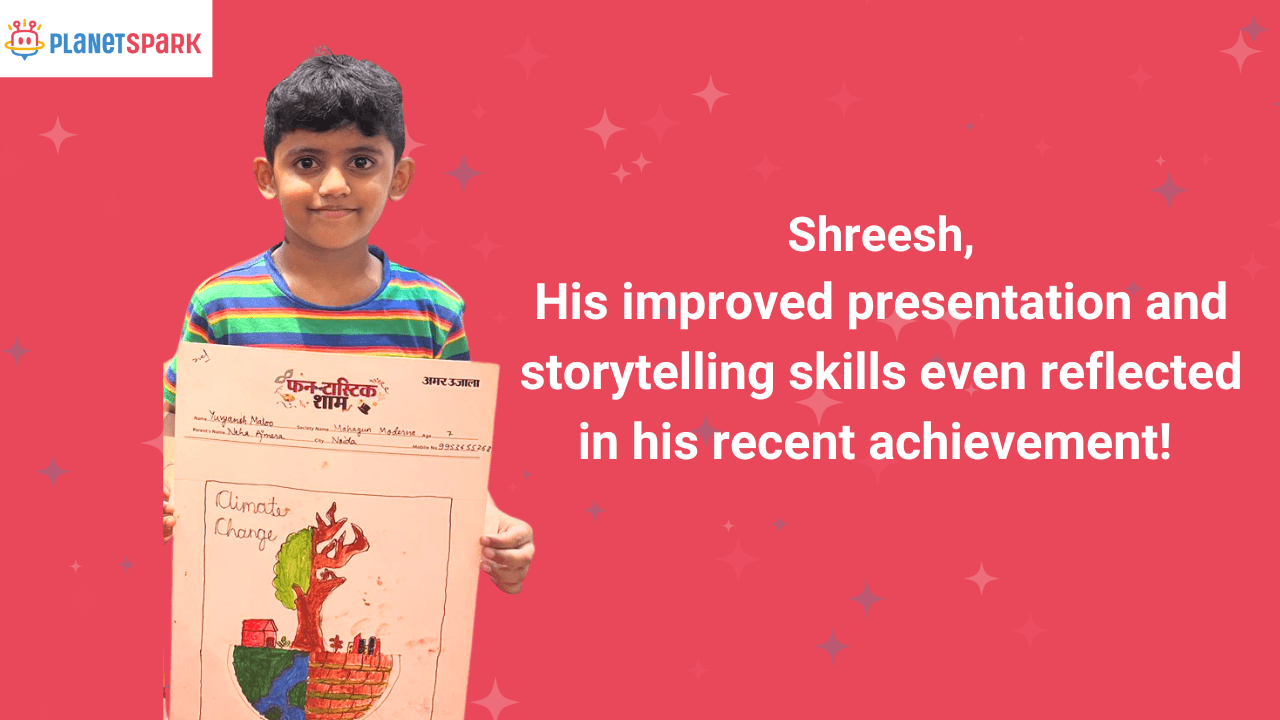
PlanetSpark has helped Shreesh express his ideas creatively and confidently. His improved presentation and storytelling skills even reflected in his recent achievement — winning second place in the Junior Category of a drawing competition on ‘Climate Change’ organized by the Amar Ujala team.
PlanetSpark Communication Skills Classes
PlanetSpark Communication Skills classes help children improve speech language skills through structured learning and expert guidance. These classes focus on building confidence, clarity, and effective communication abilities.
Features include:
- Live interactive classes
- Expert teachers
- Real-world communication practice
- Personalized feedback
- Confidence-building framework
- Structured curriculum

Build Strong Communication for a Confident Future
Speech language skills are essential for a child’s overall development. With consistent practice, engaging activities, and the right guidance, children can become confident communicators.
Encourage your child to speak, explore language, and practice regularly. Over time, these efforts will lead to better confidence, stronger communication, and long-term success in academics and life.
Frequently Asked Questions
Speech development stages involve learning sounds, words, and sentences step by step. Children gradually improve their vocabulary and pronunciation as they grow. Each stage builds the foundation for effective communication.
You can improve skills through daily conversations and active listening. Reading books and storytelling also help expand vocabulary. Structured practice ensures consistent and steady progress.
Yes, structured classes provide expert guidance and regular practice. They help children build confidence and improve speaking skills. Consistent feedback ensures noticeable improvement over time.
Yes, PlanetSpark offers expert-led programs focused on communication development. It helps children improve clarity, confidence, and expression. The approach is interactive and skill-based.
They provide live interactive sessions with trained instructors. Learners receive personalized feedback and practical exercises. This helps in improving communication skills step by step.