
Speech Therapy for Kids That Builds Clear Communication


Speech therapy for kids strengthens communication
skills, improves clarity, and supports confident expression through structured, personalized guidance. Parents searching for effective support often look for practical methods they can use at home along with professional or online therapy options. This guide explains how speech therapy for kids works, what progress looks like, and how families can choose an approach that creates real improvement.
PlanetSpark helps children develop clarity, fluency, and confidence through communication focused programs.
What Is Speech Therapy for Kids
Speech therapy for kids focuses on improving clarity, articulation, sound production, pacing, vocabulary, and expressive language. Children benefit when they struggle with mispronunciation, unclear speech, or difficulty structuring their thoughts. Many families use a mix of in-person therapy, online speech therapy for kids, and speech therapy for kids at home to create a complete support system that strengthens communication across daily situations.
Signs Your Child May Need Support
Children may show signs of requiring speech therapy when they consistently mispronounce sounds, omit parts of words, or find it difficult to express themselves clearly. Some may speak too softly or quickly, making it challenging for others to understand them. Others may avoid speaking in groups, struggle to follow instructions, or show frustration when communicating. Parents might also observe difficulties with forming sentences, understanding grammar structures, or recalling words during conversation. When these indicators persist over time or affect academic and social participation, speech therapy for kids becomes a crucial step toward confident communication.
Benefits of Early Intervention
Early intervention addresses communication challenges before they become deeply ingrained habits. Therapy at a younger age helps children master articulation, pacing, vocabulary, and expressive language during important developmental windows. These improvements support clearer reading skills, better classroom participation, and stronger peer interactions. Children who access early speech therapy for kids often transition into higher grades with greater confidence and reduced frustration.
Types of Speech Therapy for Kids
Parents can choose from multiple therapy formats depending on the child’s needs and comfort, making it possible to create a support system that matches their pace and personality. Some children thrive in structured clinic environments where in person guidance helps address articulation and motor based speech challenges. Others respond better to online speech therapy for kids because the familiar home environment reduces anxiety and encourages participation. Families who prefer consistency often combine professional sessions with speech therapy for kids at home to reinforce daily practice and build long term habits. Each format provides unique advantages, from personalized attention to flexible scheduling and interactive digital tools. The most effective choice is the one that aligns with the child’s communication goals, supports steady progress, and gives them the confidence to express themselves clearly in everyday situations.
Traditional Clinic Based Therapy
Traditional clinic based therapy provides structured sessions led by certified professionals who specialize in speech and language development. Children benefit from hands-on articulation guidance, oral motor strengthening, and in-depth assessment tools available only in clinics. Therapists can monitor sound production, tongue placement, airflow, and jaw stability. This method works well for children needing intensive correction or support linked to developmental delays. Parents receive progress reports and targeted practice tasks for speech therapy for kids at home.
Online Speech Therapy for Kids
Online speech therapy for kids uses digital platforms to deliver personalized sessions with interactive materials and visual tools. Children often improve faster because online formats use animations and real time feedback to demonstrate correct sound formation. Families benefit from convenient scheduling, no travel requirements, and the ability to observe sessions closely. Online speech therapy for kids also expands access to specialists for families searching for speech therapy for kids near me when local options are limited.
Hybrid or Home Supported Models
Hybrid models combine professional sessions with daily reinforcement through speech therapy for kids at home. Children attend scheduled online or clinic sessions for expert guidance, then practice articulation drills, sound repetition, pacing, and storytelling at home. This structure encourages consistent repetition and helps children apply communication skills naturally throughout the day.
Join now with PlanetSpark to build confident communication skills.
Speech Therapy for Kids at Home
Speech therapy for kids at home strengthens speaking skills through consistent daily practice that builds long term communication habits. It reinforces what children learn in therapy and helps them internalize correct pronunciation, pacing, and expressive patterns through repetition in familiar environments. At home practice also allows children to apply new skills during natural interactions such as storytelling, reading aloud, or describing their day, which makes progress more transferable to real life situations. Parents gain the opportunity to observe their child closely, identify specific challenges, and support them with targeted exercises provided by therapists. When combined with online speech therapy for kids or periodic in person sessions, home based practice creates a steady, continuous learning loop that accelerates clarity, confidence, and overall communication development.
Daily Practice Techniques
Daily practice techniques help children internalize correct speaking habits and apply them naturally. Activities such as reading aloud, repeating challenging sound combinations, practicing tongue and lip exercises, and narrating stories allow children to strengthen clarity. Parents can create short routines that fit morning or bedtime schedules to ensure consistency. Structured repetition builds muscle memory while expressive activities develop pacing, vocabulary, and confidence.
Parent Led Reinforcement Strategies
Parents play a critical role in reinforcing progress by modeling clear speech patterns, correcting mispronunciations gently, and encouraging open communication. Simple interactions such as describing pictures or discussing daily events develop vocabulary and expression. Parents can guide pacing by encouraging slow, clear speech. Visual cues and prompts help children stay engaged. Consistent reinforcement helps children view improvement as an achievable and natural part of communication.
Best Tools and Speech Therapy Apps for Kids
Speech therapy apps for kids provide structured interactive activities that support pronunciation, pacing, vocabulary, and expressive language development in a format that feels engaging and highly accessible. These apps use visual cues, animated mouth models, sound repetition drills, and guided exercises to help children understand how to produce each sound correctly. Many include level based challenges, progress tracking tools, and gamified rewards that motivate children to practice consistently. Because the activities are self paced, children can revisit difficult sounds or vocabulary as often as needed without pressure. When used alongside online speech therapy for kids or in person sessions, these apps reinforce daily learning, strengthen retention, and make communication practice enjoyable enough for children to stay committed.
Apps for Articulation
Articulation apps guide children through structured oral motor exercises, sound isolation drills, and pronunciation models. These tools use friendly visuals and repetition challenges to support learning. Children can practice difficult sounds independently, reinforcing what they learn during online speech therapy for kids or clinic sessions. Progress tracking tools help parents understand improvement patterns and adjust practice.
Apps for Fluency and Language
Fluency and language apps strengthen sentence structure, rhythm, and expressive communication. Children practice forming complete thoughts and responding to prompts through interactive activities. Storytelling features and simulated conversations help children practice real life communication skills. These apps support children who hesitate or struggle with confidence during conversation.
Sign up now for PlanetSpark’s live 1:1 Communication Skills Program.
Speech Therapy Games for Kids
Speech therapy games for kids turn learning into fun and improve motivation by transforming communication practice into enjoyable, low pressure activities. Games support children who respond better to playful practice rather than correction because the focus shifts from performance to participation. Through matching sounds, completing challenges, storytelling prompts, and interactive tasks, children practice articulation, vocabulary, pacing, and expressive language naturally. These activities help reduce anxiety, increase willingness to speak, and create repetition without boredom, which is essential for building long term clarity. When used consistently alongside structured therapy or at home routines, speech therapy games for kids help children build confidence, strengthen skills through real engagement, and develop clearer communication in a positive, encouraging environment.
Sound Based Games
Sound based games help children practice articulation through matching phonemes, sorting sounds, or repeating target words within challenges. These activities reinforce correct sound production while strengthening auditory discrimination skills needed for reading and speaking. Games provide a low pressure environment that encourages consistent practice.
Vocabulary and Expression Games
Vocabulary and expression games develop verbal organization, descriptive language, and expressive clarity. Tools like story cubes, prompt cards, and creative challenges encourage children to use a wider vocabulary and build stronger sentences. These games support children who need confidence and structure in expressive communication.
Finding Speech Therapy for Kids Near Me
Parents searching for speech therapy for kids near me want accessible, reliable support that delivers measurable progress and fits comfortably into their family routine. The goal is to find a provider who understands the child’s unique communication needs and offers structured guidance that leads to visible improvement. Evaluating local and digital options helps families choose the best fit based not only on convenience but also on the quality of interaction, teaching methods, and progress tracking. Some families prefer in person sessions for hands on articulation support, while others choose online speech therapy for kids for its flexibility, wider availability of specialists, and increased comfort for children who respond better at home. Comparing these options ensures parents select a pathway that supports long term clarity, confidence, and consistent skill development.
What Parents Should Look For
Parents should priorities therapist qualifications, teaching methods, and session structure. A strong provider offers clear assessments, tailored plans, and regular progress updates. It is important that the child feels comfortable and engaged. Parents should also look for guidance on speech therapy for kids at home to reinforce progress outside sessions.
Questions to Ask Before Enrolling
Parents should ask about assessment methods, session frequency, progress tracking tools, and the expected timeline for improvement. Questions about communication goals, access to online speech therapy for kids, and strategies for home reinforcement help families make informed decisions. Understanding these details ensures that therapy aligns with the child’s needs and learning style.
Book a free demo class with PlanetSpark and see real communication growth in action.
Speech Therapy for Kids With Autism
Speech therapy for kids with autism focuses on developing clarity, comprehension, social communication, and expressive language through structured, predictable, and highly supported learning methods. Children on the spectrum often benefit from consistent routines, visual aids, and step by step teaching that helps them understand how language works in real situations. Therapy may target skills such as initiating conversations, responding to questions, interpreting social cues, forming complete sentences, and using language to express needs or emotions. It also addresses sensory or processing challenges that may affect how the child communicates. With consistent reinforcement across home, school, and online speech therapy for kids, children with autism gain the confidence and ability to participate more meaningfully in everyday interactions.
Communication Challenges Addressed
Children with autism may experience challenges in expressive language, comprehension, social interaction, and pragmatic communication. Therapy helps them initiate conversation, follow routines, understand cues, and use clear verbal patterns. Some children need help with articulation or pacing. Structured support helps them communicate needs more effectively.
Structured Support Strategies
Speech therapy for kids with autism uses visual prompts, communication boards, modeling, and structured repetition. Therapists break skills into small steps matched to the child’s pace. Strategies may include joint attention practice, turn taking, and functional communication tasks. These consistent supports help children build clarity and expressive confidence.
About PlanetSpark
PlanetSpark transforms how children learn to communicate with confidence. Through live 1:1 sessions, expert mentors, and immersive speaking activities, learners develop clarity, confidence, and expression. Every session is designed to help students speak effectively, listen attentively, and connect meaningfully in real conversations.
1:1 Expert Coaching
Students receive focused guidance on voice, tone, and articulation from certified communication coaches.
Real-World Speaking Practice
Interactive debates, storytelling sessions, and discussions enable learners to apply communication skills in real time.
Video Feedback and Analysis
Learners review their recorded performances with mentors to refine body language, gestures, and delivery.
Leadership and Expression Focus
Each lesson helps students build stage confidence, emotional awareness, and authentic self-expression.
Continuous Growth Tracking
Progress is consistently measured through performance insights that strengthen communication at every level.
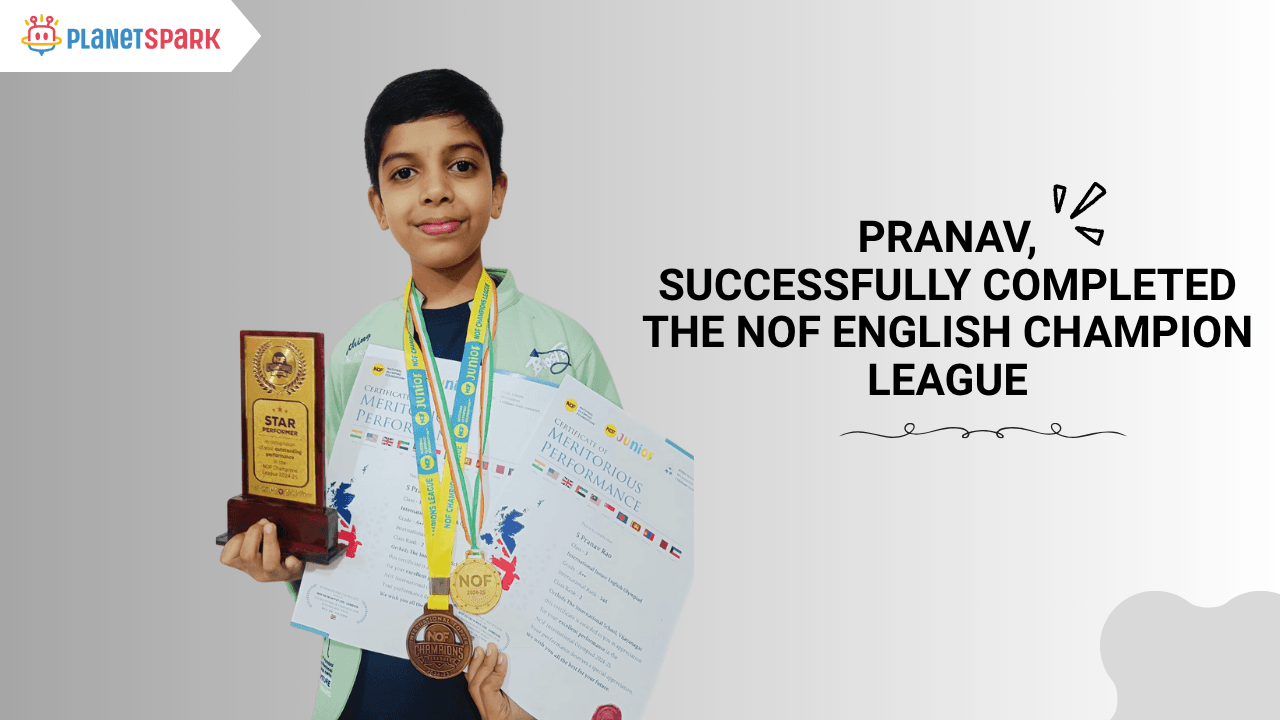
Pranav’s Speech Growth: Building Clearer Communication Through Guided Practice
Pranav, a bright Grade 3 learner aged 8, recently completed the NOF English Champion League after showing strong improvement in Public Speaking and Creative Writing. His progress reflects how early speech support helps children communicate with clarity and confidence. Through guided speech therapy activities that focused on articulation, sound awareness and controlled speaking practice, Pranav learned to express his ideas more clearly. His journey highlights how structured speech exercises can strengthen communication skills for young learners.
Final Thoughts
Speech therapy for kids delivers meaningful progress when families approach communication development as a continuous journey rather than a short-term correction. Children learn to speak clearly, express ideas confidently, and interact meaningfully when multiple forms of support work together. Professional sessions build structured skills, online speech therapy for kids increases accessibility and consistency, and speech therapy for kids at home reinforces daily practice. When these components are aligned, children experience faster articulation improvement, stronger expressive language, and steady gains in clarity across academic and social environments.
Parents play a significant role in shaping long-term outcomes. Children thrive when they receive patient guidance, regular opportunities to speak, and encouragement to practice correct sound production and expressive storytelling. Tools such as speech therapy apps for kids and speech therapy games for kids give children the repetition they need without feeling pressured or overwhelmed. These tools transform therapeutic concepts into enjoyable practice, helping children internalize clarity, pacing, and confidence naturally.
Children with specific needs, such as those requiring speech therapy for kids with autism, benefit greatly from predictable routines, visual cues, and structured communication models. When families combine targeted professional sessions with consistent at-home reinforcement, children gain the clarity, social communication skills, and confidence needed to engage more meaningfully with the world around them. Over time, positive communication experiences create a foundation of self-assurance that supports academic performance, peer relationships, and real-world readiness.
Choosing the right speech therapy for kids involves understanding the child’s learning style, comfort level, and pace of improvement. Whether parents select a local therapist, online sessions, apps, games, or a hybrid model, the most important factor is consistency. When children receive steady guidance, clear expectations, and patient reinforcement, they develop speaking habits that last. With the right support system, every child can grow into a clear, confident communicator capable of expressing their ideas with strength and clarity.
Enroll now at PlanetSpark and help your child speak with clarity and confidence.
Frequently Asked Questions
Speech therapy for kids helps improve clarity, pronunciation, pacing, vocabulary, and expressive language through structured exercises and guided practice. It supports children who struggle with articulation, delayed speech, or communication confidence by building strong, consistent speaking habits. With regular sessions and at home reinforcement, children begin to communicate more clearly in everyday situations.
Parents should consider speech therapy when a child frequently mispronounces words, speaks too softly or too fast, avoids communication, or struggles to form sentences clearly. Early intervention leads to faster improvement and reduces long term communication difficulties. Addressing these challenges promptly helps children feel more confident at school and in social interactions.
Online speech therapy for kids delivers personalized guidance through digital tools that make learning interactive and convenient, while in-person clinic-based therapy offers hands-on articulation support. Both formats are effective, and choosing between them depends on the child’s comfort, accessibility, and learning style. Many families find that combining both methods leads to the most consistent progress.
Yes, speech therapy for kids at home helps reinforce what children learn in sessions through daily practice such as reading aloud, sound drills, and storytelling. When combined with online or in-person therapy, home practice accelerates clarity and builds long-term speaking confidence. Consistent routines at home help children internalize correct pronunciation and pacing more naturally.
Speech therapy apps for kids and speech therapy games for kids provide interactive activities that support pronunciation, vocabulary, pacing, and expressive language. They make repetition enjoyable and help children practice more consistently, especially when paired with professional guidance. These tools also help children stay motivated, which improves overall learning outcomes.
Parents can choose the right provider by checking therapist qualifications, session structure, progress tracking methods, and how comfortable the child feels during sessions. Comparing local options with online speech therapy for kids helps families find the most effective and accessible approach. The right fit ensures steady progress and a positive therapy experience for the child.