
Master Structured Communication: Speak with Clarity at PlanetSpark


Imagine you are standing in front of a room. Your mind holds a brilliant idea. You open your mouth to share it, but the words come out like a tangled ball of yarn. You see your audience’s eyes glaze over. You try to fix it by adding more details, but the confusion only grows. This is a common pain point for students and professionals alike. It is the frustration of being "smart but silent" or "knowledgeable but misunderstood."
Most people think clear speaking is a natural talent. They believe you are either born with it or you are not. This is a myth. Clear speaking is a technical skill. It is about organization. It is about structured communication. Without a clear roadmap, your message dies before it reaches the listener. This guide will explore how structured communication can transform your life and how PlanetSpark provides the tools to help every learner speak with undeniable clarity.
What Is Structured Communication?
Structured communication is a systematic approach to organizing information before it leaves your mouth. It acts as a framework for interaction. The primary goal is to reduce ambiguity. When you use structured communication, you filter and process your thoughts. You ensure that only the most relevant points reach your audience.
Think of it like a house. You don't just throw wood and nails in a pile. You follow a blueprint. You build a foundation, then the frame, and finally the roof. Structured communication is that blueprint for your words. It takes a messy internal thought process and turns it into a logical flow. This makes it easier for others to exchange information and collaborate with you.
The Architecture of a Clear Message
To master structured communication, you must understand how the human brain works. Our brains love patterns. We process information faster when it follows a predictable path. If you present facts randomly, the listener's brain has to work too hard to sort them. This leads to fatigue and disinterest.
1. The Hook: Grab the Attention
Every piece of structured communication needs a starting point. This is the hook. It should address the "Why." Why should the listener care? You can start with a question, a bold statement, or a relatable problem. This prepares the brain to receive your structure.
2. The Rule of Three: Keep it Simple
The human brain is excellent at remembering things in groups of three. This is a core principle of structured communication. When you have a main point, try to support it with exactly three sub-points. This feels complete without being overwhelming. It provides a natural rhythm to your speech.
3. Transitions: Building the Bridges
A common mistake is jumping between ideas without a bridge. Structured communication relies on transition words. Phrases like "Furthermore," "In addition," or "On the other hand" guide the listener. They act as signposts that say, "We are moving to the next section now."
Why Structure Matters in Everyday Life
Structured communication isn't just for public speakers. It is a vital tool for daily life. It helps in school, in the workplace, and in personal relationships.
- Increases Efficiency: You deliver relevant information faster. You stop rambling and get straight to the point.
- Eliminates Noise: It helps you filter out unnecessary details. This ensures the listener focuses on what is important.
- Builds Trust: Clear speakers are seen as more intelligent and organized. When people understand you easily, they trust your competence.
- Reduces Conflict: Many arguments happen because of simple misunderstandings. Structured communication ensures everyone is on the same page.
Clarity is especially important when explaining technical or physical concepts. For example, if you are explaining measurements to a student, you would use a structured approach. You wouldn't just mention numbers.
You would start by defining what is measurement of length in simple terms. You would then explain the standard units. You would discuss what is length measured in, such as millimeters, centimeters, and meters. To make it even clearer, you might provide a measurement of length table for easy reference. Finally, you would show how these units relate to broader concepts like length weight and capacity. Because you followed a structure, the student understands the "How" and the "Why" behind the numbers.
7-day practice plan for structured communication.
Day 1: The "Headline First" Rule
Today, focus on the "Bottom Line Up Front" (BLUF) method. Whether you are texting a friend or talking to a parent, start with your conclusion.
- The Drill: Before you speak, think of a one-sentence "headline."
- Example: Instead of "I was thinking about the movie times and my homework and...", say: "I want to go to the 7 PM movie tonight."
- Goal: Eliminate the "lead-in" ramble.
Day 2: The Two-Beat Pause
Silence is a key part of structured communication. It gives you time to build your mental roadmap.
- The Drill: When someone asks you a question, count "one, two" in your head before answering.
- Why it works: It prevents "um" and "uh" because your brain has a second to organize the first three words of your sentence.
Day 3: Mastering the Rule of Three
The brain processes information best in groups of three. Today, structure every explanation into three parts.
- The Drill: If someone asks "How was your day?", answer with three specific highlights.
- Example: "My day was productive: I finished my project, had a great lunch, and finally understood what is measurement of length in physics class."
Day 4: The Transition Challenge
Transitions are the glue of structured communication. They act as signposts for your listener.
- The Drill: Consciously use at least one transition word in every conversation.
- Keywords: "However," "In addition," "Consequently," or "First, Second, Finally."
Day 5: Precision with Measurements
Clear communication often involves explaining data. Today, practice being precise with "What" and "How."
- The Drill: Explain a physical object's dimensions to someone without them seeing it.
- Focus: Use your knowledge of what is length measured in (meters, cm) and refer to a mental measurement of length table to be exact. This forces your brain to bridge abstract thoughts with concrete data.
Day 6: The 60-Second Summary
This is a classic PlanetSpark technique to boost "Structural Density."
- The Drill: Watch a 5-minute YouTube video or read a news article. Now, set a timer for 60 seconds and summarize it out loud.
- The Structure: Hook (What is it?) $\rightarrow$ Body (3 main points) $\rightarrow$ Conclusion (The takeaway).
Day 7: The Video Audit
Record yourself to see what the world sees.
- The Drill: Record a 2-minute video of yourself explaining a hobby or a dream.
- The Audit: Watch it back. Did you use structured communication? Did you ramble? Were your sentences short? This "Feedback Loop" is exactly how PlanetSpark's AI accelerates growth.
Ready to Level Up?
Self-practice is great, but expert feedback is faster. In a PlanetSpark demo, a mentor will analyze your Day 7 video style in real-time and show you exactly how to sharpen your structure.
PlanetSpark Turns Student Voices into TEDx Stories
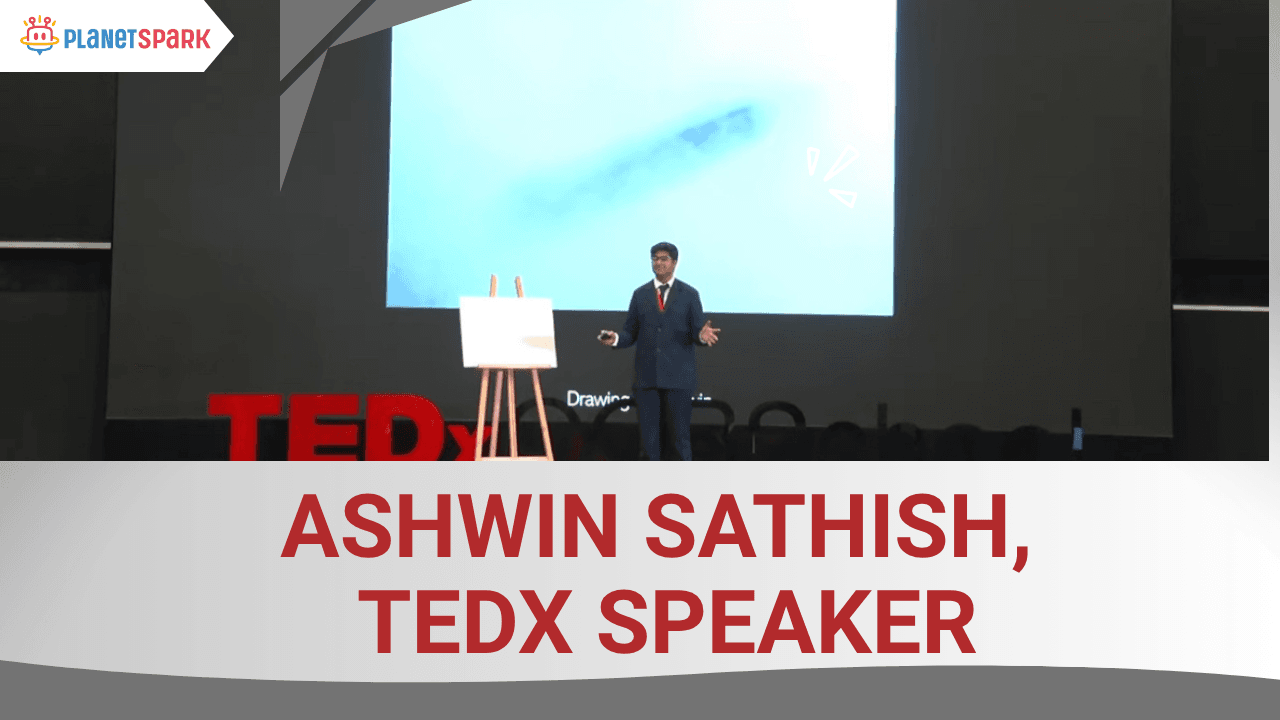
Ashwin Sathish, Grade 8 from New Delhi, stood tall as a TEDx Speaker, sparking conversations that truly matter. From classroom confidence to commanding a global stage, his journey reflects the power of voice, vision, and courage.
Build confident speakers and strong voices with PlanetSpark. Book a free trial class today.
How PlanetSpark Helps Learners Speak with Clarity
PlanetSpark is a global leader in communication skills training. We don't just teach English; we teach the "Science of Communication." We help learners transform hesitation into confidence through a highly structured curriculum.
1. Live 1:1 Mentorship: Every learner is unique. PlanetSpark provides personalized attention from certified experts. These mentors identify specific "structure gaps" in a learner's speech. They provide real-time feedback to ensure every sentence follows the principles of structured communication.
2. AI-Powered Fluency Analysis: PlanetSpark uses cutting-edge tools like SparkX. This AI analyzes a learner's speech for pace, pronunciation, and structure. It gives instant feedback. Learners can see exactly where they are rambling and where they are being clear. This data-driven approach makes mastering structured communication faster and more effective.
3. The "Spark" Methodology: Our curriculum is built on the science of storytelling and psychology. We teach learners how to:
- Think Logically: Organize thoughts before speaking.
- Use Tone and Pitch: Match their voice to their message.
- Replace Filler Words: Remove "um" and "uh" with confident pauses.
- Speak with Gestures: Use body language to support the verbal structure.
4. Experiential Learning: Clarity comes through practice. PlanetSpark uses role-playing, mock interviews, and live debates. Learners apply structured communication in real-world scenarios. They learn to host podcasts, deliver news reports, and lead discussions. This hands-on approach ensures the skills become permanent habits.
Your Voice is Your Superpower
Clear communication is the bridge between a great idea and a great achievement. By mastering structured communication, you take control of your narrative. You stop being the person who gets lost in the crowd and start being the one who leads the conversation.
PlanetSpark is here to provide the roadmap, the tools, and the support you need. Whether you are a student looking to ace your next presentation or an adult seeking a professional edge, the journey to clarity starts with structure.
Frequently Asked Questions
Even if you possess an impressive vocabulary, your message will likely fail if the ideas are presented in a jumbled or disorganized fashion. Structure serves as the essential skeleton that holds your thoughts together, making it far more critical for impact than using "fancy" or complex terminology. A simple message delivered with a clear beginning, middle, and end is always more persuasive than a complex one that lacks a logical direction.
You can start by implementing the "Rule of Three" in casual conversations, such as when you are explaining your plans for the weekend or a project at work. Additionally, practice taking an intentional two-second pause before you begin speaking to give your brain the necessary time to map out a clear path. Consistently using transition words like "furthermore" or "consequently" will also help you create a logical flow that listeners can follow effortlessly.
Structured communication enhances clarity by ensuring your message is logically organized and easy for any audience to understand immediately. It also boosts your professional credibility, as listeners perceive organized speakers as more competent and reliable. Finally, it drastically improves efficiency by reducing the time wasted on clearing up misunderstandings and answering repetitive follow-up questions.
Yes, our program directly addresses the root causes of stage fright by providing a reliable framework for every speech. Anxiety often stems from the fear of losing your train of thought, but our roadmap for structured communication ensures you always know your next point. When a learner has a solid plan to follow, their confidence naturally replaces their fear, allowing them to speak with poise.
Our unique edge lies in the powerful combination of personalized 1:1 expert mentorship and real-time, AI-powered feedback. We go beyond basic grammar by focusing on "The Science of Communication," which incorporates psychological triggers and logical frameworks. This dual approach ensures that learners not only speak correctly but also deliver their messages with maximum impact and clarity.
PlanetSpark offers specialized programs designed to meet the needs of learners at every stage of life. We provide foundation courses for early learners aged 5 to 7, intermediate tracks for teenagers, and professional modules for adults. Each curriculum is tailored to ensure that the complexity of the material matches the learner's cognitive development and personal goals.