
Master Verbal Reasoning in Communication with Examples


Table of Contents
- What Is Verbal Reasoning in Communication?
- Why Verbal Reasoning in Communication Matters for Kids
- The Difference Between Verbal Reasoning and Just Talking
- Key Components of Logical Speaking Skills
- Verbal Reasoning in Communication: Real Examples
- How to Improve Verbal Reasoning Ability in Children
- Common Verbal Reasoning Mistakes Kids Make (and How to Fix T
- How Verbal Reasoning Connects to Personality Development
- How PlanetSpark Helps Children Build Verbal Reasoning in Com
- Clear Thinking and Clear Speaking Go Hand in Hand
Have you ever watched a kid explain something and thought, "Wow, that made complete sense"? That clarity does not happen by accident. It comes from a skill called verbal reasoning in communication, and it is one of the most powerful tools a child can develop early in life.
Verbal reasoning is the ability to think logically using words, understand what is being said, and respond in a way that makes sense. When kids develop this skill, they do not just speak more clearly. They listen better, argue fairly, solve problems faster, and connect with people more confidently.
This blog covers everything you need to know about verbal reasoning in communication, why it matters for kids, how to improve verbal reasoning ability, practical exercises, and how PlanetSpark helps children build these skills for life.
What Is Verbal Reasoning in Communication?
Verbal reasoning in communication is the ability to understand language logically, process what someone is saying, and respond in a clear, structured, and meaningful way. It is the thinking that happens between hearing a message and giving a reply.
Think of it this way. When a teacher asks, "Why do you think the character made that choice?", a child using verbal reasoning does not just guess. They listen carefully, think through the logic, connect ideas, and speak in a way that actually answers the question.

Verbal reasoning combines two important skills: the ability to understand language and the ability to think in a structured, logical way. When both work together, the result is what experts call logical speaking skills, where every sentence has a point and every point is connected.
For kids, this matters in every area of life. In the classroom, it helps them answer questions clearly and participate in discussions. In friendships, it helps them express feelings without confusion. In group activities, it helps them share ideas in a way others can understand and build on.
Why Verbal Reasoning in Communication Matters for Kids
Strong verbal reasoning is not just about sounding smart. It is about being understood, being heard, and being able to think on your feet. Here is why it matters so much for children:
It builds real confidence. Children who can organise their thoughts and say them clearly feel more confident in class, in conversations, and on stage. That confidence is not just about speaking. It is about knowing that what you say makes sense.
It sharpens listening skills. Reasoning while speaking starts with understanding what was said. Kids who develop verbal reasoning pay closer attention because they know they need to process information before responding.
It improves academic performance. Most school subjects require verbal reasoning. Reading comprehension, essay writing, debating, and even maths word problems all need a child to think logically with language.
It strengthens relationships. When a child can express what they feel or think in a way that others understand, conversations go better. Misunderstandings reduce. Friendships deepen.
It prepares them for the future. Whether it is a job interview, a college presentation, or a leadership role, the ability to reason verbally while speaking is one of the most valued skills in every field.
The Difference Between Verbal Reasoning and Just Talking
Many children can talk a lot but struggle to communicate with clarity. Verbal reasoning in communication is different from just talking in a few important ways.
Talking is expressing whatever comes to mind. Verbal reasoning is thinking through ideas, organising them logically, and then expressing them in a way that makes sense to the listener.
A child without verbal reasoning might say, "I don't want to go because it is boring and also I am tired and my friend is not going anyway." There are three thoughts but no clear argument.
A child with strong verbal reasoning might say, "I would rather not go because the main reason is that my friend will not be there, and without them the event does not feel worth the effort." One clear point, supported by a reason, delivered logically.
This difference becomes more important as children grow. The ability to think logically while speaking, rather than just reacting, is what separates effective communicators from average ones.
Key Components of Logical Speaking Skills
To understand how to build verbal reasoning in communication, it helps to understand the building blocks. Strong logical speaking skills are made up of several key components.
Clarity of thought. Before speaking, the child understands what they actually want to say. They have a point, and they know it.
Sequencing. Ideas come out in an order that makes sense. Cause comes before effect. The introduction comes before the conclusion.
Use of evidence or reasoning. Strong verbal communicators do not just make claims. They support them. "I think this because..." is the beginning of logical reasoning.
Active listening. Reasoning while speaking requires understanding what was said first. A child who listens well processes better and responds more logically.
Word choice. The right words carry meaning precisely. Verbal reasoning improves when children build vocabulary and learn to choose words that say exactly what they mean.
Verbal Reasoning in Communication: Real Examples
One of the best ways to understand verbal reasoning is to see it in action. Here are examples across everyday situations kids face.
Example 1: In the Classroom
Teacher: "Why do you think the main character decided to help the stranger?"
Without verbal reasoning: "Because they were nice, I guess."
With verbal reasoning: "I think the character helped because earlier in the story they said they regretted not helping someone before. This was their chance to change that."
The second answer shows reasoning while speaking. The child connects earlier information to the current question and explains the logic behind the conclusion.
Example 2: In a Disagreement
Without verbal reasoning: "That is not fair! You always do this!"
With verbal reasoning: "I feel like this is unfair because we agreed to share equally, and right now that is not what is happening. Can we talk about it?"
The second response is calm, logical, and based on evidence. That is verbal reasoning in real life.
Example 3: In a Group Project
Without verbal reasoning: "I think we should do this topic. It is just better."
With verbal reasoning: "I think we should choose this topic because it has more available research, and our teacher mentioned it specifically last week, which might mean it will score higher."
The third example shows a child who can support a position with evidence. That is a logical speaking skill in action.
How to Improve Verbal Reasoning Ability in Children
Improving verbal reasoning ability does not require fancy tools. It requires consistent practice, the right habits, and the right environment. Here is how parents and teachers can help children build this skill.
- Encourage "because" thinking. Every time a child makes a statement, ask them to add "because." "I want this because..." "I disagree because..." This simple habit builds the foundation of reasoning while speaking.
- Read together and discuss. Reading builds vocabulary and comprehension. Discussing what was read builds reasoning. Ask questions like, "Why do you think the author wrote it this way?" or "What would you have done differently?"
- Play reasoning games. Games like 20 Questions, debate games, or storytelling challenges where every new sentence must connect to the previous one build verbal reasoning naturally through play.
- Practise structured answers. Teach children the simple structure of: Point, Reason, Example. "My point is X, because of Y, and here is an example..." This structure builds logical speaking skills quickly.
- Create safe spaces for discussion. Children develop verbal reasoning when they are encouraged to share opinions without fear of being wrong. Family dinner conversations, classroom debates, and open-ended questions all help.
Common Verbal Reasoning Mistakes Kids Make (and How to Fix Them)
Even children who are naturally good at talking can struggle with verbal reasoning. Here are the most common mistakes and how to address them.
- Jumping to conclusions. A child says, "He is mean," based on one incident. Teach them to gather more evidence before forming a judgment and to say, "Based on what I saw today, it seemed unfair," instead.
- Repeating without reasoning. Some children repeat their point louder instead of supporting it with a reason. Teach them that a reason is stronger than volume.
- Going off-topic. Verbal reasoning requires staying on the point. When children ramble, ask them gently, "What was your main point again?" This trains them to self-correct.
- Using vague language. Words like "stuff," "things," or "whatever" weaken logical communication. Build vocabulary so children can name exactly what they mean.
- Not listening before responding. Many kids start forming their reply before the other person finishes. Teach active listening as a first step to better verbal reasoning.
How Verbal Reasoning Connects to Personality Development
Verbal reasoning in communication is not just a school skill. It is a personality development skill that shapes how children are perceived, how they handle challenges, and how confidently they move through the world.
Children who develop strong verbal reasoning build several key traits that are central to personality development.
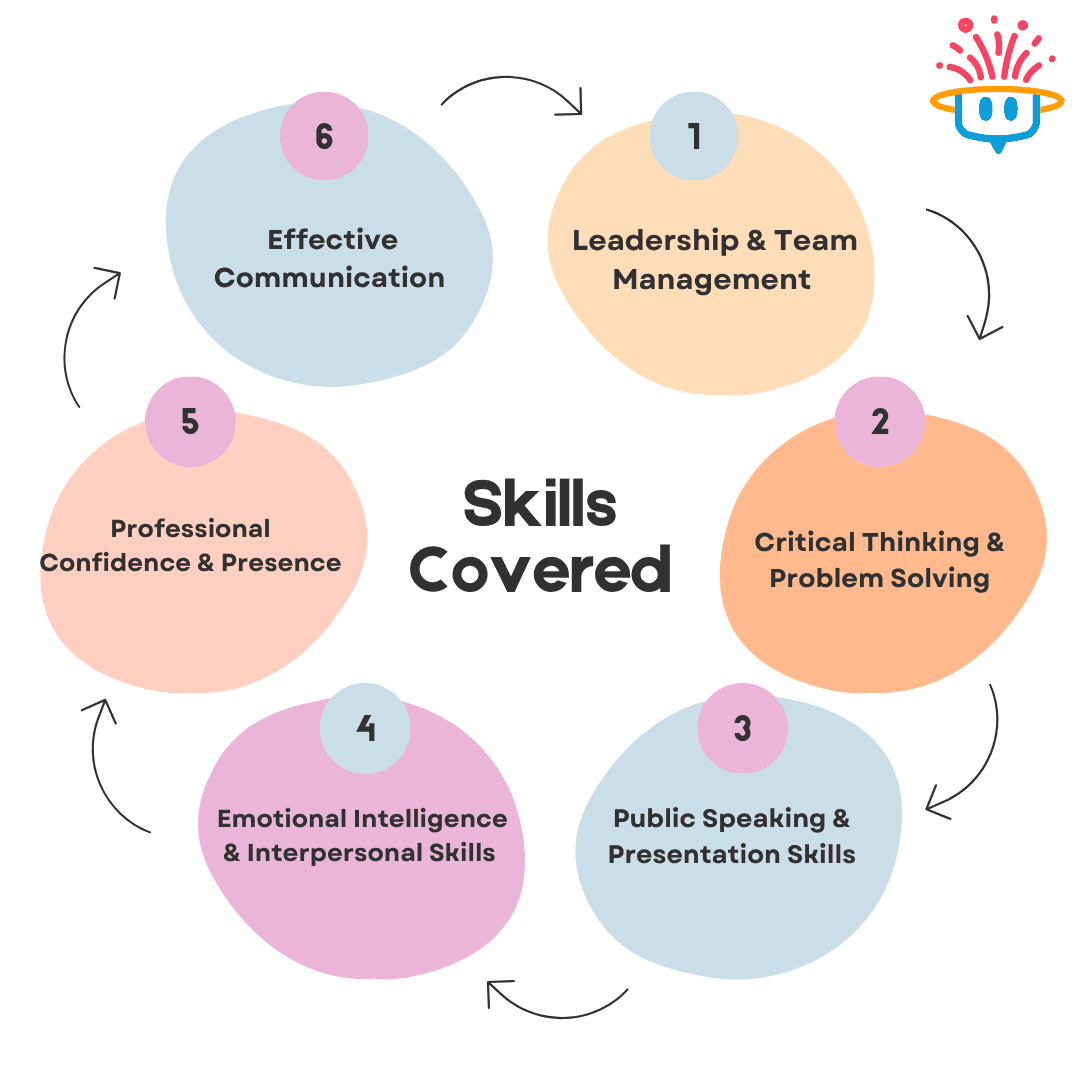
Clarity in thinking and expression. When a child knows how to reason while speaking, they are understood more easily. Their ideas land. People pay attention when they talk.
Confidence in communication. Across classrooms, group projects, debates, and stage performances, children who reason verbally feel more prepared because they trust their ability to think on their feet.
Self-awareness and emotional regulation. Verbal reasoning requires a child to pause, think, and then speak. That pause builds self-control and emotional intelligence.
Listening and empathy. Strong verbal reasoners are also strong listeners. They understand that reasoning starts with truly hearing what was said.
Leadership presence. Children who communicate logically and clearly are naturally looked to as leaders. That is not a personality type. It is a skill that any child can build.
How PlanetSpark Helps Children Build Verbal Reasoning in Communication
Building verbal reasoning in communication is a skill that grows with the right guidance, practice, and feedback. PlanetSpark's communication skills program is designed to develop exactly this in children through structured, expert-led, and engaging learning experiences.
Coaching Children to Think and Speak Logically
PlanetSpark coaches work one-on-one with children to develop the specific skills that turn scattered thoughts into clear, logical communication. This includes how to build an argument, how to support a point with evidence, and how to respond to questions with confidence and clarity.
Building the Habits That Make Verbal Reasoning Permanent
Beyond single lessons, PlanetSpark helps children build the daily communication habits that keep verbal reasoning growing. Regular practice through structured discussions, storytelling exercises, and live speaking sessions ensures that logical speaking skills become second nature.
Connecting Verbal Reasoning to Overall Growth
Every PlanetSpark coaching session connects communication development to broader personality growth. Because children who speak clearly also think clearly, listen well, lead confidently, and grow faster in every area of life.
PlanetSpark's program includes:
1:1 live expert coaching sessions Personalised communication roadmap Verbal reasoning and logical speaking modules Real-world speaking practice AI-powered progress tracking Confidence and personality development coaching

Clear Thinking and Clear Speaking Go Hand in Hand
Think about the children you know who seem to just have it together. The ones whose answers in class make the teacher nod. The ones who can explain themselves calmly during a disagreement. The ones who stand up to speak and actually hold the room.
Whether your child is just starting to express their ideas or is already building their communication confidence, the next level always starts with one habit: thinking before speaking, and speaking with purpose.
If you want expert support to help your child build verbal reasoning, improve logical speaking skills, and grow into a confident communicator, PlanetSpark is the right place to start.
Frequently Asked Questions
Verbal reasoning in communication is the ability to listen carefully, think logically about what was said, and respond in a clear and structured way. For kids, it means being able to explain their thoughts, support their opinions with reasons, and understand what others are saying accurately. It combines language skills with logical thinking to make communication more effective and meaningful.
You can improve your child's verbal reasoning ability by encouraging them to explain their opinions with reasons, asking open-ended questions after reading together, playing games that involve logic and language, and practising structured responses where they state a point, give a reason, and share an example. Creating a safe space at home where children are encouraged to share and discuss ideas is one of the most effective ways to build this skill.
Simple verbal reasoning exercises for children include the argument builder exercise where they practise stating a point and supporting it with two reasons, the listen and summarise activity where they repeat back the main idea of something they heard, the "why" chain where they keep explaining the reasoning behind a statement, and structured storytelling where every event in the story must logically lead to the next.
Public speaking is about delivering a prepared message to an audience with confidence and presence. Verbal reasoning in communication is about thinking logically while speaking in any situation, including conversations, debates, classroom discussions, and group activities. Verbal reasoning is the thinking skill underneath communication, while public speaking is one setting where that skill shows up. Both are important, and developing verbal reasoning makes public speaking much stronger.
Children often struggle with logical speaking skills because they have not yet been taught to organise their thoughts before speaking. They may jump to conclusions, repeat the same point without explaining it, go off-topic, or use vague language because they lack the vocabulary to be precise. These are normal developmental gaps that improve significantly with guided practice and feedback from a trained communication coach.
PlanetSpark helps kids develop verbal reasoning through one-on-one expert coaching sessions that focus on logical thinking, structured speaking, and active listening. Coaches work with each child on their specific communication gaps, build personalised learning plans, and use real-world practice scenarios to ensure the skills they develop are applied in actual conversations, not just in lessons. Progress is tracked through AI-powered tools and regular feedback sessions.