
Crack Your Virtual Interview with Confidence and Clarity
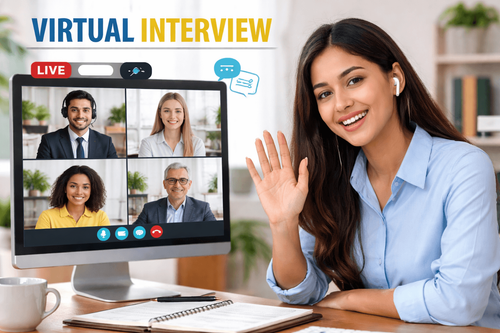

Virtual interviews have quickly become the new standard in hiring, from freshers’ placements to experienced professional roles. Companies today prefer online interviews because they are faster, more efficient, and allow them to connect with candidates from anywhere. However, for candidates, this shift has created a new challenge—you are now expected to impress, communicate, and stand out through a screen.
Unlike traditional interviews, virtual interviews limit your ability to build natural rapport. Your voice, clarity, confidence, and digital presence become your strongest tools. Even a small mistake in communication or presentation can impact your overall impression.
This is where developing strong communication skills becomes essential. Platforms like PlanetSpark help students build confidence, structured thinking, and fluent communication, which are critical for excelling in virtual interviews. Because in reality, it’s not just about what you know, it’s about how clearly and confidently you express it.
Why Virtual Interviews Are More Challenging Than They Look
At first glance, virtual interviews may seem easier—you are in a comfortable environment, and there’s no physical pressure of facing an interviewer. But in reality, they are often more challenging than in-person interviews.
Here’s why:
- You cannot fully read the interviewer’s body language or reactions
- There is a higher chance of awkward pauses or miscommunication
- Technical issues like poor internet or audio lag can disrupt your flow
- You must be more intentional with your communication, as natural interaction is limited
In a virtual setting, even small things like eye contact, tone, and pauses become extremely important. You don’t get multiple chances to create a strong impression, so every second counts.
Building the Right Mindset Before Preparation
Before you start preparing answers, you need to develop the right mindset. Many candidates approach interviews as a test where they must give “perfect answers.” This often leads to nervousness, overthinking, and lack of clarity.
Instead, shift your mindset:
- Think of the interview as a conversation, not an interrogation
- Focus on presenting your thoughts clearly, not impressing with complex answers
- Accept that it’s okay to pause, think, and respond
Confidence does not come from memorizing answers—it comes from understanding what you want to say and expressing it naturally.
Also, remember:
- You are not expected to know everything
- Interviewers are evaluating your thinking process and communication style
When you focus on clarity instead of perfection, your confidence automatically improves.
Different Stages of Virtual Interview Preparations
Step 1: Understanding the Interview Structure and Expectations
To perform well, you must first understand what the interviewer is actually looking for. Most candidates focus only on preparing answers, but interviews are about much more than that.
Recruiters typically evaluate:
- Communication clarity – Can you express your ideas clearly?
- Problem-solving ability – How do you approach questions?
- Confidence and attitude – Do you appear calm and self-assured?
There are also hidden evaluation factors:
- How well you listen before answering
- How professionally you respond under pressure
- How adaptable you are in unexpected situations
Virtual interviews can take different forms:
- One-on-one interviews
- Panel interviews
- Pre-recorded responses
Each format requires you to be clear, structured, and confident.
Upgrade your communication skills with PlanetSpark Demo Class and shine in every virtual interview.
Step 2: Strategic Preparation (Not Just Studying Answers)
Most candidates make the mistake of memorizing answers. This approach often leads to robotic responses and lack of authenticity.
Smart preparation focuses on building structured thinking.
Start with:
- Researching the company’s goals, culture, and role expectations
- Understanding how your skills align with the job
Instead of memorizing answers, prepare response frameworks:
- For personal questions → structured storytelling
- For situational questions → use real examples
- For technical questions → explain your thought process clearly
Practice answering questions in your own words. This helps you sound natural and confident, rather than rehearsed.
Another powerful technique is:
- Recording your answers
- Watching them to identify gaps in clarity, tone, and body language
Step 3: Designing Your Virtual Presence
In a virtual interview, your setup creates the first impression even before you speak. Your environment, camera positioning, and lighting directly impact how professional you appear.
Here’s how to optimize your setup:
1. Background
- Choose a clean, clutter-free background
- Avoid distractions behind you
- A simple wall or neat workspace works best
2. Lighting
- Ensure your face is clearly visible
- Use natural light or a soft front light
- Avoid strong backlighting
3. Camera Position
- Keep the camera at eye level
- Maintain a comfortable distance
- Sit straight to appear confident
4. Audio Quality
- Use a clear microphone
- Avoid noisy environments
Step 4: Mastering Communication That Stands Out
In virtual interviews, communication is your biggest advantage. Since physical interaction is limited, your words, tone, and clarity define your performance.
Here’s how to improve your communication:
- Take a pause before answering to organize your thoughts
- Speak at a steady and controlled pace
- Use simple and clear language instead of complex words
- Structure your answers logically
Avoid common mistakes:
- Speaking too fast due to nervousness
- Giving long, unstructured answers
- Using filler words like “um” or “like”
A useful approach is to:
- Start with a clear point
- Add supporting details
- End with a strong conclusion
Step 5: Body Language in a Screen-Based World
In a virtual interview, your body language is limited—but that actually makes it more powerful and noticeable. Small gestures and expressions carry more weight because the interviewer’s focus is entirely on your face and upper body.
Here’s how to use body language effectively:
- Maintain eye contact by looking into the camera, not the screen
- Sit upright with a straight and stable posture
- Keep your shoulders relaxed to avoid looking stiff
- Use natural hand gestures to emphasize key points
- Smile slightly to create a positive and approachable impression
Avoid:
- Looking down frequently
- Fidgeting or adjusting your position repeatedly
- Showing a blank or uninterested expression
Step 6: Handling Questions with Confidence and Structure
Answering questions is not about knowing everything—it’s about presenting your thoughts clearly and logically.
Let’s break down how to handle different types of questions:
1. “Tell Me About Yourself”
- Start with your background
- Highlight relevant achievements
- Connect your experience to the role
2. Strengths and Weaknesses
- Strengths: Mention skills with examples
- Weakness: Choose something real and show improvement
3. Behavioral Questions
Use the STAR method:
- Situation → Context
- Task → Responsibility
- Action → What you did
- Result → Outcome
This helps you give answers that are clear, logical, and impactful.
4. When You Don’t Know the Answer
- Stay calm
- Think for a few seconds
- Share your approach or understanding
Join PlanetSpark’s expert-led sessions and become interview-ready from home.
Step 7: Managing Technical and Unexpected Situations
No matter how well you prepare, unexpected issues can arise. What matters is how you handle them.
Here’s how to stay in control:
- If the call drops → Rejoin quickly and apologize briefly
- If audio/video fails → Inform the interviewer calmly
- If interrupted → Pause, regain focus, and continue
- If confused by a question → Politely ask for clarification
Step 8: Common Mistakes That Reduce Your Chances
Many candidates lose opportunities not because of lack of knowledge, but because of avoidable mistakes.
Watch out for these:
- Giving unstructured and lengthy answers
- Speaking too fast due to nervousness
- Reading from notes, which reduces authenticity
- Not maintaining eye contact with the camera
- Interrupting the interviewer or not listening carefully
Step 9: Post-Interview Strategy That Most Candidates Ignore
Your performance doesn’t end when the interview ends. In fact, what you do after the interview can play an important role in shaping the final impression you leave on the interviewer. A thoughtful and professional post-interview approach shows your seriousness, gratitude, and genuine interest in the role.
Start by sending a thank-you email within 24 hours of the interview. Keep it polite and concise, and express appreciation for the opportunity. You can also mention something specific from the conversation, such as a topic you discussed or something you found interesting, to make your message more personal and memorable. Don’t forget to reaffirm your interest in the role and briefly highlight how your skills align with the company’s needs.
Along with this, take some time to reflect on your performance. Ask yourself:
- What went well during the interview?
- Which answers could have been clearer or more structured?
- Were there any moments where you felt unsure or unprepared?
This self-evaluation helps you identify areas of improvement and ensures that you perform even better in your next interview.
Enroll in a PlanetSpark demo class today and boost your confidence for virtual success.
How PlanetSpark Helps You Master Virtual Interviews
.PlanetSpark helps students improve the communication and thinking skills needed to perform well in virtual interviews. It focuses on speaking clearly, organizing thoughts, and building confidence through regular practice. With expert guidance and personalized sessions, students learn how to express their ideas in a simple and effective way, making them feel more confident and prepared during interviews.
- Fluency in Spoken English: Regular speaking practice helps students speak smoothly, improve pronunciation, and form correct sentences without hesitation.
- Clear and Structured Thinking: Students learn how to organize their thoughts so their answers are easy to understand and to the point.
- Confidence Building: Continuous practice and feedback help reduce fear and make students more confident while speaking.
- Personalised Coaching: One-on-one sessions focus on individual improvement, helping students work on their weak areas.
- Mock Interview Practice: Practice interviews help students get comfortable, manage pressure, and answer questions with clarity.
Conclusion
Cracking a virtual interview is not about being perfect—it’s about being prepared, clear, and confident. When you focus on structured thinking, effective communication, and calm execution, your performance naturally improves.
To succeed:
- Prepare smartly
- Communicate clearly
- Stay confident under pressure
- Keep improving with every attempt
With the right guidance, consistent practice, and support from platforms like PlanetSpark, you can transform your interview performance and stand out in any virtual setting.
Frequently Asked Questions
PlanetSpark helps improve communication, confidence, and clarity in speaking. With regular practice and expert guidance, students learn to express their ideas effectively and perform better in interviews.
Common mistakes include poor preparation, speaking too fast, not maintaining eye contact, reading from notes, and facing technical issues without a backup plan.
Make sure your internet connection is stable, your camera and microphone are working properly, and your background is clean and quiet. Also, log in early to avoid last-minute issues.
You can improve confidence by practicing regularly, speaking in front of a camera, and preparing answers in advance. Mock interviews and feedback also help you become more comfortable and reduce nervousness.
Make sure your internet connection is stable, your camera and microphone are working properly, and your background is clean and quiet. Also, log in early to avoid last-minute issues.