
Boost Skills Using Vocabulary Recall Methods

Table of Contents
- Why Vocabulary Recall Matters for Kids
- How Children Learn English Words Faster
- Vocabulary Memory Games That Actually Work
- How to Use New Words in Speaking Naturally
- Building Active Vocabulary for Children
- Daily Habits That Improve Recall Quickly
- Mistakes That Slow Vocabulary Growth
- Join PlanetSpark Communication Skills Classes
- Conclusion - Every New Word Opens a Bigger Future
What if your child could remember new words today and confidently use them tomorrow?
Many children learn vocabulary but forget it quickly after a short time. They may recognize words while reading but struggle to use them while speaking or writing. This gap can affect confidence, classroom participation, and communication growth. Strong vocabulary recall helps children remember words faster, understand meanings deeply, and use them naturally in real conversations.
In this guide, you will learn research-backed memory techniques like active recall, spaced repetition, journaling, games, and speaking practice. You will also discover how structured coaching can turn passive vocabulary into confident expression. If your child often says, "I know this word but I forgot it," this blog is exactly where improvement begins.
Why Vocabulary Recall Matters for Kids
Vocabulary learning is not just about memorizing long word lists or remembering meanings for a test. Real success happens when children can quickly remember the right word at the right moment and use it naturally in speech or writing. That is the true power of vocabulary recall.
For example, a child may understand the word delighted while reading a storybook. However, if they continue saying only happy in every conversation, that word has not yet become part of their active vocabulary. Vocabulary recall helps children move words from recognition to real-life usage.
Strong vocabulary recall helps children in many important ways:
Express Ideas Clearly
When children know more words, they can explain their feelings, thoughts, and opinions more accurately. Instead of saying "I feel bad," they can say "I feel disappointed" or "I feel nervous."
Speak with Confidence
Children who remember words quickly speak with less hesitation. They feel more confident answering questions in class, making friends, and participating in activities.
Improve Creative Writing Quality
A wider vocabulary makes stories and essays more interesting. Instead of repeating common words, children can use descriptive words that make writing stronger and more engaging.
Read Advanced Books with Ease
When children already know many words, reading becomes smoother and more enjoyable. They understand stories faster and feel encouraged to read more.
Perform Better in Interviews, Debates, and Presentations
Strong vocabulary helps children express ideas clearly during competitions, school interviews, speeches, and debates.
Build Stronger Academic Confidence
Children who communicate well often feel more successful in school. Good vocabulary supports reading comprehension, writing, and classroom discussions.
Children with richer vocabulary often feel more confident because they can express themselves better. Instead of saying only good, they may use words like excellent, helpful, thoughtful, or amazing depending on the situation.
When children recall words quickly, communication becomes smoother, smarter, and more natural. This is why parents should focus not only on teaching new words, but also on helping children remember and use them regularly.
Still hearing your child use the same basic words every day?
Book a FREE PlanetSpark trial class today and help them speak smarter with confidence.
How Children Learn English Words Faster
Children learn English words faster when vocabulary is connected to memory systems, repetition, emotions, and practical use. Simply reading a word once is rarely enough. The brain needs repeated exposure in different ways before a word is stored in long-term memory.
1. Active Recall
Instead of rereading notes again and again, ask children to remember meanings without looking at the answer. This forces the brain to retrieve information, which strengthens memory.
Example:
Word: enormous
Ask: What does enormous mean?
If the child tries to answer first, memory becomes stronger than passive reading.
2. Spaced Repetition
Reviewing words at increasing time gaps helps children remember them for longer periods.
Best review pattern:
- After 1 hour
- After 1 day
- After 3 days
- After 1 week
- After 1 month
Apps like Anki and Quizlet use this method effectively.
3. Visual Association
Children often remember pictures faster than plain text. Pair words with images.
Example:
Word: waterfall
Picture: water flowing from a mountain cliff
This is especially useful for younger children.
4. Emotion and Storytelling
The brain remembers emotional or interesting stories better than dry facts.
Example:
Word: brave
Story: A brave child rescued a kitten from heavy rain.
5. Speaking the Word Aloud
When children hear, say, and repeat a word aloud, pronunciation and memory improve together.
6. Writing the Word in Sentences
Using a word in original sentences makes children understand how it works in context.
When children hear, say, read, write, and use a word, memory becomes stronger and recall becomes faster.
Vocabulary Memory Games That Actually Work
Children remember words better when learning feels like play instead of study pressure. Use these vocabulary memory games for 10 to 15 minutes daily.
Word Match Cards
Write vocabulary words on one set of cards and meanings or pictures on another. Ask children to match them.
This improves word recognition and memory speed.
Rapid Synonym Race
Say a simple word like big. The child must quickly say similar words:
- huge
- giant
- massive
- enormous
This builds quick recall.
Mystery Word Challenge
Give clues and let children guess the word.
Example:
"I am a word that means very tired."
Answer: exhausted
Scrabble and Boggle
These games improve spelling, word formation, and thinking speed.
Wordle
Helps children recognize patterns, letters, and vocabulary combinations.
Story Chain Game
Each person adds one sentence using a target word. This develops creativity and usage confidence.
Blurting Technique for Kids
Ask children to write every word they remember from a topic in 60 seconds. Then compare with the actual list.
This reveals memory gaps and improves retention.
Want vocabulary practice that kids actually enjoy?
Book your demo class now. Limited trial slots fill fast every week.
How to Use New Words in Speaking Naturally
Many children learn vocabulary but never use it aloud. Parents often ask how to make children use words naturally without sounding forced.
Daily 3-Word Challenge
Choose 3 words every morning. Ask the child to use them in conversation during the day.
Example:
- curious
- celebrate
- gentle
Dinner Table Conversations
Ask open-ended questions:
- What surprised you today?
- What was the most exciting part of school?
- Describe your best friend in three words.
This encourages natural speaking.
Role Play Activities
Pretend to be:
- News anchor
- Teacher
- Shopkeeper
- Scientist
- Storyteller
Children enjoy speaking more through role play.
Retell Cartoons or Stories
Ask the child to narrate what happened using new vocabulary.
Replace Basic Words
Instead of:
- good → wonderful
- bad → unpleasant
- nice → thoughtful
- happy → delighted
Praise Every Attempt
Children speak more when they feel safe trying.
Vocabulary becomes fluent when it enters everyday conversations, not just notebooks.
Building Active Vocabulary for Children
Active vocabulary for children means words they can use confidently while speaking and writing. Passive vocabulary means words they understand only while reading or listening.
Goal: Move Words from Passive to Active
Simple formula:
Learn → Recall → Speak → Write → Review
Example
Word learned: fascinated
Passive use: child recognizes it in a book.
Active use: "I was fascinated by the dinosaur museum."
Best Practices
- Teach 5 useful words weekly instead of 25 random ones
- Use each word in 3 spoken sentences
- Write each word in a short paragraph
- Review weekly
- Encourage usage in family conversations
Parent Tip
Ask children to describe objects richly.
Instead of:
"The cake was nice."
Try:
"The cake was delicious, soft, and beautifully decorated."
Better vocabulary creates better communication.
Is your child learning words but not using them?
Reserve a FREE trial session and unlock active speaking skills now.
Daily Habits That Improve Recall Quickly
Big results come from small daily routines.
Read for 15 Minutes Daily
Books naturally expose children to repeated vocabulary.
Keep a Vocabulary Journal
Write:
- Word
- Meaning
- Synonym
- Sentence
- Drawing
Use Word of the Day
Choose one word and use it several times daily.
Say Words Aloud
Speaking improves pronunciation and memory speed.
Bedtime Revision
Quick review before sleep often improves memory retention.
Weekly Family Quiz
Turn revision into fun family time.
Label Home Objects
Chair, mirror, cupboard, shelf, curtain.
This helps younger children connect language with real objects.
Consistency always beats cramming.
Want your child to speak confidently, not just memorize words?
Book your FREE PlanetSpark trial class today before slots fill up.
Mistakes That Slow Vocabulary Growth
Avoid these common mistakes:
Teaching Huge Word Lists
Too many words at once can confuse children.
Only Memorizing Meanings
Children need speaking and writing practice too.
No Revision Plan
Without review, forgetting is natural.
Correcting Harshly
Fear reduces confidence and participation.
Difficult Words Too Early
Teach practical age-appropriate words first.
Ignoring Listening Skills
Stories, audiobooks, and conversations build vocabulary naturally.
Comparing Children
Every child learns at a different pace.
A positive learning environment creates faster progress than pressure.
Join PlanetSpark Communication Skills Classes
PlanetSpark communication skills classes help children turn vocabulary knowledge into confident speaking skills. Many kids understand words while reading but hesitate to use them in conversations, presentations, or classroom discussions. Our structured learning approach helps children improve vocabulary recall, fluency, grammar, and self-expression through practical communication training.
Every child receives 1:1 live sessions with expert trainers who personalize lessons based on learning style, pace, confidence level, and goals. A customized roadmap focuses on speaking clarity, sentence formation, vocabulary growth, and overall communication development.
PlanetSpark also offers smart tools like SparkX AI Video Analysis, where children upload speeches or storytelling practice and receive feedback on voice clarity, body language, grammar usage, confidence, and idea flow. With AI practice sessions, students can independently rehearse speeches, answer prompts, and improve fluency anytime.
Children strengthen writing and creativity through Spark Diary, a digital journal for reflections, stories, speeches, and guided writing prompts. Learning stays fun with gamified activities such as vocabulary quizzes, grammar challenges, spelling games, and revision contests. Features like SparkBee and SparkShop add daily practice and useful eBooks for continuous learning.
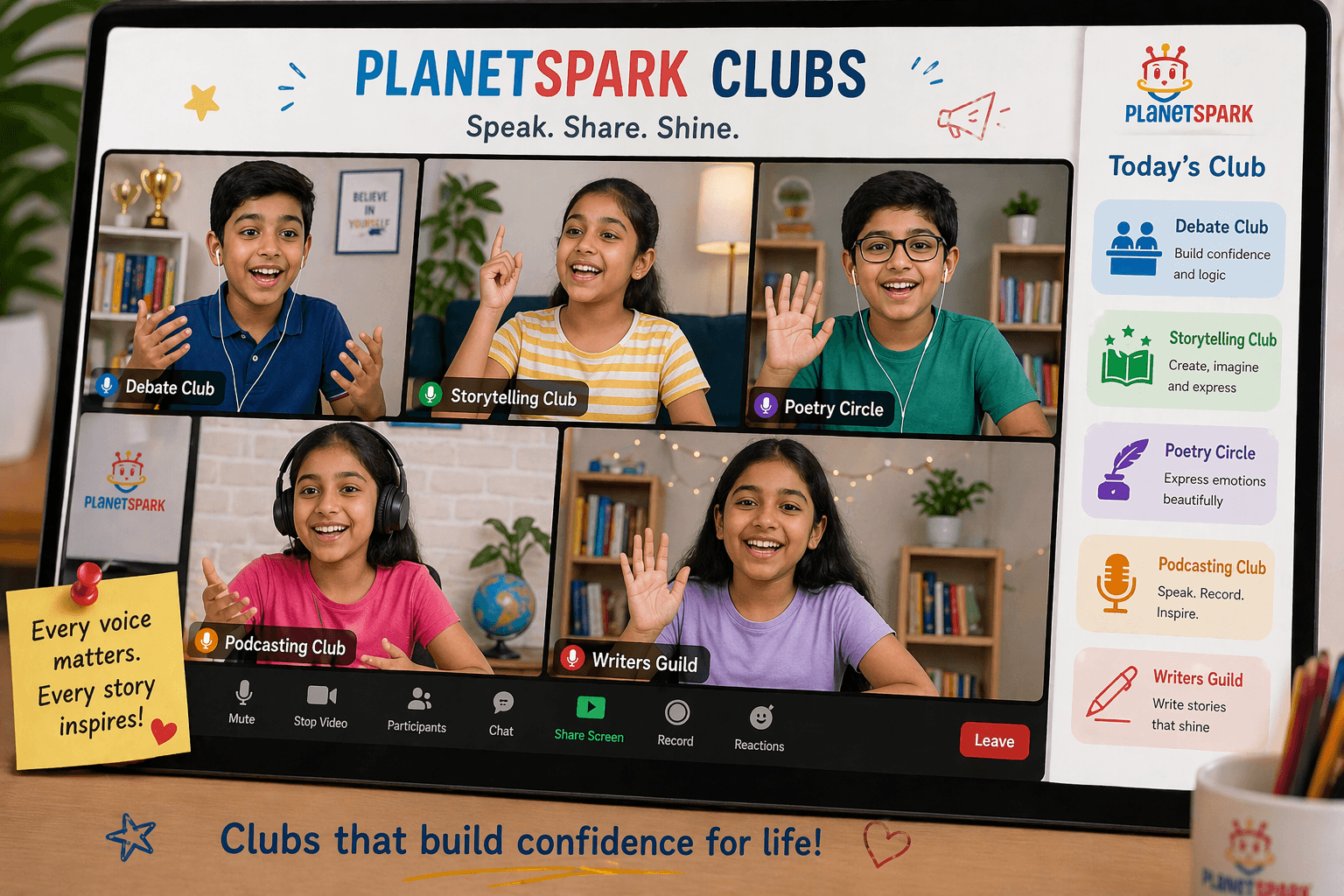
Students can also join engaging communities like Debate Club, Story Writing Club, Poetry Circles, Podcasting Club, and Writers Guild to apply skills in real settings. Parents receive regular PTMs and progress reports with measurable insights and action plans.
Why Parents Choose PlanetSpark
- Live interactive 1:1 classes
- Certified communication trainers
- Real speaking practice
- Personalized feedback
- AI-powered progress tools
- Confidence-building curriculum
- Flexible schedules

Conclusion - Every New Word Opens a Bigger Future
Vocabulary growth is not about memorizing difficult words. It is about helping children think clearly, express confidently, and communicate powerfully. With active recall, spaced repetition, games, speaking practice, and the right coaching, children can remember words faster and use them naturally.
The earlier children build strong vocabulary recall, the easier school success, public speaking, writing, and confidence become.
Start today with one new word, one new sentence, and one confident step forward.
Read More: Vocabulary Enhancement Words for Better Communication Skills
Frequently Asked Questions
Vocabulary recall is the ability to remember words quickly and use them correctly while speaking, reading, or writing.
Children forget words when they only read meanings once and do not review or use them regularly.
Use flashcards, spaced repetition, reading practice, speaking challenges, and daily revision.
Yes. Games reduce pressure and improve recall speed naturally through repetition and engagement.
We recommend 5 to 10 practical words with repeated usage instead of long random lists.
PlanetSpark combines speaking practice, writing, AI feedback, memory methods, and expert coaching.
Absolutely. Our trainers build comfort gradually through personalized 1:1 sessions.
PlanetSpark offers programs for school-age children across multiple skill levels.
Many parents notice better speaking confidence and vocabulary usage within a few weeks of regular practice.
Simply book a free trial session and let our experts assess your child’s current level.