
Vocational Skills Training for Job Readiness & Communication
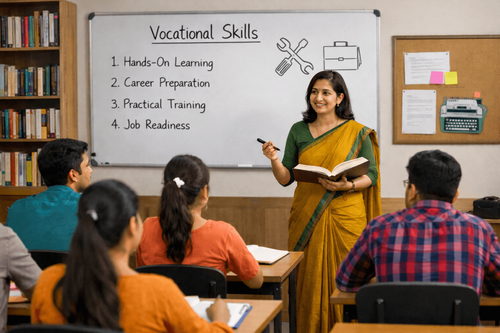

Table of Contents
- What Are Vocational Skills and Why Do They Matter?
- Key Vocational Skills Examples That Improve Employability
- How Vocational Skills Training Strengthens Communication
- The Role of Vocational Skills in Job Readiness
- PlanetSpark Communication skills Course: A Game-Changer for
- Vocational Skills Across Industries
- Your Future Starts with the Right Skills
The modern workplace demands more than academic knowledge, it requires practical vocational skills that prepare individuals for real-world professional challenges. Employers value candidates who can communicate effectively, collaborate with teams, think critically, and demonstrate hands-on competence. This blog explores how vocational skills training bridges the gap between classroom learning and workplace expectations, helping students and professionals become truly job-ready.
Vocational skills meaning extends beyond technical expertise to include problem-solving, teamwork, workplace communication, time management, and professional etiquette. Unlike traditional education, vocational training focuses on real-world application, practice, and performance.
In this blog, you will learn about key vocational skills examples, their role in employability, and how structured training—especially communication skills training, builds confidence, interview readiness, and leadership potential. We will also highlight how platforms like PlanetSpark support learners in mastering spoken English and workplace communication, empowering them to succeed across industries.
By the end, you will understand how vocational skills enable individuals to communicate persuasively, perform effectively, and thrive in today’s competitive job market.

What Are Vocational Skills and Why Do They Matter?
Vocational skills are practical, job-oriented abilities that equip individuals with the tools needed to perform specific professional tasks effectively. The vocational skills meaning emphasizes hands-on training, real-world application, and workplace relevance rather than purely academic knowledge.
Unlike traditional education, which often prioritizes theoretical learning, vocational skills are designed to make learners immediately employable. These skills focus on real-world problem-solving, technical proficiency, and professional communication, key components of workplace success.
In today’s evolving job market, companies prioritize candidates who can contribute from day one. This is why vocational skills training has become a critical component of education systems, corporate hiring strategies, and career development programs.
Vocational skills also include soft skills such as teamwork, leadership, adaptability, and communication. These are often considered equally important as technical skills because they determine how effectively an individual functions within a professional environment.
For students, vocational skills create a strong foundation for internships, apprenticeships, and entry-level roles. For professionals, they enhance career growth, promotion potential, and workplace credibility.
Key Vocational Skills Examples That Improve Employability
Here are some important vocational skills examples that are highly valued across industries:
1. Communication Skills
Effective communication is one of the most essential vocational skills. Professionals must be able to express ideas clearly, listen actively, and engage in meaningful conversations.
2. Problem-Solving Skills
Employers value individuals who can analyze challenges and propose solutions rather than waiting for instructions.
3. Time Management
Managing deadlines, prioritizing tasks, and maintaining productivity are core vocational skills that improve workplace efficiency.
4. Team Collaboration
Working well in teams ensures smoother project execution and better workplace relationships.
5. Digital Literacy
Basic computer skills, online communication, and technical adaptability are now essential vocational skills.
6. Leadership and Decision-Making
Strong leadership enables professionals to guide teams and make strategic choices.
7. Customer Service Skills
This is crucial in hospitality, retail, and corporate sectors.
8. Professional Etiquette
Understanding workplace behavior, email writing, and formal communication adds credibility.
How Vocational Skills Training Strengthens Communication
Vocational skills training is often associated with technical expertise, practical knowledge, and job-oriented competencies. However, one of its most powerful yet underrated outcomes is communication development. Beyond preparing individuals for specific roles, vocational programs actively shape how learners speak, present, listen, and interact in professional environments.
Many students perform well academically but struggle in real-world communication scenarios such as interviews, client conversations, team discussions, or presentations. Vocational training bridges this gap by integrating structured communication practice into skill development.
Here is how vocational skills training strengthens communication in depth.
Better Clarity in Speech
Clarity is not just about speaking English, it is about expressing ideas logically and confidently.
Vocational training improves clarity by:
Encouraging structured thinking before speaking
Teaching learners how to organise responses
Practising role-based conversations
Eliminating filler words and hesitation
For example, during mock workplace scenarios, students learn how to explain a process step by step, respond to questions directly, and communicate solutions clearly. This builds the ability to express thoughts without confusion or overcomplication.
Over time, learners move from vague responses to precise, professional communication.
Improved Fluency in English
Fluency develops through consistent practice, not theory alone. Vocational training environments often include:
Interactive discussions
Group activities
Role plays
Real-world simulations
Regular spoken practice
This repeated exposure reduces fear and improves natural speech flow. Learners begin thinking in English rather than mentally translating from their native language.
Fluency training also focuses on:
Correct pronunciation
Appropriate vocabulary
Sentence structuring
Workplace language usage
As fluency improves, confidence naturally follows.
Confidence in Interviews
Interview anxiety is one of the biggest barriers to employment. Even skilled candidates struggle to articulate their strengths under pressure.
Vocational training strengthens interview communication through:
Mock interviews
Feedback-based improvement
Practice answering behavioural questions
Teaching structured frameworks for responses
Learners are trained to:
Introduce themselves professionally
Explain career gaps or transitions confidently
Highlight skills with examples
Handle unexpected questions calmly
Repeated simulation reduces nervousness and prepares candidates for real hiring environments. Confidence in interviews often becomes the turning point between rejection and selection.
Effective Presentation Skills
Presentation skills are essential in almost every profession, whether in corporate offices, client meetings, classrooms, or training sessions.
Vocational programs build presentation abilities by teaching:
How to structure a topic clearly
How to open and close a presentation effectively
Voice modulation techniques
Body language awareness
Eye contact and stage presence
Learners practise presenting in front of peers, receiving constructive feedback, and refining their delivery style.
This repeated exposure removes stage fear and builds the ability to speak in front of groups with confidence and authority.
Strong Listening Abilities
Communication is not only about speaking. Active listening is equally important in workplaces.
Vocational training improves listening skills by:
Teaching learners to respond thoughtfully instead of reacting quickly
Practising note-taking during discussions
Encouraging clarification questions
Conducting teamwork activities that require careful listening
Strong listening improves:
Team collaboration
Client understanding
Conflict resolution
Task accuracy
When individuals listen carefully, misunderstandings reduce and productivity increases.
The Broader Impact on Career Readiness
Vocational skills training develops communication as a practical workplace competency rather than a theoretical subject.
It ensures learners can:
Participate in professional discussions
Write clear emails and reports
Handle workplace challenges diplomatically
Represent themselves confidently
This makes vocational training essential not just for employment, but for overall personality development and long-term career growth.
In today’s competitive job market, technical knowledge may open the door, but communication determines growth. Vocational skills training ensures individuals are not only skilled workers but confident communicators ready for real-world success.
The Role of Vocational Skills in Job Readiness
Job readiness is no longer defined merely by academic qualifications, degrees, or high exam scores—it is determined by how well an individual can function in a real professional environment. Many graduates today struggle in workplaces not because they lack knowledge, but because they lack practical vocational skills that prepare them for real-world work situations. This is where vocational skills training plays a transformative role in shaping employability and career success.
Being job-ready means that a person can step into a workplace, understand expectations, collaborate with others, communicate clearly, and contribute meaningfully from day one. Vocational skills bridge the gap between classroom learning and professional application by focusing on practical abilities rather than theoretical knowledge alone. These skills help individuals transition smoothly from education to employment, making them confident, adaptable, and workplace-prepared.
One of the most important aspects of vocational skills is that they enable individuals to adapt to workplace expectations. Every organization has its own culture, communication style, deadlines, and professional norms. Without vocational skills, new employees may feel overwhelmed or confused. However, with proper training, individuals learn workplace etiquette, professionalism, responsibility, and accountability—making their transition into the job market much smoother.
Another crucial role of vocational skills is in professional communication. Many talented students fail to perform well in interviews or workplaces due to weak communication skills. Vocational skills training helps learners develop clarity in speech, confidence in expressing ideas, active listening abilities, and effective presentation skills. This ensures they can communicate with colleagues, managers, and clients in a clear and professional manner.
Vocational skills also prepare individuals to handle real-world challenges rather than avoiding them. In real jobs, problems rarely come with textbook solutions. Through vocational training, individuals learn critical thinking, problem-solving, decision-making, and adaptability—skills that help them manage pressure, solve workplace issues, and think strategically in complex situations.
Additionally, vocational skills enhance an individual’s ability to work efficiently in teams. Most modern workplaces rely heavily on collaboration. Vocational skills such as teamwork, empathy, conflict resolution, and interpersonal communication ensure that individuals can work harmoniously with diverse teams, respect different perspectives, and contribute positively to group projects.
Finally, vocational skills nurture leadership potential. Even if a person is not in a managerial role, leadership qualities such as responsibility, initiative, confidence, and decision-making are highly valued in every profession. Vocational training helps individuals develop these traits early, making them future-ready leaders rather than just employees.
Because of these benefits, many employers now actively seek candidates who have undergone vocational skills training. Such candidates require less onboarding, adapt faster to workplace culture, perform more efficiently, and contribute to overall productivity. As a result, vocational skills have become a key factor in determining long-term career success and professional growth.

PlanetSpark Communication skills Course: A Game-Changer for Vocational Skills
Why communication skills is a Core Vocational Skill
Fluency in English has become one of the most crucial vocational skills in global workplaces. Many students and professionals struggle with spoken English, which affects their confidence and career opportunities.
PlanetSpark’s communication skills course is designed to help learners master:
Conversational fluency
Pronunciation and clarity
Grammar in real-life contexts
Public speaking confidence
Professional communication
How PlanetSpark’s Course Supports Career Growth
The course uses interactive learning, live practice sessions, role-plays, and real-world conversations to build practical communication skills. Learners gain confidence in interviews, presentations, and workplace discussions.
Unlike traditional classrooms, PlanetSpark provides personalized feedback, structured learning paths, and engaging sessions that make communication learning enjoyable and effective.
Vocational Skills Across Industries
Business and Corporate Sector
Communication, leadership, teamwork, and problem-solving are essential vocational skills here.
Technology and IT
Digital literacy, analytical thinking, and adaptability are key.
Healthcare
Empathy, patient communication, and teamwork matter greatly.
Hospitality and Tourism
Customer service and interpersonal communication are critical vocational skills.
Education
Teachers require strong communication, classroom management, and presentation skills.
Your Future Starts with the Right Skills
Vocational skills are no longer optional, they are essential for success in the modern world. Whether you are a student preparing for your first job or a professional aiming for career growth, developing strong vocational skills will set you apart from the competition.
The right combination of technical expertise and communication ability ensures that you are not just employable, but truly valuable to any organization. By investing in structured training, you gain confidence, clarity, and competence that last a lifetime.
Platforms like PlanetSpark play a crucial role in helping learners master spoken English and professional communication—two foundational vocational skills that open doors to global opportunities. With interactive learning, expert guidance, and real-world practice, PlanetSpark empowers students to communicate with confidence, think critically, and perform effectively in any professional setting.
Your journey toward success begins with the decision to learn, grow, and evolve. Equip yourself with the right vocational skills today, and watch your career soar tomorrow.
You may also read :
Frequently Asked Questions
Vocational skills meaning refers to practical, job-specific abilities that help individuals perform effectively in professional environments. These include technical expertise, communication skills, teamwork, and problem-solving.
They make individuals job-ready, improve employability, enhance confidence, and prepare learners for real-world workplace challenges.
Examples include communication skills, digital literacy, leadership, teamwork, time management, customer service, and problem-solving.
Through internships, vocational training programs, practical workshops, communication courses, and real-life learning experiences.
PlanetSpark integrates spoken English and communication training with practical learning methods, helping students develop confidence, clarity, and workplace-ready communication—making them stronger in both vocational skills and professional interaction.