
What Causes Speech Delay in Children: How PlanetSpark Helps Kids


Table of Contents
- What Is Speech Delay? – A Clear Definition
- What Causes Speech Delay? – A Comprehensive Look (600+ Uses)
- Top Factors Affecting Speech Development in Children
- How PlanetSpark Supports Early Communication Development
- Early Speech Delay Signs in Children
- Understanding 4 Year Old Speech Delay Behavior Problems (200
- From Classroom Voice to TEDx Spotlight
- Is It Just “Late Talking”? Normal vs Delay
- Why Early Support Matters
- Why PlanetSpark Is the Perfect Learning Partner for Your Chi
- Understanding and Supporting Speech Development at PlanetSPa
Every child has a voice waiting to be heard, but what happens when words come late?
Understanding what causes speech delay is the first step toward helping children communicate confidently. This guide explores common reasons behind speech delays, early warning signs, and practical strategies parents can use at home. It also highlights how PlanetSpark’s expert-led programs, personalized learning paths, and interactive sessions support early communication development, helping children express themselves clearly, build confidence, and thrive socially and academically.
What Is Speech Delay? – A Clear Definition
To understand speech challenges, we first need to know what is speech delay.
Speech delay refers to a condition in which a child does not develop the ability to speak or use language at the expected age level. Although every child develops differently, pediatricians use typical age milestones to help determine when a child might need evaluation.
For example:
- By age 12 months: Many children say “mama” or “dada”
- By age 2: They may combine 2–3 word phrases
- By age 3–4: They should use more complex sentences and be understood by others
If these expected milestones are consistently missed, a child may be experiencing speech delay in children.

What Causes Speech Delay? – A Comprehensive Look (600+ Uses)
Understanding what causes speech delay requires looking beyond words. Development of speech is influenced by multiple systems working together by hearing, cognition, motor planning, neurological function, environment, and social interaction.
Here are the major causes:
1. Hearing Issues
One of the most common, and often overlooked, reasons for delayed speech is hearing impairment. If a child cannot hear clearly, they don’t get the auditory input needed to mimic and learn speech sounds.
Causes include:
- Fluid in the ear (common with frequent ear infections)
- Congenital hearing loss
- Temporary blockage (wax or infection)
Without early detection, hearing issues can slow language learning significantly.
2. Developmental Disorders
Certain neurodevelopmental disorders can affect speech:
- Autism Spectrum Disorder (ASD): Many children on the autism spectrum show delayed expressive language and may have unique communication patterns.
- Global Developmental Delay: A broader delay that impacts multiple areas, such as motor skills and cognition, not just speech.
- Intellectual Disability: Cognitive limitations can slow language development.
These conditions represent situations where what causes speech delay isn’t a single defect in speech, but instead reflects larger developmental processing differences.
3. Oral–Motor Problems
Some children have difficulty with the physical act of producing speech sounds.
This occurs when muscles of the mouth, jaw, and tongue aren’t coordinating properly in a condition known as apraxia of speech or dysarthria.
In apraxia of speech:
- The brain struggles to plan and sequence the movements needed for speech.
- A child may know what they want to say, but can’t produce it clearly.
This is another important answer to what causes speech delay.
4. Environmental and Social Factors
Believe it or not, a child’s environment plays a big role.
Children who have limited interaction, less exposure to rich language, or few opportunities to practice communication may show delayed speech patterns. This includes:
- Lack of responsive interaction.
- Limited reading or storytelling.
- Overexposure to screens without engagement.
These factors don’t damage speech ability, but they slow natural language learning.
Give Your Child the Power to Speak with Confidence!
5. Selective Mutism
Some children can speak but don’t in certain situations due to anxiety or social stress. While not a developmental deficit, selective mutism can present as a speech delay if the child speaks less in public or unfamiliar settings.
6. Genetic and Biological Causes
Certain genetic syndromes are associated with speech delays:
- Down syndrome
- Fragile X syndrome
- Other chromosomal syndromes
These genetic differences can influence brain development and speech pathways.
7. Emotional and Behavioral Influences
Rarely, emotional distress, trauma, or significant life changes can affect a child’s willingness to speak or engage, especially in toddlers and preschoolers.
This category also includes 4 year old speech delay behavior problems where frustration or acting out stems from difficulties expressing needs with words.
Top Factors Affecting Speech Development in Children
Speech delay can result from medical, neurological, or environmental factors. Identifying the root cause early helps ensure timely support and effective intervention for healthy communication development.
Medical & Physical Causes
- Hearing Loss: Fluid buildup from frequent ear infections or permanent hearing impairment limits sound clarity, making it difficult for children to hear, imitate, and learn speech sounds.
- Oral-Motor Issues: Weak or uncoordinated tongue, jaw, and mouth muscles, tongue-tie, or cleft palate can restrict clear sound production and affect speech development.
- Neurological Conditions: Conditions like autism, cerebral palsy, intellectual disabilities, or brain injuries may affect how the brain processes language and controls speech muscles.
Boost Your Child’s Personality with Expert-Guided Learning
Environmental & Developmental Factors
- Lack of Stimulation: Minimal conversation, reading, or interactive play reduces language exposure, slowing vocabulary growth and overall speech development in young children.
- Excessive Screen Time: High passive screen exposure replaces real interaction, limiting opportunities for conversation, listening practice, and expressive language development.
- Emotional or Psychological Issues: Anxiety, trauma, or extreme shyness can reduce a child’s willingness to speak, even when they can communicate.
- Multilingual Homes: Exposure to multiple languages may cause temporary delays, but consistent focus on one primary language usually supports steady speech progress.
When to Seek Help
Consult a specialist if your child isn’t meeting age-based milestones like babbling, speaking words, understanding instructions, or being clearly understood by others.
How PlanetSpark Supports Early Communication Development
At PlanetSpark, we understand that communication is more than just words, but it's connection, confidence, and participation in life.
Here’s how PlanetSpark helps children with speech development challenges:
1. Personalized Assessment & Learning Plans
Every child is unique. PlanetSpark begins with a comprehensive assessment to understand:
- Listening and understanding
- Speech sound production
- Vocabulary and sentence use
- Social communication
- Behavioral signs
By identifying each child’s strengths and needs, PlanetSpark creates a customized plan that targets speech delay in children effectively.
2. Speech-Focused Curriculum with Certified Experts
PlanetSpark’s communication programs are delivered by trained professionals who specialize in:
- Speech therapy techniques
- Play-based language models
- Naturalistic conversation practice
This blends structured learning with engaging activities that motivate children to communicate.
Support Your Child in Becoming a Leader of Tomorrow
3. Social Interaction and Emotional Confidence
Communication isn’t only about vocabulary; it’s about using language with others.
PlanetSpark incorporates:
- Group activities to encourage peer interaction.
- Social games to practice turn-taking and expressive dialogue.
- Storytelling and role play to build confidence.
By creating a supportive environment, children learn to use language naturally.
4. Parent Coaching and Home Support
Parents are a child’s first teachers. PlanetSpark equips caregivers with:
- Strategies to boost language at home
- Tips on responsive listening and prompting
- Ideas for language-rich routines and play
This ensures progress continues 24/7, not only during sessions.
5. Ongoing Monitoring and Progress Tracking
Speech development isn’t static. PlanetSpark regularly evaluates progress to:
- Adjust goals
- Celebrate achievements
- Identify emerging challenges
This helps tailor each child’s journey and ensures that gains are sustained.
Early Speech Delay Signs in Children
Recognising speech delay signs early helps parents act on time. Monitoring age-wise communication milestones allows quicker intervention and better language development outcomes for children.
Common Speech Delay Signs by Age
By 12–18 months:
- Not babbling (“ba-ba”, “ma-ma”)
- Limited imitation of sounds
- Not responding to name consistently
By 2 years:
- Less than 50 words
- Not using two-word combinations
- Difficulty being understood even by familiar adults
By 3 years:
- Speech is only understood occasionally
- Little variety in consonant sounds
- No interest in interactive games or pretend play
By 4 years:
- Others struggle to understand the child
- Limited sentence structure
- Frustration or tantrums around communication
These are important speech delay signs that can help guide early intervention decisions.
Understanding 4 Year Old Speech Delay Behavior Problems (200+ Uses)
Parents of preschoolers often worry when their 4-year-old isn’t speaking like classmates.
The most concerning 4 year old speech delay behavior problems include:
- Tantrums when asked to speak.
- Silence around unfamiliar adults or children.
- Using gestures instead of words continuously.
- Frequent frustration due to communication breakdowns.
These behaviors don’t mean the child is “choosing not to talk.” Instead, they often reflect frustration or a lack of skills to express thoughts, exactly why early support is so important.
From Classroom Voice to TEDx Spotlight
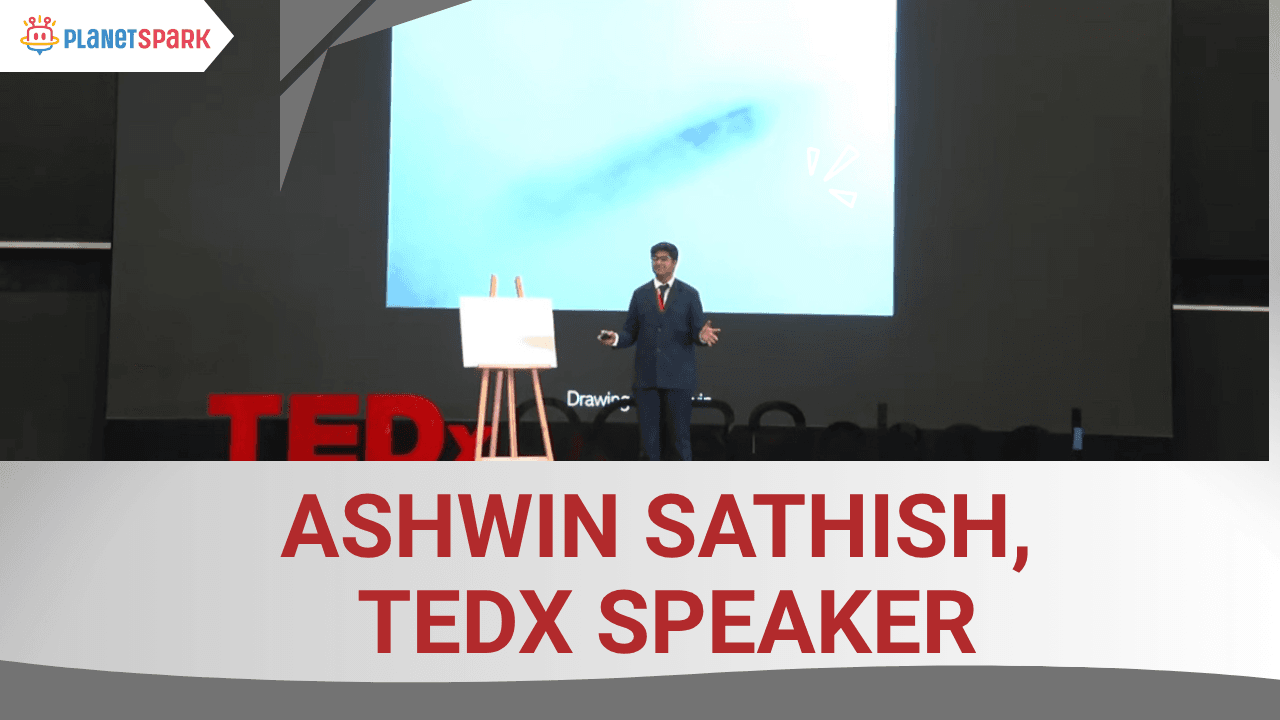
Ashwin Sathish, Grade 8 from New Delhi, stood tall as a TEDx Speaker, sparking conversations that truly matter. From classroom confidence to commanding a global stage, his journey reflects the power of voice, vision, and courage.
If you want your child to overcome speech challenges early and build confident communication skills, PlanetSpark offers expert-led programs designed to nurture clear speech, strong expression, and self-belief from a young age.
Is It Just “Late Talking”? Normal vs Delay
Some children are considered “late talkers” when they begin speaking later but catch up naturally. However, distinguishing normal variation from speech delay in children is key.
Warning signs that need professional evaluation include:
- Not babbling by 12 months
- Less than 50 words by 2
- No use of 2-word combinations by 24 months
- Regression (losing previously-acquired words)
- Hearing concerns
This is when understanding what causes speech delay helps guide the next steps.
Why Early Support Matters
Intervening early isn’t just helpful but can dramatically change outcomes. The preschool years are a critical period when the brain is most adaptable and responsive to learning.
Research consistently shows that early communication support can:
- Improve vocabulary development
- Strengthen sentence formation and grammar
- Reduce behavioral frustrations
- Boost social skills and confidence
- Prevent future learning challenges
For caregivers asking ,“Why didn’t my child talk sooner?”, early support offers solutions, not blame.

Why PlanetSpark Is the Perfect Learning Partner for Your Child
PlanetSpark creates confident, well-spoken, and future-ready children through personalised training, engaging digital tools, and activity-based learning. With expert coaching and structured practice, kids develop communication strength, emotional intelligence, and strong personality traits that help them thrive in school and beyond.
Personality Development Services at PlanetSpark:
- Builds confidence through guided speaking and real-time practice.
- Strengthens leadership and teamwork with interactive tasks.
- Enhances emotional intelligence using SEL-based modules.
- Improves social etiquette and polite communication skills.
- Teaches body language, eye contact, and effective posture.
- Encourages clarity of thought through journaling and reflections.
- Boosts decision-making and problem-solving abilities.
- Develops assertiveness and respectful expression.
- Supports goal setting and personal growth habits.
- Offers regular parent consultations for steady progress.
Understanding and Supporting Speech Development at PlanetSPark
Speech delay in children is a common concern, but not an impossible one. By recognizing what causes speech delay, identifying signs early, and seeking targeted support, parents can help their child build strong communication skills.
Whether challenges stem from hearing, motor planning, developmental conditions, or environmental factors, the key is early, informed action.
And that’s where PlanetSpark makes a meaningful difference with personalized, engaging, and scientifically-informed support that champions every child’s communication growth.
Also Read:
Live Classes vs Recorded Classes: Which is Better? | PlanetSpark
How to Speak More Eloquently at Work? Learn With PlanetSpark
Frequently Asked Questions
Speech delay can be caused by hearing issues, developmental conditions, oral–motor difficulties, limited language exposure, or neurological factors. Identifying the root cause early helps ensure the child receives timely and effective support.
Common speech delay signs include limited vocabulary, unclear speech, difficulty forming sentences, frustration during communication, and delayed milestones compared to peers. Persistent signs beyond expected ages may require professional evaluation.
Not always. Some children are late talkers and catch up naturally. However, ongoing speech delay in children can affect learning, behavior, and confidence, making early monitoring and support extremely important.
A 4 year old with speech delay may show tantrums, withdrawal, or aggression due to frustration ein xpressing needs. These behavior problems often reduce as communication skills improve with guided intervention.
PlanetSpark supports speech delay through personalized assessments, expert-led communication training, interactive storytelling, and confidence-building activities that strengthen language skills while keeping learning engaging and stress-free.
PlanetSpark combines research-backed methods, certified trainers, parent guidance, and continuous progress tracking, making it a trusted platform for nurturing early communication skills and addressing speech delay effectively.