
How to Use AI for Storytelling- Learn with PlanetSpark

Table of Contents
- What is AI for Story Writing and How Does It Work
- Benefits of Using AI for Storytelling
- How to Use AI to Write a Story Step by Step
- Real Life Examples of AI for Story Writing
- Best Practices to Use AI for Story Writing Effectively
- Challenges and Limitations of AI in Storytelling
- Why Strong Storytelling Skills Still Matter
- Learn Storytelling with PlanetSpark Creative Writing Classes
- Build Your Storytelling Skills for the Future
Struggling to turn ideas into engaging stories? AI for story writing is transforming how beginners and professionals create content by making storytelling faster and more structured. Many learners face challenges such as lack of ideas, weak story flow, or difficulty expressing emotions in writing.
This blog will help you understand how to use AI to write a story, explore practical techniques, and learn how to combine AI tools with human creativity. You will also discover examples, benefits, and best practices to improve your storytelling skills effectively.
What is AI for Story Writing and How Does It Work
AI for story writing refers to tools that use artificial intelligence to generate ideas, develop plots, and improve writing quality. These tools rely on natural language processing to understand prompts and produce meaningful text based on patterns.
When you use AI to write a story, you provide a prompt such as a theme, character, or situation. The AI then expands that input into structured content, making it easier to build stories quickly and efficiently.
How Story Writing AI Enhances Creativity and Idea Development
AI acts as a creative partner rather than replacing human imagination. It helps writers explore multiple possibilities and expand their thinking.
- Generates unique story ideas based on simple prompts
- Suggests creative plot twists and unexpected turns
- Helps build detailed characters with personality traits
- Provides descriptive scenes that enhance storytelling
For example, a basic idea like “a lost key” can turn into a mystery, adventure, or emotional story depending on how AI expands it. This flexibility encourages writers to think beyond obvious ideas and explore new directions.
AI not only generates ideas but also helps writers explore different narrative possibilities that they might not have considered initially. For instance, a single story concept can be expanded into multiple genres such as mystery, fantasy, or drama using AI prompts. This flexibility allows writers to experiment freely without the pressure of getting everything perfect in the first attempt.
Another important advantage is that AI encourages iterative thinking. Writers can refine their prompts step by step and observe how the story evolves with each change. This process builds creative confidence and improves decision making in storytelling. Over time, writers begin to understand what makes a story engaging and how small changes can impact the overall narrative.
AI also supports visual imagination. When writers struggle to describe scenes, AI can generate vivid descriptions that help them visualize settings more clearly. This improves descriptive writing and makes stories more immersive for readers.
Why Writers Are Rapidly Adopting AI Tools
The rise of story writing AI is driven by its ability to reduce effort and improve productivity. Writers no longer need to struggle with starting from scratch.
AI tools provide instant support, allowing writers to:
- Begin writing without hesitation
- Maintain consistency in storytelling
- Explore different genres easily
This makes AI especially valuable for beginners who want guidance and professionals who need efficiency.
Benefits of Using AI for Storytelling
AI for story writing offers several advantages that help writers improve both creativity and efficiency. It simplifies the writing process while enhancing overall quality.
Boosts Creativity and Expands Thinking
AI introduces new ideas that writers may not think of on their own. It helps expand imagination by offering multiple perspectives.
Writers can experiment with different story directions without fear of failure. This encourages creative exploration and innovation.
Helps Overcome Writer’s Block Effectively
Writer’s block can slow down progress and reduce motivation. AI provides instant suggestions, helping writers continue their work without interruption.
Instead of feeling stuck, writers can use AI prompts to generate the next scene or dialogue. This keeps the momentum going and reduces frustration.
Improves Language, Structure, and Clarity
AI tools help refine writing by improving grammar, vocabulary, and sentence structure. They also suggest better ways to express ideas.
Writers can learn from these suggestions and gradually improve their skills. This makes AI a valuable learning tool as well.
Saves Time and Increases Productivity
AI speeds up the writing process significantly. Tasks such as brainstorming, outlining, and drafting can be completed quickly.
This allows writers to focus more on creativity and storytelling rather than spending excessive time on basic tasks.
How to Use AI to Write a Story Step by Step
Using AI effectively requires a clear and structured approach. Following a step by step process ensures better results.
Step 1: Create a Clear and Detailed Prompt
The quality of AI output depends on the prompt. A detailed prompt helps AI generate relevant and engaging content.
For example:
Write a suspense story about a missing diary in a boarding school.
Adding details such as tone, genre, and character type improves the output quality.
Step 2: Generate Multiple Ideas and Story Outlines
Use AI to create different story ideas and outlines. This helps you compare options and choose the best one.
AI can help you:
- Create beginning, middle, and ending structure
- Suggest character arcs and development
- Add conflict and resolution elements
This step builds a strong foundation for your story.
Step 3: Expand the Story into Detailed Scenes
Once you have an outline, expand each section into full scenes. Add descriptions, emotions, and dialogues.
AI can assist in writing paragraphs, but you should refine them to match your voice. This ensures originality and depth.
While expanding scenes, it is important to focus on sensory details and emotional depth. AI can help generate basic descriptions, but writers should enhance them by adding personal insights and unique elements. For example, instead of simply describing a rainy day, you can include sounds, smells, and emotions to make the scene more engaging.
Writers can also use AI to experiment with dialogue writing. By generating multiple versions of a conversation, they can compare and select the most natural and impactful one. This improves dialogue flow and helps create realistic character interactions.
Another useful approach is layering. Start with a simple AI generated paragraph, then add details such as character thoughts, background context, and subtle hints that build suspense or emotion. This transforms a basic draft into a rich and compelling narrative.
Step 4: Edit, Personalize, and Improve the Story
AI-generated content needs editing. Review the story carefully and make improvements.
Focus on:
- Adding emotional depth
- Improving flow and transitions
- Making the story more engaging
This step transforms a basic draft into a compelling story.
Want to write better stories with confidence?
Build storytelling skills with Planetspark experts
Book your free class now
Real Life Examples of AI for Story Writing
AI is widely used across different fields for storytelling. These real life examples highlight its practical applications.
Students Using AI for Creative Writing Practice
Students use AI tools to improve their writing skills and complete assignments. AI helps them generate ideas and structure their stories better.
For example, a student can input a short idea and expand it into a full story with characters and plot. This improves both creativity and confidence.
Content Creators and Script Writers
Content creators use AI to write scripts for videos, podcasts, and social media. AI helps generate engaging content quickly.
It also assists in writing dialogues, creating hooks, and structuring narratives that capture audience attention.
Professionals Using AI for Content Creation
Working professionals use AI for blogs, marketing content, and storytelling in presentations. AI helps them communicate ideas effectively.
It also supports brainstorming for campaigns and creating compelling narratives that connect with audiences.
AI is also being used in collaborative storytelling environments where multiple writers work together on a single project. In such cases, AI helps maintain consistency in tone and style across different sections of the story. This ensures a smooth reading experience for the audience.
In educational settings, teachers use AI tools to demonstrate storytelling techniques. Students can compare their own writing with AI generated content to understand areas of improvement. This interactive learning method makes writing more engaging and effective.
Additionally, AI is increasingly used in game design and interactive storytelling. Developers use AI to create dynamic storylines that change based on user choices. This shows how AI is not limited to traditional writing but is expanding storytelling into new formats.
Best Practices to Use AI for Story Writing Effectively
To get the best results, it is important to use AI thoughtfully and strategically.
Combine AI with Human Creativity for Better Results
AI should support your ideas, not replace them. Always add your personal touch to the story.
This ensures originality and emotional connection with readers.
Use AI for Drafting and Idea Generation
AI works best for generating drafts and ideas. Avoid relying on it for final output.
Editing and refining are essential to create high quality content.
Experiment with Prompts to Explore Different Styles
Try different prompts to generate varied outputs. This helps you discover new writing styles and approaches.
For example, you can rewrite the same story as a thriller or a comedy to explore creativity.
Learn Storytelling Techniques from AI Outputs
AI-generated content can be used as a learning tool. Analyze how stories are structured and how ideas are developed. This helps you improve your writing skills over time.
Another important practice is reviewing AI generated content critically. Writers should not accept suggestions blindly. Instead, they should evaluate whether the content aligns with their story’s tone and purpose. This helps maintain originality and avoids generic storytelling.
It is also helpful to set clear goals before using AI. Decide whether you need help with idea generation, structure, or editing. This ensures that you use AI efficiently without becoming dependent on it for every step.
Writers should also maintain a balance between speed and quality. While AI can generate content quickly, taking time to refine and personalize the output leads to better results. Consistent practice with this approach improves both writing skills and creative thinking.

Challenges and Limitations of AI in Storytelling
While AI is useful, it has certain limitations that writers should understand.
Limited Emotional Depth and Human Connection
AI can generate text, but it may not fully capture complex human emotions. Writers need to enhance emotional elements manually.
Possibility of Generic or Repetitive Content
AI sometimes produces similar or repetitive content. Editing and personalization are necessary to make the story unique.
Dependence on Input Quality
The effectiveness of AI depends on the prompt. Poor prompts lead to weak outputs.
Learning how to write effective prompts is essential for better storytelling results.
Why Strong Storytelling Skills Still Matter
Storytelling is deeply connected to human experience. It reflects emotions, values, and perspectives that AI cannot fully replicate. Even with advanced AI tools, storytelling remains a human driven skill. Understanding narrative structure, character development, and emotional connection is essential.
AI can assist in generating ideas and drafts, but it cannot replace imagination and personal experience. Writers who develop strong storytelling skills can use AI more effectively.
Storytelling skills help in:
- Clear communication and expression
- Creative thinking and problem solving
- Building confidence in sharing ideas
By combining AI tools with structured learning, writers can achieve better results and create impactful stories. Writers who develop strong storytelling skills can create meaningful connections with their audience.
In professional settings, storytelling is used to communicate ideas, present concepts, and influence decisions. Whether it is marketing, teaching, or leadership, the ability to tell a compelling story is highly valuable.
By focusing on skill development alongside AI usage, writers can ensure long term growth. AI may evolve, but the core principles of storytelling will always remain essential.
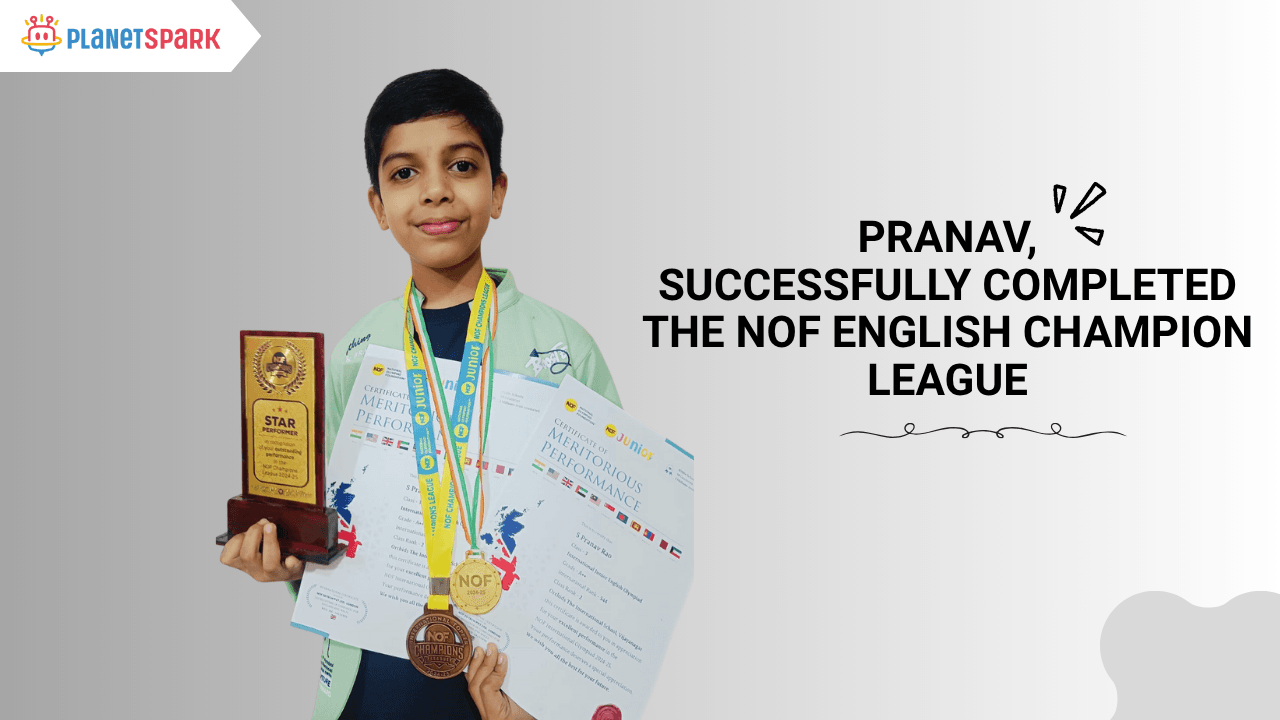
Pranav, a Grade 3 star, - successfully completed the NOF English Champion League, showcasing his brilliance in Public Speaking and Creative Writing.
Learn Storytelling with PlanetSpark Creative Writing Classes
PlanetSpark Creative Writing Classes
Storytelling improves with practice and expert guidance. PlanetSpark Creative Writing classes are designed for students and professionals who want to enhance their storytelling and communication skills. These classes focus on building creativity, confidence, and structured writing abilities.
Key features include:
- Live interactive sessions with expert teachers
- Real world storytelling practice
- Personalized feedback on writing
- Confidence building framework
- Structured curriculum for all levels
- Focus on creativity and expression

Build Your Storytelling Skills for the Future
Storytelling is a powerful skill that helps you express ideas, connect with people, and build confidence. AI for story writing makes the process easier, but true creativity comes from consistent practice and learning.
By combining AI tools with structured guidance, you can unlock your full potential as a storyteller. Keep experimenting, practicing, and refining your skills to create meaningful and impactful stories over time.
Frequently Asked Questions
Yes, beginners can use AI tools to learn storytelling techniques quickly. It provides guidance on structure, vocabulary, and creativity. This helps build confidence and improve writing skills over time.
AI provides instant prompts, ideas, and suggestions to continue writing. It helps writers stay motivated and avoid getting stuck. This makes the creative process smoother and more consistent.
Yes, PlanetSpark offers structured programs focused on storytelling skills. Expert guidance helps improve creativity, clarity, and expression. Regular practice sessions build confidence in writing and speaking.
Yes, children can use AI tools along with guided learning for better results. These tools help spark creativity and improve writing abilities. With proper support, kids can develop strong storytelling skills.
Yes, PlanetSpark provides creative writing programs designed for different age groups. The courses focus on storytelling, communication, and confidence building. This helps learners express ideas clearly and effectively.