
Alliteration Made Easy: Write & Speak Better with PlanetSpark

Table of Contents
- What Is Alliteration? A Simple Meaning for Parents
- Why Alliteration Helps Children Write and Speak Better
- Alliteration Examples for Kids (From Easy to Advanced)
- How to Teach Alliteration at Home (Step-by-Step Guide)
- Common Mistakes Kids Make (And How to Fix Them)
- How PlanetSpark Helps Children Master Alliteration and Langu
- Practical Writing Prompts Using Alliteration
- How Alliteration Supports School Success
- Alliteration in Daily Life (Real Examples Kids Already Know)
- Fun Family Activities to Practise Alliteration
- Alliteration vs Other Writing Techniques (Clear Differences)
- How Alliteration Boosts Vocabulary Growth
- When Your Child Struggles With Sounds: What Parents Can Do
- PlanetSpark’s Structured Approach to Sound Training
- How PlanetSpark Helped a Young Author Succeed
- Conclusion
Many parents notice that their child’s writing feels plain or their speech sounds flat. This is completely normal. Children are still learning how to play with words, add expression, and make their sentences interesting. One simple technique that can help instantly is alliteration. If you have been searching for what is alliteration or trying to understand the alliteration meaning in easy words, you are in the right place. Alliteration is a fun language tool that helps children write creatively and speak with more clarity. Kids enjoy it because it turns ordinary words into playful, memorable phrases.
In this guide, you will learn the exact meaning of alliteration, see simple alliteration examples, and discover activities you can do at home to help your child improve their writing and speaking skills. This article will help you understand the concept clearly and show you how to use it to strengthen your child’s confidence with words.
What Is Alliteration? A Simple Meaning for Parents
Alliteration is when two or more words start with the same sound. It’s not about matching letters, it’s about matching the sound your child hears and speaks. This makes sentences more musical, memorable, and fun for kids to say out loud.
In simple words, alliteration meaning is:
Using the same starting sound in a group of words to create rhythm and interest.
For example:
Happy hippos hop
Tiny turtles tiptoe
Children naturally enjoy these patterns because they feel playful and easy to repeat. When kids start using alliteration, they begin noticing sounds more clearly, choosing better words, and expressing ideas with more confidence.
Understanding what is alliteration is the first step. In the next section, you’ll see why this simple technique can make a big difference in how your child writes and speaks.
Why Alliteration Helps Children Write and Speak Better
Alliteration may look simple, but it supports several important communication skills your child needs as they grow. When children repeat the same starting sound, they naturally slow down, listen carefully, and choose words with more intention. This improves both writing and speaking in meaningful ways.
Improves writing creativity
Alliteration helps children move beyond plain sentences. It encourages them to experiment with words, add rhythm, and make their writing more expressive. Even a small phrase like “brave birds” can spark bigger creative ideas.
Strengthens speaking clarity and confidence
Repeating sounds helps kids practise articulation. They learn how to shape sounds properly, speak more clearly, and use expressive tone. This is especially helpful for children who speak softly or rush through sentences.
Supports reading fluency
Alliteration trains the brain to expect the next sound. This makes reading smoother and helps children focus on how words feel and sound together. It also improves sound awareness, which is essential for early literacy.
Alliteration Examples for Kids (From Easy to Advanced)
Children understand alliteration best when they see clear, relatable examples. These examples gradually progress from simple phrases to meaningful sentences, so you can choose what fits your child’s age and comfort level.
Easy alliteration examples for ages 6–8
These short, playful phrases help younger kids recognise repeating sounds.
Busy bees buzz
Funny frogs flip
Happy horses hop
Silly snakes slide
Medium-level examples for ages 9–12
These phrases add light description and help children build expressive vocabulary.
Brave birds balanced on branches
Clever cats chased colourful butterflies
Gentle giants guarded the garden
Advanced alliteration examples for creative writing
Older children can use these in school assignments, stories, or poems.
The shimmering sun spread soft sparkles across the silent sea
Bold breezes brushed past the bright, bustling bazaar
Curious clouds crawled across the calm morning sky
These examples show children how alliteration adds charm and rhythm to everyday writing. Up next, you’ll learn simple steps to teach alliteration at home.
How to Teach Alliteration at Home (Step-by-Step Guide)
Teaching alliteration doesn’t need worksheets or long lessons. With a few simple activities, you can help your child understand the concept and start using it naturally in writing and everyday conversations.
Step 1: Start with common sounds
Pick an easy sound like b, s, or t.
Show your child how to create short word pairs such as “blue ball” or “tiny turtle.” Use objects around the house to make it more engaging.
Step 2: Play alliteration games
Turn learning into a fun challenge.
Alphabet Alliteration: Choose a letter and make as many word pairs as possible.
Five-Word Challenge: Build a sentence using five words starting with the same sound.
Story Starter Game: Begin a story with an alliterative phrase and let your child continue it.
Step 3: Use daily surroundings for inspiration
Encourage children to observe objects, foods, or natural elements and try matching sounds. For example, “spicy soup,” “giggling geese,” or “round rocks.”
Step 4: Add alliteration to everyday writing
Ask your child to include at least one alliteration phrase in journals, homework essays, or story prompts. This builds a habit and improves creative expression over time.
In the next section, we’ll cover common mistakes children make when learning alliteration and simple ways to fix them.
Common Mistakes Kids Make (And How to Fix Them)
As children start using alliteration, they may mix it up with other writing techniques or struggle to find the right words. These are normal challenges and can be corrected with simple guidance.
Mistake 1: Matching letters instead of sounds
Children often think alliteration means using the same letter. But it’s about sound.
Fix: Say the words out loud together. Ask, “Do these start with the same sound?” This helps them focus on hearing, not spelling.
Mistake 2: Forcing too many words
Some kids try to repeat a sound in every word, making sentences awkward.
Fix: Teach them to use alliteration in short, natural phrases like “golden grass” or “playful puppies.”
Mistake 3: Using sounds that are hard to pronounce
Sounds like r, th, or sh can be tricky for some children.
Fix: Start with simple sounds such as b, p, s, or m. As confidence grows, introduce more challenging sounds slowly.
Mistake 4: Forgetting meaning while creating alliteration
Kids may focus too much on matching the sound and ignore the overall sense of the sentence.
Fix: Remind them that meaning comes first. Encourage them to choose words that fit their idea and sound pattern.
In the next section, we’ll explore how PlanetSpark’s programs help children build language confidence through engaging, structured learning.
Want personalised training for your child? Book a free trial today!
How PlanetSpark Helps Children Master Alliteration and Language Skills
PlanetSpark teaches alliteration in a way that feels natural, fun, and confidence-boosting for children. Instead of memorising definitions, kids learn through activities, storytelling, and one-to-one guidance that strengthens both writing and speaking skills.
Interactive sessions that build sound awareness
Children learn to listen closely to starting sounds through games, reading activities, and guided practice. This strengthens phonetic awareness, which is essential for writing clarity and fluent speech.
Creative writing exercises that encourage expression
Kids create their own alliteration phrases, short poems, and story starters. These tasks help them build vocabulary, imagination, and sentence rhythm, all key elements of expressive writing.
One-to-one coaching for personalised support
Every child learns differently. PlanetSpark trainers give personalised feedback, helping children understand what is alliteration, how to use it correctly, and how to apply it in everyday writing.
Speaking activities that improve clarity and confidence
Children practise reading alliteration out loud, which sharpens articulation and makes their speech clearer. This is especially useful for kids who speak softly or rush through sentences.
Practical Writing Prompts Using Alliteration
These simple, child-friendly writing prompts help your child apply alliteration instantly. You can use them for homework practice, weekend activities, or quick creativity boosts at home.
Prompts for Ages 6–8
Write a sentence starting with the S sound (example: sunny squirrels).
Create a short phrase using the B sound, like big balloons.
Describe your favourite animal using the same starting sound in two words.
Prompts for Ages 9–12
Write a three-sentence story using any one sound of your choice.
Pick a place (beach, garden, market) and describe it using at least two alliteration phrases.
Create a character name that uses alliteration, such as Mighty Maya or Brave Ben.
Creative Writing Prompts for Advanced Learners
Write a four-line poem filled with gentle or strong starting sounds.
Describe a moment of nature (rainfall, sunrise, wind) using rhythmic word pairs.
Rewrite a simple sentence by adding at least two alliteration phrases.
These prompts encourage children to experiment with sounds, play with words, and build expressive writing habits. They also boost confidence as children begin using alliteration in a natural, meaningful way.
How Alliteration Supports School Success
Alliteration isn’t just a fun language tool. It plays a meaningful role in your child’s school performance. Teachers often expect children to recognise sound patterns, describe literary devices, and use expressive language in assignments. Learning alliteration early makes these tasks much easier.
Helps in creative writing
Children who understand alliteration can write richer descriptions and more engaging stories. This often leads to better grades and stronger confidence in English class.
Improves poetry comprehension
Poems for school frequently use sound patterns. When children know what alliteration is, they can identify it quickly and explain why the poet used it.
Enhances classroom presentations
Alliteration makes phrases memorable. Kids can use it in speeches or small presentations to sound more confident and organised.
Supports exam answers
Children often lose marks because they cannot explain literary devices. Knowing the meaning of alliteration helps them answer exam questions clearly and correctly.
Alliteration in Daily Life (Real Examples Kids Already Know)
Alliteration appears everywhere, making it easy for children to recognise it naturally. Showing real-life examples helps them understand the concept without feeling like they’re learning something new or difficult.
Examples from cartoons and characters
Mickey Mouse
Peppa Pig
Donald Duck
SpongeBob SquarePants
Popular brand names
Coca-Cola
Dunkin’ Donuts
Best Buy
PayPal
Movie and book titles
Fantastic Four
Kung Fu Panda
Peter Pan
Black Beauty
Help your child master writing and speaking with PlanetSpark. Explore our classes now.
Fun tongue twisters
She sells seashells
Peter Piper picked a peck of pickled peppers
Busy bees buzz briskly
When children see alliteration all around them, they understand how common and useful it is in communication.
Fun Family Activities to Practise Alliteration
Parents can turn alliteration into a fun, bonding activity. These simple games improve creativity, vocabulary, and fluency, all while making learning enjoyable.
Car or travel games
Pick a letter and take turns making alliteration phrases.
Describe things you see outside using the same starting sound.
Object hunt
Ask your child to find two or three things at home that share the same sound, like “tiny towel,” “silver spoon,” or “pink pillow.”
Word basket
Write common sounds on small chits. Your child picks one and makes as many alliteration words as possible in one minute.
Family storytelling game
Start a story with an alliterative phrase such as “Brave birds began…” and let each family member add one sentence.
These activities encourage natural learning and help children apply alliteration in daily life.
Alliteration vs Other Writing Techniques (Clear Differences)
Parents often confuse alliteration with rhyme or repetition. Clarifying the differences helps children avoid common mistakes and understand the concept clearly.
Alliteration
Repeating the same starting sound in nearby words.
Example: playful puppies.
Rhyme
Repeating ending sounds in words.
Example: cat – hat – mat.
Repetition
Using the same word or phrase more than once.
Example: He ran fast, very fast.
Assonance
Repeating vowel sounds inside words.
Example: The light of the fire is a sight.
By teaching these differences, you help your child build a strong foundation in writing and reading. If you want, I can move to the next section.
Try a free speaking skills demo for your 7–12-year-old and boost confidence instantly.
How Alliteration Boosts Vocabulary Growth
Alliteration is one of the simplest and most enjoyable ways to help children build stronger vocabulary skills without making learning feel like a chore. When kids repeat the same starting sound in a sentence, they naturally develop sound awareness and gain confidence in choosing the right words. For example, when a child creates a sentence like “Sara sings sweet songs softly,” they actively search for new words beginning with the s sound. This not only strengthens word recall but also enhances their creativity and linguistic flexibility.
Alliteration also improves phonemic awareness, which is the ability to recognize and manipulate the smallest sounds in language. This skill is essential for early reading fluency and spelling. Children who regularly practice alliterative sentences develop sharper listening skills and learn the rhythm of language faster. Over time, they show better sentence formation, enhanced clarity in speaking, and increased interest in creative writing activities.
Parents can use alliteration meaningfully every day, during playtime, storytelling, or even in casual conversations, turning simple word repetition into powerful learning moments.
When Your Child Struggles With Sounds: What Parents Can Do
Many children experience difficulty with particular sounds, especially during early language development. This is very common, and alliteration becomes an enjoyable, pressure-free way to practise these tricky sounds. Instead of formal drills, children repeat fun, rhythmic phrases that make the learning experience playful and natural. Start with easy consonants like b, m, or p, which are easier for most children to articulate. Gradually move to more challenging sounds once their confidence increases.
Here’s how parents can support their child effectively:
Start with short, simple alliteration examples like “Big blue ball” or “Milo makes muffins.”
Encourage slow, clear repetition so the child can feel each sound.
Celebrate every small improvement, positive reinforcement motivates better speech.
If a child hesitates, repeat the phrase together instead of correcting them sharply.
Keep practice sessions short and fun to maintain interest.
Alliteration not only improves pronunciation but also strengthens memory, rhythm, and sound sequencing, skills essential for both reading and speaking. With consistency and gentle guidance, children gradually overcome sound-related challenges with confidence.
PlanetSpark’s Structured Approach to Sound Training
PlanetSpark follows a research-backed, child-centered approach that helps children improve speech clarity, writing creativity, and overall communication skills through systematic sound practice. Instead of offering random exercises, PlanetSpark structures each class to build mastery step-by-step, ensuring children understand what is alliteration, how to use it, and how it enhances both writing and speaking.
Here’s what PlanetSpark’s training includes:
Warm-up Drills: Fun mouth-movement and breathing exercises that prepare children for clear articulation.
Articulation Practice: Children repeat similar starting sounds in engaging speech games, helping them pronounce tough sounds effortlessly.
Alliteration-Based Storytelling: Kids create mini-stories using repeated initial sounds, strengthening imagination alongside phonetic skills.
Teacher Feedback: Instant, personalized guidance that helps children improve clarity and correct pronunciation gently.
Confidence-Building Speaking Tasks: Activities like show-and-tell, tongue twisters, and expressive reading sessions.
By combining structured training with playful activities, PlanetSpark ensures children are not just learning alliteration examples, they’re applying them naturally in speaking and writing.
How PlanetSpark Helped a Young Author Succeed
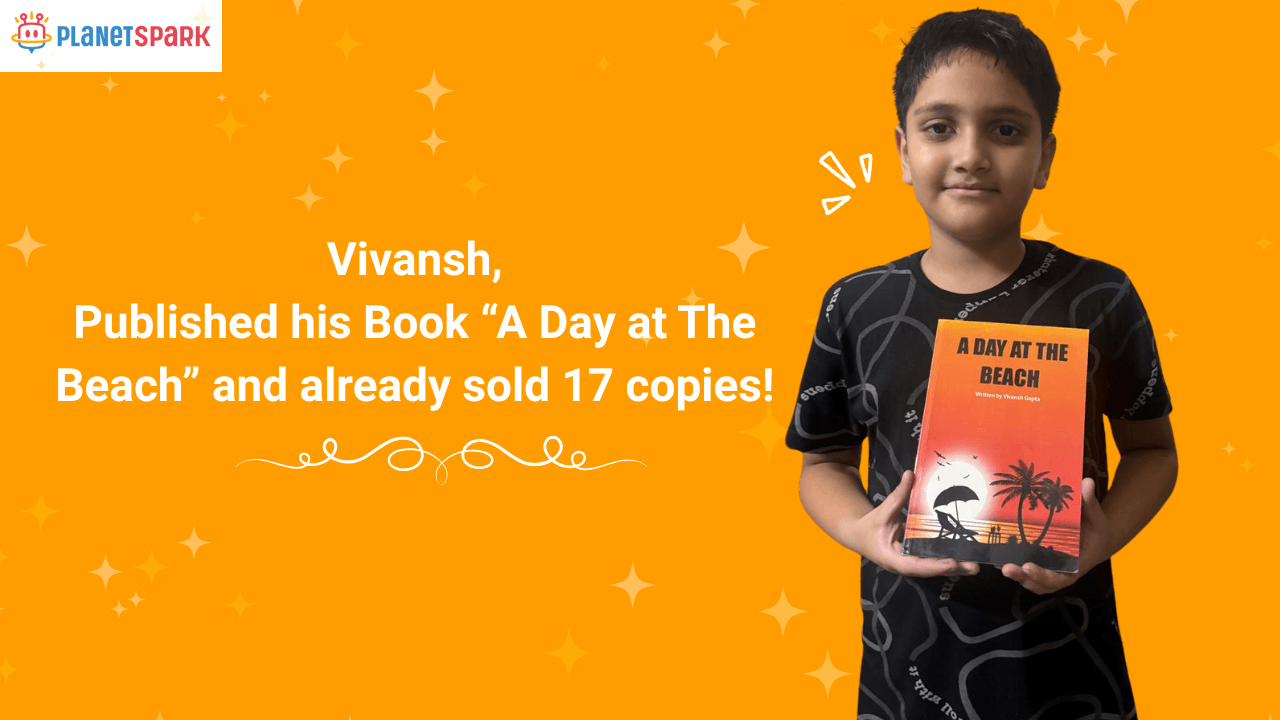
Vivansh | Age 10 | Young Author
Vivansh’s journey shows how strong language skills can turn creativity into real achievement. Through structured writing practice and creative techniques like alliteration at PlanetSpark, he developed confidence in expressing ideas clearly and creatively. This growth helped him become a published author at a young age, with 17 copies of his book successfully sold. Vivansh’s success highlights how playful language tools and guided learning can transform a child’s writing skills into meaningful accomplishments.
Conclusion
Alliteration is more than just a playful language trick, it is a powerful tool that can help your child write creatively, speak clearly, and gain confidence in everyday communication. Understanding what is alliteration and how to use it allows children to experiment with words, develop rhythm in sentences, and make their writing more expressive. From simple alliteration examples like “Silly snakes slide” to advanced story-building exercises, children gradually build vocabulary, pronunciation, and overall fluency.
For parents, incorporating alliteration into daily activities, through storytelling, games, or short writing prompts, offers a simple and effective way to support learning at home. Programs like PlanetSpark take this a step further by providing structured guidance, personalized feedback, and interactive exercises that make learning enjoyable and results-driven.
By teaching your child the meaning and application of alliteration, you’re giving them a strong foundation for academic success, improved speaking skills, and creative confidence. Start with small exercises, watch your child experiment with words, and see their writing and speech flourish.
Frequently Asked Questions
Alliteration is when two or more words start with the same sound, not necessarily the same letter. It makes sentences rhythmic, fun to say, and easy for children to remember. For example: “Tiny turtles tiptoe.”
You can start with simple games, like picking a letter and making phrases (e.g., “Busy bees buzz”), storytelling with repeated sounds, or fun word challenges using everyday objects.
Alliteration improves writing creativity, strengthens vocabulary, builds pronunciation skills, and makes speech more expressive. It also encourages children to play with words and think imaginatively.
Some beginner-friendly examples include: “Happy horses hop,” “Silly snakes slide,” and “Blue balloons bounce.” Starting simple helps children practice sounds without frustration.
Short daily practice of 5–10 minutes is enough. Incorporate it into reading, storytelling, or casual conversations. Consistency helps children absorb sounds naturally and boosts confidence.
PlanetSpark offers one-to-one sessions, interactive exercises, and personalized feedback to teach alliteration through writing and speaking tasks. Children learn through fun games, storytelling, and structured sound activities that improve fluency, creativity, and confidence.