
Anthropomorphism Meaning Explained with Examples

Table of Contents
- Understanding Anthropomorphism Meaning in Simple Terms
- Why Do We Use Anthropomorphism?
- Understanding the Key Difference Between Anthropomorphism an
- Anthropomorphism Examples from Stories and Literature
- How Anthropomorphism Works in Stories Students Love
- Turning Literary Devices into Real Writing Skills with Plane
Stories become memorable when characters feel alive, even when those characters are not human. From talking animals in fables to animated objects in modern stories, writers have long used anthropomorphism to connect readers emotionally with ideas, objects, and creatures. For students learning creative writing, this literary device is a powerful way to make stories vivid, expressive, and relatable.
Understanding anthropomorphism meaning helps students go beyond plain descriptions and enter the world of imaginative storytelling. When non-human characters think, feel, speak, or behave like humans, stories instantly become more engaging. This is why anthropomorphism is widely used in children’s literature, fantasy, cartoons, and even persuasive writing.
In this blog, we explore what anthropomorphism is, why writers use it, and how students can apply it confidently in creative writing, while also learning how it differs from personification.
Understanding Anthropomorphism Meaning in Simple Terms
Anthropomorphism means giving human qualities to non-human beings, such as animals, objects, or natural forces. These qualities can include emotions, thoughts, speech, intentions, or moral understanding.
For example, when a fox plans a clever trick or a robot feels lonely, the writer is using anthropomorphism. The non-human character is behaving like a human, not just acting symbolically.
To understand what anthropomorphism is, think about stories where animals talk, make decisions, or show emotions like jealousy, kindness, or fear. These characters are not just described poetically; they are written as if they have human minds.
Anthropomorphism in Everyday Life
Anthropomorphism is not limited to books. People use it naturally in daily life:
Saying a computer is “angry” because it crashes
Talking to pets as if they understand complex emotions
Describing cars as “loyal” or “stubborn.”
This natural tendency shows why anthropomorphism feels so familiar and effective in writing. Readers instinctively connect with human-like behavior, even when it appears in unexpected forms.
Why Students Should Learn Anthropomorphism Early
For students, learning anthropomorphism:
Encourages imagination
Improves storytelling skills
Builds emotional connection in writing
Makes narratives more engaging
In creative writing, students often struggle to bring ideas to life. Anthropomorphism provides a bridge between imagination and expression, helping students write stories that feel animated and meaningful.
Learning techniques like anthropomorphism early creates standout writers.
Join now and explore creative writing that builds imagination with structure.
Why Do We Use Anthropomorphism?
One of the main reasons writers use anthropomorphism is emotional connection. Readers may not immediately relate to an object, animal, or abstract idea, but when it behaves like a human, empathy forms naturally.
When a tree “feels lonely” or an animal “dreams of freedom,” readers emotionally invest in the story. This emotional engagement is essential in creative writing, especially for younger audiences.
Making Complex Ideas Easier to Understand
Anthropomorphism helps explain abstract or complex ideas in a simple, relatable way. Moral lessons, social behavior, and emotional struggles become easier to understand when represented through human-like non-human characters.
This is why fables and fairy tales use animals to teach values such as honesty, bravery, and kindness. Students absorb lessons without feeling lectured.
Enhancing Creativity and Imagination
Creative writing thrives on imagination. Anthropomorphism pushes students to think beyond reality and explore “what if” scenarios:
What if a pencil had opinions?
What if the moon felt jealous of the sun?
What if animals governed a city?
Such questions expand creative thinking and help students move away from predictable storytelling.
Anthropomorphism in Student Writing
For students, anthropomorphism is often the first step toward advanced storytelling. It teaches them how to:
Develop characters
Show emotions instead of stating them
Create engaging plots
By learning anthropomorphism meaning, students begin to understand how writers influence readers’ emotions and perceptions.
Many students miss structured exposure to such techniques.
Book a free demo class and see how creative ideas turn into confident writing.
Understanding the Key Difference Between Anthropomorphism and Personification
Students often confuse anthropomorphism vs personification because both involve giving human qualities to non-human things. However, the difference lies in depth and intention.
Personification gives human traits to objects or ideas for descriptive effect. Anthropomorphism gives human identity, behavior, and decision-making ability to non-human characters.
Personification: A Descriptive Tool
In personification, objects or nature are described using human actions or emotions, but they do not become full characters.
Example:
“The wind whispered through the trees.”
Here, the wind does not think or make decisions. It is simply described poetically.
Anthropomorphism: A Character-Building Tool
In anthropomorphism, the non-human entity becomes a character with thoughts, emotions, and motivations.
Example:
“The wind was angry and decided to knock down everything in its path.”
Now, the wind behaves like a human character with intent and emotion.
Why This Difference Matters in Creative Writing
Understanding anthropomorphism vs personification helps students choose the right technique. Personification adds beauty to writing, while anthropomorphism adds storytelling depth.
Students writing poems may prefer personification. Students writing stories, fables, or narratives often benefit more from anthropomorphism.
Learning when and how to use each shows maturity in creative writing and helps students avoid confusion or misuse.
This level of understanding sets strong writers apart early.
Enroll now to strengthen creative writing foundations the right way.
Anthropomorphism Examples from Stories and Literature
Some of the most beloved stories in the world rely on anthropomorphism. Talking animals, thinking objects, and emotional robots are common because they captivate readers instantly.
Examples include:
Animals that speak and behave like humans in fables
Toys that feel emotions and form friendships
Machines that question their purpose
These examples show how anthropomorphism creates entire worlds where imagination feels natural.
Anthropomorphism Examples for Students
Students can use anthropomorphism in simple yet effective ways:
A school bag is complaining about being too heavy
A clock worrying about being late
A cat planning a clever escape
Such examples help students practice creativity while still maintaining structure in writing.
Why Examples Matter in Learning
Seeing and creating anthropomorphism examples helps students understand how this device works in real writing. It moves learning from theory to practice and builds confidence.
Creative writing becomes more enjoyable when students see their ideas come alive on the page.
How Anthropomorphism Works in Stories Students Love
When students understand anthropomorphism meaning, they begin to notice it everywhere, in books, movies, cartoons, and even advertisements. Anthropomorphism is powerful because it transforms non-human characters into emotional anchors within a story. These characters don’t just exist; they experience.
Take animated films where animals attend school, worry about friendships, or chase dreams. These characters reflect human struggles, making the story relatable despite its fantasy setting. This is the core strength of anthropomorphism: it disguises real-life emotions inside imaginative forms.
For student writers, anthropomorphism allows them to explore feelings such as fear, excitement, jealousy, or hope without writing directly about themselves. A nervous pencil before an exam or a brave little boat facing a storm can communicate emotions safely and creatively.
Anthropomorphism Examples from Literature and Learning
Classic literature uses anthropomorphism to teach moral lessons. Fables often present animals as wise, foolish, clever, or arrogant, not randomly, but intentionally. These animals act as mirrors of human behavior.
Modern children’s literature continues this tradition. Objects talk, animals reason, and even abstract ideas take shape. Through such anthropomorphism examples, students learn:
How characters develop personalities
How actions reveal emotions
How dialogue brings stories alive
Anthropomorphism is not about fantasy alone; it is about clarity. When a non-human character faces a problem, the lesson becomes easier to grasp because it is simplified and symbolic.
Using Anthropomorphism Thoughtfully in Student Writing
While anthropomorphism is creative, it must be purposeful. Students should ask:
Why am I giving this character human qualities?
What emotion or message am I trying to convey?
Does this help the reader understand the story better?
When used thoughtfully, anthropomorphism improves storytelling depth. When overused, it can confuse readers. Learning balance is what separates beginner writing from strong creative writing.
Turning Literary Devices into Real Writing Skills with PlanetSpark
Learning concepts like anthropomorphism vs personification or identifying anthropomorphism examples is only the first step. What truly matters is how students use these techniques in their own writing. This is where structured creative writing guidance makes a difference.
PlanetSpark’s Creative Writing program focuses on helping students move from understanding to application. Instead of memorizing definitions, students practice writing stories, descriptions, and narratives using literary devices naturally and confidently.
Genre-Focused Curriculum: Covers diverse forms like stories, poems, essays, reviews, and persuasive letters to build versatile writing skills.
Framework-Based Learning: Students master story arcs, the S.T.O.R.Y structure, the 5W1H method, and the PEEL technique for structured writing.
Writing and Speaking Integration: Learners present their written pieces to strengthen expression and storytelling confidence.
Real-Time Editing: Classes emphasize rewriting and refinement through peer reviews and teacher feedback.
Publishing Opportunities: Students can feature their work on PlanetSpark’s blog, e-magazine, or co-authored anthologies for recognition.
Creativity Boosters: Writing prompts, imagination games, and story dice activities nurture originality and creative thinking.
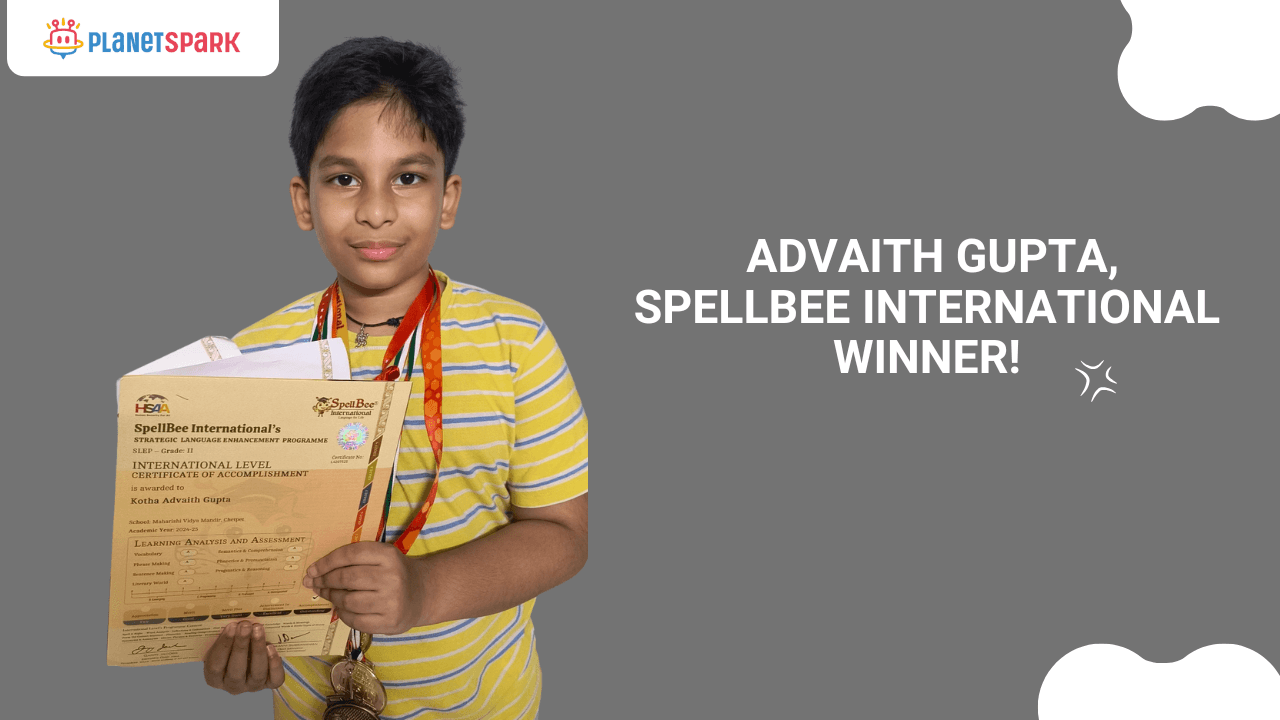
Advaith Gupta – Spelling His Way to Global Recognition!
From mastering vocabulary to shining at SpellBee International, Advaith creates remarkable achievements.
Advaith Gupta’s journey is a powerful example of how language mastery builds confidence. What began as improving vocabulary soon transformed into exceptional performance at SpellBee International, where Advaith stood out with accuracy, clarity, and confidence.
His success highlights an important truth: strong language skills are not limited to spelling alone. Vocabulary, articulation, and expression work together to create confident communicators.
Today, Advaith’s journey inspires students to look beyond memorization and focus on expression, clarity, and communication, skills that creative writing and public speaking nurture together.
Confidence grows when skills are practiced the right way.
Book a free demo class and see how ideas turn into impactful writing.
Bringing Stories to Life with Human Touch
Understanding what is anthropomorphism gives students a powerful creative tool. It teaches them that writing is not just about describing events, it’s about creating experiences. When non-human characters think, feel, and act like humans, stories become memorable.
Anthropomorphism allows students to explore emotions safely, communicate ideas clearly, and connect with readers deeply. Whether it’s a short story, a paragraph, or a full narrative, this device adds life to writing.
Students who learn literary devices early develop a natural command over language. They don’t just write—they communicate ideas with confidence and creativity.
Creative writing is not a talent reserved for a few. It is a skill that grows with the right guidance, practice, and encouragement.
Frequently Asked Questions
Anthropomorphism means giving human qualities, emotions, or actions to animals, objects, or ideas. When a clock feels tired or a lion plans revenge like a human, that is anthropomorphism. For students, it makes writing more imaginative and helps them express emotions creatively.
No, they are related but not the same. Personification gives brief human traits, while anthropomorphism turns non-human characters into full human-like beings with thoughts, emotions, and motivations. Understanding this difference helps students use literary devices correctly in creative writing.
Anthropomorphism helps writers create emotional connections. Readers relate more easily to characters who think and feel like humans, even if they are animals or objects. This makes stories more engaging, memorable, and meaningful.
Students can use anthropomorphism in stories, essays, poems, and speeches, especially when they want to explain ideas creatively. It is commonly used in fables, narratives, descriptive writing, and even persuasive speeches for impact.
Students learn best through guided practice, reading examples, writing regularly, and receiving feedback. When students practice creative writing with structure, they understand when and how to use anthropomorphism naturally instead of forcing it.