
Basic Writing Strokes for Kindergarten: Easy Activities for Beginners
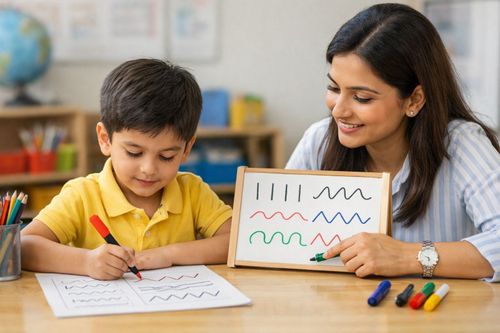

Table of Contents
- What Are Basic Writing Strokes?
- Importance of Pre-Writing Strokes for Kindergarten
- Types of Basic Strokes for Kids Writing
- Pre-Writing Activities for Preschoolers
- Line Tracing Worksheets for Kids
- Fun Activities to Develop Early Writing Skills
- Fine Motor Skills Activities for Writing
- Pencil Control Exercises for Kids
- Tips for Parents and Teachers
- Common Challenges and How to Overcome Them
- Conclusion
Did you know that a child doesn’t start learning to write by forming letters, but by mastering simple lines and shapes first? Before writing A, B, or C, children develop their skills through small movements that build control and confidence. These early steps may seem simple, but they play a huge role in shaping a child’s writing journey. Developing strong writing skills begins long before a child starts forming letters or words. In the early years, children need to build control, coordination, and confidence through simple movements known as basic writing strokes.
These foundational strokes such as lines, curves, and shapes play a crucial role in preparing young learners for successful handwriting.
What Are Basic Writing Strokes?
Basic writing strokes are simple lines and shapes that form the foundation of handwriting. These include vertical lines, horizontal lines, curves, circles, and diagonal lines. Before children learn to write letters and words, they must first become comfortable drawing these basic patterns.
The purpose of these strokes is to prepare kids for proper letter formation. Each letter in the alphabet is made up of a combination of strokes. For example, straight lines help in writing letters like “L” and “T,” while curves are essential for letters like “C” and “O.” By practicing these strokes, children gradually develop the control needed to write clearly and correctly.
In early education, basic writing strokes play a crucial role in building essential writing readiness skills. They help children understand movement, direction, and spacing, making the transition to actual writing much smoother and less overwhelming.

Importance of Pre-Writing Strokes for Kindergarten
Pre-writing strokes are important because they help children develop the foundational skills needed for writing. These activities strengthen writing readiness skills, ensuring that children are physically and mentally prepared to start forming letters.
One of the key benefits is the improvement of hand-eye coordination. When children trace or draw lines and shapes, they learn to control their hand movements based on what they see. This coordination is essential not only for writing but also for many everyday tasks.
Practicing pre-writing strokes also builds confidence in young learners. As children successfully complete simple activities, they feel encouraged and motivated to try more challenging tasks. This positive experience creates a strong base for learning and helps them approach writing with interest rather than hesitation.
Types of Basic Strokes for Kids Writing
Vertical Lines
These are straight up-and-down lines. They are one of the easiest strokes for children to learn and form the base for letters like “L,” “T,” and “H.” Practicing vertical lines helps improve control and direction.
Horizontal Lines
Horizontal lines go from left to right. These strokes are important for letters such as “E,” “F,” and “Z.” They help children understand writing direction, which is essential for proper handwriting.
Diagonal Lines
Diagonal lines are slanted lines that go in different directions. These are slightly more challenging and are used in letters like “A,” “K,” and “X.” Practicing them improves coordination and precision.
Curved Lines
Curved strokes are essential for forming rounded letters like “C,” “S,” and “U.” These lines help children develop smooth hand movements and better control.
Zig-Zag and Patterns
Zig-zag lines and repeating patterns help improve rhythm and flow in writing. These activities also make learning more fun and engaging for young children.
Circles and Loops
Circles and loops are important for letters such as “O,” “a,” and “g.” Practicing these shapes strengthens hand movement and prepares children for more complex writing tasks.
Help your child build strong writing skills with fun daily activities.
Pre-Writing Activities for Preschoolers
Drawing in Sand or Flour
Let children draw lines and shapes using their fingers in sand or flour. This sensory activity makes learning enjoyable while helping them understand movement and shape formation.
Finger Tracing Activities
Children can trace lines, shapes, or patterns using their fingers before using a pencil. This builds confidence and helps them get comfortable with basic strokes.
Coloring and Pattern Drawing
Coloring within boundaries and drawing simple patterns improves control and attention. It also enhances creativity while developing early writing skills.
Play-Based Learning Methods
Using games, toys, and creative activities like drawing on boards or using chalk keeps children engaged. Learning through play reduces pressure and encourages consistent practice.
Line Tracing Worksheets for Kids
Line tracing worksheets are one of the most effective tools for helping children practice basic writing strokes. They provide structured guidance, allowing kids to follow lines and shapes while improving control and confidence.
Benefits of Tracing Worksheets
Tracing worksheets help children develop pencil control and hand stability. They also improve hand-eye coordination and teach proper writing direction. Regular practice builds muscle memory, making it easier for kids to transition to writing letters.
Different Types of Tracing Patterns
Worksheets can include a variety of patterns such as straight lines, curves, zig-zags, waves, and shapes. Some worksheets also combine patterns to gradually increase difficulty, helping children progress step by step.
How to Use Worksheets Effectively
Start with simple patterns and slowly move to more complex ones. Keep practice sessions short and engaging to maintain interest. Encourage children to trace slowly and carefully rather than rushing, and always appreciate their efforts to build confidence.
Fun Activities to Develop Early Writing Skills
Making writing practice fun is key to keeping children engaged. Interactive activities help kids learn naturally while developing essential writing skills.
Dot-to-Dot Drawing
This activity helps children connect numbered or dotted points to form shapes or pictures. It improves counting skills along with hand control and coordination.
Maze Activities
Simple mazes encourage children to guide a pencil through paths without crossing lines. This strengthens focus, control, and problem-solving skills.
Pattern Copying Games
In this activity, children observe a pattern and try to recreate it. It enhances memory, attention to detail, and the ability to follow sequences.
Drawing Shapes and Objects
Encouraging kids to draw basic shapes like circles, squares, and triangles and later simple objects helps them practice strokes while expressing creativity. This builds both confidence and fine motor skills.
Fine Motor Skills Activities for Writing
Clay and Playdough Exercises: Playing with clay or playdough helps strengthen the small muscles in a child’s hands and fingers. Activities like rolling, squeezing, and shaping improve grip and flexibility, which are essential for writing.
Bead Threading: Threading beads onto a string is a great way to enhance hand-eye coordination and finger control. It also helps children develop focus and patience while strengthening fine motor skills.
Paper Tearing and Pasting: Tearing paper into small pieces and pasting them onto surfaces improves finger strength and control. This simple activity also encourages creativity and coordination.
Using Scissors Safely: Supervised cutting activities help children learn control and precision. Using child-safe scissors strengthens hand muscles and improves coordination needed for writing tasks.
Pencil Control Exercises for Kids
Holding the Pencil Correctly
Teaching children the proper way to hold a pencil is the first step toward good handwriting. A correct grip ensures better control and reduces strain while writing.
Tracing Lines and Shapes
Tracing helps children practice controlled movements. Starting with simple lines and shapes builds confidence and gradually prepares them for writing letters.
Gradual Progression to Letters
Once children are comfortable with basic strokes, they can slowly move on to forming letters. This step-by-step approach makes learning easier and less overwhelming.
Practice Routines for Consistency
Regular, short practice sessions help children improve steadily. Consistency is key to developing strong pencil control and building confidence in writing skills.
Explore engaging worksheets and activities to boost early writing skills.
Tips for Parents and Teachers
Keep Activities Short and Engaging
Young children have short attention spans, so it’s important to keep writing activities brief and fun. Short sessions of 10–15 minutes can be more effective than longer, tiring ones.
Encourage Without Pressure
Avoid forcing children to practice. Gentle encouragement and positive reinforcement help build interest and confidence, making learning a more enjoyable experience.
Use Colorful and Interactive Materials
Bright worksheets, crayons, markers, and fun tools like chalk or magnetic boards can make writing practice exciting. Interactive materials keep children motivated and eager to participate.
Celebrate Small Achievements
Appreciate every small effort and improvement. Celebrating progress, no matter how minor, boosts confidence and encourages children to keep learning.
Common Challenges and How to Overcome Them
Lack of Interest
Some children may find writing activities boring. To overcome this, turn practice into games or creative tasks like drawing, tracing in sand, or using colorful tools.
Difficulty in Grip or Control
Children may struggle with holding a pencil properly. Using thicker pencils, crayons, or grip aids can make it easier for them to control their movements.
Inconsistent Practice
Irregular practice can slow progress. Setting a simple daily routine helps build consistency without overwhelming the child.
Simple Solutions and Strategies
Be patient and flexible in your approach. Adjust activities based on the child’s comfort level, provide guidance when needed, and always maintain a supportive and positive learning environment.

Conclusion
Basic writing strokes are the building blocks of strong handwriting skills. By practicing simple lines, curves, and shapes, children develop the control and confidence needed to move on to letters and words. These early activities not only support writing but also improve coordination and fine motor development.
Consistent and playful practice is the key to success. When children engage in fun and interactive activities regularly, they learn naturally without feeling pressured. Over time, these small efforts lead to noticeable improvement and a positive attitude toward writing.
In the long run, mastering basic strokes helps children develop clear, neat handwriting and better academic skills. With the right guidance and encouragement, every child can build a strong foundation for writing success.
Frequently Asked Questions
Pre-writing strokes are basic lines and shapes like vertical lines, curves, and circles that help children prepare for writing letters and words.
Children can begin practicing simple strokes as early as 2 to 3 years old, depending on their readiness and interest.
You can improve pencil control through activities like tracing, coloring, playing with clay, and practicing simple line and shape drawing regularly.
Worksheets are helpful but not necessary. Children can also learn through play-based activities like drawing in sand, finger tracing, and creative games.
Short daily sessions of 10–15 minutes are enough to build skills gradually without overwhelming the child.