
Best Story Writing Examples for Classes 3–8


Table of Contents
- Why Story Writing Is Important for Students?
- Understanding the Basic Structure of Story Writing
- Short Story Writing Examples for Classes 3–4
- How Reading Story Writing Examples Helps Students
- Story Writing Tips for Students
- Why Story Writing Skills Matter Beyond School
- How PlanetSpark Helps Children Excel in Story Writing?
- Student Success Story by PlanetSpark
- Master Story Writing Skills with PlanetSpark
Story writing is one of the
most effective ways to develop a child’s creativity, imagination, and language skills. From learning how to express thoughts clearly to building confidence in English communication, storytelling plays a vital role in a student’s academic and personal growth. For children in Classes 3–8, story writing moves beyond simple sentences and becomes a powerful tool for self-expression.
In today’s learning environment, students are encouraged not just to memorise answers but to think creatively. That’s where story writing examples become extremely useful. By reading and practising different types of stories, such as short story examples and personal narrative examples, children learn structure, vocabulary, emotions, and storytelling flow.
In this blog, PlanetSpark shares the best story writing examples for Classes 3–8, explains story structure, provides class-wise samples, and shows how PlanetSpark helps children become confident and creative storytellers.
Why Story Writing Is Important for Students?
Story writing is much more than
an English classroom activity. It helps children develop essential life skills that go far beyond academics. Story writing helps students:
- Improve vocabulary and sentence formation
- Develop logical thinking and sequencing
- Enhance imagination and creativity
- Express emotions and personal experiences
- Build confidence in written and spoken English
- Improve comprehension and communication skills
When children practise story writing regularly, they learn how to organise thoughts, describe situations, and convey messages clearly.
Understanding the Basic Structure of Story Writing
Before exploring story writing examples, students need to understand the basic structure of a good story. Most stories follow a simple and effective format:
- Introduction – Introduces the characters, setting, and background
- Beginning – Presents the situation or problem
- Middle – Develops the main events or conflict
- Climax – The most exciting or turning point of the story
- Ending – Resolves the story and often includes a lesson or moral
Almost all short story examples for students follow this structure, making stories easy to understand and enjoyable to read.
Short Story Writing Examples for Classes 3–4
Short stories are ideal for younger students as they are easy to read, simple to write, and often include a clear moral.
Short Story Example 1 for Class 3: The Kind Elephant
Once upon a time, there lived a kind elephant in a forest. All the animals loved him because he helped everyone. One day, a baby tiger fell into a pit. The elephant heard its cries and rescued it using its trunk. All the animals thanked the elephant for his kindness.
Moral: Kindness is always rewarded.
Short Story Example 2 for Class 4: The Greedy Dog
A fox found a piece of meat and ran across the small river. When he looked into the water, he saw his reflection and thought it was another fox with more meat. He tried to grab it and dropped his own meat into the water. He went home hungry.
Moral: Greed leads to loss.
Story Writing Examples for Class 5
At this stage, students start writing longer stories with better descriptions and emotions.
Creative Story Example: A Rainy Day Surprise
It was raining heavily, and school was closed. I felt bored at home until my parents suggested cooking together. We laughed, made a mess, and enjoyed delicious noodles. That rainy day turned into one of the happiest days I remember.
Lesson: Happiness lies in simple moments.
Personal Narrative Examples for Students
Personal narratives allow students to write about real-life experiences, helping them express emotions honestly and clearly.
Example 1- Personal Narrative Example: My First Sports Day
Class: 5–6
I was very nervous on my first sports day. When my race started, I ran as fast as I could. Even though I came second, my parents clapped loudly. That day taught me that participation matters more than winning.
Example 2- My First Stage Performance
I still remember my first stage performance at school. My hands were shaking, and my heart was beating fast. When I started speaking, I forgot one line, but I continued confidently. The audience clapped loudly, and I felt proud of myself. That day, I learned that confidence matters more than perfection.
Short Story Writing Examples for Class 6
Example 1- Imaginative Story Example: The Talking Tree
One afternoon, I rested under a tree and heard it speak. The tree warned me about cutting down forests and harming nature. When I woke up, I realised it was a dream, but the message stayed with me forever.
Lesson: We must protect nature.
Example 2- The Time I Met My Future Self
One night, I dreamed that I met my future self. He looked confident and happy. He told me that hard work, discipline, and self-belief had helped him succeed. When I woke up, I felt motivated to work harder and chase my dreams.
Short Story Writing Examples for Class 7
Students in Class 7 begin writing more complex stories with emotions, lessons, and imagination.
Short Story Example: The Lost Wallet
Ravi found a wallet on the road while returning home. Instead of keeping it, he searched for the owner and returned it. The man rewarded Ravi and praised his honesty. Ravi felt proud of doing the right thing.
Moral: Honesty brings true happiness.
Story Writing Examples for Class 8
At this level, students are encouraged to think deeply and write meaningful stories.
Personal Narrative Example: A Lesson I Will Never Forget
Once, I ignored my parents' advice and performed poorly on a test. Instead of scolding me, she encouraged me to work harder. Her words motivated me to improve, and I performed much better next time. That lesson changed my attitude forever.
Give your child the confidence to write, speak, and shine—start their PlanetSpark journey today!
How Reading Story Writing Examples Helps Students
Reading different story writing examples for students helps children:
- Understand story flow and structure
- Learn new words and phrases
- Improve grammar naturally
- Gain ideas for their own stories
- Build confidence in creative writing
This is why regular exposure to short story examples and personal narrative examples is so important.
Story Writing Tips for Students
Writing a good story becomes easy and enjoyable when students follow the right approach. Whether you are writing for school exams, homework, or competitions, these story writing tips for students will help you improve creativity, clarity, and confidence.
- Plan Before You Write: Before you start, consider the characters, setting, and main idea. A simple outline with a beginning, middle, and ending helps keep the story organised.
- Start with a Strong Opening: The first few lines should grab the reader’s attention. Begin with an interesting situation, a thought-provoking question, or an exciting moment to pique the reader's curiosity.
- Keep the Language Simple and Clear: Use age-appropriate words and short sentences. Clear language makes the story easy to understand and enjoyable to read.
- Focus on One Main Idea: Avoid adding too many characters or events. A focused storyline helps deliver a strong message or moral.
- Show Feelings Through Actions: Instead of only telling emotions, describe actions. For example, show nervousness through trembling hands or excitement through a bright smile.
- Use Descriptive Details: Add small details about places, people, and emotions to make the story more interesting and vivid.
- Maintain a Logical Flow: Events should happen in the correct order. Smooth transitions help the reader follow the story without confusion.
- Write a Meaningful Ending: End the story with a clear conclusion. A lesson, moral, or reflection makes the story memorable.
- Revise and Edit: Always re-read your story to correct spelling, grammar, and sentence structure. Editing improves the quality of writing.
- Practice Regularly: The more you write, the better you become. Daily practice builds confidence and strengthens storytelling skills.
Why Story Writing Skills Matter Beyond School
Strong storytelling skills help children:
- Perform better in exams
- Improve public speaking and presentations
- Communicate ideas confidently
- Develop leadership and emotional intelligence
- Prepare for future careers
- Story writing builds a foundation for lifelong communication success.
How PlanetSpark Helps Children Excel in Story Writing?
PlanetSpark makes learning fun as easy as we immerse fun, pictures, and game-based learning for kids of all age groups. Our online English grammar and writing classes are specifically developed to help kids understand the core concepts and basics, and later apply them in real-world communication. With gamified creative writing courses, your child can practice writing from beginner to advanced level without feeling pressured or bored.
Here’s what makes PlanetSpark different from other ed-tech platforms:
- Step-by-step learning process which starts from beginner's writing topics to advanced concepts like worldbuilding.
- More than 800+ interactive practice worksheets and quizzes specially handpicked and designed by industry experts to make grammar and creative writing easy and engaging.
- Expert certified English teachers with hands-on experience in the teaching industry who can personalise sessions according to the needs of the child.
- Live, 1:1 interactive classes with teachers and trainers who provide instant feedback and offer two-way engagement through active participation.
- Curriculum built around real-world situations to make the learning process seem natural and relevant.
- Learning through games, storytelling, and visual effects makes the child feel that learning is fun and engaging.
- Follows the latest curriculum for students appearing for board exams, so that they feel confident while giving their exams.
Student Success Story by PlanetSpark
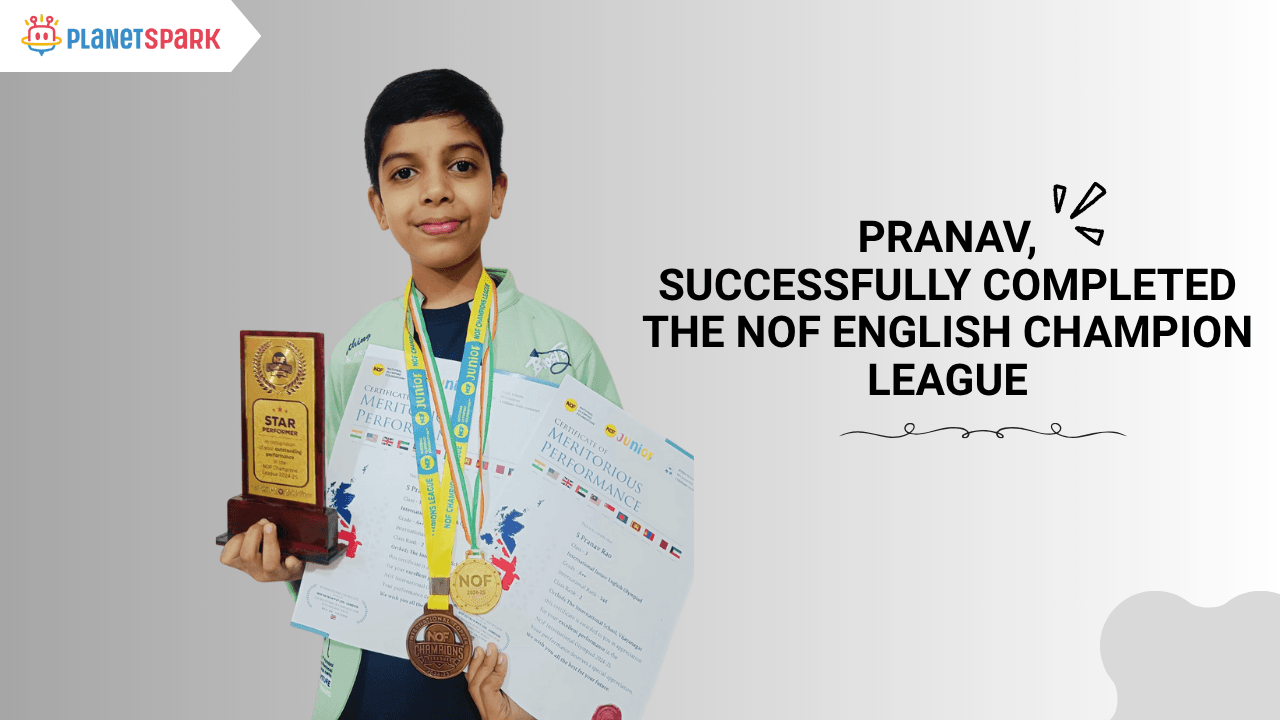
Pranav, a Grade 3 star, successfully completed the NOF English Champion League, showcasing his remarkable talent in Public Speaking and Creative Writing. Through consistent practice and guided learning, he built confidence, improved expression, and learned to present his ideas clearly—proving that the right support can help young learners shine.
Help your child become the next confident communicator—book a free PlanetSpark demo class today!
Master Story Writing Skills with PlanetSpark
Story writing is a powerful tool that shapes creativity, confidence, and communication skills in children. With regular practice and exposure to the right story writing examples, students from Classes 3–8 can become confident writers and imaginative thinkers. PlanetSpark helps children unlock their storytelling potential through expert guidance, structured practice, and personalised feedback.
Frequently Asked Questions
Common types of story writing examples include:
- Short stories with morals
- Personal narrative examples
- Imaginative or fantasy stories
- Creative stories based on real-life events
- Reflective stories with lessons
Each type helps students explore different writing styles and emotions.
Class 3–4 students can improve by reading short story examples, writing small paragraphs, focusing on one main idea, using simple language, and practising stories with clear morals.
For Class 5–8 students, story writing involves longer narratives, emotional depth, better descriptions, structured plots, and personal reflections. They are encouraged to think creatively and express opinions confidently.
Personal narratives are stories based on real-life experiences. They help students express emotions honestly, improve clarity of thought, and build confidence in sharing personal experiences through writing.
PlanetSpark helps children improve story writing through personalised 1:1 coaching, structured creative writing practice, storytelling activities, feedback-driven improvement, and confidence-building exercises.