
Coherence in Writing: Tips to Create Clear Connected Paragraphs
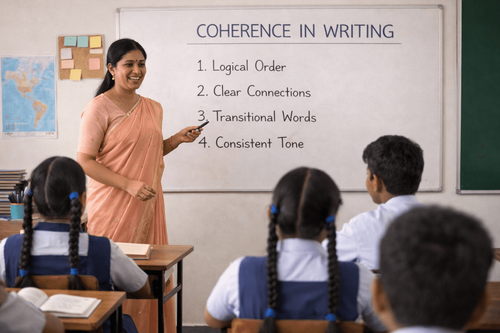

Table of Contents
- What is Coherence in Writing
- What is Coherence in Paragraph Writing
- Why Coherence is Important in Writing
- Coherence and Cohesion in Writing
- Techniques to Achieve Coherence in Writing
- Coherence in Academic Writing
- Common Mistakes that Break Coherence
- Strategies to Improve Coherence in Writing
- Practical Exercises to Build Coherence Skills
- PlanetSpark Creative Writing Course for Strong Writing Skill
- Building Coherent Writing for Clear Communication
Writing becomes powerful when ideas flow smoothly from one sentence to the next. That smooth flow is called coherence in writing, and it ensures readers clearly understand the message being conveyed. Whether you are writing an essay, academic paper, blog, or story, coherent paragraphs help maintain clarity and logical progression.
This blog explains what is coherence in writing, how it works in paragraphs, and how writers can improve logical flow using proven techniques. You will also learn about coherence and cohesion in writing, practical strategies to structure ideas, and tips to improve coherence in academic writing.
What is Coherence in Writing
Coherence in writing refers to the logical connection and smooth flow of ideas within sentences, paragraphs, and the entire text. When writing is coherent, readers can easily follow the writer’s thought process.
Key Characteristics of Coherent Writing
A coherent piece of writing usually includes:
Logical sequence of ideas
Clear topic sentences
Smooth transitions between sentences and paragraphs
Consistent focus on the main idea
Well-organized supporting details
For example:
Incoherent paragraph:
Online learning is useful. Students learn many subjects. Technology is growing. Teachers also use apps.
Coherent paragraph:
Online learning has become increasingly popular because it allows students to learn various subjects from anywhere. With the rapid growth of technology, teachers now use digital platforms and interactive apps to make lessons more engaging and accessible.
In the second paragraph, the ideas are connected logically, making it easier for readers to understand the message.

What is Coherence in Paragraph Writing
What is coherence in paragraph writing? It refers to how well sentences within a paragraph connect and support the central idea.
A coherent paragraph generally contains three essential parts:
Topic Sentence – Introduces the main idea
Supporting Sentences – Provide explanation, examples, or evidence
Concluding Sentence – Summarizes or transitions to the next idea
Example Structure of a Coherent Paragraph
Topic sentence: Reading regularly improves language skills.
Supporting points:
Expands vocabulary
Improves sentence structure
Enhances comprehension skills
Concluding idea: As a result, consistent reading helps people become better writers and communicators.
This structure ensures the paragraph remains focused and logically connected.
Why Coherence is Important in Writing
Coherence in writing plays a critical role in ensuring that ideas are presented in a clear, logical, and meaningful way. When a piece of writing is coherent, readers can easily follow the writer’s thoughts from one sentence to the next and from one paragraph to another. Without coherence, even well-researched content can appear confusing or disconnected, making it difficult for readers to grasp the intended message.
In simple terms, coherence acts as the bridge that connects ideas. It ensures that every sentence contributes to the central idea and that the overall structure of the content flows naturally. Whether the writing is academic, professional, or creative, coherence allows readers to understand not only what the writer is saying but also how different ideas are related.
For example, in an essay or article, the writer may present multiple points, arguments, or examples. If these ideas are not logically connected, readers may feel lost or uncertain about the main message. However, when the content is coherent, each idea builds upon the previous one, guiding the reader smoothly through the discussion.
Another reason coherence is important is that it improves readability. Readers generally prefer content that is easy to follow and logically structured. When ideas are clearly connected, readers can process information quickly and remain engaged with the content. This is especially important in academic writing, where complex ideas must be explained clearly.
Benefits of Coherent Writing
Coherent writing offers several advantages that improve the overall quality of communication.
Improves clarity of ideas
When writing is coherent, the writer’s thoughts are presented in a structured and organized manner. Each paragraph focuses on a specific idea, and supporting sentences explain that idea clearly. This clarity helps readers understand the message without confusion.Helps readers follow the argument easily
In argumentative or analytical writing, coherence ensures that the reasoning is logical and easy to follow. Readers can see how one point leads to another, making the argument more persuasive and convincing.Strengthens academic and professional writing
Coherence is a key requirement in academic essays, research papers, and professional reports. Teachers, professors, and employers often evaluate writing based on how well ideas are organized and connected. Well-structured writing reflects critical thinking and strong communication skills.Enhances storytelling and narrative flow
In creative writing, coherence helps maintain a smooth narrative flow. Whether writing stories, articles, or blog posts, coherent writing ensures that events, descriptions, and ideas progress logically, keeping readers engaged throughout the text.Makes essays and research papers more convincing
When arguments and evidence are presented in a coherent way, readers are more likely to trust and accept the writer’s viewpoint. Logical organization strengthens the credibility of the content and makes it more persuasive.
In educational settings, teachers frequently assess assignments based on clarity, logical structure, and idea development. This is why coherence in academic writing is extremely important. Students who organize their ideas clearly and connect their arguments effectively are more likely to produce high-quality essays and research papers.
Coherence and Cohesion in Writing
Many writers confuse coherence and cohesion in writing, but they are different concepts that work together.
Coherence
Coherence refers to the logical organization of ideas in a text.
Cohesion
Cohesion refers to grammatical and lexical links that connect sentences.
Examples of Cohesion Devices
Transition words: however, therefore, meanwhile
Pronouns: he, she, it, they
Synonyms and repetition: repeated key terms to maintain topic focus
Conjunctions: and, but, because
Example
Without cohesion:
The climate is changing. Many countries are worried. Governments are making policies.
With cohesion:
The climate is changing rapidly, and many countries are becoming increasingly concerned. As a result, governments are developing new policies to address environmental challenges.
Cohesion tools help create a seamless reading experience.
Techniques to Achieve Coherence in Writing
Writers can use several techniques to ensure clarity and flow.
1. Use Clear Topic Sentences
A topic sentence introduces the central idea of a paragraph.
Example:
Digital literacy is becoming an essential skill for modern professionals.
2. Maintain Logical Order
Ideas should follow a logical sequence, such as:
Chronological order
Cause and effect
Problem and solution
Comparison and contrast
3. Use Transition Words
Transitions connect ideas and guide readers.
Examples include:
First, next, finally
Similarly, likewise
However, on the other hand
Therefore, consequently
4. Keep a Single Focus in Each Paragraph
Each paragraph should discuss only one main idea.
5. Repeat Key Terms Strategically
Repeating key concepts helps readers stay focused on the main idea.
Coherence in Academic Writing
Coherence in academic writing is essential because academic texts often contain complex ideas that must be presented logically.
Academic Writing Requires
Structured arguments
Evidence-based reasoning
Clear paragraph connections
Logical transitions between sections
Techniques Used in Academic Writing
Outlining before writing
Using structured headings
Maintaining consistent terminology
Connecting paragraphs through transition sentences
Example transition sentence:
"While the previous section explained the causes of climate change, the following section discusses its impact on global ecosystems."
These connections help maintain logical progression throughout the document.
Common Mistakes that Break Coherence
Even experienced writers sometimes struggle with maintaining coherence.
1. Jumping Between Ideas
Switching topics abruptly confuses readers.
2. Lack of Transitions
Without linking words, paragraphs feel disconnected.
3. Too Many Unrelated Details
Including irrelevant information breaks paragraph unity.
4. Weak Topic Sentences
If the topic sentence is unclear, the paragraph loses direction.
5. Poor Paragraph Organization
Ideas should always follow a logical order.
Strategies to Improve Coherence in Writing
Improving coherence requires consistent practice and awareness.
Practical Strategies
Plan your ideas before writing
Use outlines or mind maps
Check logical flow between sentences
Read the paragraph aloud to test clarity
Edit for transitions and structure
Editing Checklist for Coherence
Ask yourself these questions:
Does each paragraph focus on one idea?
Do sentences logically connect to each other?
Are transitions used effectively?
Does the paragraph support the main argument?
If the answer to any of these is no, the paragraph may require revision.
Practical Exercises to Build Coherence Skills
Learning coherence becomes easier with practice.
Exercise 1 – Rearranging Sentences
Rearrange sentences to form a logical paragraph.
Exercise 2 – Transition Practice
Insert appropriate transition words in a paragraph.
Exercise 3 – Paragraph Expansion
Start with a topic sentence and build a complete paragraph using supporting details.
Exercise 4 – Outline to Paragraph
Convert an outline into a coherent paragraph.
These exercises help writers understand how ideas connect logically.

PlanetSpark Creative Writing Course for Strong Writing Skills
Strong writing requires creativity, structure, and consistent feedback. The PlanetSpark Creative Writing Course is designed to help both kids and adults develop these skills through guided learning and advanced technology.
PlanetSpark offers 1:1 personal trainers for every learner, ensuring individual attention and tailored instruction. Each trainer understands the student’s pace, learning style, and strengths, providing instant feedback that helps improve storytelling, grammar, and fluency.
The program follows a personalised curriculum and learning roadmap. After assessing the learner’s current ability, trainers create a customised plan that strengthens vocabulary, paragraph structure, creative thinking, and communication skills.
PlanetSpark also integrates technology through SparkX – an AI enabled video analysis tool. This tool evaluates voice clarity, body language, sentence structure, and confidence, giving learners detailed performance insights.
Students benefit from AI-led practice sessions that simulate real speaking and storytelling scenarios. These sessions provide instant feedback on grammar, pacing, and clarity.
Another unique feature is Spark Diary, a digital journal where students practise writing daily reflections, stories, and speeches. This habit improves creativity and clarity of thought.
Learning becomes exciting through gamified modules, including vocabulary quizzes, grammar challenges, and spelling games that reinforce language skills.
Parents receive regular updates through structured PTMs and comprehensive progress reports, helping them track improvements in writing, critical thinking, and confidence.
Students can also participate in learning clubs such as debate, storytelling, podcasting, and writing communities, which promote collaboration and creativity.
Finally, Sparkline, a safe platform for students, allows them to publish stories, speeches, and creative content while receiving appreciation from peers.
Building Coherent Writing for Clear Communication
Coherence in writing is essential for expressing ideas clearly and effectively. When sentences and paragraphs connect logically, readers can easily understand the message and stay engaged throughout the text.
Writers can achieve coherence by focusing on clear topic sentences, logical organization, effective transitions, and consistent paragraph structure. Understanding the relationship between coherence and cohesion in writing also helps create smoother and more meaningful content.
Whether you are writing essays, research papers, blogs, or stories, strong coherence ensures your ideas are presented in a structured and impactful way. With regular practice, editing, and the right guidance, anyone can develop the ability to craft clear, well-connected paragraphs that communicate ideas with confidence.
You can also read:
Frequently Asked Questions
Coherence in writing refers to the logical connection and smooth flow of ideas within sentences, paragraphs, and an entire text. When writing is coherent, readers can easily understand how ideas relate to each other.
A coherent text usually includes:
Clear topic sentences
Logical organization of ideas
Proper transitions between sentences
Consistent focus on the main theme
Coherence ensures the writing feels structured and meaningful rather than random or disconnected.
Coherence in paragraph writing means that all sentences within a paragraph work together to support one central idea.
A coherent paragraph usually contains:
A clear topic sentence
Supporting details and examples
Logical sentence order
A concluding or transition sentence
This structure helps maintain clarity and ensures readers can follow the paragraph easily.
Coherence refers to the logical flow and organization of ideas in a text, while cohesion refers to the grammatical and lexical tools that connect sentences.
Examples of cohesion include:
Transition words
Pronouns
Conjunctions
Repetition of key terms
Together, coherence and cohesion create smooth, understandable writing.
Coherence in academic writing helps present arguments clearly and logically. Academic texts often contain complex ideas, and coherence ensures readers can follow the reasoning.
Benefits include:
Improved readability
Stronger arguments
Better organization of ideas
Higher academic writing quality
Professors and examiners often evaluate essays based on coherence and logical structure.
Students can improve coherence through consistent practice and structured learning techniques.
Some effective methods include:
Planning ideas before writing
Using outlines and paragraph structures
Adding transitions between sentences
Revising and editing for clarity
Practising storytelling and essay writing regularly
Structured programs such as the PlanetSpark Creative Writing Course help learners build these skills through expert trainers, AI based feedback tools, and guided writing practice. This approach helps both kids and adults develop clear, confident, and well-connected writing abilities.