
Understanding Comparative Writing and Its Purpose | PlanetSpark


Table of Contents
Comparative writing is one of the most important academic writing skills students develop during their school years. It teaches learners how to examine two or more subjects closely, identify meaningful similarities and differences, and present those observations in a logical and organised way. This blog explains what comparative writing is, why it matters, and how students can structure effective comparison essays. It also introduces common mistakes to avoid and offers practical topic ideas to practise this skill confidently. Developing this ability early supports stronger analytical thinking, which is a core focus of PlanetSpark’s Creative Writing programs that encourage structured expression and clarity of thought.
Comparative Writing and Its Purpose
Comparative writing is a structured way of writing that teaches students how to study two or more related subjects by identifying their similarities and differences. Instead of writing about one topic at a time, students use compare and contrast writing to understand how ideas connect, differ, and influence each other.
For example, when a student compares online classes and offline classes, they do not only mention features such as screens or classrooms. Instead, they explain how learning methods, interaction, and discipline are similar or different. This helps readers understand both subjects more clearly.
Purpose of Comparative Writing
The main purpose of comparative writing is to help students think deeply and write clearly. Each comparison should answer an important question and guide the reader toward a meaningful conclusion.
- First, comparative writing develops critical thinking skills. When students compare two stories, characters, or ideas, they learn how to observe details, identify patterns, and make thoughtful decisions.
- Next, compare and contrast writing improves understanding of topics. By studying similarities and differences together, students learn more than they would by reading about one subject alone.
- In addition, comparative writing teaches students how to organise ideas logically. Students learn to group related points, use clear transitions, and follow a structured writing pattern.
- Finally, comparative writing strengthens explanation and reasoning skills. Students learn to support their ideas with examples, which is an important part of academic writing.
According to academic writing guidelines, compare and contrast writing is effective only when it has a clear purpose. Without a clear goal, comparative writing becomes a simple list of points instead of meaningful analysis.
Help your child think clearly and write confidently.
Learn comparative writing through structured Creative Writing programs at PlanetSpark.
Selecting Subjects for Effective Comparison
Choosing the right subjects is the foundation of a strong compare and contrast essay. Not all topics create meaningful comparisons.
What makes good comparison subjects
Effective subjects usually:
- Belong to the same category
- Share comparable features
- Offer both similarities and differences
- Support a clear analytical purpose
Examples of strong subject pairs
- Online learning vs classroom learning
- Fiction books vs non fiction books
- Traditional education vs modern education
- City life vs village life
Avoid comparing unrelated subjects, as this leads to forced analysis and weak arguments.
From comparing ideas to expressing opinions with clarity.
Build strong compare-and-contrast writing skills with expert-guided learning at PlanetSpark.
Key Approaches to Comparative Writing Structure
A clear structure is the backbone of effective comparative writing. Without proper organisation, even good ideas can become confusing for the reader. Therefore, choosing the right structure helps students present similarities and differences in a clear, logical, and easy to follow manner.
Before beginning a compare and contrast essay, students should decide how they want to organise their ideas. The structure they choose depends on the type of subjects, the number of comparison points, and the level of detail required.
Why Structure Is Important in Compare and Contrast Writing
A strong comparative writing structure helps students:
- Present ideas in a clear and logical order so readers can easily follow the comparison
- Avoid repetition and confusion by grouping related points together
- Maintain balance between subjects by giving equal attention to both sides
- Guide readers smoothly from one point to the next using clear transitions
- Show similarities and differences clearly without mixing ideas
- Stay focused on the main comparison purpose instead of adding unrelated details
- Write organised paragraphs that support the overall comparison
As a result, structured writing makes comparisons more meaningful and easier to understand.
Organising Comparisons: Block Method vs Point-by-Point Method
When writing comparative writing tasks, students must choose how they will organise similarities and differences. In compare and contrast writing, the two most commonly used structures are the block method and the point-by-point method. Each method helps students organise comparisons in a clear and meaningful way.
Understanding these methods helps students decide how to present their ideas clearly and avoid confusion.
Block Method in Comparative Writing
In the block method, students write about one subject completely before moving on to the next subject. Both subjects are discussed using the same comparison points, but they are kept in separate sections.
How the block method works
- First, students introduce both subjects
- Next, they explain all the points about Subject A
- Then, they explain the same points about Subject B
- Finally, they conclude the comparison
Example for kids
If students compare dogs and cats, they first write everything about dogs such as food habits, behaviour, and care. After that, they write about cats using the same points.
Advantages of the block method
- Easy to understand
- Helps students focus on one subject at a time
- Reduces confusion for beginners
Turn everyday comparisons into powerful writing skills.
Explore Creative Writing programs that strengthen thinking, structure, and expression.
Point by Point Method in Comparative Writing
In the point-by-point method, students compare both subjects together under each comparison point. This method shows similarities and differences side by side.
How the point-by-point method works
- First, students introduce both subjects
- Next, each paragraph discusses one comparison point for both subjects
- The comparison happens immediately within the paragraph
Example for kids
When comparing online classes and offline classes, one paragraph explains learning style in both, another compares student interaction, and a third compares discipline.
Advantages of the point-by-point method
- Makes similarities and differences easy to notice
- Improves critical thinking
- Encourages detailed compare and contrast writing
Choosing Between the Block Method and the Point-by-Point Method
Students should choose the structure based on their writing goal:
- Use the block method for simple and short comparisons
- Use the point-by-point method for detailed and analytical comparisons
- Stick to one method throughout the essay
- Use transition words like both, however, similarly, and on the other hand
Common Mistakes in Comparative Writing
Many students struggle with comparative writing because of avoidable errors.
Frequent mistakes to avoid
- Listing similarities and differences without analysis
- Switching structures mid-essay
- Comparing too many points at once
- Failing to connect comparisons to the main idea
- Using unequal evidence for both subjects
Good compare and contrast writing focuses on balanced discussion and consistent organisation throughout the essay.
How PlanetSpark’s Creative Writing Programs Deliver Real Results
Genre-Based Curriculum: Short stories, poetry, journals, essays, book reviews, and persuasive letters taught through focused lesson plans.
Framework Driven Writing: Structured instruction using story arcs, S.T.O.R.Y framework, 5W1H, and PEEL technique.
Writing and Speaking Integration: Oral Presentations to Build Confidence, Clarity, and Storytelling Flow.
Editing and Feedback Focus: Real-time editing with peer review and teacher-guided revisions.
Publishing Opportunities: Student work featured on PlanetSpark’s blog, e magazine, and co-authored anthologies.
Creativity Boost Activities: Story dice, prompts, image-based writing, and guided imagination tasks.
Give your child the tools to compare, analyse, and express.
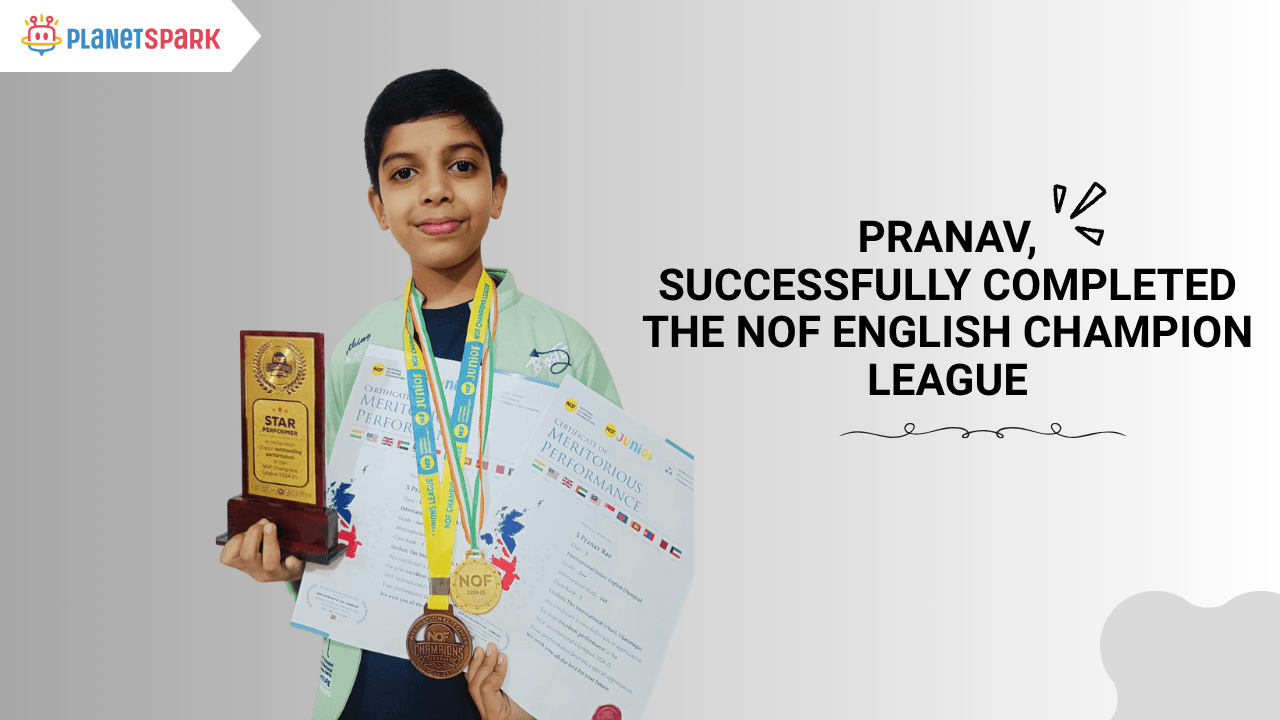
Pranav, a bright Grade 3 learner, successfully completed the NOF English Champion League, where he demonstrated exceptional growth in both Public Speaking and Creative Writing. Through structured writing activities such as comparative writing, Pranav learned how to organise his ideas clearly, identify similarities and differences thoughtfully, and express his opinions with confidence. Pranav’s journey highlights how PlanetSpark’s Creative Writing programs help young learners develop analytical thinking, structured expression, and confident communication at an early age
Conclusion
Understanding comparative writing helps students move beyond simple descriptions and develop strong thinking and expression skills. By learning how to identify similarities and differences, choose meaningful topics, and organise ideas using the block method or point-by-point method, students gain clarity, confidence, and structure in their writing. Mastering compare and contrast writing also prepares learners for higher academic tasks by strengthening analysis, reasoning, and communication.
Frequently Asked Questions
Comparative writing is a type of academic writing where students examine two or more subjects by identifying their similarities and differences to understand ideas more deeply.
Compare and contrast writing helps students improve critical thinking, organise ideas logically, and explain relationships between topics clearly.
Good compare and contrast writing topics include online classes vs offline classes, fiction vs non fiction books, city life vs village life, and traditional vs modern education.
A compare and contrast essay 100 – 1K words is suitable for school students, depending on grade level and depth of comparison required.
Students can learn compare and write effectively through structured practice, clear templates, examples, and guided Creative Writing programs like those offered by PlanetSpark.