Composition writing is a core language
skill that helps students organize thoughts, express ideas clearly, and communicate meaningfully through written words. From simple paragraphs to detailed picture-based compositions, composition writing teaches students how to present ideas logically while using correct language and structure. When children learn composition writing early, they gain confidence not only in exams but also in everyday communication and creative expression.
PlanetSpark supports students in developing strong
composition writing skills through structured lessons and expert feedback. With step-by-step guidance, learners progress from writing basic sentences to creating clear, engaging, and well-organized compositions.
What Is Composition Writing?
Composition writing refers to writing a structured piece of text on a given topic using clear language, logical flow, and proper organization. It includes different forms such as narrative writing, descriptive writing, imaginative writing, and picture composition. The purpose of composition writing is to communicate ideas meaningfully rather than simply forming grammatically correct sentences.
Through composition writing, students learn how to introduce a topic, expand ideas using examples or descriptions, and conclude effectively. This process teaches them how writing works as a complete piece rather than as disconnected lines. Over time, composition writing improves a student’s ability to think critically, express creativity, and communicate ideas confidently.
Why Composition Writing Is Important for Students?
Composition writing plays a critical role in a student’s overall language development. When students write a composition, they must think carefully about what they want to say, how to organize their ideas, and which details best support the topic. This process strengthens thinking skills because students are not simply writing sentences but planning and shaping meaning. Regular practice in composition writing improves vocabulary as students learn to choose appropriate words instead of repeating the same ones. It also strengthens sentence construction by teaching students how to connect ideas smoothly and avoid broken or incomplete thoughts. Over time, compositions become clearer, more structured, and more confident.
Composition writing also supports reading comprehension and speaking skills. When students understand how ideas are organized in writing, they read with better understanding and speak more clearly. They learn how introductions, explanations, and conclusions work together, which improves how they explain ideas verbally in class discussions and presentations.
Composition Writing Format Explained
Understanding composition writing format is essential for producing writing that is clear, organized, and easy to follow. The format provides a reliable structure that guides students from the beginning of the composition to the end. It helps them know where to start, how to develop ideas, and how to finish effectively. Without a clear format, compositions often become confusing, with ideas jumping randomly, repeating unnecessarily, or ending abruptly. Format acts as a framework that keeps writing focused and balanced while still allowing creativity.
A standard composition writing format is built around three main parts. The introduction introduces the topic and sets the context so the reader understands what the composition is about. A strong introduction prepares the reader for the ideas that will follow and creates interest in the topic. The body of the composition develops the topic in detail by describing events, explaining ideas, or narrating experiences using clear supporting details. Organizing the body logically helps maintain flow and prevents repetition. The conclusion brings the composition to a meaningful close by summarizing the main idea, reflecting on the topic, or offering a final thought. A clear conclusion ensures the composition feels complete rather than unfinished.
Why Format Matters in Composition Writing
Using the correct format improves readability and makes writing easier for both the writer and the reader. When ideas are arranged logically, readers can understand the message without confusion. This is especially important in exams and assessments, where clarity and organization are key evaluation criteria. Teachers assess not only what students write but also how they structure their ideas. Students who follow a clear composition writing format score better because their writing shows planning, organization, and control. Over time, understanding format helps students write confidently and independently, reducing hesitation and improving overall writing quality.
How to Write a Composition Step by Step
Learning how to write a composition becomes far less overwhelming when students follow a clear, step-by-step approach. Many students feel anxious about composition writing because they try to write everything at once without a plan. A structured process breaks writing into manageable stages, helping students stay focused and confident. When students know exactly what to do at each stage, writing feels organized instead of stressful, and ideas flow more naturally.
Planning Before Writing
Planning is the most important step in composition writing because it lays the foundation for the entire piece. Before writing, students should carefully read and understand the topic, identify what is being asked, and think about the main idea they want to convey. Brainstorming ideas helps students collect thoughts without worrying about order at first.
Once ideas are listed, students should decide the sequence in which they will appear. Writing a simple outline with an introduction idea, key body points, and a conclusion ensures that the composition stays on track. Planning prevents repetition, reduces confusion, and helps students include all important points. A well-planned composition is always clearer and more confident than one written without preparation.
Writing the First Draft
While writing the first draft, students should focus on expressing ideas clearly rather than trying to write perfectly. This stage is about turning planned ideas into sentences and paragraphs using simple, correct language. Students should follow the outline closely so that ideas flow logically from introduction to conclusion.
At this stage, mistakes are normal and expected. Students should not stop frequently to correct grammar or vocabulary, as this can interrupt the flow of writing. Completing the first draft helps students see their ideas on paper and builds confidence. A complete draft, even with errors, is easier to improve than an unfinished piece.
Revising and Improving the Composition
Revision is the stage where good writing becomes strong writing. During revision, students read their composition carefully to check grammar, spelling, punctuation, and sentence structure. They look for repeated words, unclear sentences, and places where ideas can be explained better.
Revision also helps students improve flow by adding linking words, rearranging sentences, or strengthening the introduction and conclusion. This step teaches students that writing improves through effort and reflection, not instant perfection. Over time, regular revision builds awareness of writing quality and helps students become independent writers.
Composition Writing Examples for Better Understanding
Composition writing examples are powerful learning tools because they show students how writing rules work in real situations. Many students struggle with instructions until they see an actual example. Examples make abstract ideas like structure, flow, and tone concrete and easy to understand.
By reading examples, students see how ideas are introduced, expanded, and concluded. They also learn how long paragraphs should be, how sentences connect, and how vocabulary is used naturally. This exposure reduces fear and helps students feel more confident when writing their own compositions.
What Students Learn from Composition Writing Examples
By studying composition writing examples, students learn how strong introductions capture attention and clearly present the topic. They understand how body paragraphs develop ideas with details instead of jumping randomly between points. Examples also show how conclusions bring writing to a natural and satisfying close.
Students also learn about tone, vocabulary choice, and sentence variety. They begin to notice how simple words can be used effectively and how sentence length can change for better flow. This understanding helps students improve their own writing style and clarity.
Composition Writing Topics for Practice
Practicing with a variety of composition writing topics helps students develop flexibility and creativity. Different topics require different ways of thinking. Personal experience topics encourage reflection, descriptive topics improve observation, imaginative topics strengthen creativity, and picture-based prompts build visual thinking.
Common composition writing topics include my favourite place, a memorable day, a rainy day, my best friend, or an interesting picture. These topics are familiar and relatable, making it easier for students to focus on structure and expression rather than struggling for ideas.
Importance of Practicing Different Topics
Practicing different topics helps students adapt their writing style based on context and purpose. This prepares them for exams, classroom assignments, and real-life situations where they may need to write on unfamiliar subjects.
Topic variety also prevents boredom and keeps writing practice engaging. As students practice more topics, they become faster thinkers, clearer writers, and more confident communicators. Over time, composition writing stops feeling difficult and becomes a skill students can rely on across subjects and situations.
Picture Composition Writing for Young Learners
Picture composition writing is especially effective for young learners because it connects what children see with what they write. At an early age, many students have ideas but struggle to put them into words. A picture provides a clear starting point, reducing hesitation and helping children organize thoughts naturally. When students look at an image, they begin to notice details, actions, and relationships, which makes writing feel purposeful instead of intimidating.
Picture composition also supports language development by encouraging children to convert visual information into sentences. This strengthens vocabulary, sentence structure, and confidence. Because students are guided by what they see, they are less likely to feel stuck or unsure about what to write, making picture composition an ideal introduction to composition writing.
To write picture composition, students should begin by observing the picture carefully before writing anything. They should look at who is in the picture, what objects are present, where the scene is taking place, and what actions are happening. Taking a few moments to notice details helps students avoid rushed or incomplete writing.
After observation, students should decide the order in which events or details will be described. Writing in a logical sequence makes the composition easy to understand. Using simple, clear sentences is important, especially for young learners. Students should focus on describing actions and situations accurately rather than using complex vocabulary. This approach maintains clarity and helps build strong sentence formation skills.
Benefits of Picture Composition Writing
Picture composition writing offers multiple learning benefits for young learners. It improves observation skills as students learn to notice details they might otherwise ignore. It strengthens imagination by encouraging children to think about what is happening in the picture and what might happen next.
Picture composition also builds vocabulary and sentence formation skills because students practice turning visual cues into words. Most importantly, it builds confidence. Having a visual reference reassures students that they always have something to write about, which reduces fear and hesitation during writing tasks.
Common Mistakes in Composition Writing
Many students struggle with composition writing because they repeat common mistakes during the early stages of learning. These mistakes are normal and often occur when students write without guidance or structure.
Common mistakes include writing without planning, which leads to scattered ideas and repetition. Weak introductions or conclusions can make a composition feel incomplete. Repeating the same ideas or words reduces clarity and interest. Ignoring composition writing format often results in disorganized writing. Some students also focus too much on length, believing longer writing is better, even when clarity is lost.
Recognizing and correcting these mistakes helps students improve quickly. With proper guidance and regular practice, students learn that good composition writing is about clear ideas, logical flow, and meaningful expression rather than writing as much as possible.
About PlanetSpark
PlanetSpark transforms how students learn to write and communicate with confidence. Through live 1:1 sessions, expert mentors, and structured creative writing activities, learners develop clarity, expression, and storytelling skills.
• 1:1 Expert Coaching Students receive personalized guidance on literary devices and writing techniques.
• Step-by-Step Creative Writing Instruction Learners practice poetry, storytelling, and stylistic tools like anadiplosis.
• Real-Time Feedback and Revision Students improve writing through continuous expert feedback.
• Continuous Progress Tracking Growth is tracked across structure, vocabulary, and expression.
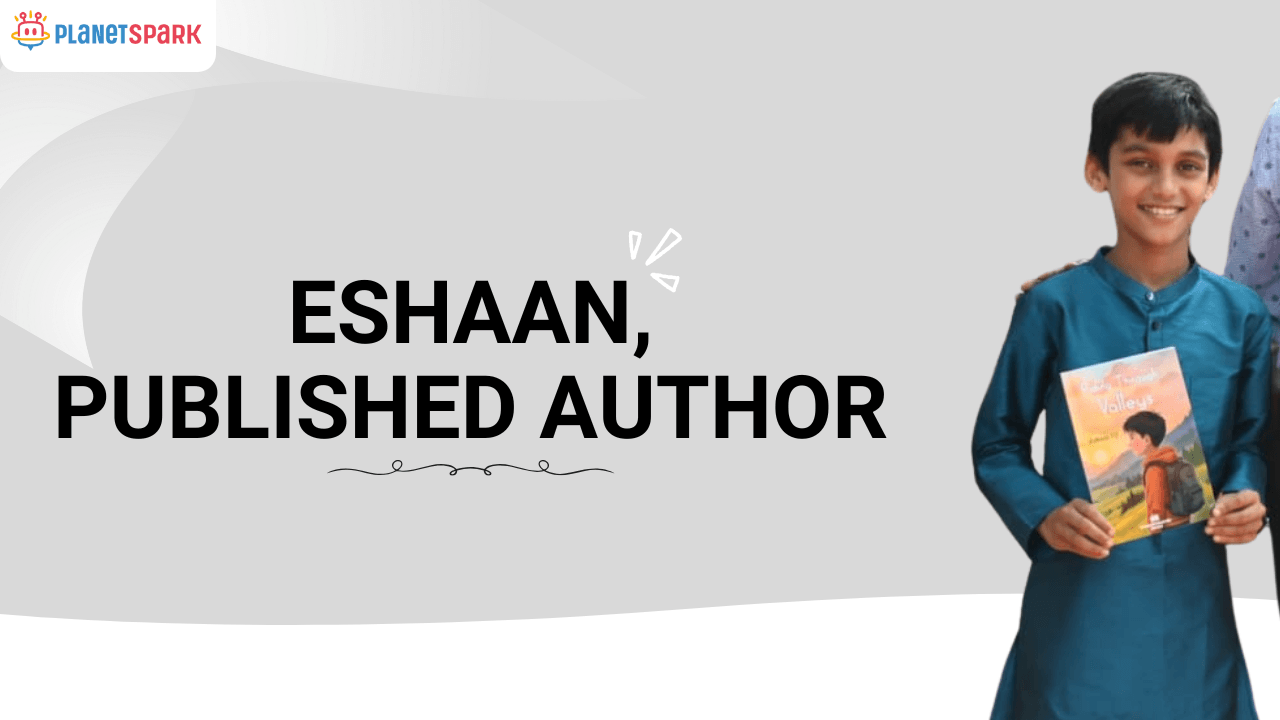
Eshaan’s Journey: From Classroom Creator to Confident Creative Writer
Eshaan, a dynamic Grade 7 learner aged 12, has taken a meaningful step forward in creative writing by transforming classroom activities into original storytelling. What began as guided writing exercises gradually developed into a well-structured storybook, reflecting his imagination, discipline, and growing control over language. Through consistent practice and thoughtful feedback, Eshaan learned how to shape ideas, build narratives, and express creativity with clarity. His journey highlights how focused creative writing practice helps students move beyond basic tasks and develop a strong, confident writing voice.
Final Thoughts on Composition Writing
Composition writing forms the foundation for strong communication and long-term academic success. When students understand how to write a composition using the proper format, relevant examples, and a variety of topics, writing stops feeling confusing or stressful. Instead, it becomes a structured and enjoyable process where ideas can be expressed clearly and confidently.
With regular practice, students learn how to organize thoughts, develop ideas logically, and communicate meaning through writing. Expert guidance plays an important role in this journey by helping students identify mistakes, refine expression, and build confidence step by step. PlanetSpark’s creative writing programmed support learners through structured lessons, personalized feedback, and continuous practice, enabling them to develop clear, confident, and expressive writing skills that benefit them throughout their academic journey and beyond.
Composition writing is the process of writing a structured piece of text on a given topic using clear ideas and proper organization. It teaches students how to introduce a topic, develop ideas logically, and conclude effectively. Composition writing helps students move beyond sentence-level writing to express complete, meaningful thoughts.
The correct composition writing format includes an introduction, a body, and a conclusion. This structure helps students organize ideas clearly and maintain logical flow throughout the composition. Using the correct format also helps students perform better in exams, as teachers value clarity and organization.
Students can improve composition writing by planning before writing, practicing regularly, and revising their work carefully. Reading composition writing examples helps them understand structure and style. Constructive feedback from teachers or mentors further accelerates improvement and builds confidence.
Good composition writing topics include personal experiences, descriptive scenes, imaginative situations, and picture-based prompts. Topics such as my favourite place, a memorable day, or a picture description are especially effective for beginners. Practicing different topics helps students adapt their writing style and think creatively.
Picture composition helps young learners connect visual observation with language development. It provides a clear reference point, making it easier for children to decide what to write. This approach improves imagination, sentence formation, and confidence while making writing more engaging and enjoyable.
Composition writing helps students develop thinking, language, and communication skills at the same time. It improves vocabulary, sentence structure, and clarity of expression by encouraging organized thinking. Regular practice also strengthens reading comprehension and builds confidence in speaking and presenting ideas.