
Build Copywriting Skills to Create High-Impact Content


Copywriting is the art of using words to connect, explain, and inspire action. From catchy ads to simple messages, copywriting is everywhere. Whether you are a working professional writing emails or a child learning how to express ideas clearly, copywriting skills help turn thoughts into powerful words.
Many people think copywriting is only for marketers, but that is not true. Kids use copywriting when they write a school notice. Adults use it while drafting WhatsApp messages, social media posts, or presentations. Understanding what is copywriting helps both kids and adults communicate better, build confidence, and share ideas clearly.
In this blog, we will explain the copywriting meaning, explore simple copywriting examples, and break down skills in an easy, step by step way. The language is simple so kids can enjoy reading, and the ideas are practical so professionals can apply them instantly.
What Is Copywriting?
Copywriting is the skill of using words to communicate a message clearly and effectively. When someone writes with a goal in mind, such as explaining an idea, sharing information, or encouraging action, that writing is called copywriting. In simple words, copywriting meaning is writing that works.
For kids, copywriting can be as easy as writing a line for a school poster or creating a catchy sentence for a project. For working professionals, it may include writing emails, presentations, ads, or social media posts. In all cases, the purpose remains the same: to make the reader understand and respond.
What is Copywriting can be understood better through daily life examples. When a chocolate wrapper says “Tasty and Fun,” that is copywriting. When a school notice clearly explains an event, that is also copywriting. These small messages use simple words but deliver a strong meaning.
Copywriting is not about using difficult words. It is about choosing the right words. Strong copywriting skills help people express thoughts in a structured and confident way. This is why copywriting is important for both kids and adults.
Copywriting also improves thinking ability. Before writing, the writer thinks about what to say, how to say it, and who will read it. This habit helps kids build clarity and helps professionals communicate faster and better.
Some common places where copywriting is used every day include:
Advertisements on TV and mobile
School announcements and posters
Product descriptions
Emails and messages
Social media captions
All these examples show that copywriting is a life skill, not just a professional one.
Types of Copywriting for Kids
There are different types of copywriting, and kids can learn them in a fun and simple way. Each type helps develop a different skill, such as creativity, clarity, or confidence.
Creative copywriting focuses on imagination and storytelling. It allows kids to play with words and ideas. Writing a catchy title, a short poem, or a fun line for a drawing are all creative copywriting examples. This type helps children enjoy writing and express emotions freely.
Informational copywriting is used when the goal is to explain something clearly. Kids use this type when they write instructions, explain rules of a game, or describe a topic in a school assignment. This form of copywriting builds logical thinking and helps kids organize their thoughts.
Persuasive copywriting helps convince or influence others. When a child writes a short speech, suggests an idea to friends, or writes a message asking people to join an activity, they are using persuasive copywriting. These copywriting skills help build confidence and speaking ability.
Digital copywriting is very common today. Kids and adults both use it while writing captions, comments, or messages online. Learning digital copywriting early helps children communicate responsibly and clearly in the online world.
Each type of copywriting improves a different ability:
Creative copywriting improves imagination
Informational copywriting improves clarity
Persuasive copywriting improves confidence
Digital copywriting improves expression
Learning these types helps kids understand that writing is not just for exams. It is a tool to share ideas, solve problems, and connect with people. For professionals, these same skills help in emails, reports, and marketing communication.
Strong copywriting skills learned early stay useful for life.
"Every great story begins with a single word."
Unlock your child’s potential with PlanetSpark’s Creative Writing Course.
Easy Examples of Copywriting
Copywriting can seem complicated, but it is all around us. Understanding what is copywriting examples makes it easy for kids and adults to see how words can influence and explain.
Daily Life Examples Kids Can Relate To
Kids practice copywriting even without realizing it. For example:
Writing a poster for a school event like “Join the Fun Fair this Friday!”
Creating a title for a drawing or craft that makes it exciting
Writing a thank you message for friends or teachers
Even small sentences can be powerful if they catch attention and explain clearly. These examples show that copywriting skills are not just for professionals - they are part of everyday life.
Examples Adults Use Every Day
Adults use copywriting in more formal ways:
Emails that inform or request action
Social media posts that engage followers
Short messages for product or service descriptions
Advertising copy that promotes products or services
Fun Table: Copywriting Examples for Kids and Adults
| Audience | Example | Purpose |
|---|---|---|
| Kids | “Save the Planet! Plant a Tree Today” | Persuasion & Awareness |
| Kids | “Math Fun Game Tonight” | Information & Clarity |
| Adults | “Buy 1 Get 1 Free Today Only” | Persuasion & Action |
| Adults | “Top 5 Tips for Healthy Eating” | Information & Engagement |
These examples make it clear that copywriting is everywhere, and learning to use it well gives kids and adults a real advantage in expressing ideas, influencing others, and sharing information.
"Imagination is the first step to innovation."
Let your child explore creativity through PlanetSpark’s fun writing lessons.
What Are Copywriting Skills?
Copywriting skills are the abilities you need to write messages that inform, inspire, or persuade. Learning these skills is useful for both kids and professionals, as they improve communication, confidence, and creativity.
Core Copywriting Skills Kids Can Learn
Clear Writing – Using words that are simple and easy to understand.
Creativity – Thinking of fun and interesting ways to say something.
Persuasion – Writing to convince or encourage others.
Observation – Noticing details around you to create better messages.
Storytelling – Turning ideas into short, engaging stories.
Core Copywriting Skills Adults Use
Attention-Grabbing Writing – Creating headlines or subject lines that make readers curious.
Audience Understanding – Knowing who you are writing for and what they care about.
Editing and Clarity – Making messages easy to read and understand.
Call-to-Action Writing – Encouraging readers to take action, like clicking a link or buying a product.
Consistency and Tone – Writing in a voice that matches your purpose or brand.
Why These Skills Are Important
Kids gain confidence in school projects and creative writing.
Adults improve work communication, marketing, and online content.
Both learn to organize thoughts, think logically, and express ideas clearly.
Quick Tip for Kids: Practice writing short messages for daily activities, like explaining your favorite game or telling a story in 3 sentences. This builds strong copywriting skills naturally.
Quick Tip for Adults: Try rewriting a social media post or an email in simpler words while keeping it interesting and persuasive.
By understanding what are copywriting skills, anyone can start improving communication and creativity right away.
"Imagination is the first step to innovation."
Let your child explore creativity through PlanetSpark’s fun writing lessons.
How Kids Can Practice Copywriting Skills
Learning copywriting skills is fun when kids practice in daily life. The key is to combine creativity, clarity, and simple words. Kids don’t need to write long essays; short, engaging messages are enough to start.
Daily Activities to Practice Copywriting
Writing Posters or Notices – Create small posters for school events or home activities, like “Bake Sale Today!” or “Reading Hour Fun!”
Short Story Titles – Make exciting titles for your stories, such as “The Adventure of the Magic Pencil.”
Messages to Friends and Family – Write simple notes like “Let’s play a game” or “Thank you for helping me.”
Social Media Practice – Kids can create captions for pictures or drawings they make, focusing on clear and fun wording.
Fun Copywriting Challenges for Kids
Headline Challenge: Write three different ways to say “Clean Your Room” that sound exciting.
Slogan Game: Make a slogan for your favorite snack in 5 words or less.
Story in 5 Sentences: Explain your favorite activity in exactly 5 sentences using interesting words.
Benefits of Practicing Regularly
Improves writing and vocabulary
Encourages creative thinking
Builds confidence to express ideas
Helps in school presentations and projects
By practicing every day, kids develop copywriting skills that are useful for school, online activities, and even communicating with friends and family.
"Words can change the world."
Help kids master copywriting and storytelling with PlanetSpark.
Key Copywriting Ideas Every Kid Should Know
To become confident in copywriting, kids need to understand some key ideas that guide how they write. These ideas make writing more engaging, clear, and persuasive.
1. Keep It Simple
Use short sentences and simple words. Kids and adults understand better when the message is clear. Example: Instead of writing “Participation in the reading competition is highly encouraged,” write “Join the reading competition!”
2. Make It Fun
Add excitement to your writing. Use playful words or interesting descriptions. Example: “Jump into the magic world of stories!”
3. Use Action Words
Words like “try,” “explore,” “join,” and “create” encourage the reader to do something. These are called verbs of action and are very important in copywriting.
4. Be Creative
Think of unique ways to say common things. Example: Instead of “Clean your desk,” try “Make your desk sparkle!”
5. Know Your Reader
Writing is more effective when you know who will read it. Kids can think about friends, teachers, or family. Adults think about customers, colleagues, or followers.
6. Use Examples
Adding small examples helps readers understand your point. Example: “Eat fruits like apples or bananas to stay strong!”
7. Short Paragraphs and Lists
Breaking ideas into small chunks or bullet points makes writing easier to read. This is a key copywriting skill for both kids and adults.
8. Practice Storytelling
Even short stories or messages should have a small flow: beginning, middle, and end. Storytelling keeps readers interested.
By following these ideas, kids can write messages that are clear, fun, and persuasive. Adults can use the same ideas in emails, social media posts, or content for work. Strong copywriting skills build confidence, creativity, and clarity for life.
How PlanetSpark Helps Kids Learn Copywriting
PlanetSpark helps children develop strong copywriting skills by combining creativity, structure, and practical practice. Its programs make writing fun and engaging while teaching kids to organize their thoughts, express ideas clearly, and communicate confidently. Through a mix of lessons, activities, and feedback, children learn to write stories, letters, and essays that are both interesting and structured.
Key Features of PlanetSpark’s Creative Writing Program:
Genre-Based Curriculum: Covers short stories, poetry, journal writing, essays, book reviews, and persuasive letters, with dedicated lesson plans for each genre.
Framework-Driven Writing Instruction: Teaches story arcs (beginning-middle-end), S.T.O.R.Y structure, 5W1H method, and PEEL technique for essays and arguments.
Writing + Speaking Integration: Kids present their written work orally, building expressive confidence and narrative flow.
Editing, Feedback, and Rewriting: Real-time editing, peer review, and teacher feedback sessions help children revise and improve their writing.
Real Publishing Opportunities: Kids can publish their stories on PlanetSpark’s blog, e-magazine, or in co-authored anthologies, boosting visibility and pride.
Creativity Stimulus Activities: Story dice, prompts, image-based writing, and guided imagination exercises encourage original thinking.
With PlanetSpark, children not only learn copywriting skills but also enjoy a structured, creative, and rewarding learning experience that builds lifelong writing confidence.
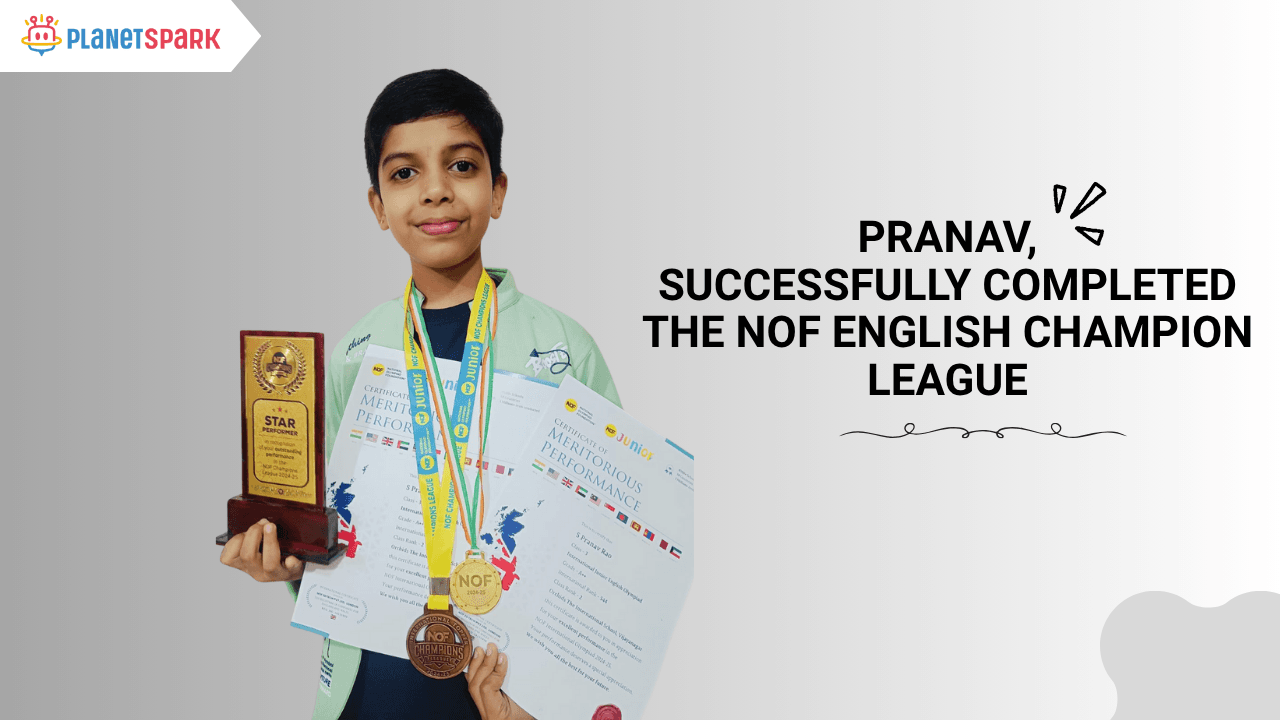
Pranav Shines in NOF English Champion League
Pranav, a bright Grade 3 student, successfully completed the NOF English Champion League, demonstrating outstanding skills in Public Speaking and Creative Writing. His confidence, clarity, and creativity set him apart, reflecting his dedication and talent in expressing ideas effectively.
Conclusion: Why Copywriting Skills Matter for Kids
Learning copywriting skills is more than just writing words - it is about expressing ideas clearly, thinking creatively, and communicating confidently. Whether for school projects, online messages, or everyday life, strong copywriting helps kids share their thoughts in a way that is engaging, persuasive, and easy to understand.
By developing these skills early, children gain advantages that last a lifetime:
Improved Communication: They learn to write and speak clearly, making their ideas easy to understand.
Enhanced Creativity: Copywriting encourages imagination, unique thinking, and problem-solving.
Confidence Building: Writing structured and persuasive messages boosts self-assurance.
Better Academic Performance: Skills like organizing thoughts, storytelling, and explaining ideas help in assignments and presentations.
Real-World Relevance: Copywriting skills are useful online, in social media, and even in professional life.
With programs like PlanetSpark’s creative writing courses, children can practice these skills in a fun and structured way, combining writing, speaking, feedback, and publishing opportunities.
Ultimately, mastering copywriting skills prepares kids not only to write effectively but also to think critically, communicate confidently, and succeed in both academic and real-life situations.
"Creativity is intelligence having fun."
Boost your child’s writing and expression with PlanetSpark’s Creative Writing Course.
Frequently Asked Questions
Copywriting for kids is writing simple and creative messages that explain, persuade, or entertain. It helps children communicate ideas clearly in school projects, posters, and stories.
Copywriting skills improve writing, thinking, and speaking. They boost confidence, creativity, and the ability to share ideas clearly with others.
Kids can practice by writing short messages, making posters, creating story titles, or explaining a favorite activity in 3–5 sentences.
Examples include slogans for school events, captions for drawings, messages to friends, or short story titles.
Yes! Creative writing teaches storytelling, structure, and imagination, which are key to becoming a strong copywriter.
No! Copywriting helps in daily life, online communication, social media, and even professional writing skills as children grow.